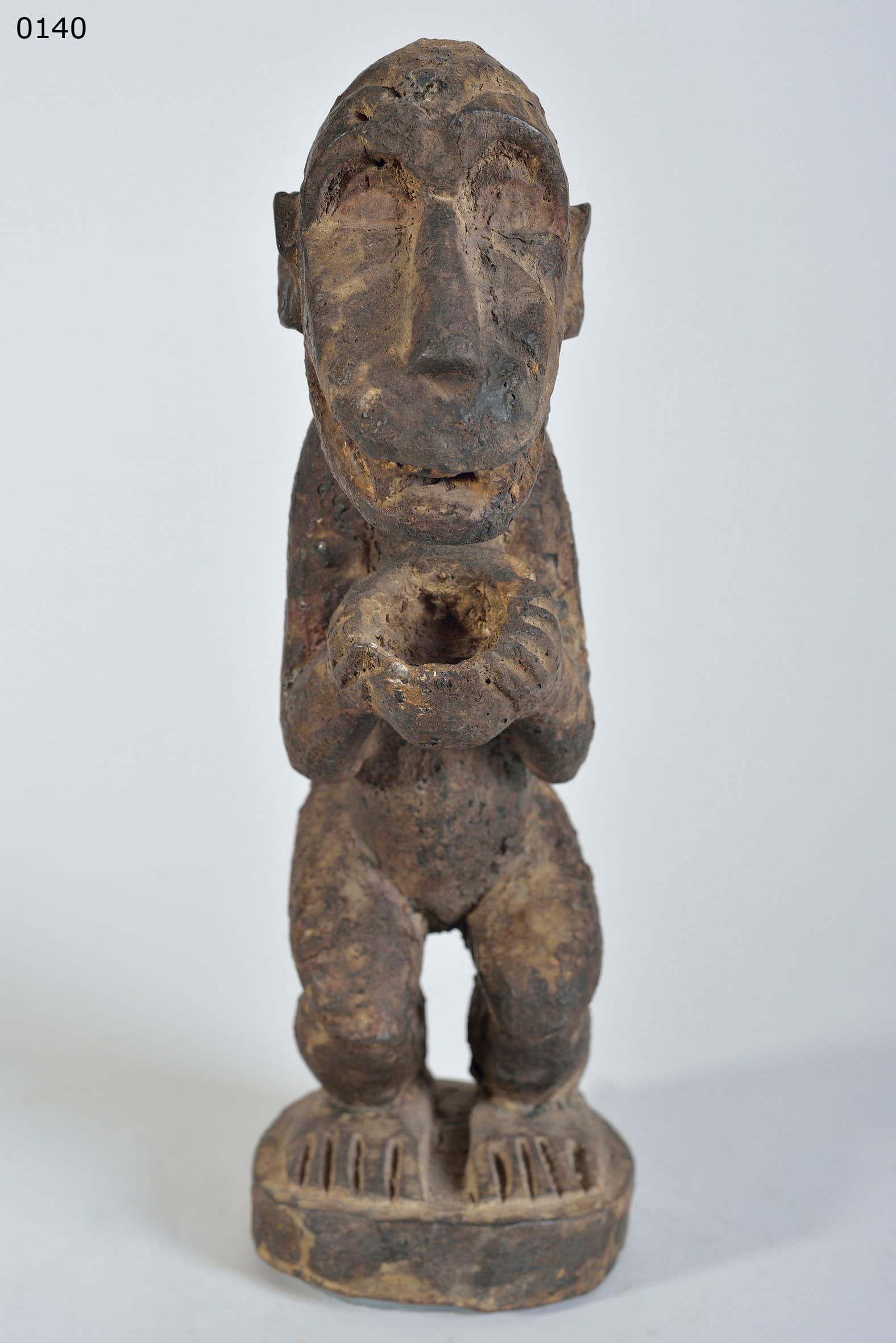
This highly abstracted wooden figure portrays a standing or slightly crouching monkey holding an offering bowl outward from its chest. The head is dominant, with a massive, blocky muzzle and bared teeth, and the entire form is coated in a dry, pale, grey-brown crust.
1. Aesthetic style — the blocky architecture of the wilderness
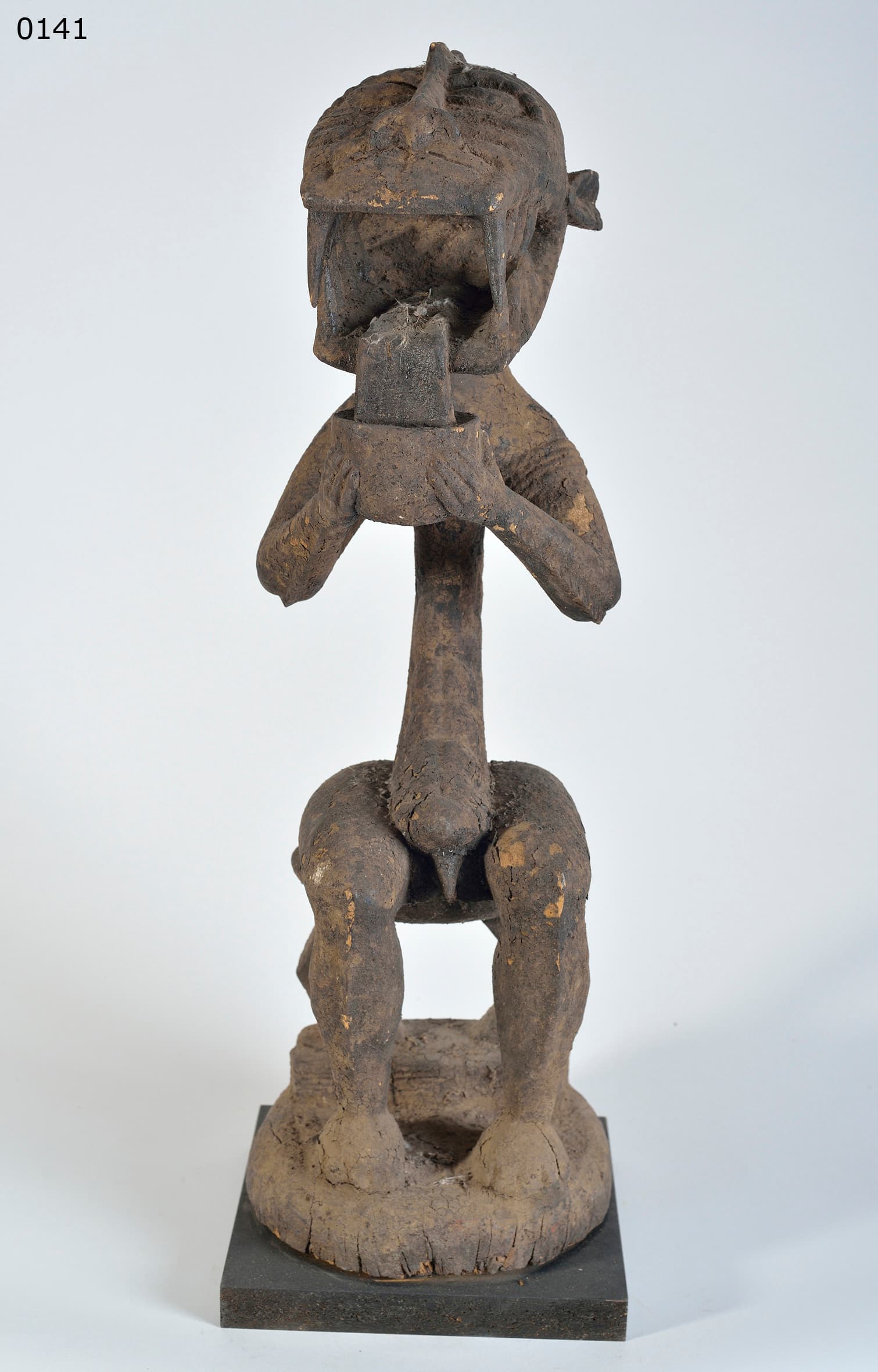
This third iteration of the Baoule mbotumbo relies on an extremely blocky, almost cubist architecture to project strength. The carver has reduced the primate's limbs to thick, unarticulated cylinders, while the head is a massive, angular wedge dominated by a brutal, jagged mouth. This lack of refinement is purposeful; it aesthetically distances the object from the smooth, civilized blolo bian figures. The raw, heavy geometry serves as a visual warning that the spirit contained within is crude, powerful, and operates outside the bounds of human morality.
2. Ritual function — altar receptacles and divinatory authority
The bowl held outward by this figure acts as an active altar receptacle. In Baoule ritual practice, the diviner relies on the intimidating presence of the mbotumbo to enforce his authority. When clients approach the diviner to cure a sickness or cast a counter-spell, they must provide sacrifices. The bowl is the literal interface between the human client and the hungry bush spirit. Placing an offering—such as an egg, kola nut, or blood—into the bowl activates the figure, binding the spirit to perform the aggressive, magical task requested by the diviner.
3. Physical patina — severe desiccation and friable patination
Unlike the dark, oily figures, this mbotumbo exhibits a very dry, highly desiccated patina, suggesting it may have been stored in a more arid environment or an abandoned shrine. The wood has suffered significant cellular collapse, resulting in deep, longitudinal fissures across the head and torso. The surface crust is pale, chalky, and friable, consisting of dried earth, oxidized organic matter, and ancient termite wear at the base. This severe, dry taphonomy is a highly prized indicator of genuine, long-term historical exposure and abandonment.
Summary
A brutalist and deeply evocative carving, this standing Baoule monkey figure represents the terrifying, uncompromising power of the bush. Its blocky, abstract geometry and severe, dry desiccation crackle make it a phenomenal artifact of West African divination.
Written with AI assistance from the collection appraisal, object photography and our own research; editorially reviewed. Mistakes are possible — corrections are welcome. How we work →

mask (collected in Abidjan)

mask (called GOLI)
simian statue (called MBOTUMBO or GBEKRE)