This monumental wooden figure, measuring an impressive 133 cm, depicts a highly elongated, stylized human form standing on a thick, cylindrical base. The figure features a classic Senufo facial profile, dramatically sweeping, elongated arms, and a deep, lustrous, dark-brown patina.
1. Aesthetic style — architectural elongation and the pombibele aesthetic
The pombibele (meaning "those who give birth") or déblé (rhythm pounder) is one of the most structurally magnificent and globally recognized forms of Senufo art. The sculptor has deliberately exaggerated the vertical proportions of the figure, transforming the human body into a soaring, aerodynamic column. The sweeping, continuous line from the shoulders down the elongated arms creates a profound sense of elegant, kinetic tension. The face retains the canonical Senufo geometry—a prognathic jaw, a crested coiffure, and a serene expression—but the genius of the piece lies in its transformation of the torso into a functional, monumental pillar of rhythmic power.
2. Ritual function — the Poro society and the rhythms of the dead
Unlike statues that sit stationary on altars, the pombibele is a kinetic, acoustic ritual instrument utilized by the Senufo Poro secret society. During the complex, multi-day funeral ceremonies of high-ranking Poro elders, initiates would hold these massive figures by the arms or torso and strike the heavy cylindrical base repeatedly against the earth. This rhythmic pounding was believed to purify the ground, awaken the ancestral spirits, and encourage the soul of the deceased to detach from the physical world and journey to the realm of the dead. The figure acts as a literal, acoustic bridge between the living earth and the subterranean ancestors.
3. Physical patina — kinetic impact wear and heavy oxidation
The physical condition of this rhythm pounder is consistent with historic, functional use. The heavy, cylindrical base exhibits significant, organic blunting and crushing of the wood fibers, which is compatible with being forcefully struck against hard, compacted earth during funerary rites. The upper torso and arms possess a deeply polished, dark-mahogany patina, resulting from handling by Poro initiates. This contrast between the battered base and the burnished torso is characteristic of a traditionally used déblé.
Summary
A significant structural example of West African art, this Senufo rhythm pounder embodies the solemn, acoustic power of the Poro society. Its sweeping elongation and impact-wear make it a notable ethnographic object.
Written with AI assistance from the collection appraisal, object photography and our own research; editorially reviewed. Mistakes are possible — corrections are welcome. How we work →
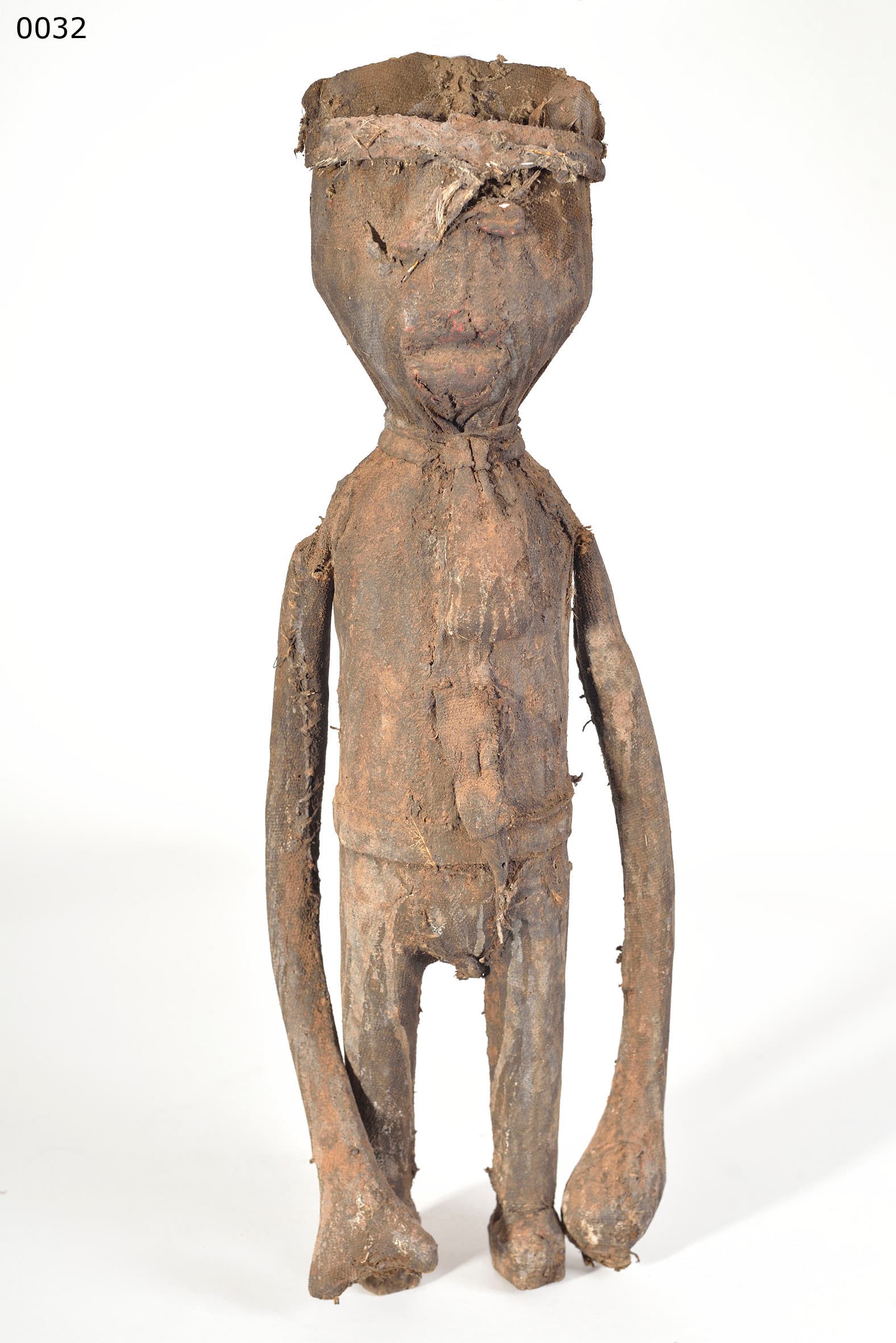
power figure (called KAFIGELEDJO)
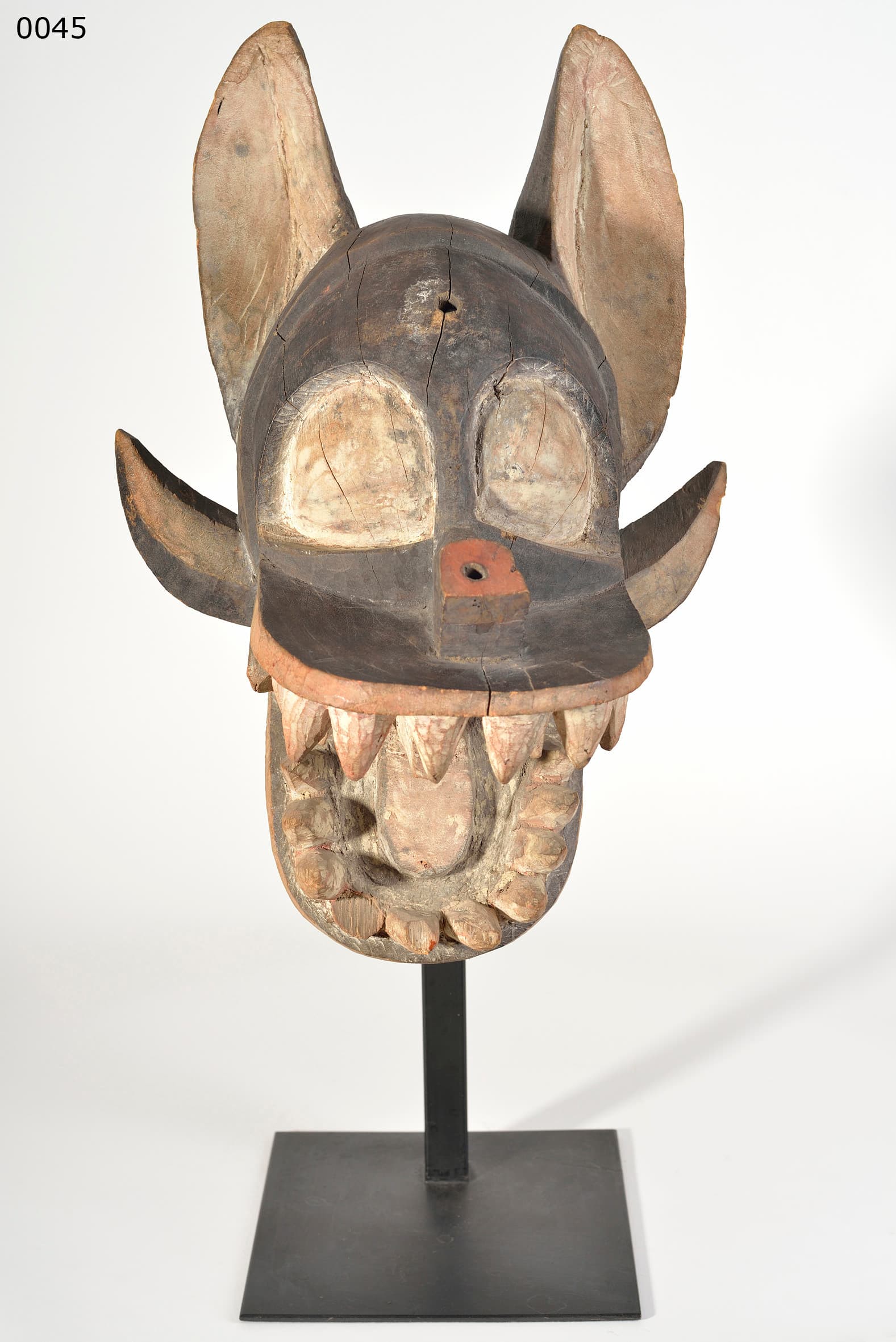
headcrest mask
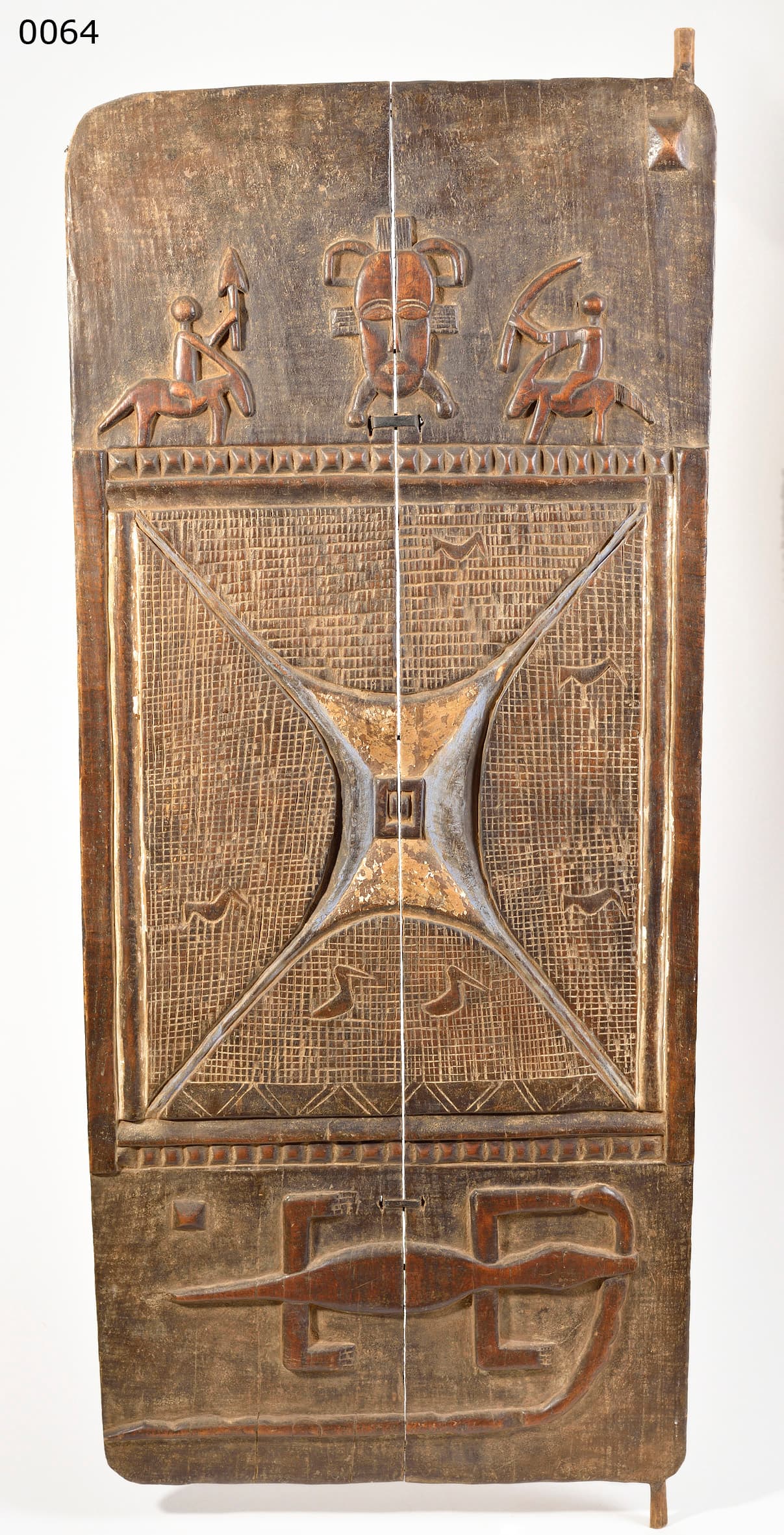
door
