A fierce zoomorphic wooden headcrest (attributed to the first half of the 20th century, 57 cm) from the Senufo of the Ivory Coast — a massive open jaw lined with teeth, large animal ears, and projecting horns.
1. The aesthetics of aggression
This mask is consistent with the classic Wanyugo (or "Firespitter") masking tradition, designed to project a terrifying appearance.
- Composite Beast: The mask combines the jaws of a hyena or crocodile, the tusks of a warthog, and the horns of an antelope — a monster composed of the bush's most dangerous and lethal elements.
2. The "firespitter"
The Wanyugo gets its nickname from its dramatic nocturnal performances.
- Sparks from the Teeth: During dances a tinderbox of glowing embers is sometimes placed inside the mask's open jaws. The dancer exhales sharply through the mask, causing a shower of sparks to fly from the teeth — creating the terrifying illusion of a fire-breathing demon in the pitch black of the village square.
3. Spiritual warfare
This mask is traditionally used as an anti-witchcraft instrument for the Poro secret society.
- Against Malevolence: When the village is threatened by an epidemic, sudden death, or suspected witchcraft, the Wanyugo is deployed. Its dramatic appearance and fiery breath are intended to frighten away malevolent spirits that are immune to polite prayers.
Summary
The Wanyugo is traditionally understood as a spiritual instrument of intimidation. It represents a highly developed example of aggressive design, combining fangs, horns, and pyrotechnics intended to dispel malevolent forces from the Senufo community.
Written with AI assistance from the collection appraisal, object photography and our own research; editorially reviewed. Mistakes are possible — corrections are welcome. How we work →
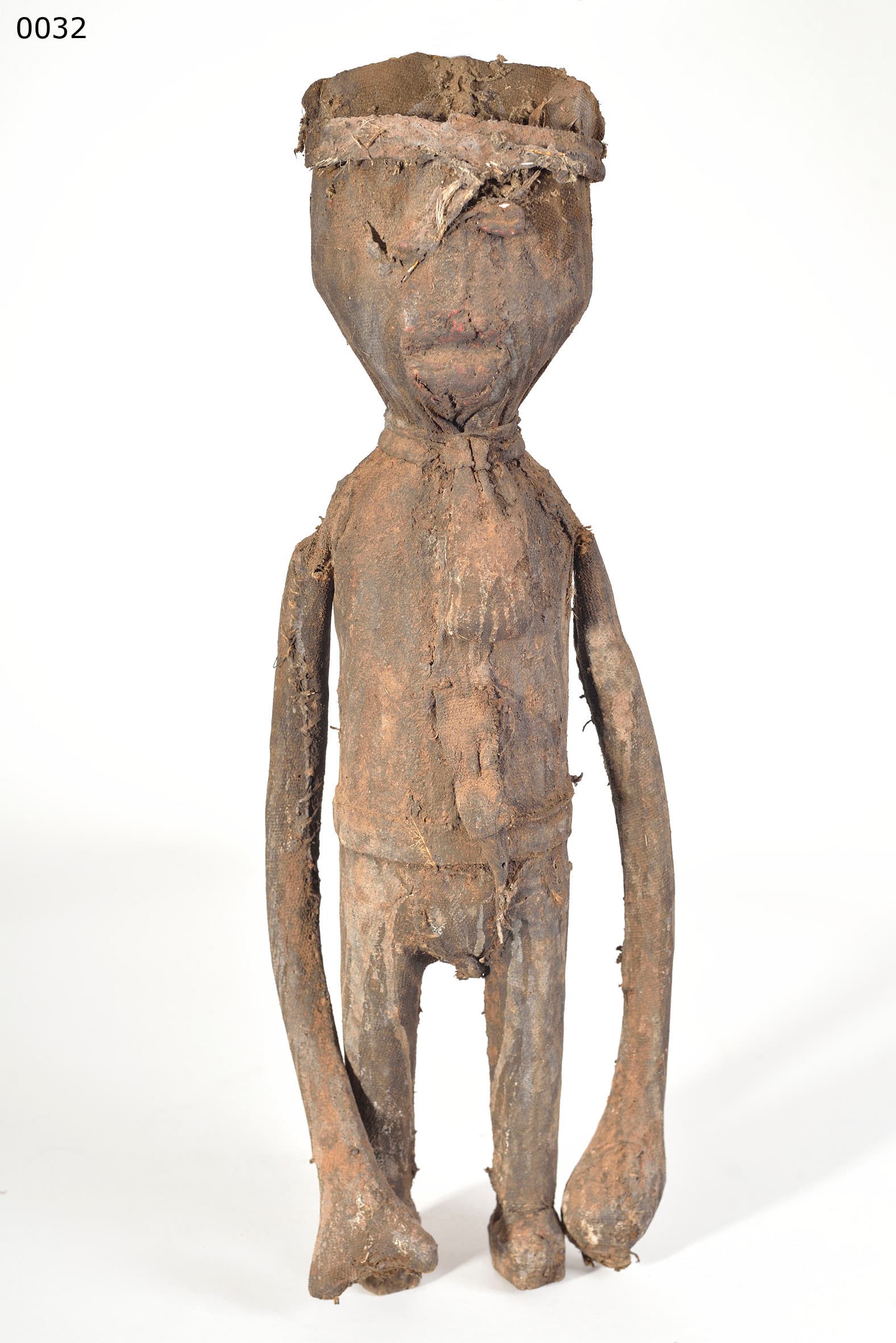
power figure (called KAFIGELEDJO)
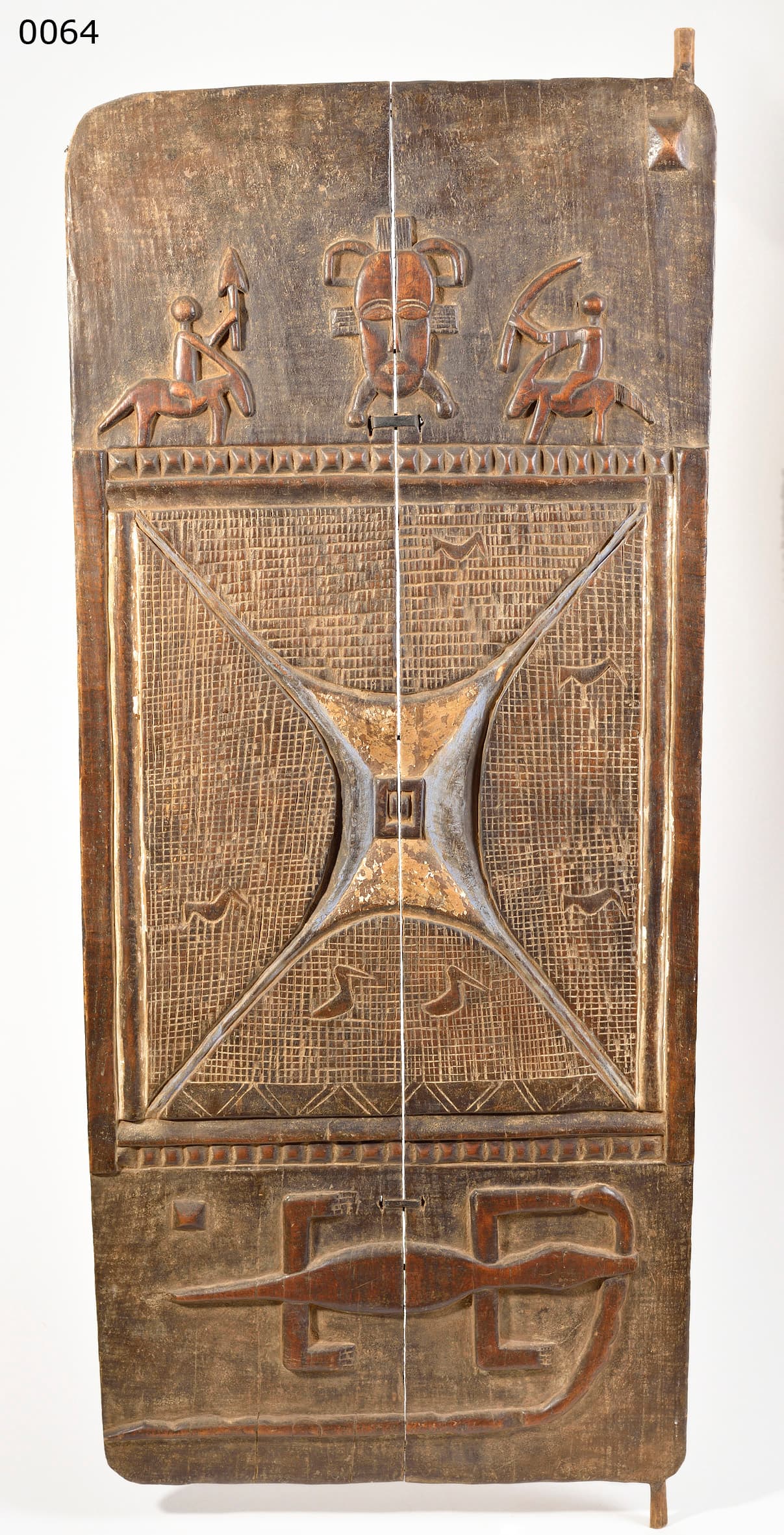
door

female rythm pounder (called POMBIBELE)
