This exceptionally tall, dark wooden statue depicts an elongated female figure with a prominent, projecting navel, small hands thrust forward, and intricate geometric scarification across the face. She is adorned with a thick, traditional pubic covering made of dried, matted plant fibers.
1. Aesthetic style — the izzi sub-style of Igbo statuary
The Izzi people, a northeastern subgroup of the Igbo in Nigeria, possess a highly distinct, aggressive, and monumental carving style. This culthouse statue exemplifies their aesthetic, which radically departs from the more naturalistic southern Igbo carvings. The figure is severely elongated and rigid, emphasizing sheer architectural scale (142 cm) over anatomical realism. The facial features are boldly carved, highlighted by deep, specific clan scarification patterns. The aggressive, forward-thrusting posture and the pronounced, protruding navel—a universal African symbol of lineage and the maternal umbilical connection to the ancestors—project raw, uncompromising power.
2. Ritual function — communal shrines and the alusi spirits
Monumental statues of this caliber were not privately owned; they were the collective, sacred property of the village, housed in massive communal cult houses or shrines. The figure represents an Alusi (nature deity) or a deified founding ancestor of the Izzi clan. These statues formed a physical pantheon within the shrine, surrounded by offerings and lesser figures. The community would petition this towering female entity for agricultural fertility, protection during wartime, and the successful birth of children, treating the statue as the literal, physical embodiment of the village's protective maternal life-force.
3. Physical patina — shrine taphonomy and original fiber preservation
The ethnographic integrity of this massive statue is notable, primarily due to the preservation of the thick, dried fiber pubic covering. Organic materials rarely survive in the humid Nigerian climate, suggesting this statue was carefully sequestered and protected within a dry cult house. The wood itself has oxidized to a deep, matte, soot-blackened patina, the result of decades of exposure to shrine fires and the accumulation of atmospheric dust and sacrificial libations. The natural desiccation cracks running along the vertical grain are consistent with its age and historic deployment.
Summary
A towering and formidable expression of northeastern Nigerian spiritual architecture, this Igbo-Izzi cult statue commands space with aggressive, unyielding power. Its massive scale, intense scarification, and the rare preservation of organic fibers make it a significant example of this sculptural tradition.
Written with AI assistance from the collection appraisal, object photography and our own research; editorially reviewed. Mistakes are possible — corrections are welcome. How we work →

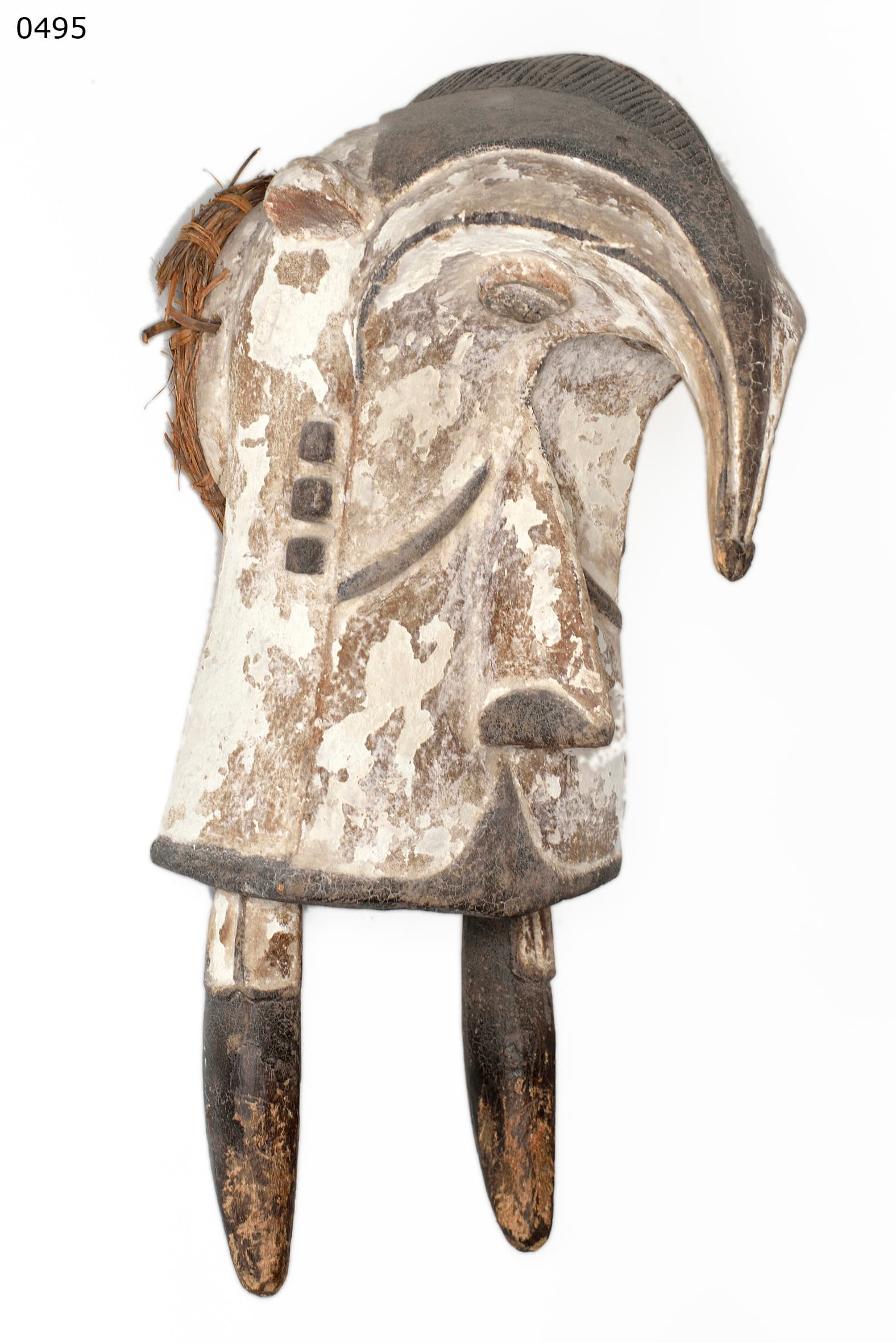
head crest (called elephant mask)
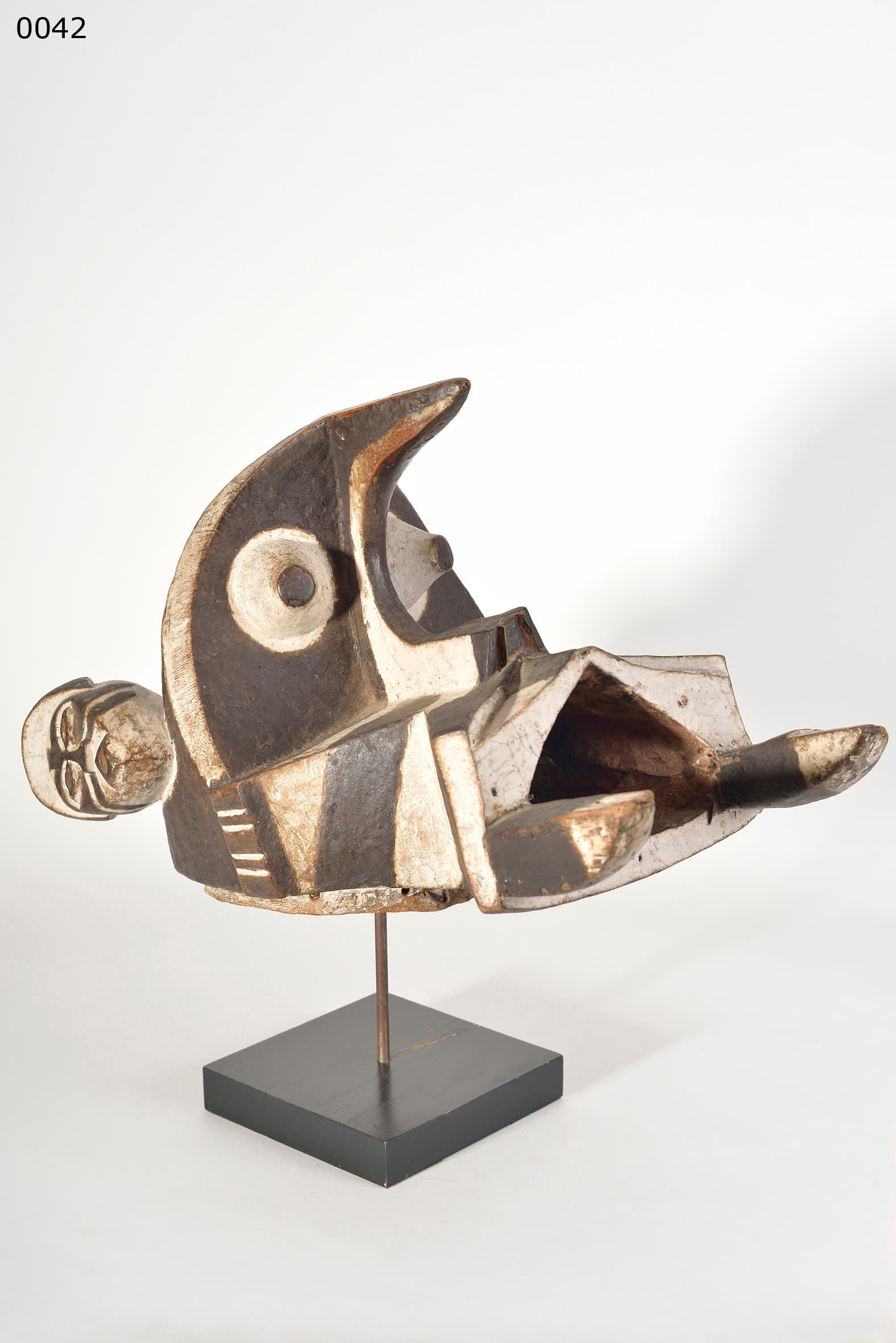
headcrest mask with multiple faces (called elephant mask)
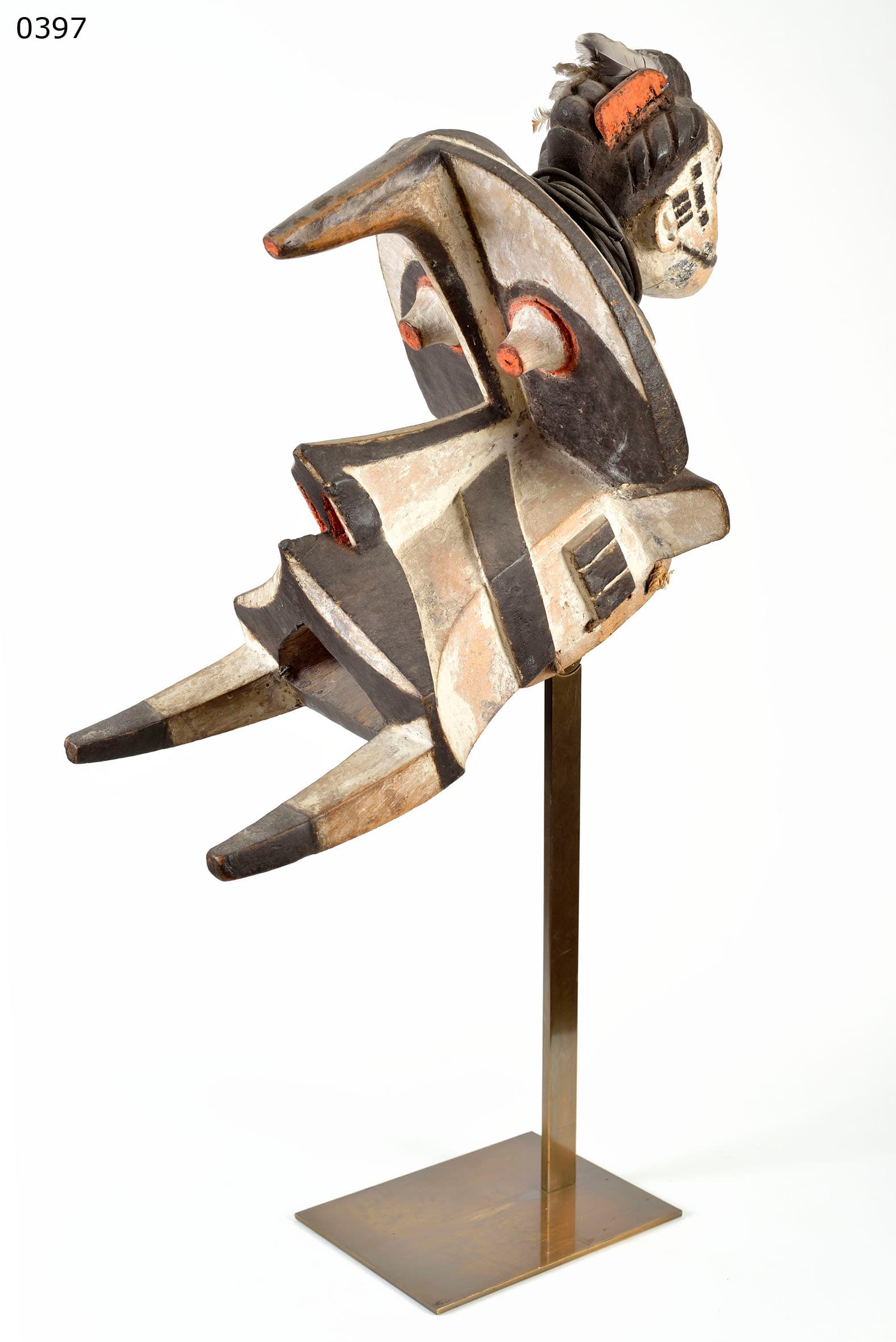
head crest elephant mask on METRA socle