A complex cubist variant of the Izi Elephant Spirit mask (attributed to the first half of the 20th century, 52 cm) from Nigeria — the massive elephant snout joined by secondary human-like faces carved into the structure.
1. Multi-directional power and omniscience
While standard Ogbodo Enyi masks project power forward, this piece features secondary faces carved onto the back or sides of the main elephant structure.
- All-Seeing Spirit: The inclusion represents the spirit's "all-seeing" nature (omniscience). It guards against malevolence from all directions, symbolizing that the power of the elephant spirit cannot be ambushed or bypassed.
2. African cubism
- Chaotic Assembly: The mask is a blocky assembly of geometric shapes — cylinders, wedges, and cones — painted in contrasting pigments.
- Structure Over Realism: It is an example of African Cubism, prioritizing structural geometric force over biological realism to convey the heavy mass of the elephant.
3. The dance of chaos
- Erratic Violence: During the dry season the Ogbodo Enyi is danced with wild, erratic, and violent movements.
- 360° Terror: The multi-faced nature of this mask disorients spectators, adding to the terrifying, unpredictable aura of the "wild beast" as it sweeps evil, disease, and bad luck out of the village.
Summary
This multi-faced Ogbodo Enyi is a complex spatial sculpture. It is designed to expand the defensive power of the elephant spirit into 360 degrees — creating a cubist representation of community protection.
Written with AI assistance from the collection appraisal, object photography and our own research; editorially reviewed. Mistakes are possible — corrections are welcome. How we work →

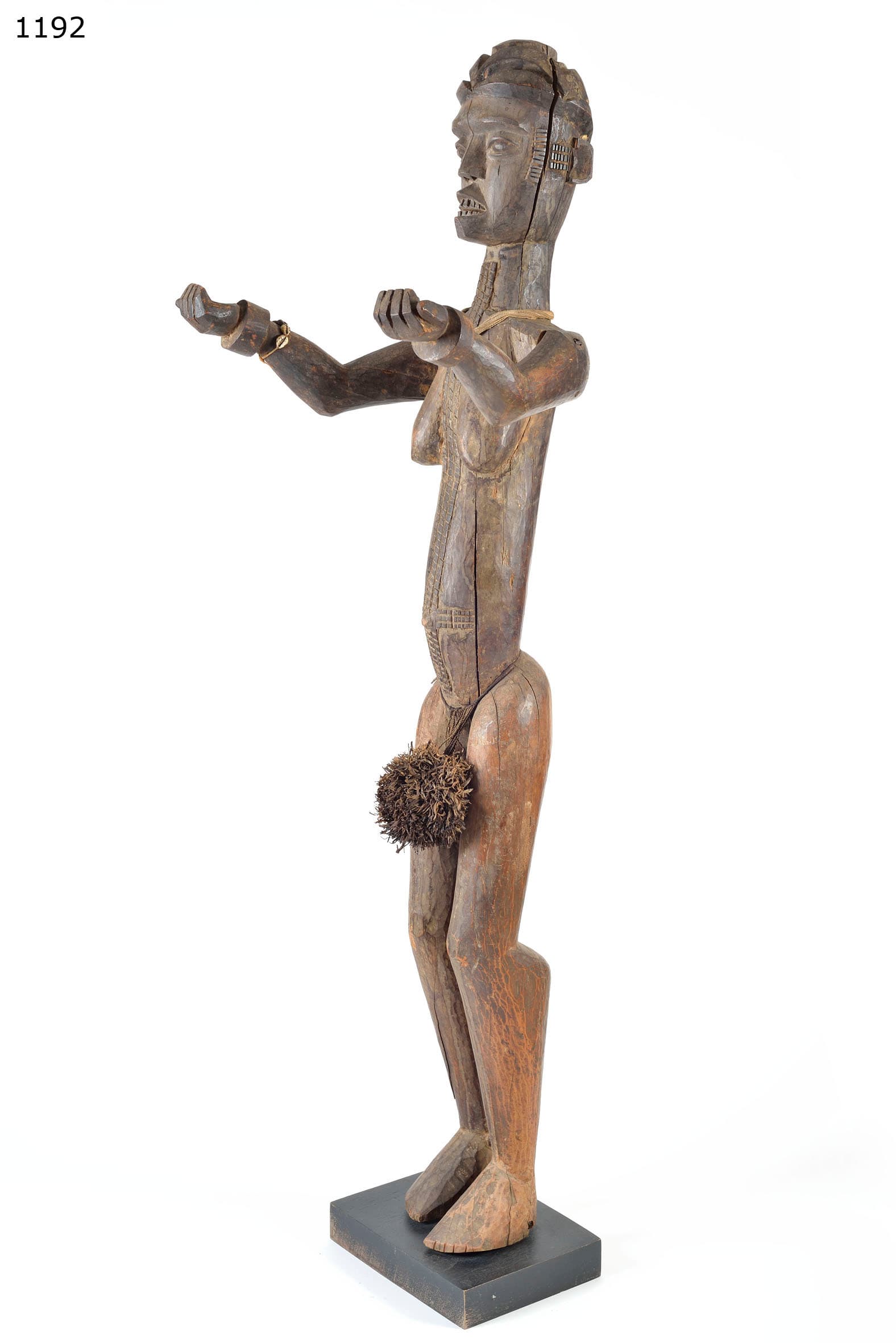
head crest (called elephant mask)
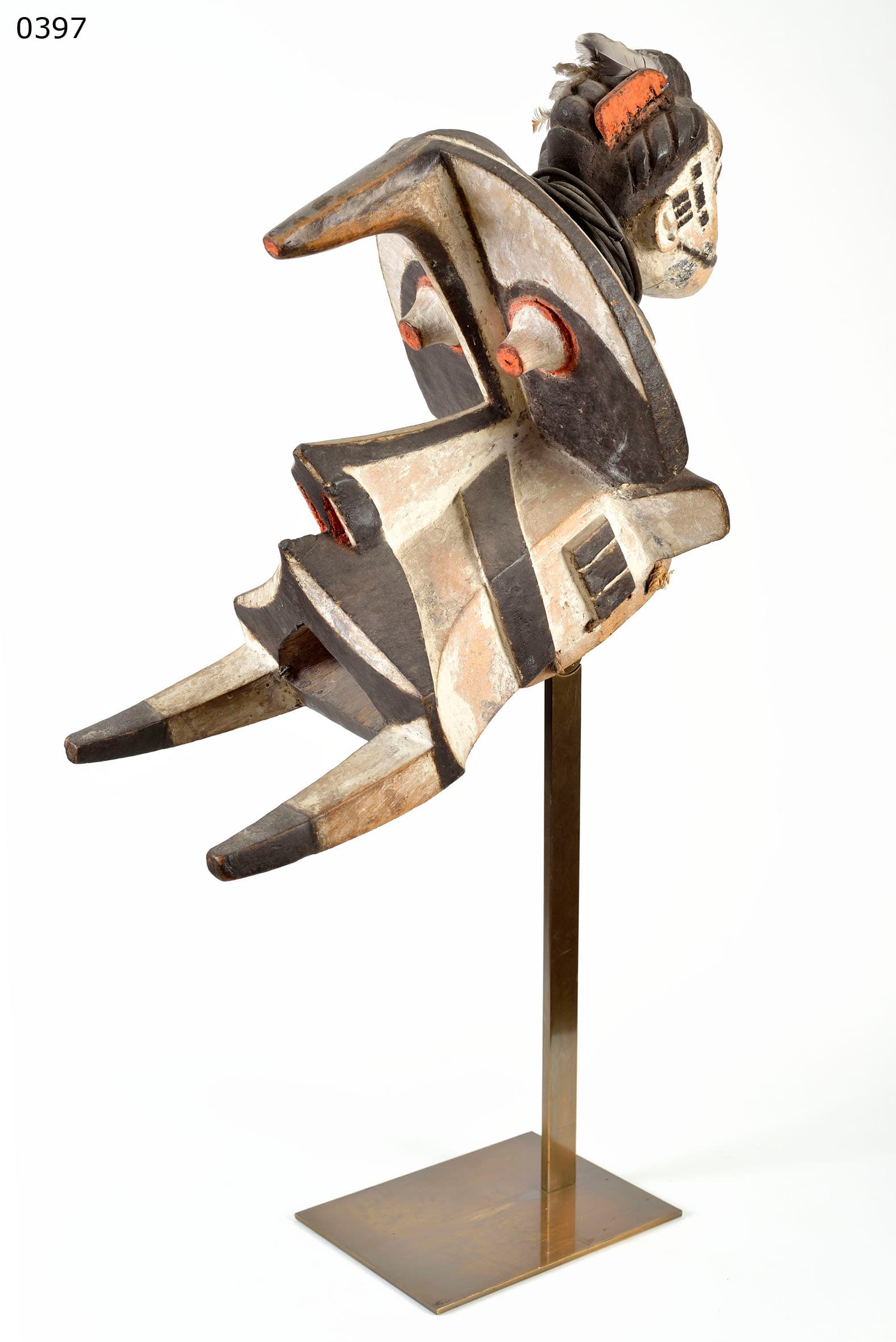
head crest elephant mask on METRA socle
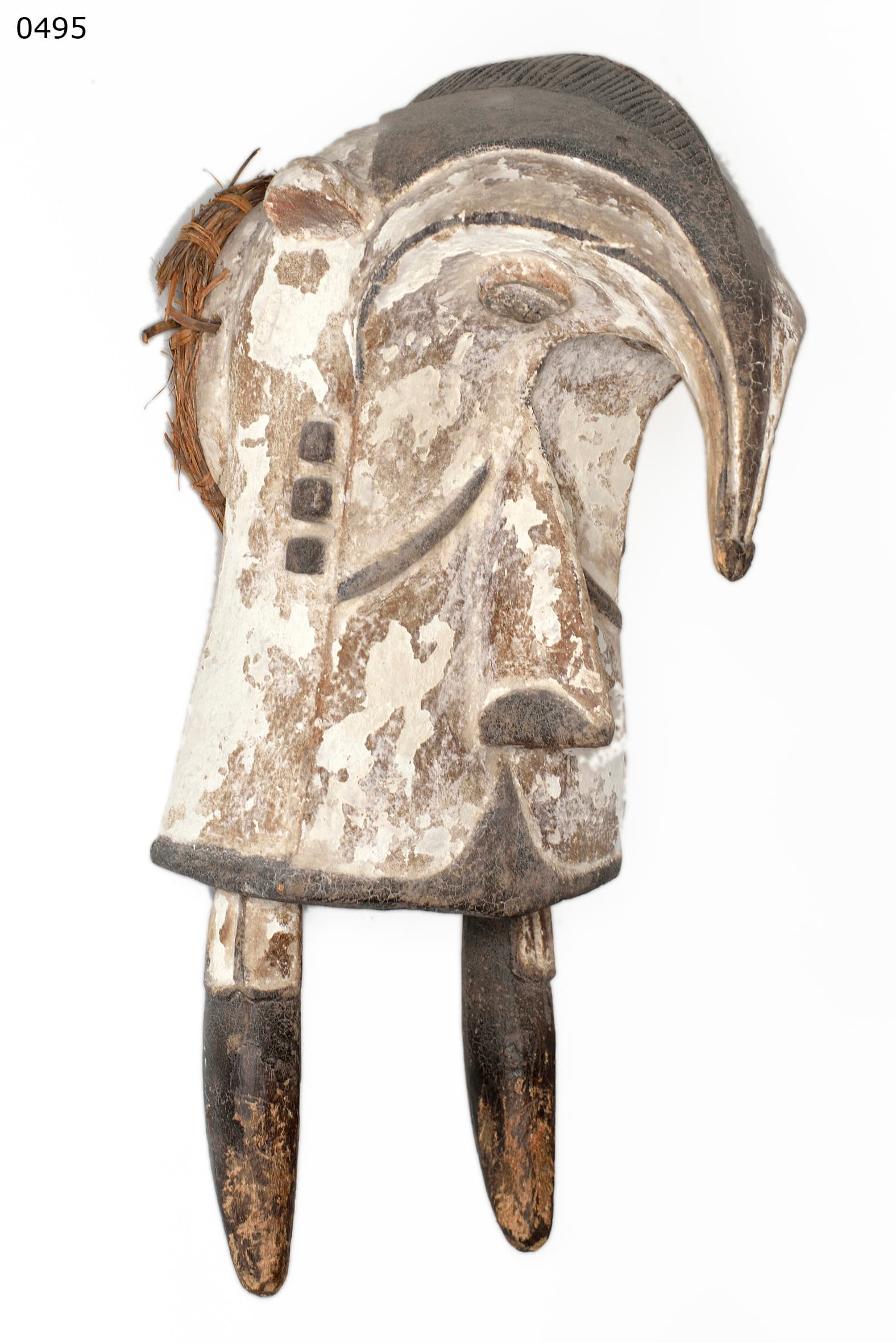
headcrest mask