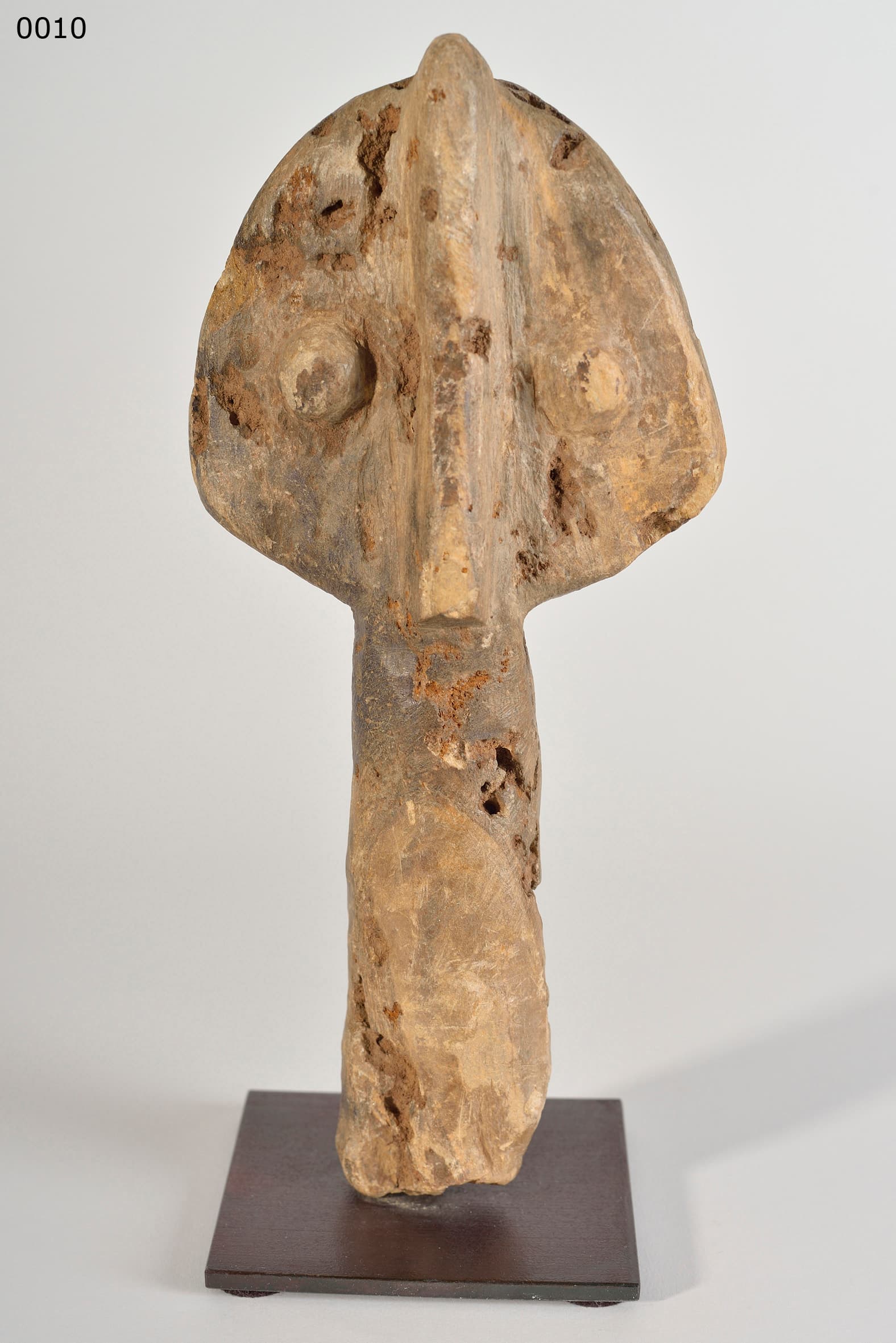
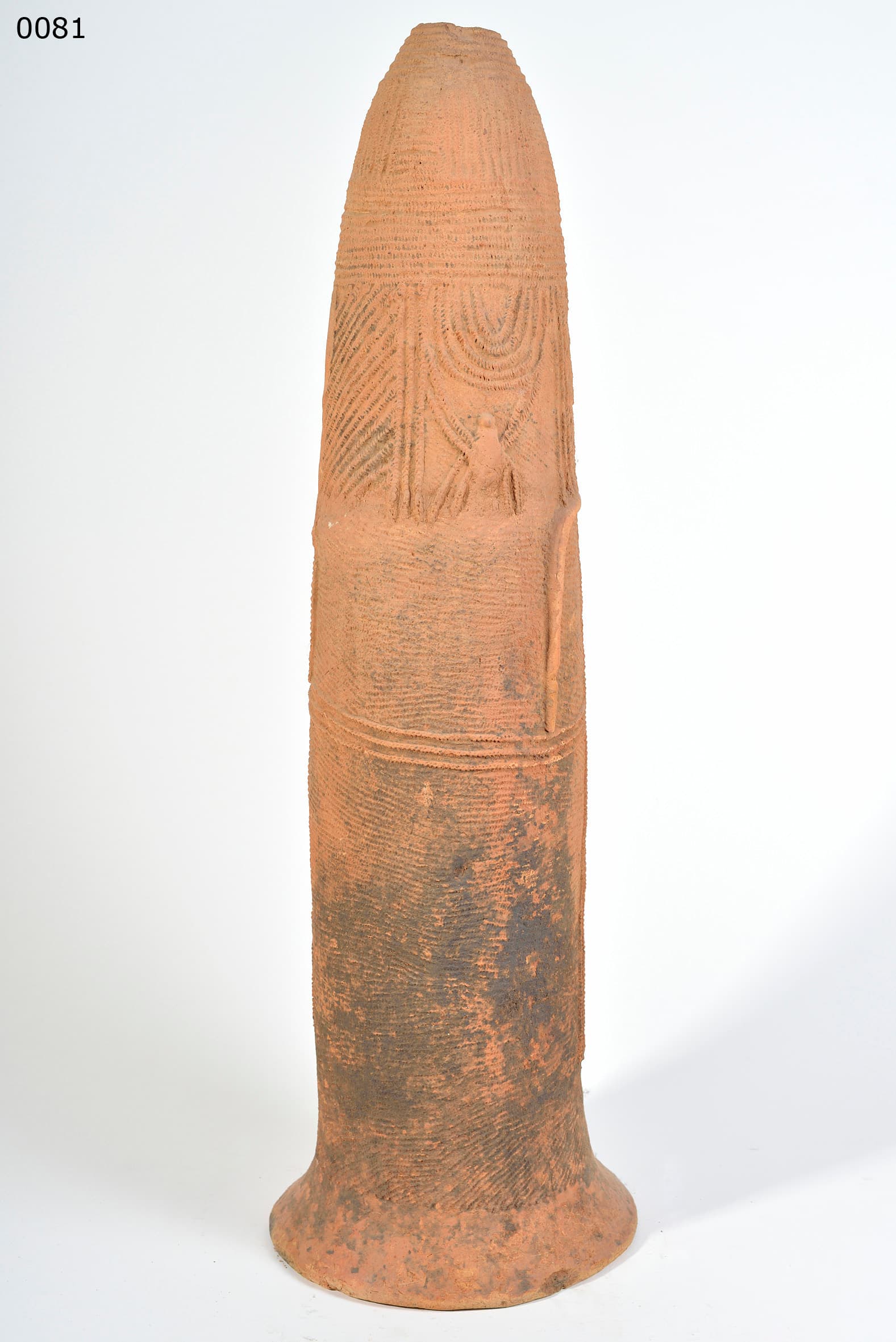
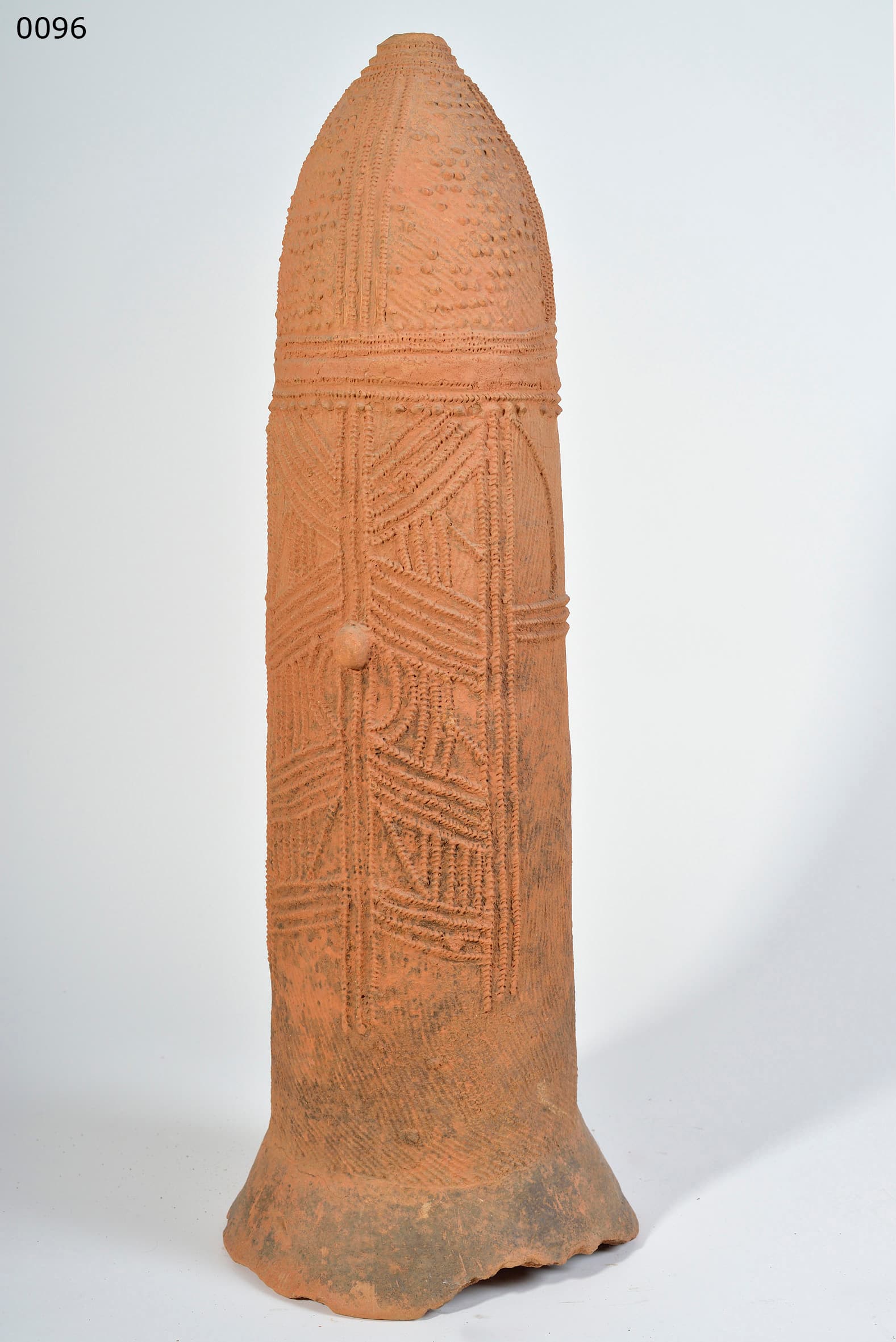
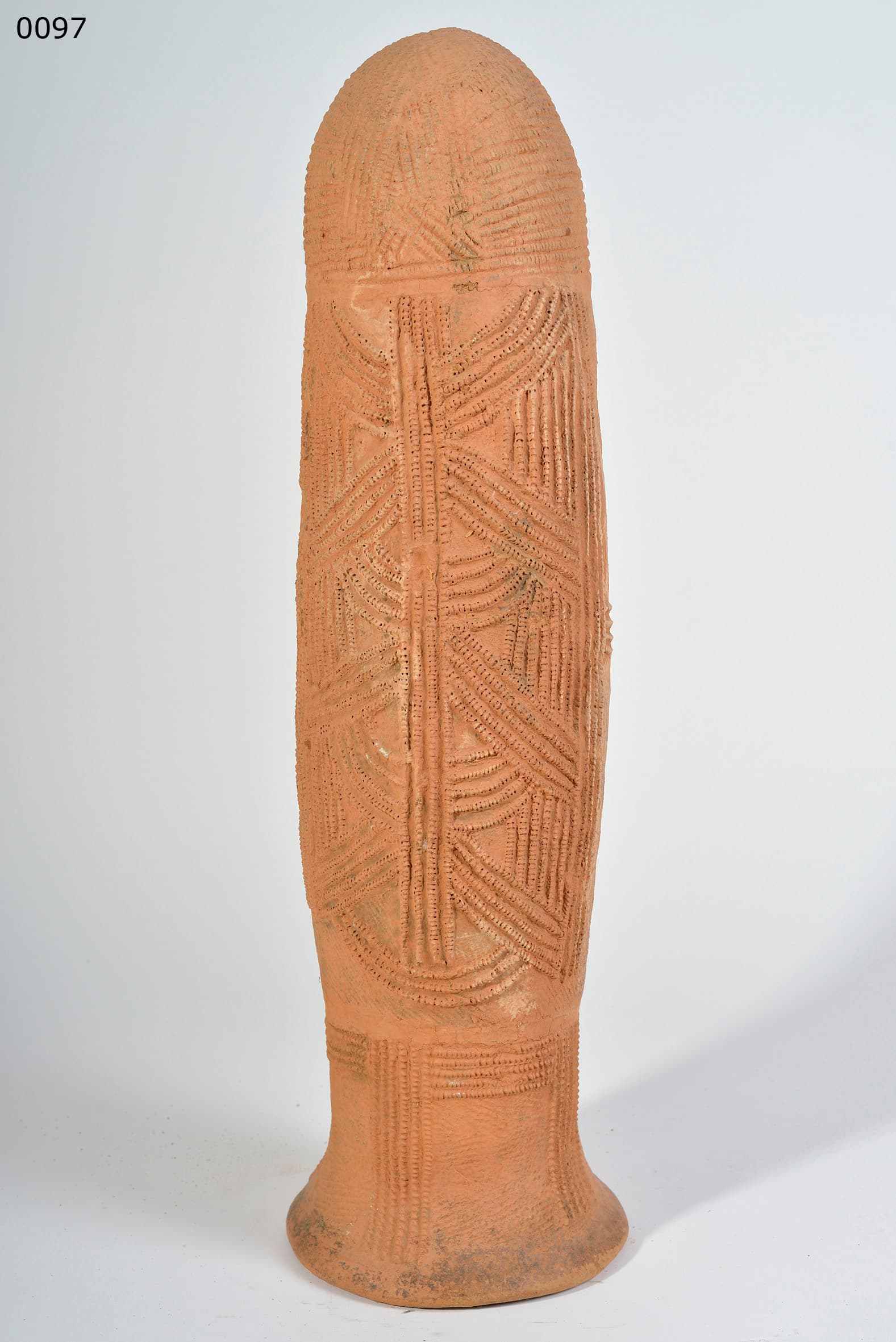
A monumental bullet-shaped terracotta urn (3rd–11th C., 71 cm) from the Bura of Niger/Burkina Faso — densely textured with rouletted concentric bands, branching arch patterns, and geometric wave motifs.
1. The largest seed
At 71 cm, this is one of the larger urns of the Bura-Asinda-Sikka corpus.
- Scale Signals Status: A larger urn required more clay, more fuel, and more kiln-time — an investment likely associated with high-ranking lineages.
- Visible from Afar: Monumental urns are believed to have anchored important sections of the necropolis, potentially serving as landmark graves for founding elites.
2. A denser registry
The surface decoration on this piece is especially elaborate.
- Stacked Bands: Multiple concentric registers of rouletted texture may identify distinct lineage affiliations and ritual achievements.
- Arches as Architecture: The branching arch motifs have been interpreted as stylized representations of sacred shelters or clan compounds — pressing the entire built world of the deceased onto the vessel.
3. Survival across a millennium
Firing thick-walled ceramic tubes of this magnitude is one of African archaeology's great technical achievements.
- Structural Challenge: The tall, narrow form is prone to cracking from uneven heat; producing them reliably suggests a highly skilled tradition of potting.
- Buried and Preserved: Interred below Sahelian soil for more than a thousand years, the urn's intact survival reflects the technical mastery of Bura potters.
Summary
This monumental Bura phallic urn represents a highly dense and elaborate form of the tradition. Its scale, intricate registry, and remarkable survival suggest its role as a grave-marker for a founding ancestor of high rank — a towering clay seed planted in the Sahelian earth.
Written with AI assistance from the collection appraisal, object photography and our own research; editorially reviewed. Mistakes are possible — corrections are welcome. How we work →