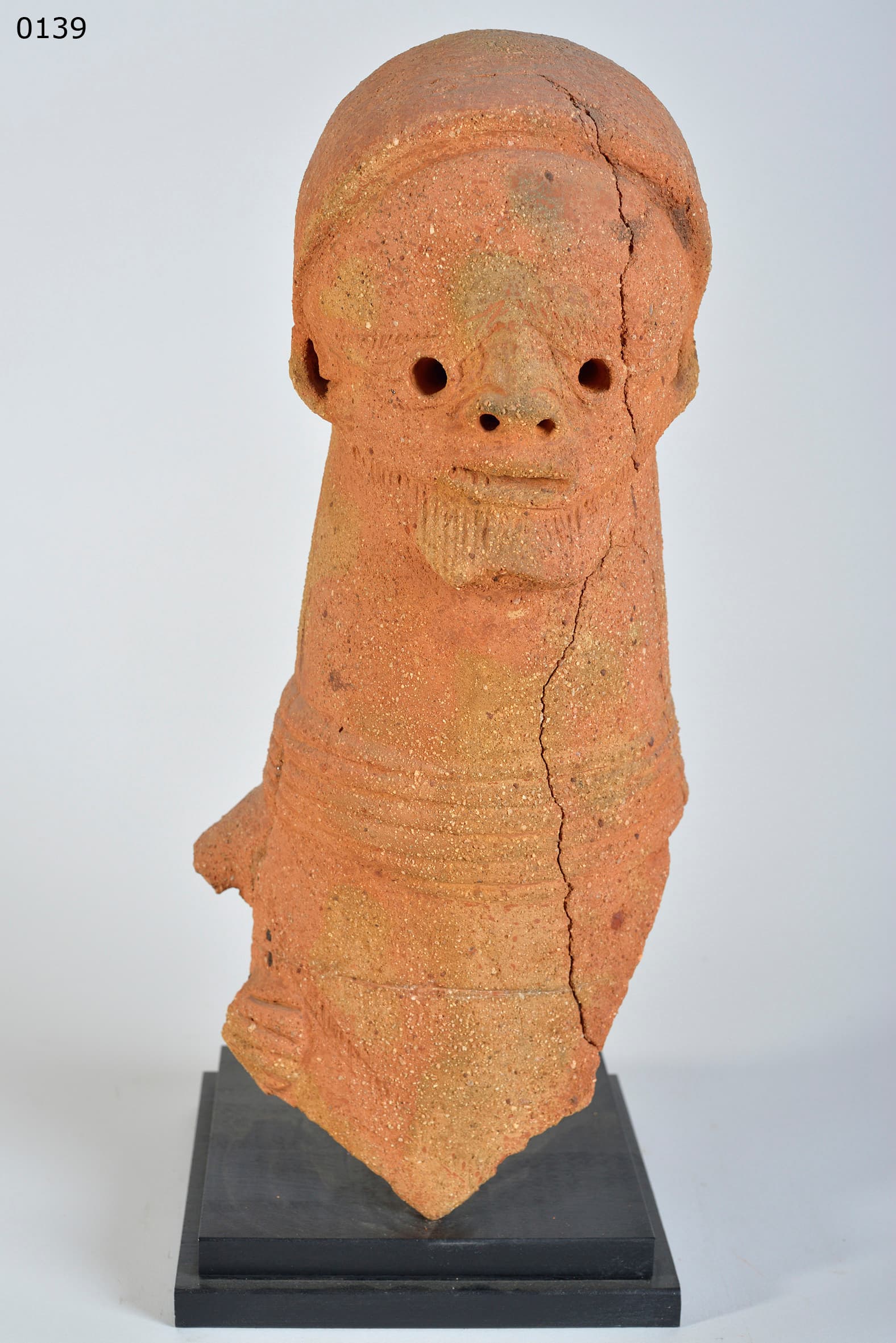
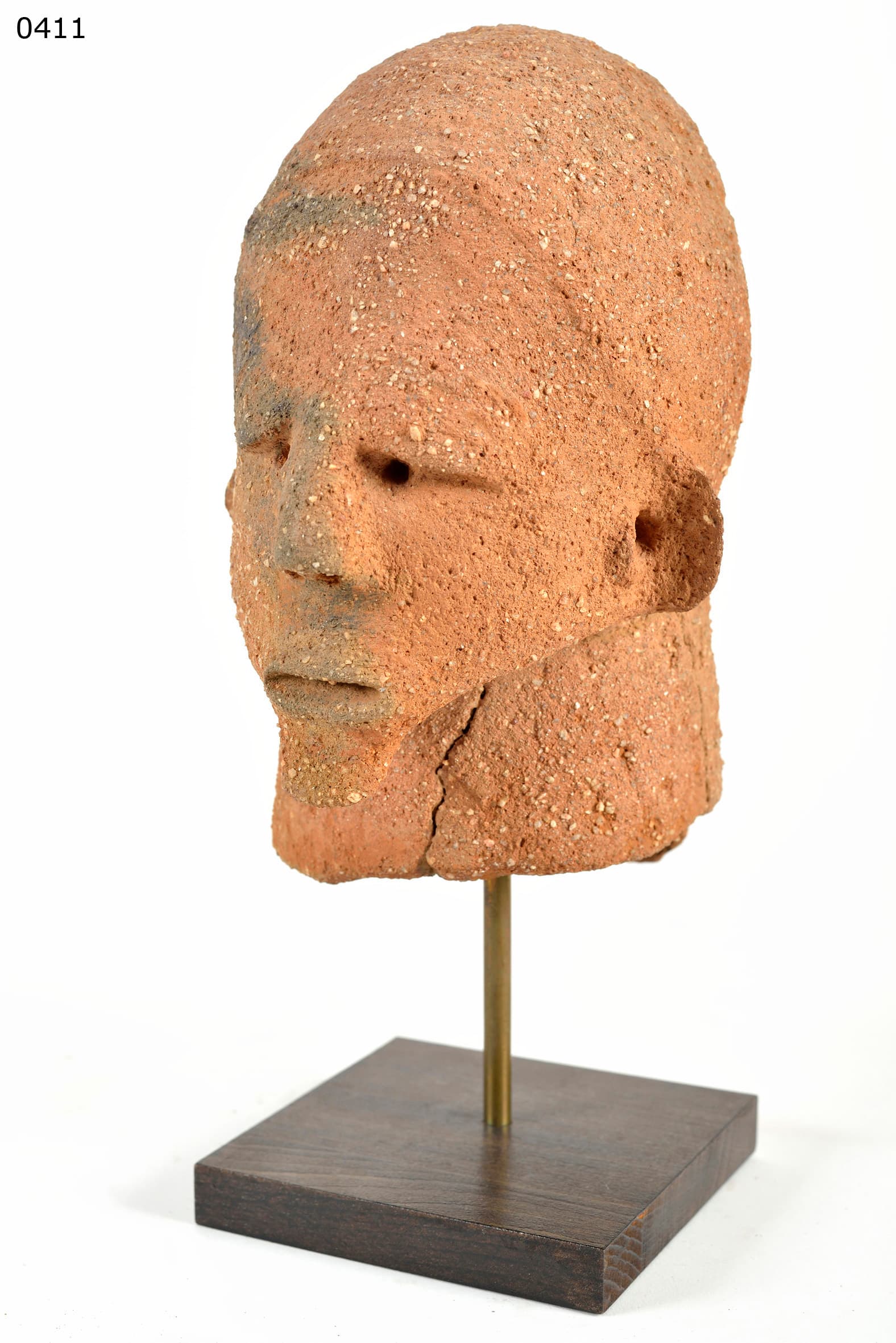
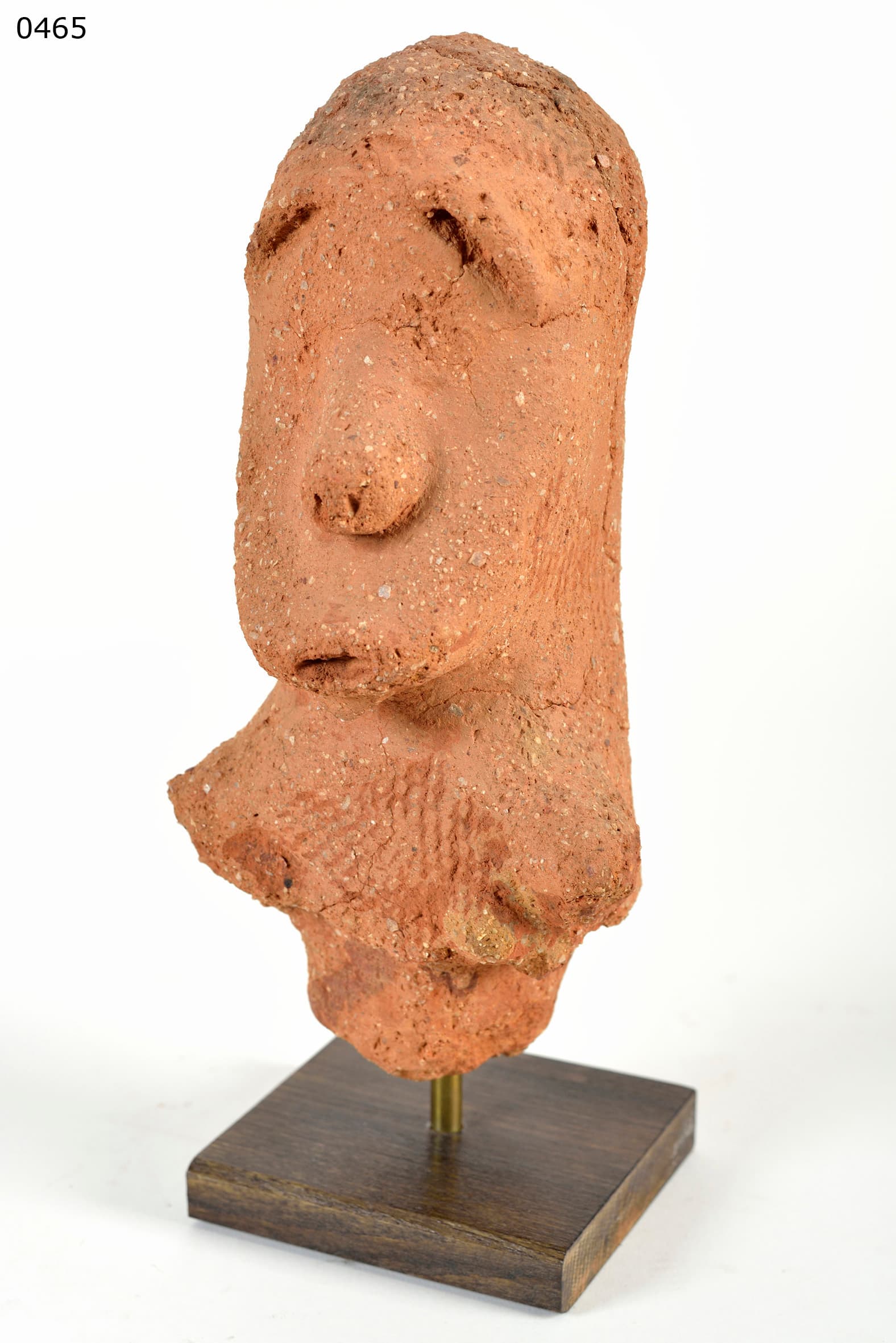
A ca. 2,000-year-old terracotta figure (58 cm) from the Sokoto of Nigeria — a female body with heavy overhanging brow ridges, pierced circular eyes, and an abstracted child carried on her back.
1. The Sokoto enigma
The Sokoto culture of northwestern Nigeria is closely related to — and contemporaneous with — the famous Nok (c. 500 BCE – 200 CE).
- Related but Distinct: Sokoto terracottas share chronology and technique with Nok but possess a heavier, more severe aesthetic.
- Signature Brow: The massive, protruding, overhanging brow ridge casts deep shadows over pierced circular (rather than triangular) eyes — a characteristic feature of the Sokoto idiom.
2. The founding mother
This 58 cm figure depicts an iconic matriarchal subject.
- Child on the Back: The abstracted child carried on the mother's back suggests that veneration of female fertility and matrilineal continuity was central to Iron Age Nigerian societies.
- Weight as Status: The figure's substantial scale elevates a mother-and-child scene into a monumental cult image rather than a domestic genre piece.
3. Archaeological survival
Firing hollow terracottas of this mass without exploding required exceptional skill.
- Grog-Tempered Walls: Heavy tempering with crushed ceramic allowed the thick walls to survive open-pit firing.
- Two Millennia Intact: Buried in an elite grave or community shrine, the figure has endured 2,000 years of Sahelian soil — a notable ancient representation of motherhood.
Summary
This Sokoto maternity figure is a significant work of early West African art. Its brooding brow and sheltered child support the interpretation that matrilineal veneration was an important aspect of this civilization approximately two thousand years ago.
Written with AI assistance from the collection appraisal, object photography and our own research; editorially reviewed. Mistakes are possible — corrections are welcome. How we work →