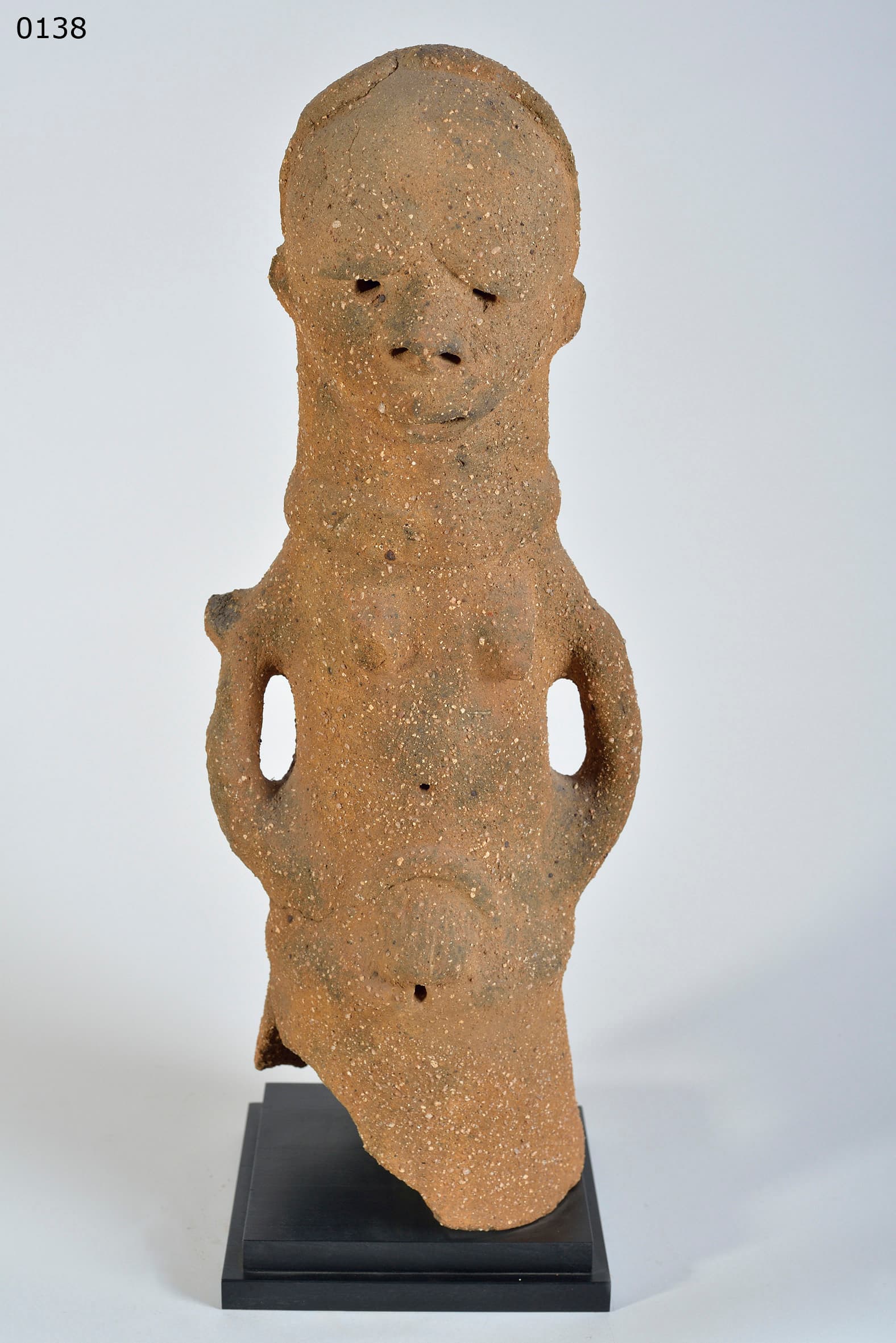
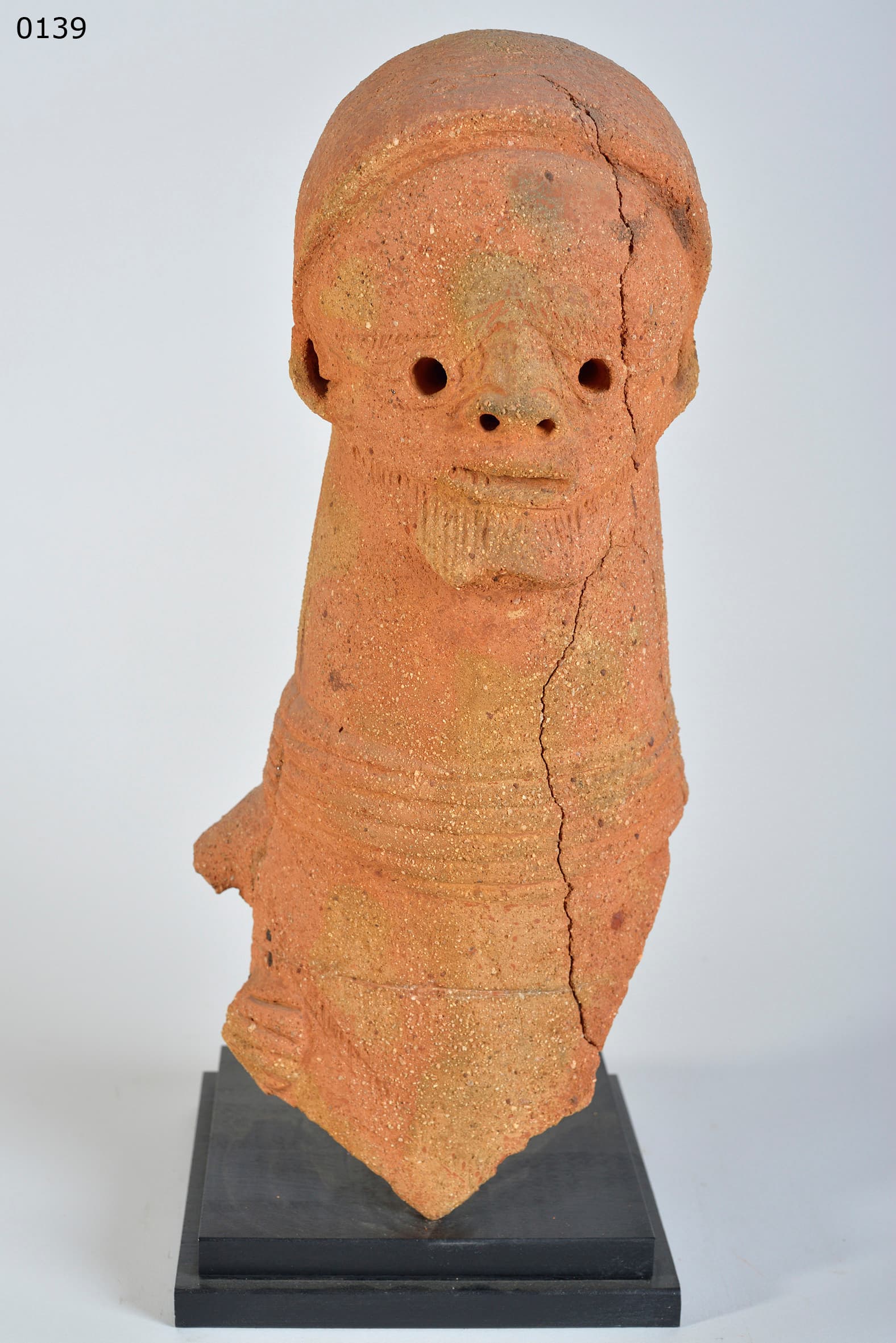
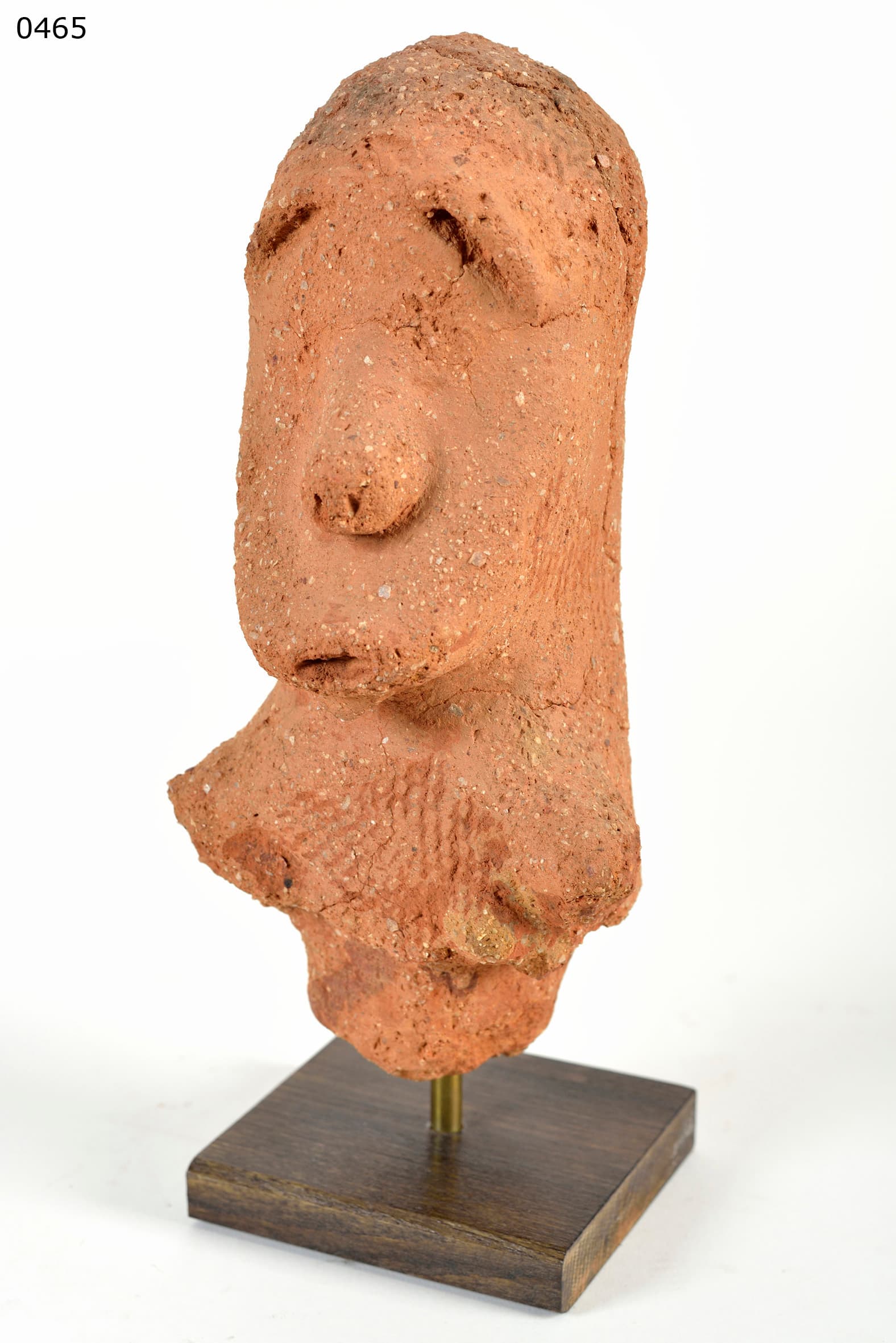
An ancient heavily weathered Sokoto terracotta head (~2000 years old, 23 cm) from Nigeria — distinctive overhanging heavy brow ridge and deeply recessed eye slits characteristic of the Sokoto style, with a protruding simplified snout or jaw, the coarse pale-orange clay deeply degraded with a friable sandy texture and significant soil calcification.
1. The Sokoto iron-age aesthetic
Existing contemporaneously with the famous Nok civilization (circa 500 BC to 200 AD), the Sokoto terracotta tradition of northwestern Nigeria represents a distinct parallel Iron Age aesthetic.
- Austere Minimalism: While Nok art emphasizes pierced triangular eyes and elaborate coiffures, Sokoto artists favored a stark austere minimalism.
- Overhanging Brow: The defining hallmark is the massive heavy overhanging brow creating deep dramatic shadows over narrow eye slits — the human face is stretched into an almost cylindrical or phallic shape, projecting raw unyielding architectural mass rather than refined naturalism.
2. Votive offerings and shrine fragmentation
Like their Nok counterparts, Sokoto terracottas are almost exclusively discovered as fragments.
- Monumental Original Bodies: Archaeological evidence suggests these heads originally sat atop full monumental bodies — heavy statues used in complex agricultural and healing shrines.
- Intentional Breaking: The deliberate stylized distortion suggests representations of supernatural deities or deified ancestors rather than ordinary humans — when shrines were abandoned or rituals required the release of spiritual energy, figures were likely intentionally broken and buried.
3. Grog tempering and millennium-old calcification
The physical condition shows wear consistent with long-term subterranean aging.
- Quartz and Rock Temper: To prevent thick heavy clay from exploding during open-pit firing, Sokoto potters heavily tempered the clay with coarse quartz sand and crushed rock — visible protruding from the eroded surface today.
- Hardened Calcifications: Centuries buried in acidic Nigerian soil have stripped away any original slip — leaving a highly porous surface choked with hardened white mineral calcifications that are difficult to replicate artificially.
Summary
This Sokoto head is a monumental, austere example of ancient West African ceramic engineering. Its heavy geometric abstraction and geological calcification, compatible with an age of approximately 2,000 years, make it an archaeological antiquity of significant historical interest.
Written with AI assistance from the collection appraisal, object photography and our own research; editorially reviewed. Mistakes are possible — corrections are welcome. How we work →