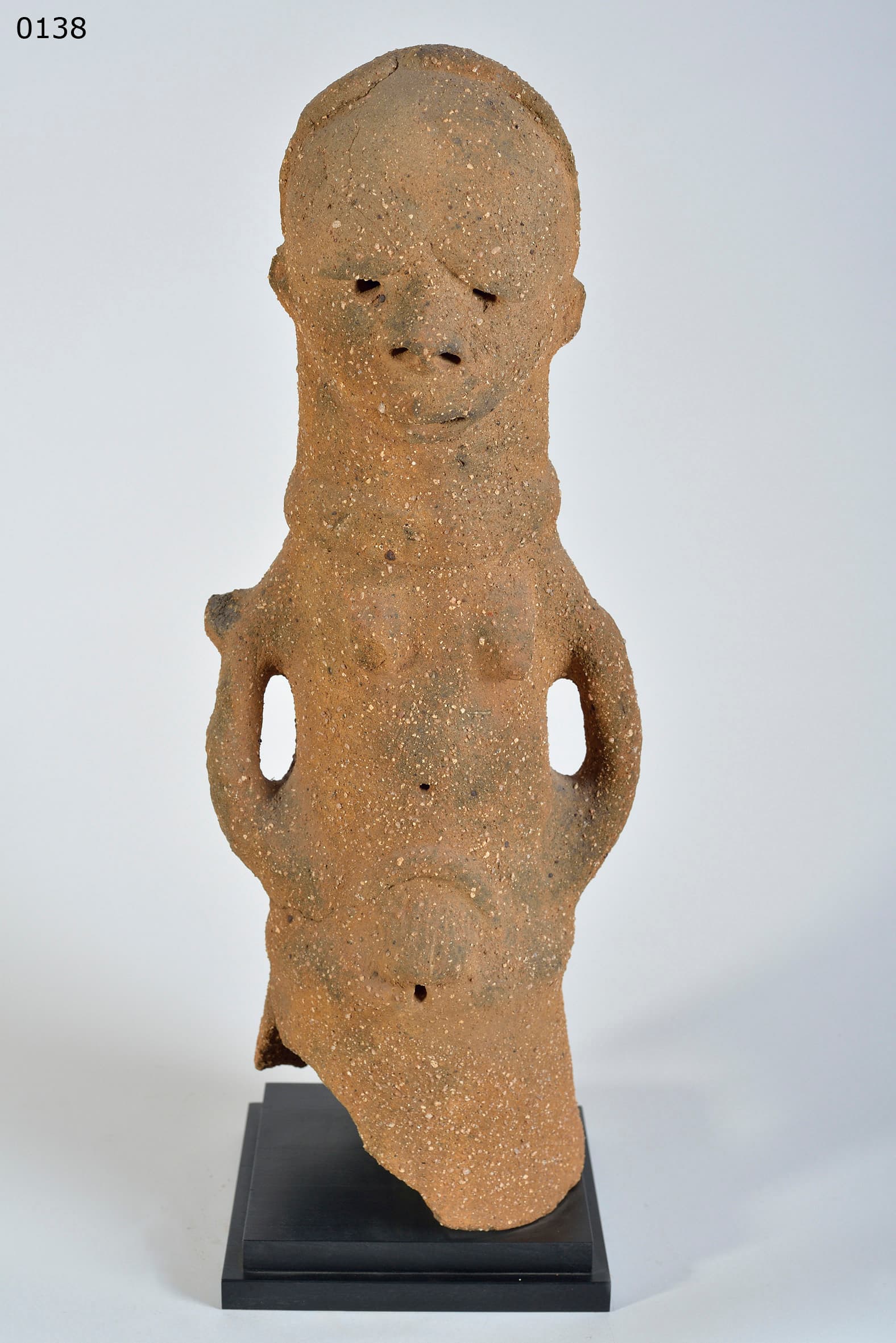
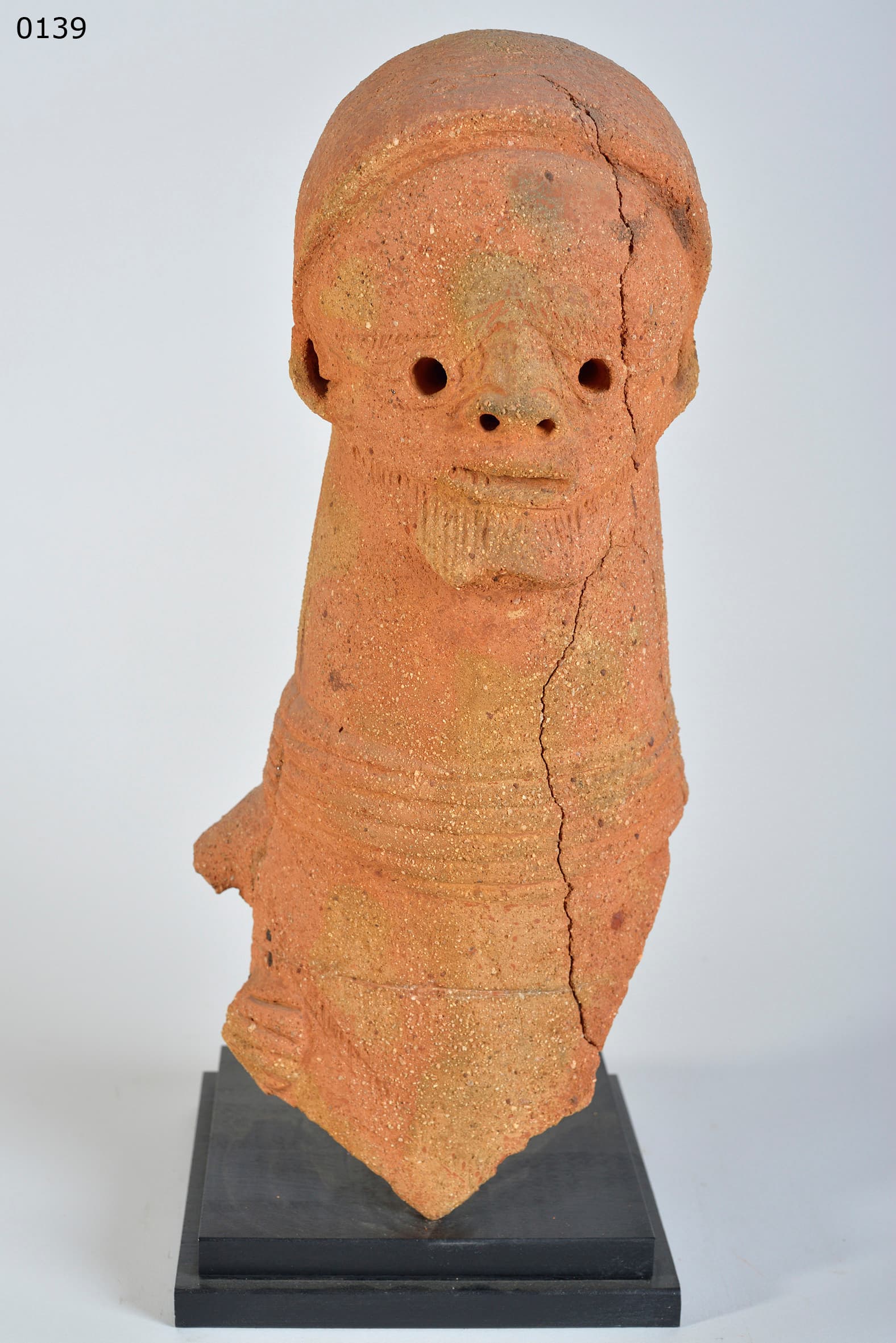
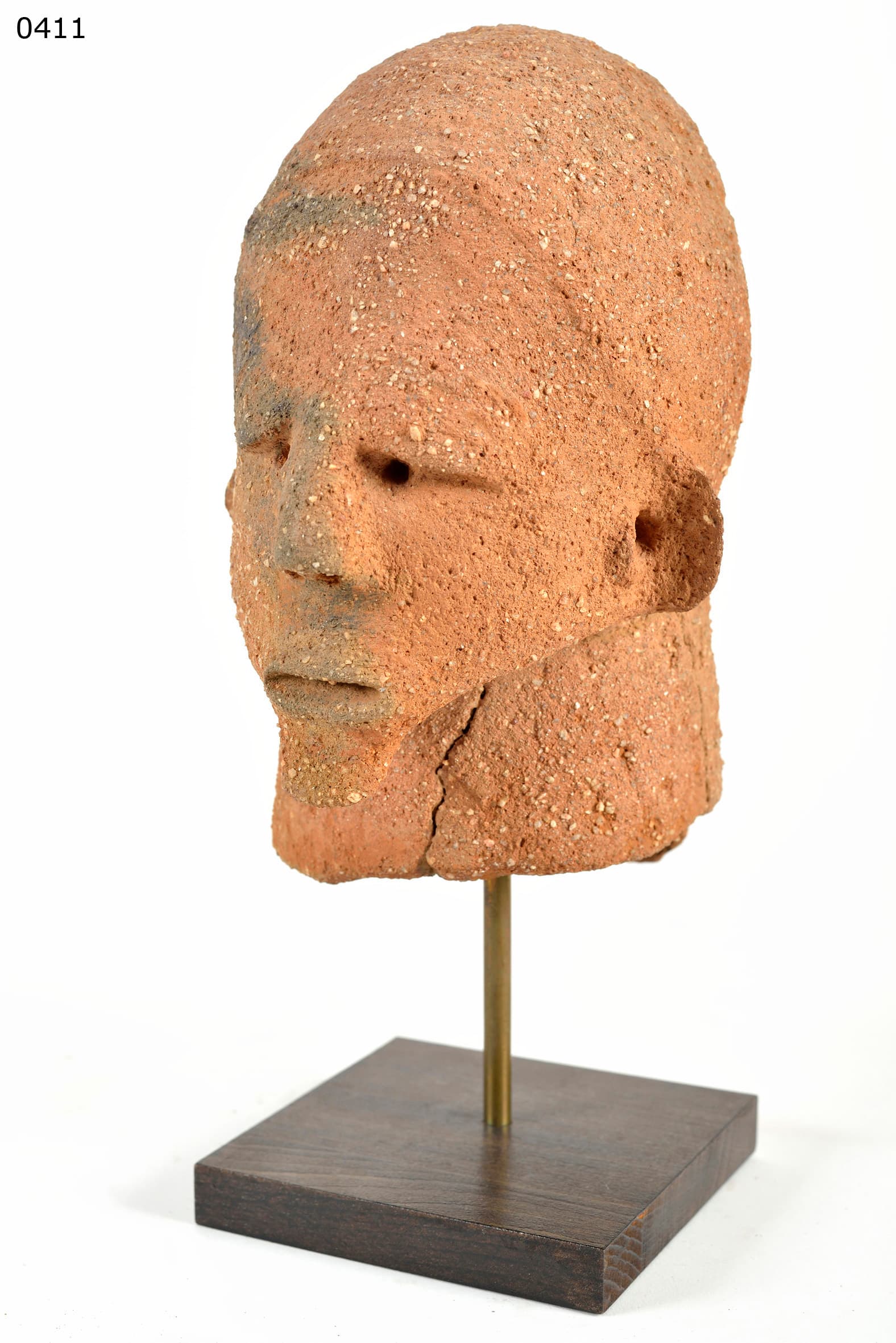
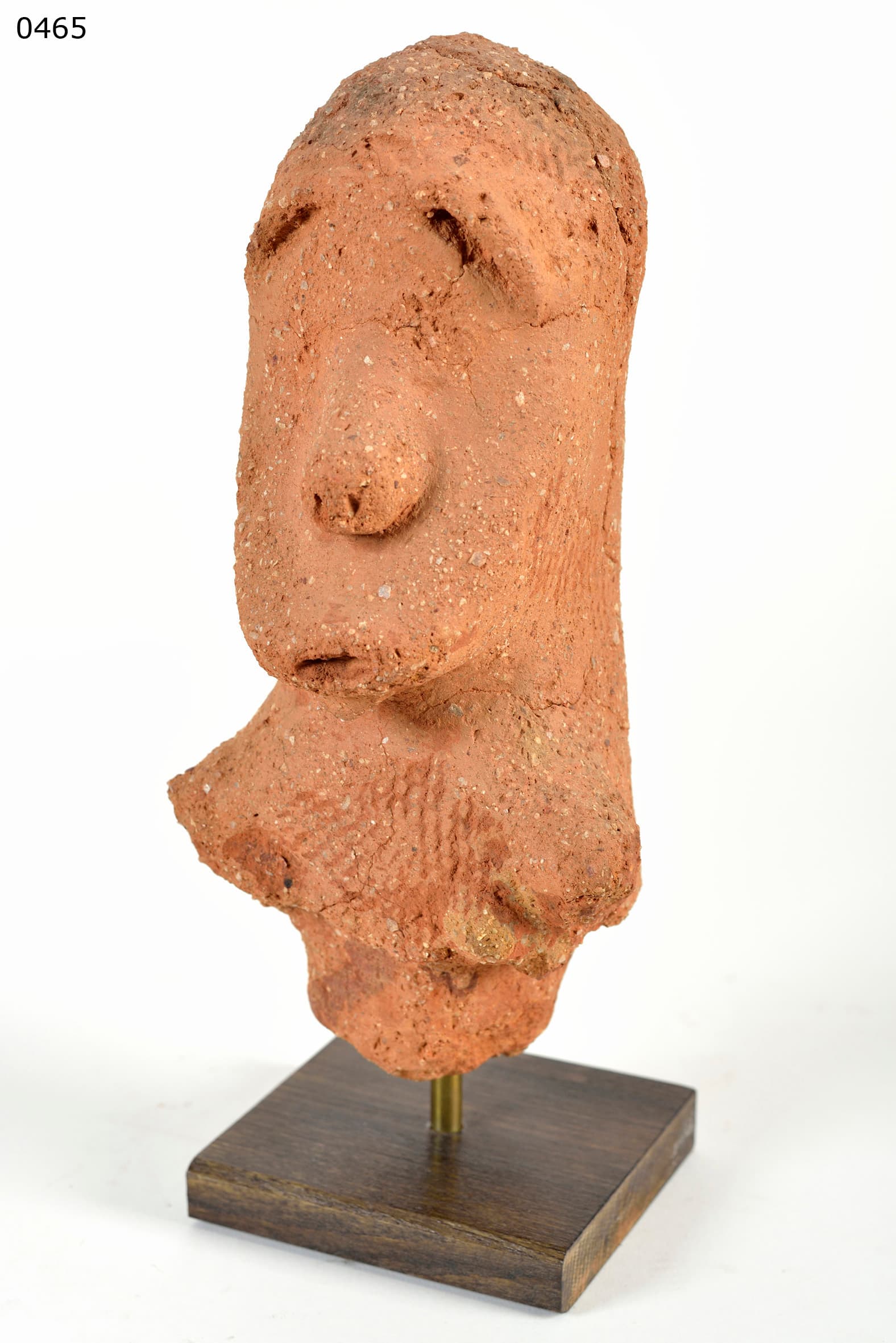
An imposing ca. 2,000-year-old terracotta male figure (54 cm) from the Sokoto of Nigeria — heavy columnar torso and a striking elongated head with the classic overhanging brow ridges and deeply set eyes of the region, the reddish clay eroded with a coarse granular texture consistent with long-term geological degradation.
1. The Sokoto stylistic corpus
Dating to roughly 500 BCE–200 CE, the Sokoto terracotta tradition was discovered in northwestern Nigeria, closely related to yet distinct from the Nok.
- Austere Cylinder: An austere cylindrical body topped by a massive simplified head — the Sokoto signature silhouette.
- Jutting Brow: The heavy jutting brow ridges plunge into deep shadowed eye sockets, creating a brooding, powerful psychological presence.
2. Iron age funerary and shrine contexts
The exact use of Sokoto terracottas remains partly enigmatic, but their scale and commanding presence strongly suggest elite functions.
- Grave or Community Shrine: Likely elite grave markers or the centerpieces of foundational community shrines.
- Watchful Protection: The prominent brows and intense gaze imply a protective function — anchoring the formidable spirits of early Iron Age ancestors to the physical landscape.
3. Two-millennium archaeological surface
The physical state is consistent with the estimated age.
- Dissolved Slip: The original smooth fired-clay slip appears largely dissolved, consistent with long-term soil movement, monsoon rains, and chemical weathering.
- Granular Interior Exposed: What remains is the coarse granular internal matrix, heavily pitted and fused with soil deposits — taphonomic features consistent with an ancient origin.
Summary
Emanating a brooding presence, this Sokoto terracotta figure is a significant survivor of Nigeria's Iron Age. Its prominent brow and profound surface erosion are consistent with long-term geological weathering, characteristic of this ancient tradition.
Written with AI assistance from the collection appraisal, object photography and our own research; editorially reviewed. Mistakes are possible — corrections are welcome. How we work →