A classic dark wooden female figure (1st half 20th C., 52 cm) from the Senufo of the Ivory Coast — seated on a traditional four-legged stool, nursing a child on her lap, with sharp conical breasts and a crested helmet-like coiffure.
1. The tyekpa society and matrilineage
While Senufo art is dominated by the male Poro society, maternity figures of this type are usually associated with the female societies.
- Tyekpa and Sandogo: These female associations commission maternal sculpture for their own rituals.
- Matrilineal Society: Senufo descent and inheritance are traced through the mother — this figure is a significant celebration of matrilineal strength and the continuation of the bloodline.
2. Senufo formalist aesthetics
The carving is highly consistent with the Senufo aesthetic.
- Projecting Breasts: Sharp and conical, symbolizing youth and nourishment.
- Prognathic Face: Elongated and thrust-forward, topped with the classic helmet-like crested hairstyle historically worn by high-status Senufo women.
3. The seat of authority
The mother is not standing — she is seated on a traditional four-legged Senufo stool.
- Aristocratic Elevation: As with the seated Dogon patriarchs, the stool elevates the figure from commoner to aristocrat or divine founder.
- Calm Authority: She sits in composure, ensuring the survival of the clan through her offspring rather than through visible exertion.
Summary
This Senufo maternity statue is a classic example of Ivorian carving. It utilizes sharp, elegant geometry to honor the central importance of the mother, serving as a seated, authoritative anchor of the Senufo matrilineage.
Written with AI assistance from the collection appraisal, object photography and our own research; editorially reviewed. Mistakes are possible — corrections are welcome. How we work →
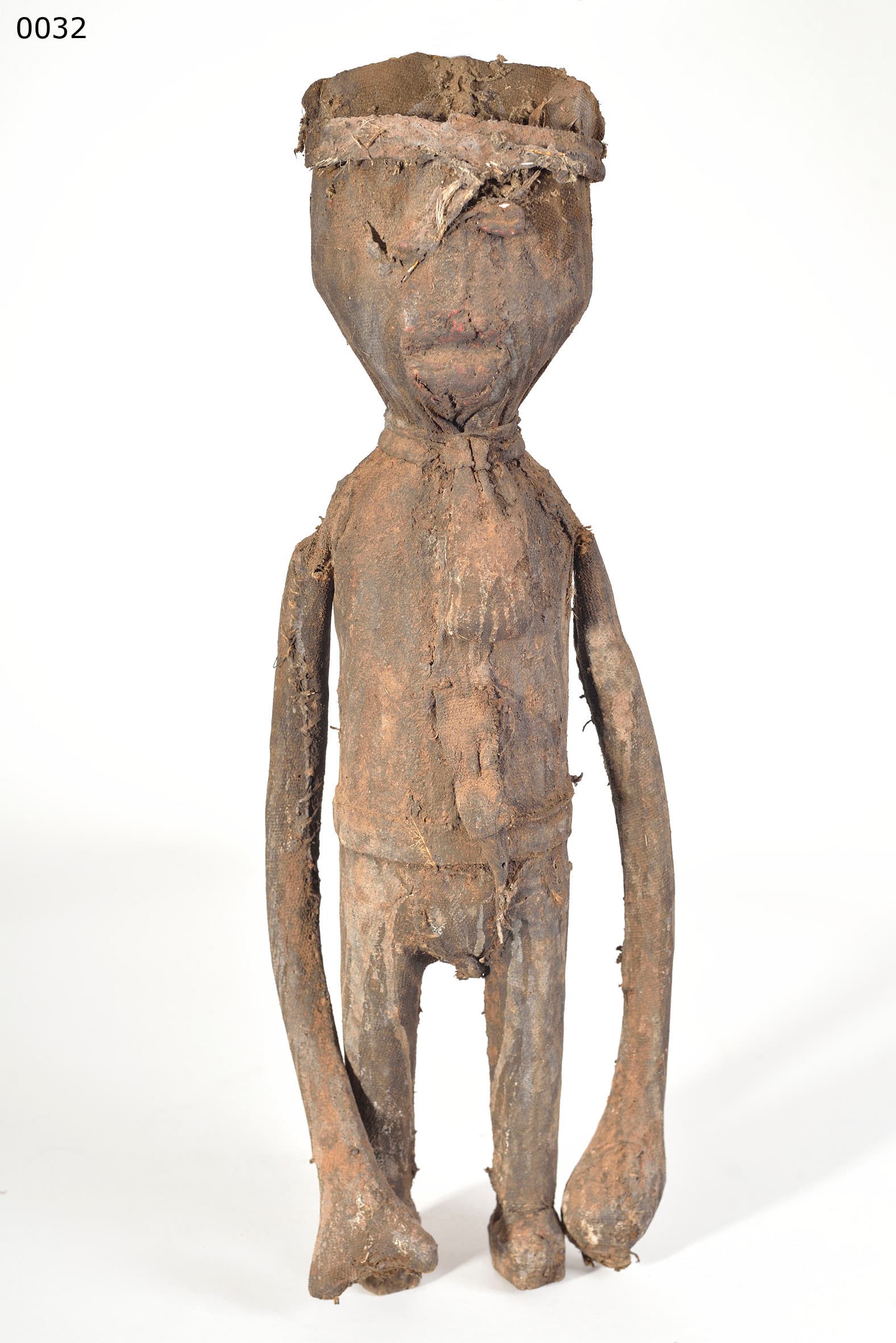
power figure (called KAFIGELEDJO)
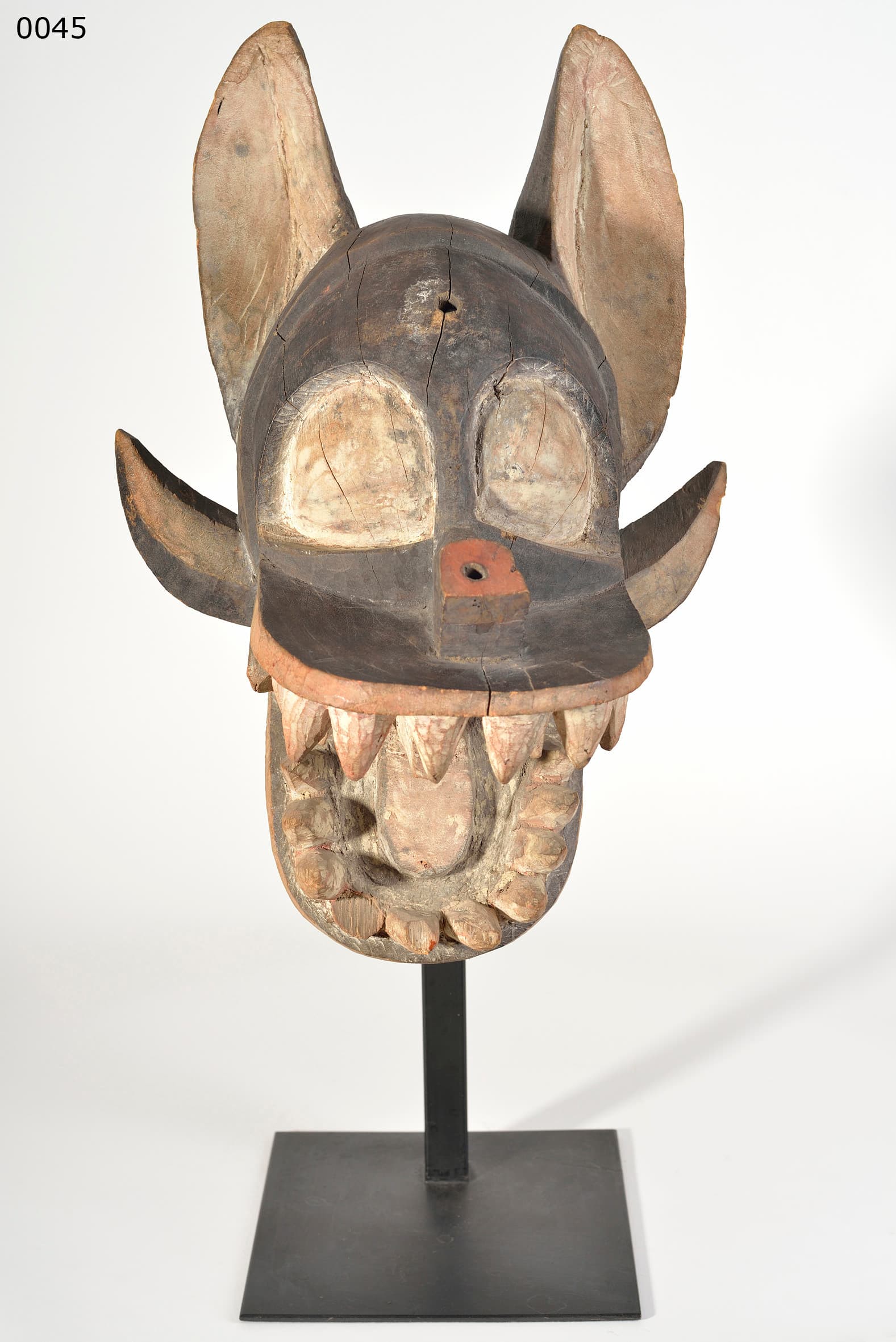
headcrest mask
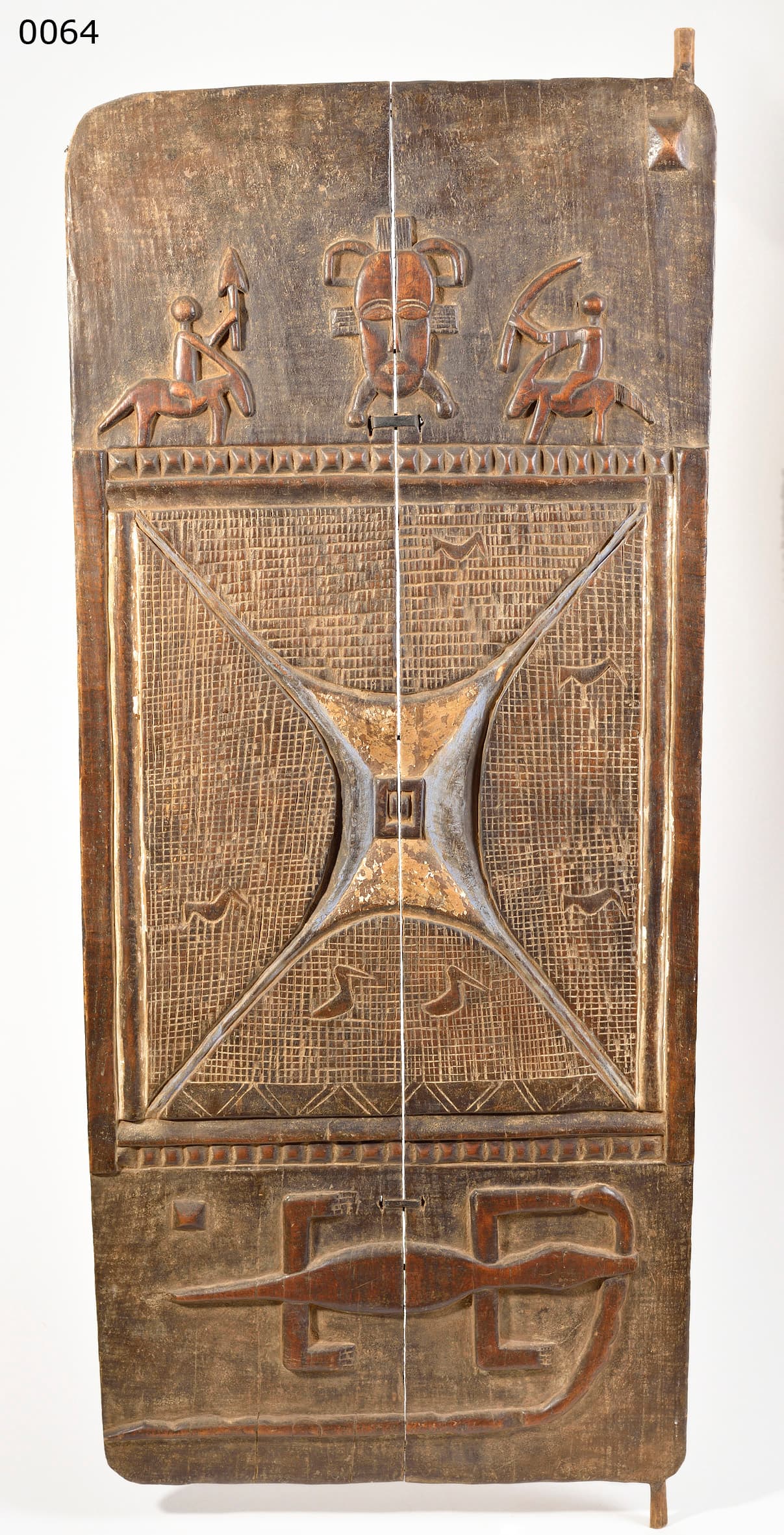
door
