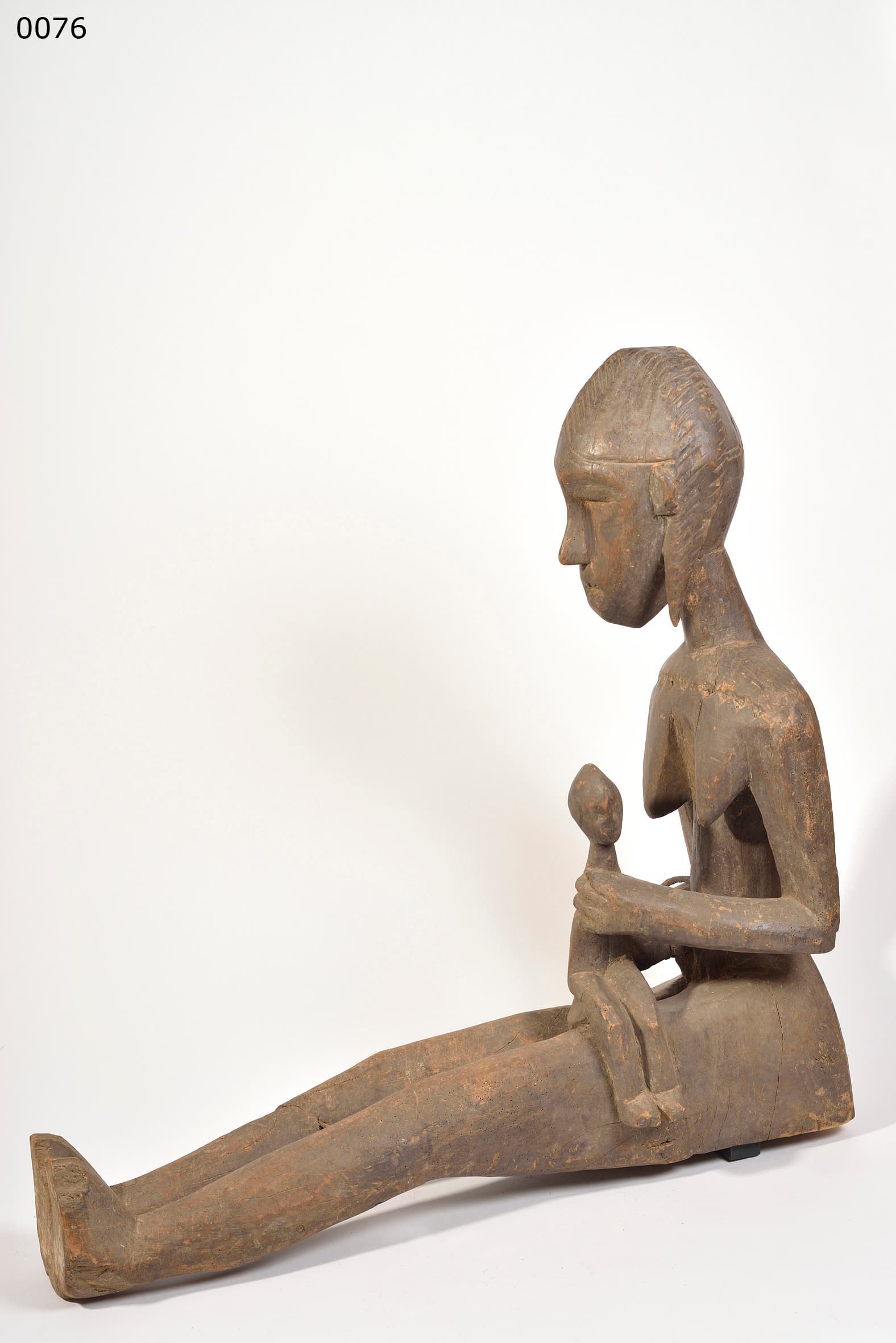
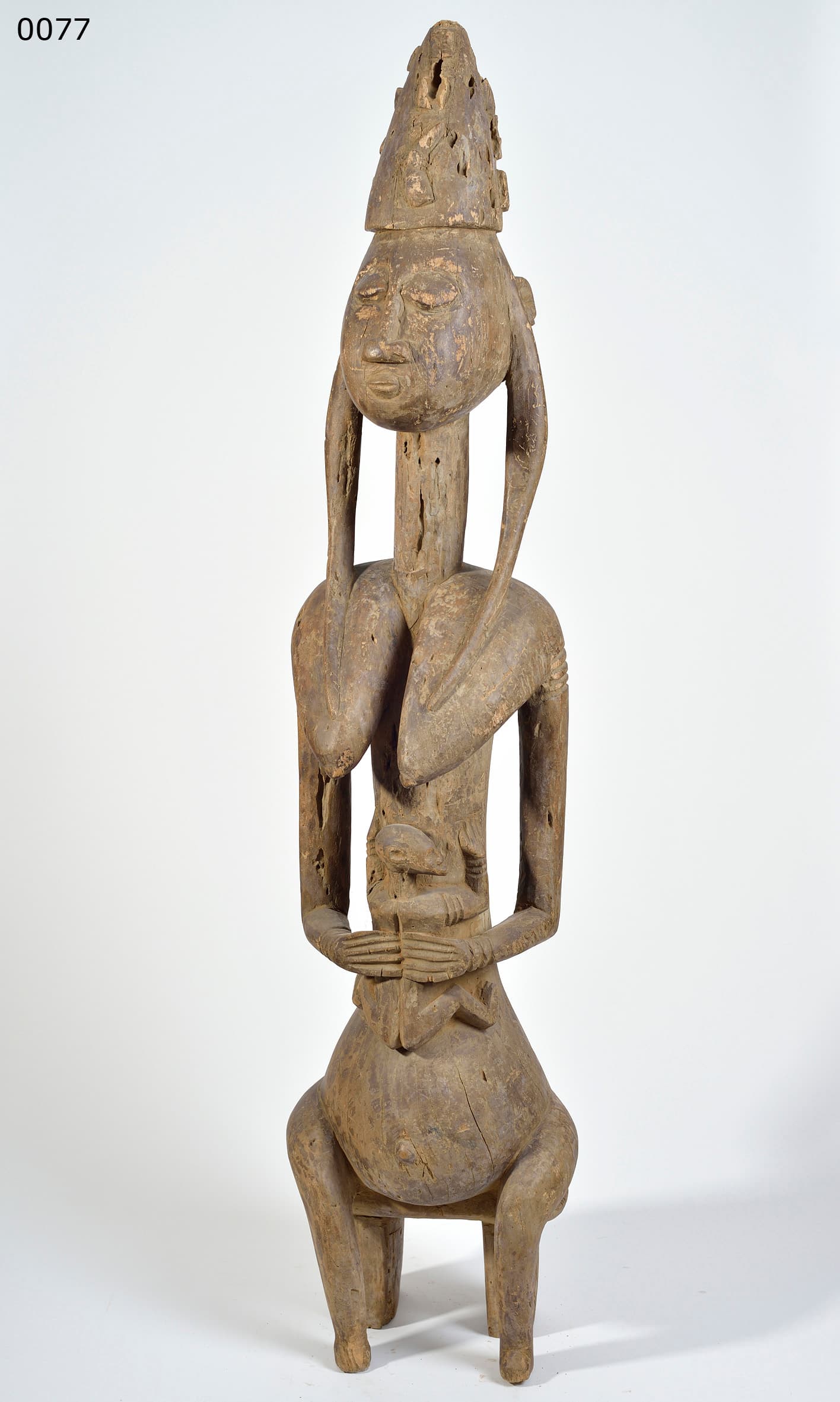
A towering wooden female figure (1st half 20th C., 102 cm) from the Bamana of Mali — rigid verticality, jutting breasts, block-like hands at her sides, sweeping finely incised coiffure, and a dry dark patina traced with deep vertical age-cracks.
1. Jonyeleni aesthetics
This statue aligns strongly with the Jonyeleni ideal, a class of figures used by the Jo society to depict beautiful marriageable young women.
- Exaggerated Fertility: The pronounced breasts and sharp geometric shoulders emphasize fertility and physical maturation.
- Architectural Ideal: The severe abstraction and rigid frontality project a strictly architectural yet highly idealized standard of Bamana beauty.
2. Didactic function in the jo society
The figure is not a passive memorial but a ceremonial prop.
- Traveling Announcement: Initiates of the Jo society transport such statues from village to village to declare their newly achieved adult status.
- Teaching Tool: The figures demonstrate the community's strict expectations of female beauty, composure, and potential motherhood — visual focal points during the vibrant celebratory dances of the initiates.
3. Sahelian desiccation
The significant deep cracks running down the torso are natural.
- Climate Cycling: Decades of wood expansion and contraction in the arid Malian climate produce structural checking along the grain.
- Oxidized Surface: The dry, oxidized patina combined with the structural checking guarantees authentic creation and use in the first half of the 20th century.
Summary
Standing as a towering testament to the Jo society's ideals of youthful beauty, this Bamana figure masterfully blends geometric severity with profound cultural meaning. Its immense scale and deep natural age checking make it a highly significant ethnographic artifact.
Written with AI assistance from the collection appraisal, object photography and our own research; editorially reviewed. Mistakes are possible — corrections are welcome. How we work →