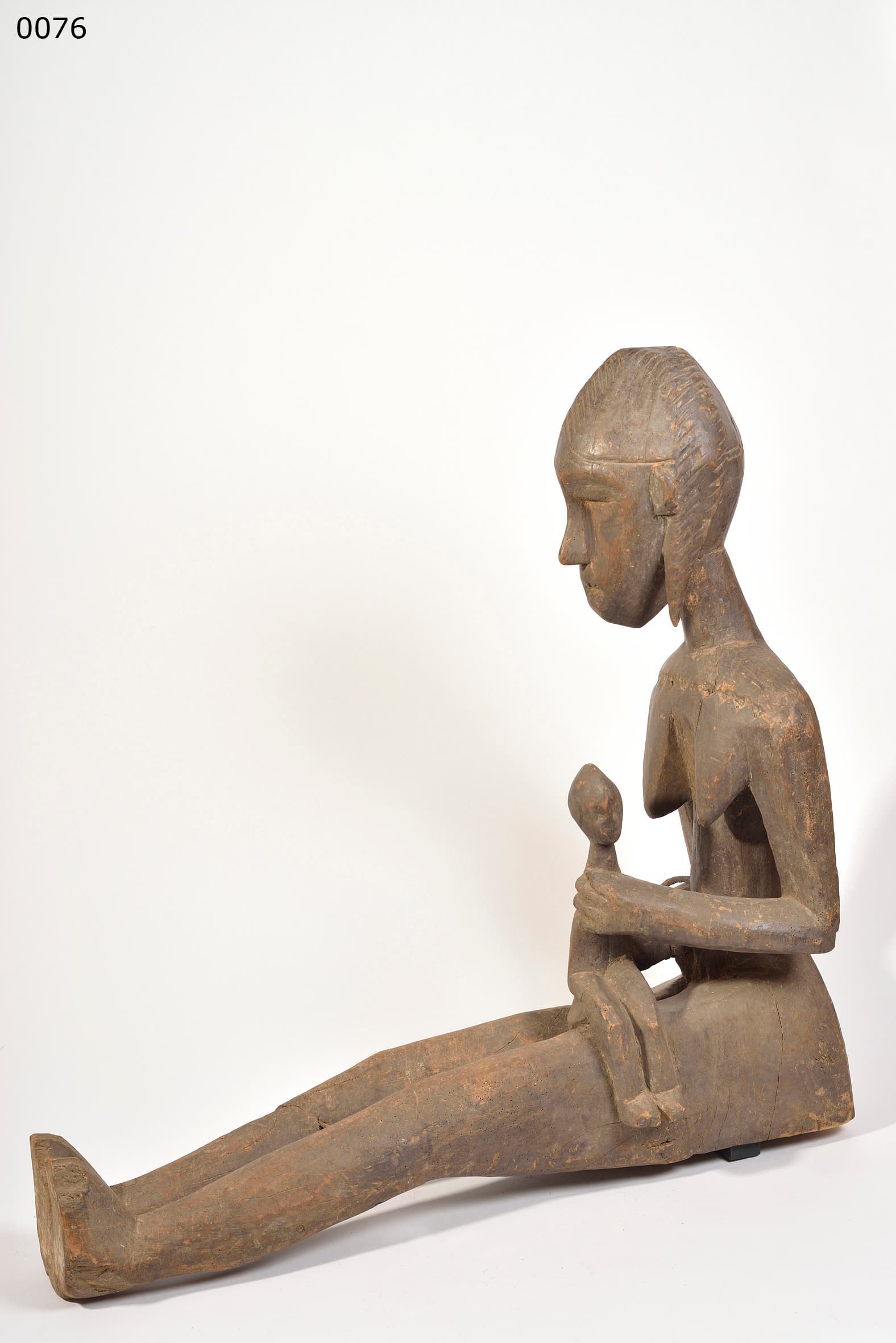
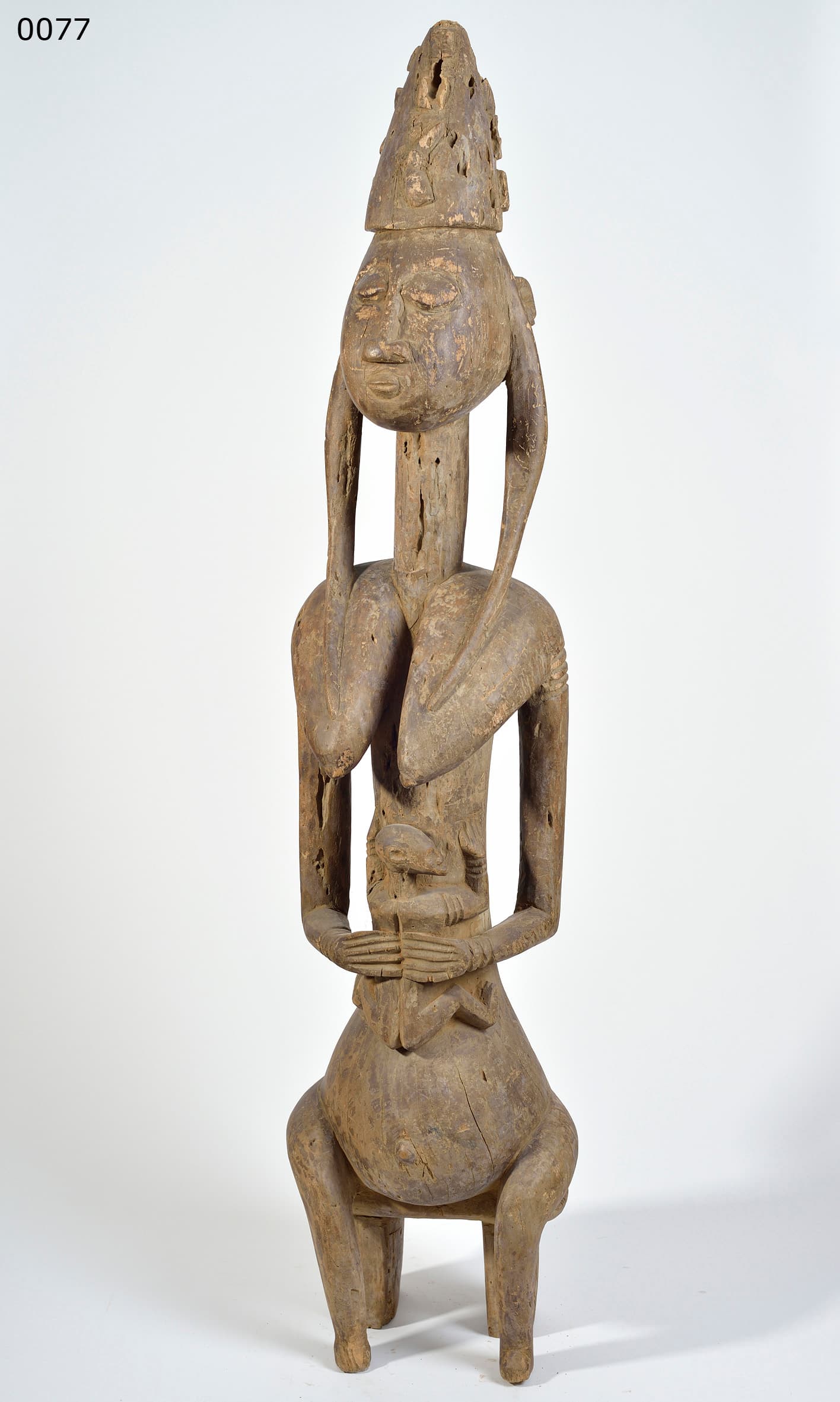
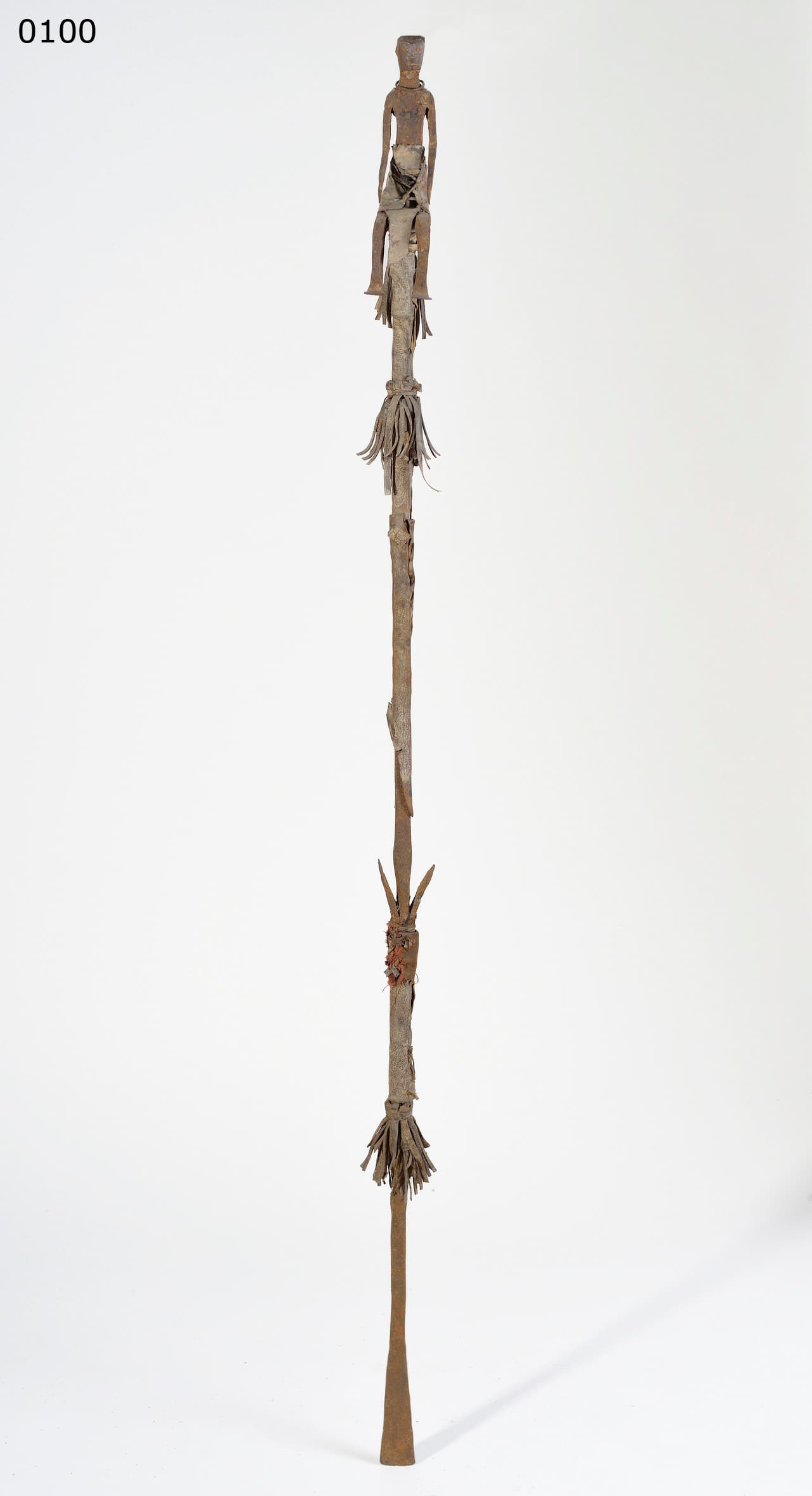
Eine hoch aufragende weibliche Holzfigur (1. Hälfte 20. Jh., 102 cm) aus den Bamana von Mali - starre Vertikalität, hervorstehende Brüste, blockartige Hände an den Seiten, geschwungene, fein geschnittene Frisur und eine trockene, dunkle Patina mit tiefen, vertikalen Altersrissen.
1. Jonyeleni Ästhetik
Diese Statue entspricht stark dem Ideal der Jonyeleni, einer Figurenklasse, die von der Jo-Gesellschaft verwendet wurde, um schöne, heiratsfähige junge Frauen darzustellen.
- Übertriebene Fruchtbarkeit: Die ausgeprägten Brüste und die scharfen geometrischen Schultern betonen die Fruchtbarkeit und die körperliche Reife.
- Architektonisches Ideal: Die strenge Abstraktion und die starre Frontalität projizieren einen streng architektonischen, aber hoch idealisierten Standard der Bamana-Schönheit.
2. Didaktische Funktion in der Jo-Gesellschaft
Die Figur ist kein passives Mahnmal, sondern ein zeremonielles Requisit.
- Reisende Ankündigung: Eingeweihte der Jo-Gesellschaft transportieren solche Statuen von Dorf zu Dorf, um ihren neu erlangten Erwachsenenstatus zu verkünden.
- Lehrmittel: Die Figuren demonstrieren die strengen Erwartungen der Gemeinschaft an weibliche Schönheit, Gelassenheit und potenzielle Mutterschaft - visuelle Brennpunkte während der lebhaften Festtänze der Eingeweihten.
3. Sahelische Exsikkation
Die tiefen Risse, die sich über den Torso ziehen, sind natürlich.
- Klimazyklus: Jahrzehntelange Ausdehnung und Kontraktion des Holzes im trockenen Klima Malis erzeugen strukturelle Risse entlang der Maserung.
- Oxidierte Oberfläche: Die trockene, oxidierte Patina in Verbindung mit der strukturellen Rissbildung garantiert eine authentische Entstehung und Verwendung in der ersten Hälfte des 20.
Zusammenfassung
Diese Bamana-Figur ist ein überragendes Zeugnis der jugendlichen Schönheitsideale der Jo-Gesellschaft und verbindet meisterhaft geometrische Strenge mit tiefgreifender kultureller Bedeutung. Ihr immenser Umfang und ihre tiefe natürliche Alterung machen sie zu einem höchst bedeutenden ethnografischen Artefakt.
KI-unterstützt erstellt aus Sammlungsgutachten, Objektfotografie und eigener Recherche, redaktionell geprüft. Fehler sind möglich — Hinweise darauf sind uns willkommen. Zum Verfahren →