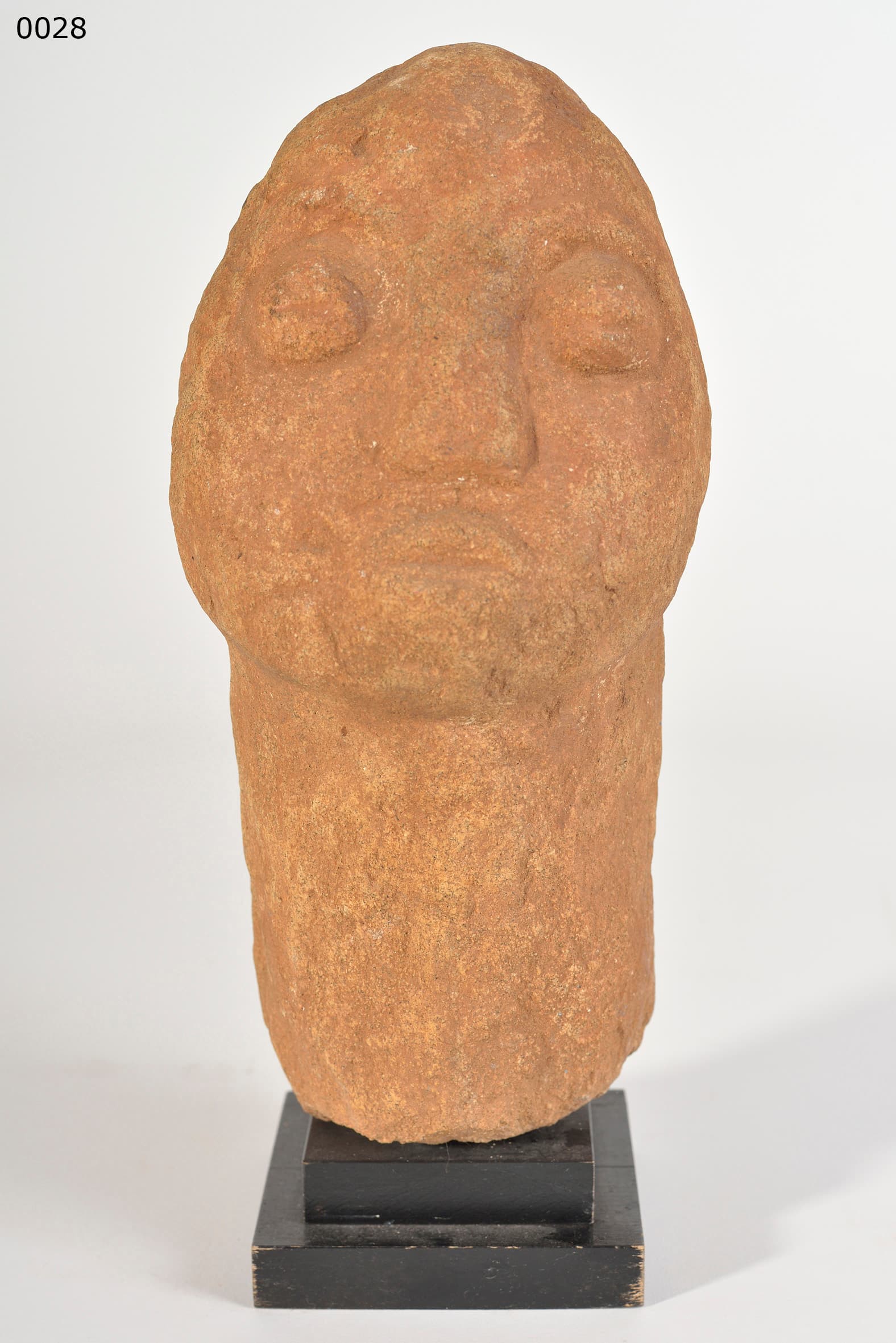
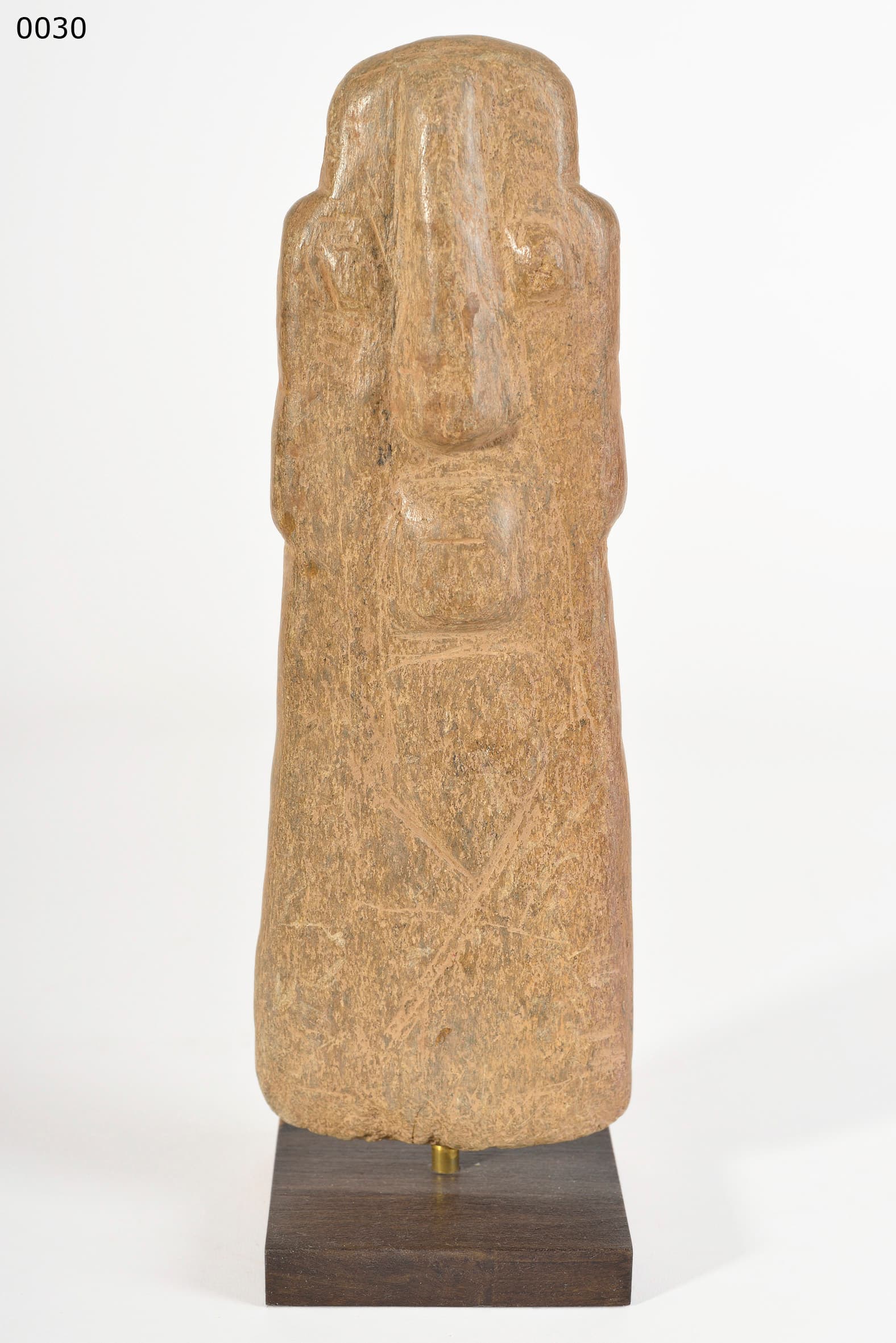
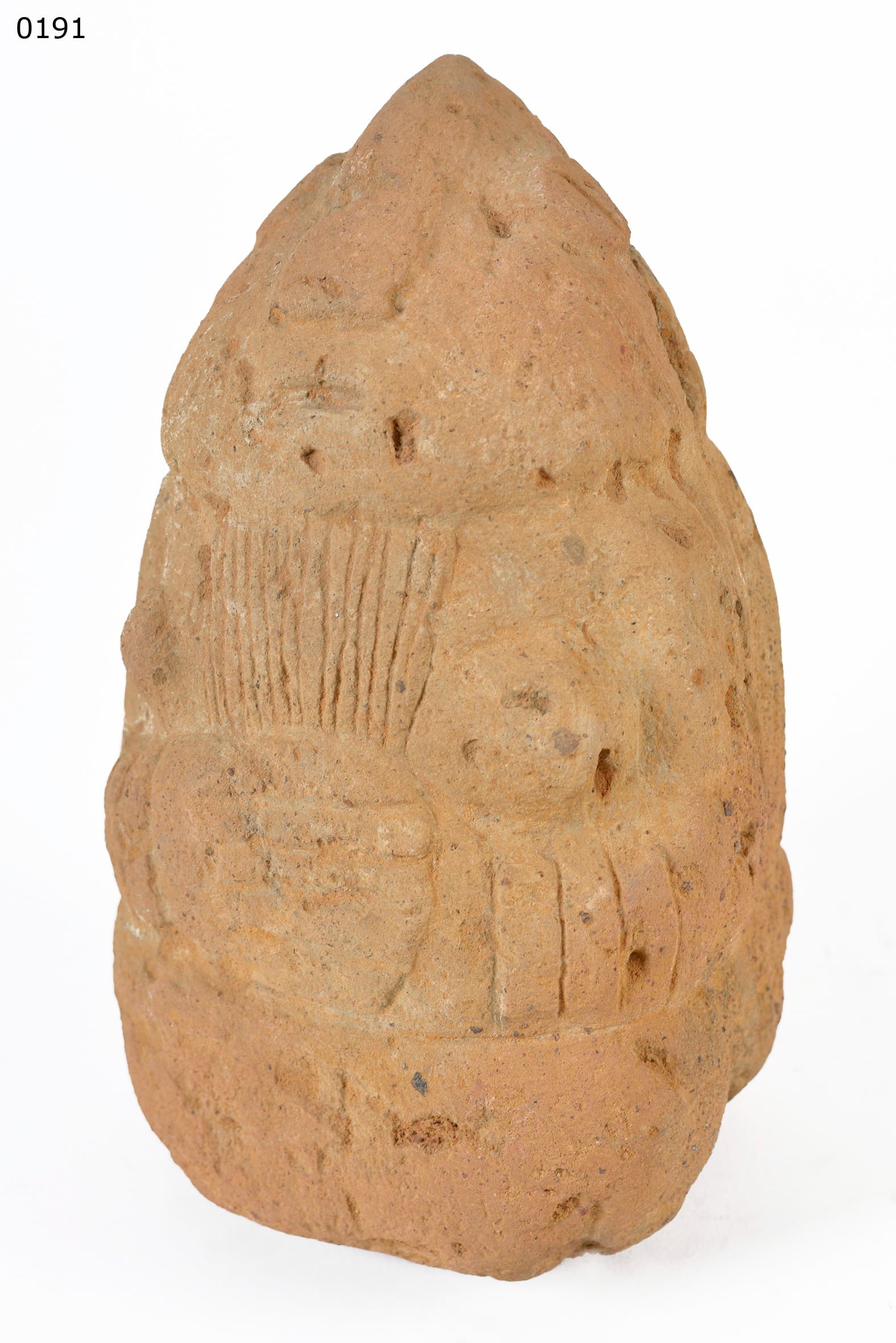
An ancient laterite stone sculpture (attributed to the 12th–16th C., 25 cm) from the Kurumba of Burkina Faso — reduced to a deeply abstract blocky anthropomorphic form in a squatting posture, the iron-rich reddish stone profoundly pitted and eroded, with only the heaviest geometric volumes of the head and folded limbs remaining legible.
1. Ancient lithic abstraction of the Sahel
Alongside the better-known woodcarving tradition, the Voltaic region sustains a significant ancient lithic sculpture culture.
- Unforgiving Medium: The dense laterite demands pure volumetric geometry — the carver could not produce delicate naturalism even if he wanted to.
- Permanence by Design: The heavy blocky masses project an aura of permanence that deliberately contrasts with the ephemerality of human life, emphasizing the eternal over the particular.
2. Anchoring the ancestral soul
Stone figures of this type functioned as eternal grave markers or altar centerpieces for high-ranking individuals.
- Soul-Anchor: The heavy stone was believed to physically anchor the wandering soul of the deceased to the earth, keeping them accessible to the living.
- Immortal Conduit: Long after the physical body had disappeared, the stone continued to receive libations and prayers for rain and agricultural fertility on behalf of the ancestor.
3. Laterite taphonomy and extreme antiquity
The physical condition is consistent with the traditional 12th–16th-century dating.
- Dissolved Silicates: Centuries of monsoon rains and Sahelian winds have leached the softer minerals from the laterite.
- Iron Skeleton: What remains is a heavily cratered porous iron framework — a pattern of weathering consistent with prolonged environmental exposure.
Summary
A rare survival, this Kurumba stone figure is a powerful expression of Voltaic ancestral veneration. Its extreme laterite weathering and profound geometric weight are consistent with early Voltaic stone carving traditions.
Written with AI assistance from the collection appraisal, object photography and our own research; editorially reviewed. Mistakes are possible — corrections are welcome. How we work →