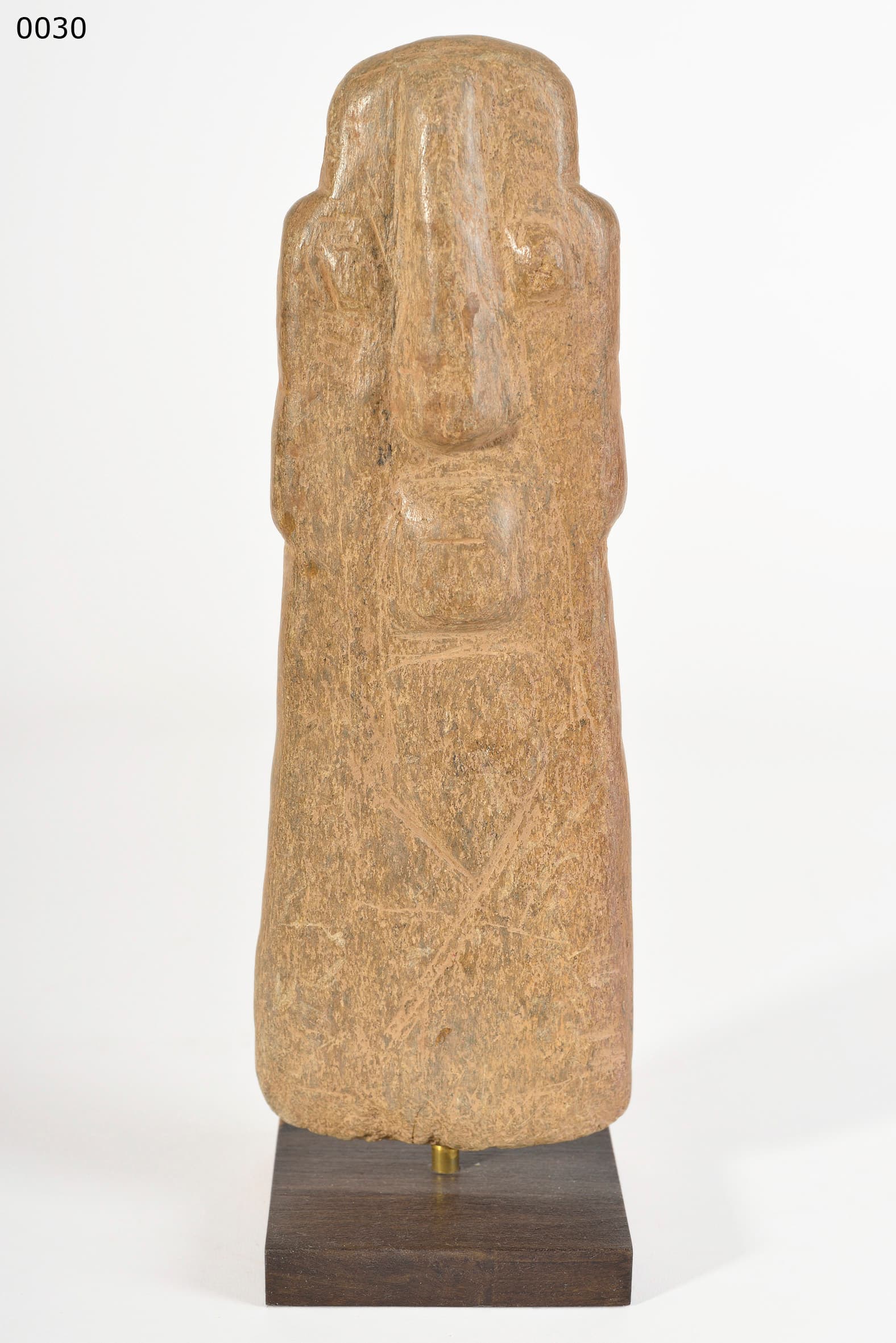
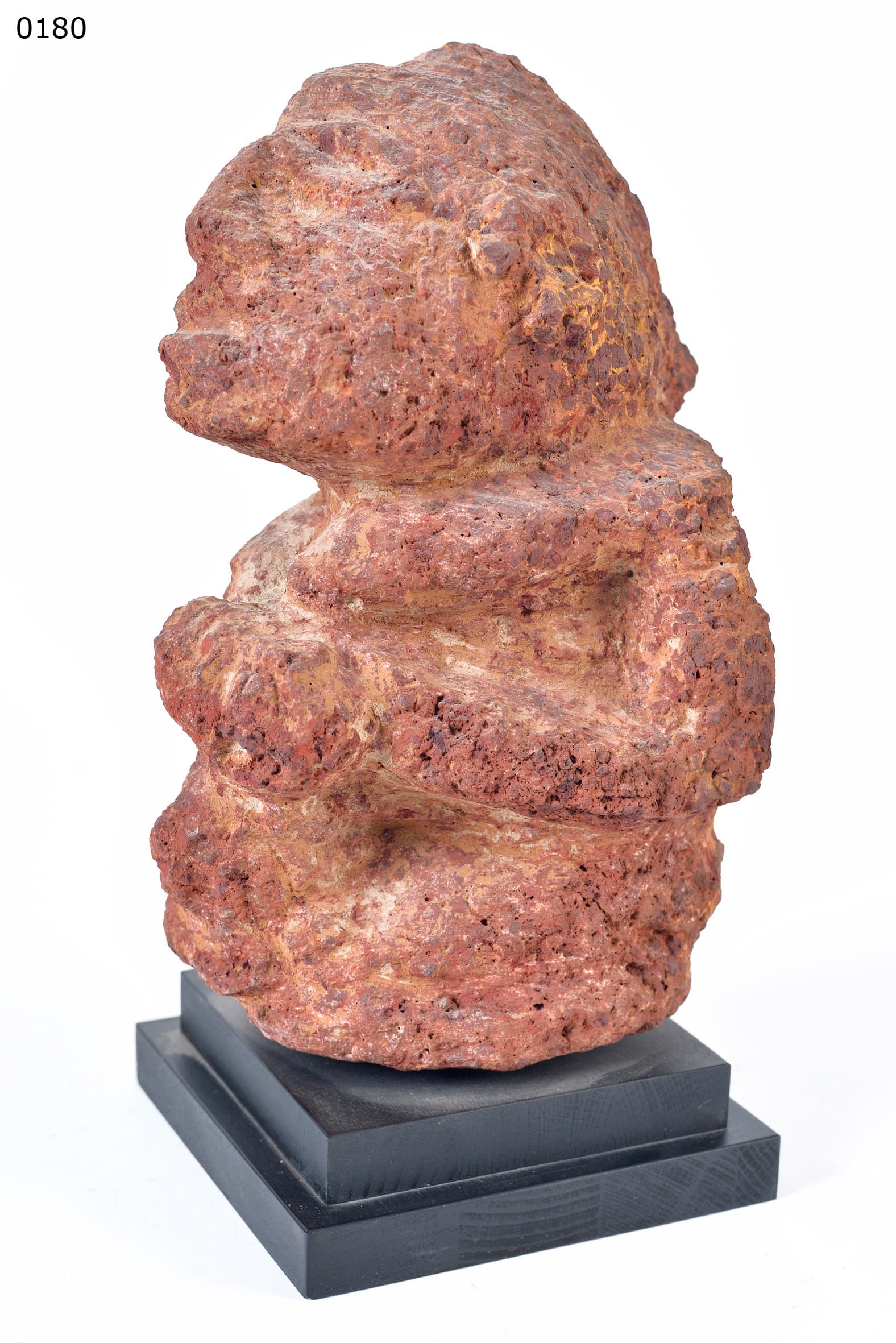
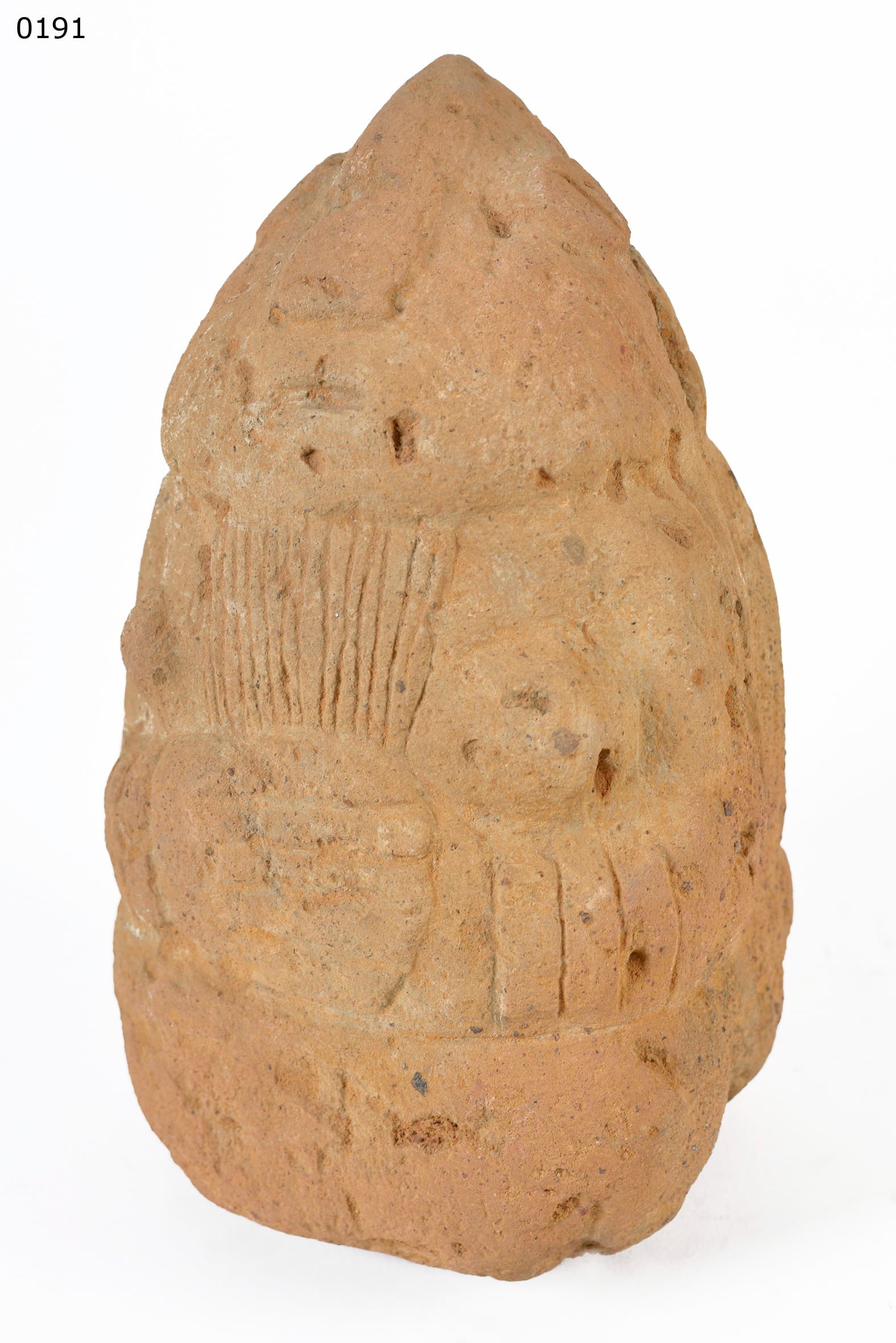
An ancient deeply eroded stone monolith (12th–16th C., 28 cm) from the Kurumba (often synonymous with the Nyonyosi) of Burkina Faso — carved into a simplified slightly phallic Y-shaped pillar with minimal features.
1. The "ancient ones" and lithic permanence
The Kurumba are considered the original pre-Mossi inhabitants of the Sahelian plateau in Burkina Faso.
- Stone Over Wood: While wooden carvings eventually succumb to termites, the Kurumba used dense laterite and granite to forge an unbreakable eternal link between ancestors and territory — designed to endure centuries of weather.
2. Phallic abstraction and rebirth
This carving leans heavily into a columnar, almost phallic abstraction.
- Death as Renewal: In ancient West African funerary art, phallic shapes frequently symbolize regeneration and fertility. The shape conveys the idea that the deceased ancestor continues to "seed" and bless the living community from the grave — transforming death into an act of renewal.
3. Territorial grave anchors
- Outdoor Monuments: These stones were not hidden indoors. They were erected directly on the burial mounds of founding ancestors or placed in sacred outdoor groves.
- Legal Claim in Stone: The heavy pitted erosion confirms its deep antiquity (12th–16th century), serving as a permanent legal claim marker for the clan's historical ownership of the land.
Summary
Stripped of delicate details by centuries of Sahelian wind, this stone pillar is a pure elemental anchor. It is a territorial claim written in stone by Burkina Faso's earliest inhabitants.
Written with AI assistance from the collection appraisal, object photography and our own research; editorially reviewed. Mistakes are possible — corrections are welcome. How we work →