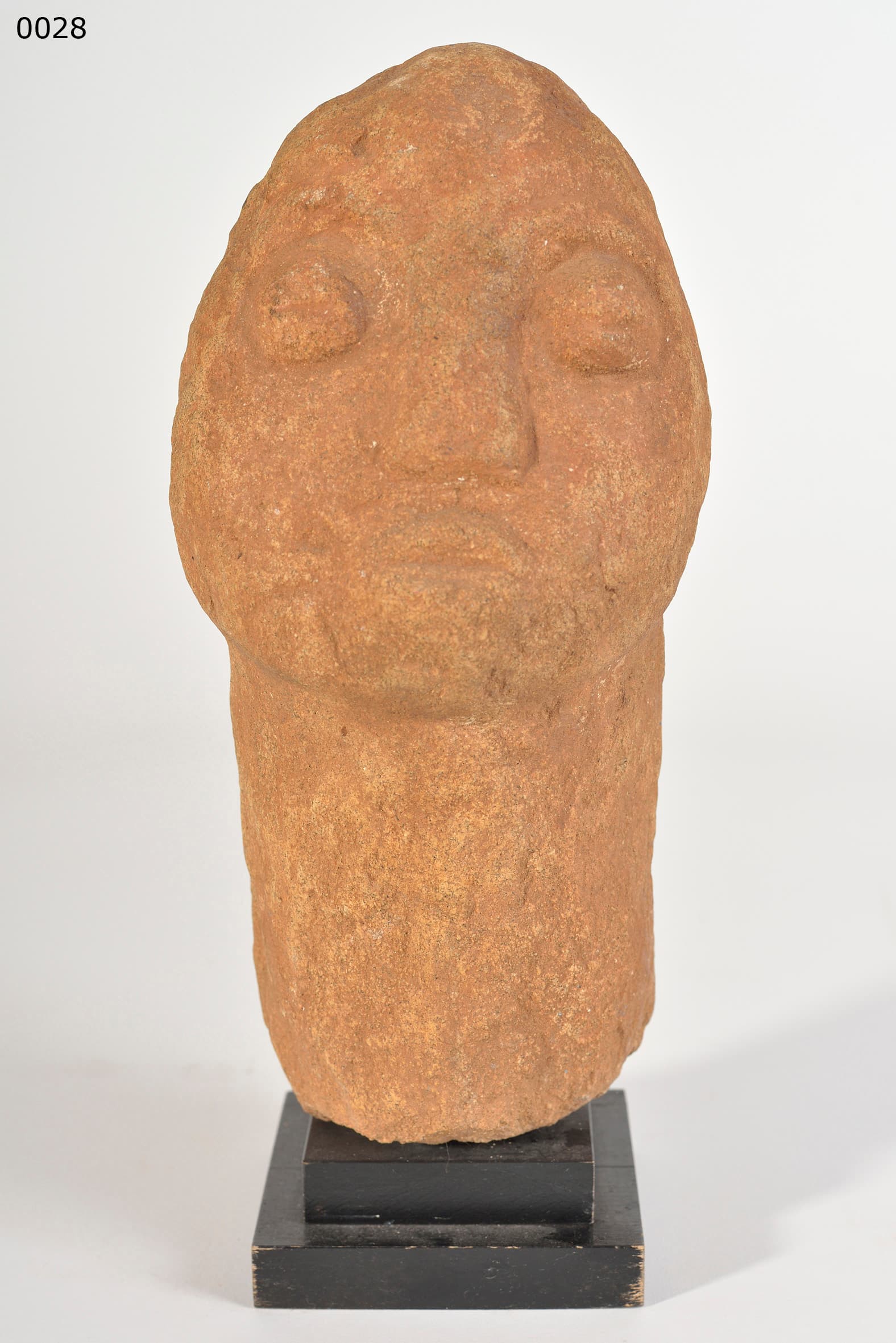
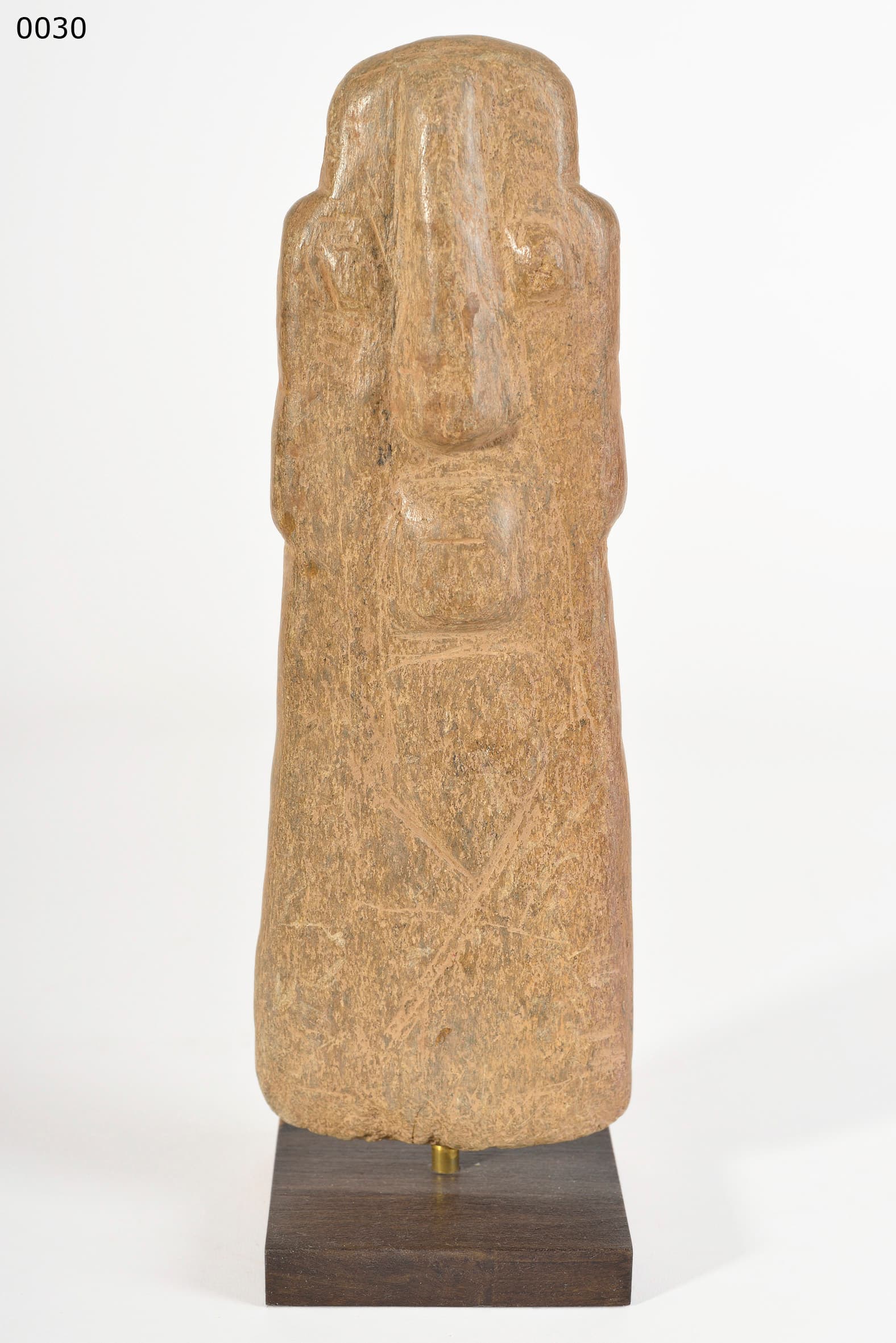
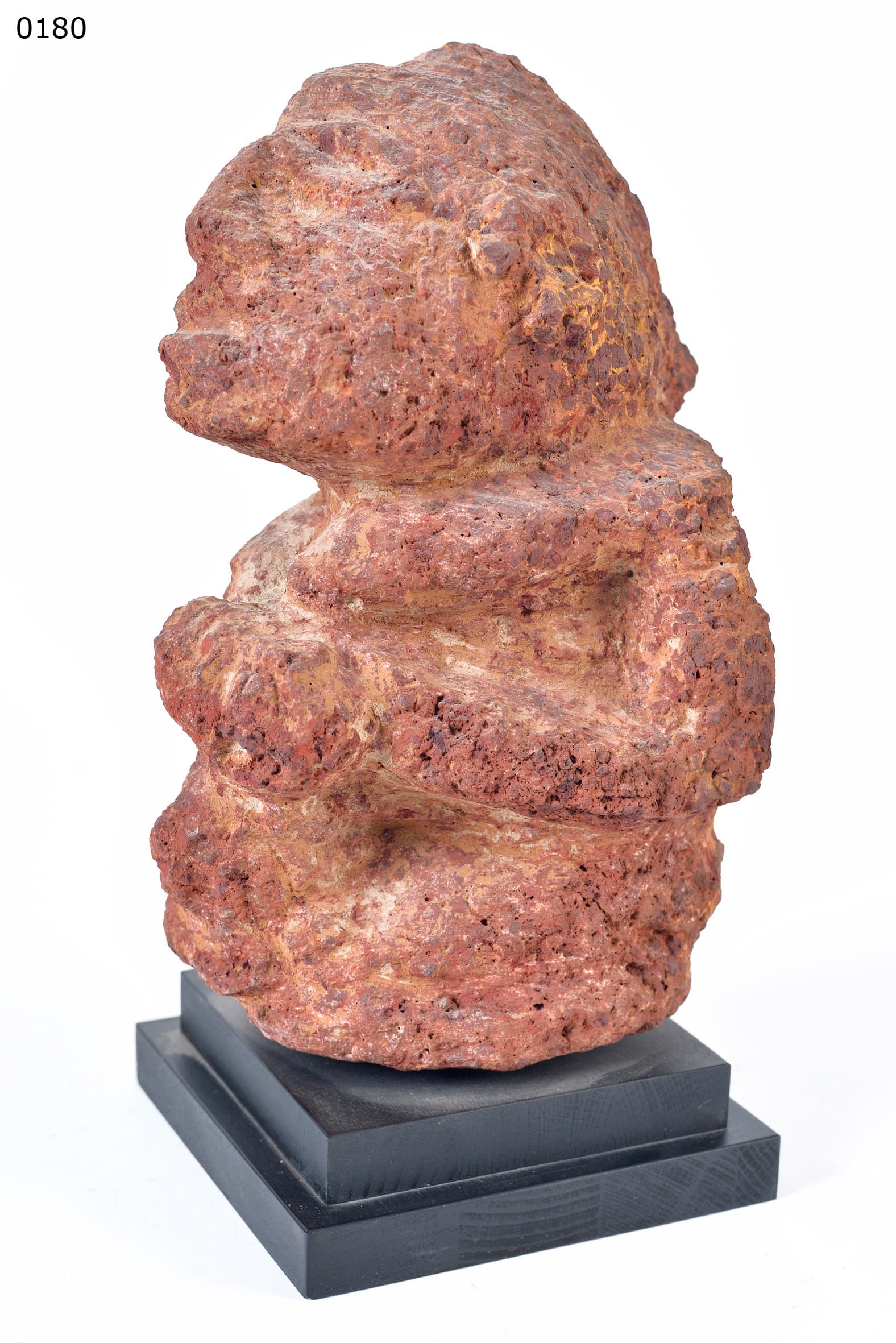
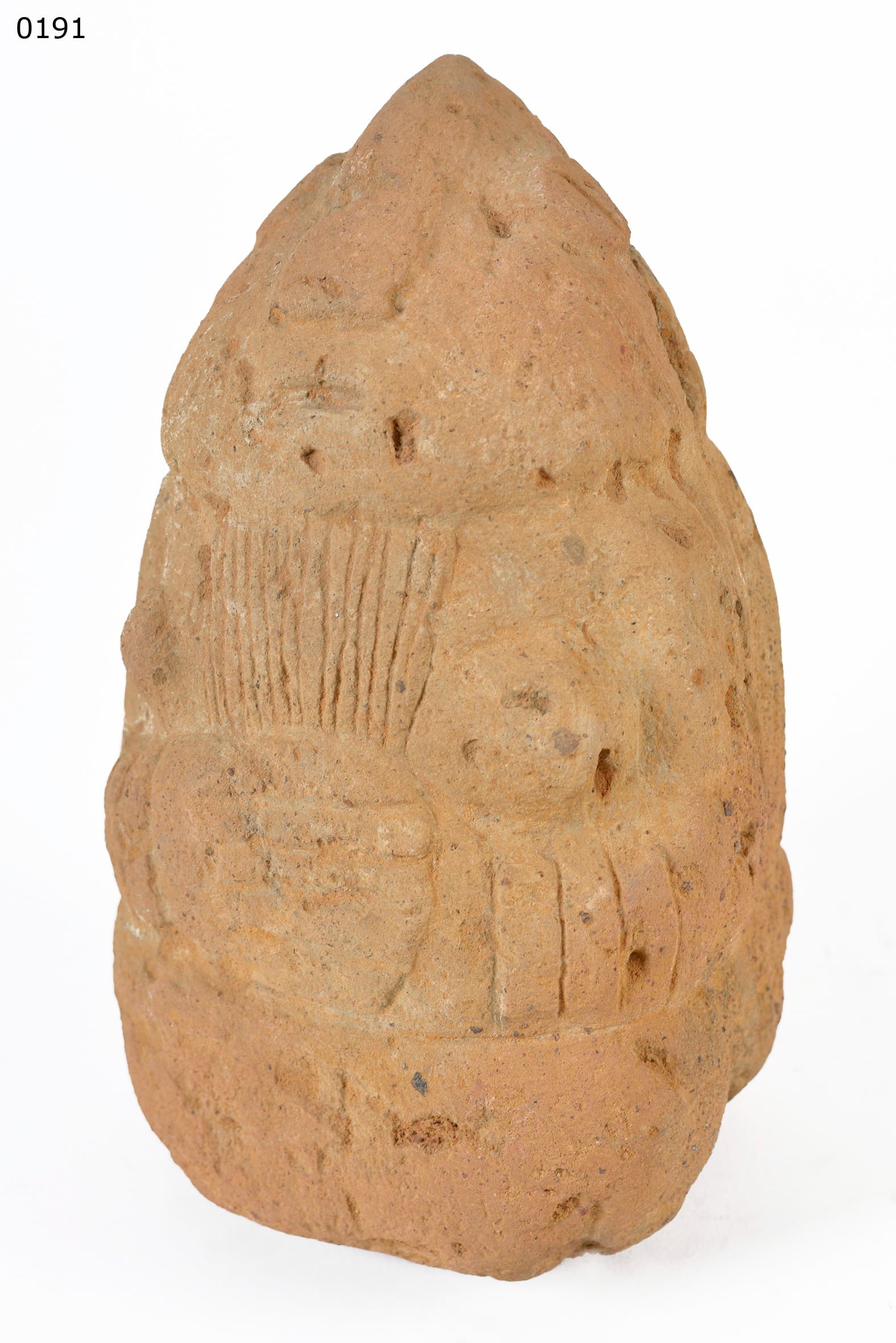
An ancient, highly abstracted stone tomb figure (12th–16th C., 27 cm) from the Kurumba (Nyonyosi) culture of Burkina Faso — a profound archaeological record of the Sahelian plateau.
1. The "ancient ones" and lithic permanence
The Kurumba are considered the original, pre-Mossi inhabitants of Burkina Faso, revered as the "Masters of the Earth."
- Stone Over Wood: While most West African art is carved from wood, these early cultures used dense laterite and granite to forge an unbreakable, eternal link between their ancestors and the territory. In a landscape where wood inevitably succumbs to termites and decay, the choice of stone was a deliberate act of permanence.
2. Radical abstraction
This figure relies on extreme reduction.
- The Totemic Form: The bifurcated Y-shaped top suggests the essence of a head and shoulders, distilling the human form into a permanent symbolic pillar.
- Universal, Not Individual: The sculptor makes no attempt at anatomical realism, portraying the deceased as a formless, universal spirit rather than a specific individual.
3. Funerary and territorial function
- Erected Outdoors: These stones were not hidden indoors. They were erected directly on the burial mounds of founding ancestors or placed in sacred groves.
- Heavy Geological Patina: The pitted, eroded surface is consistent with significant age. It served as a physical reminder to the community that the ancestor still watched over — and held claim to — the clan's land.
Summary
This Kurumba stone figure is a silent sentinel of the early West African Iron Age. Its minimalist proto-modern design bridges archaeology and art, representing an eternal contract between the living community and the earth.
Written with AI assistance from the collection appraisal, object photography and our own research; editorially reviewed. Mistakes are possible — corrections are welcome. How we work →