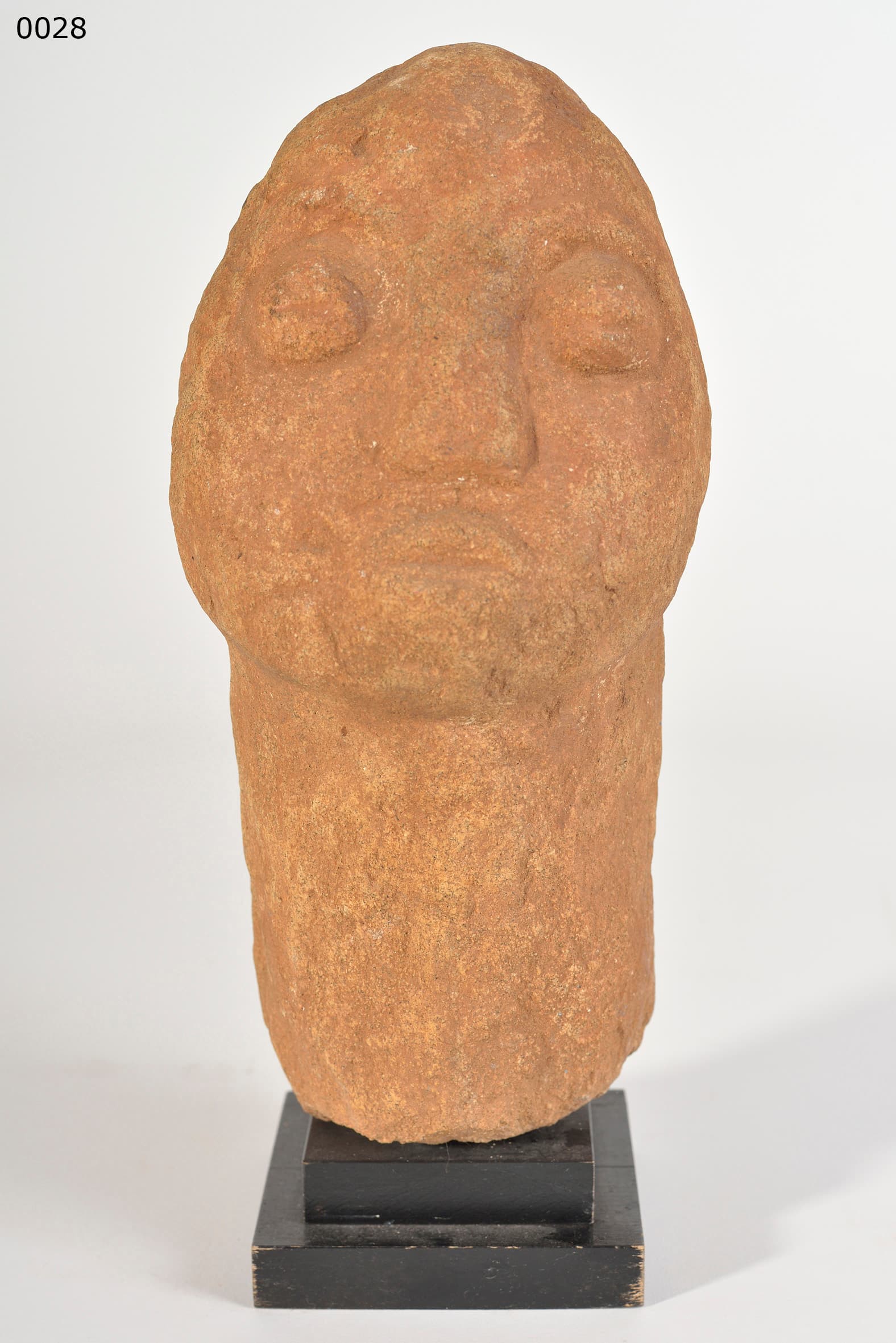
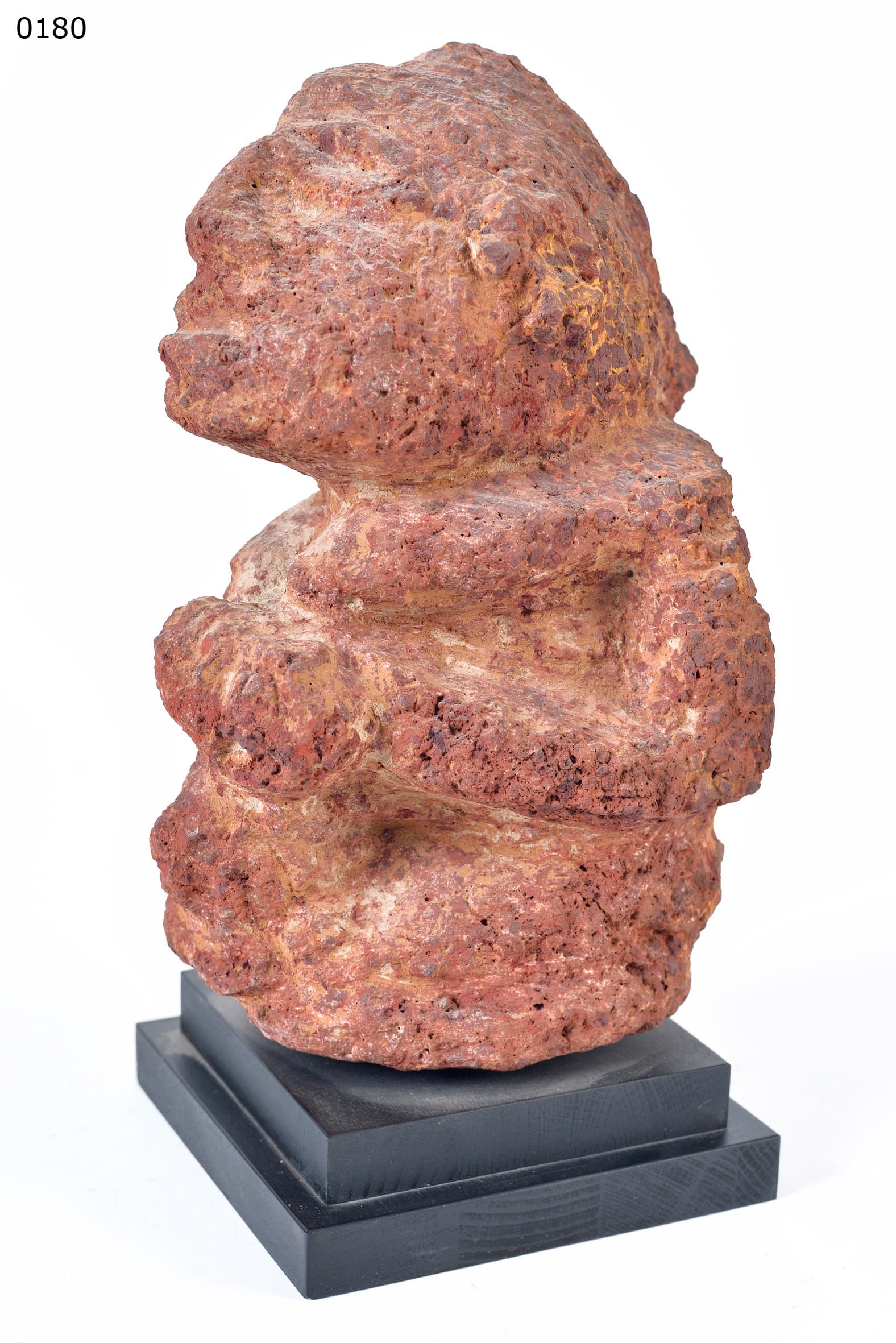
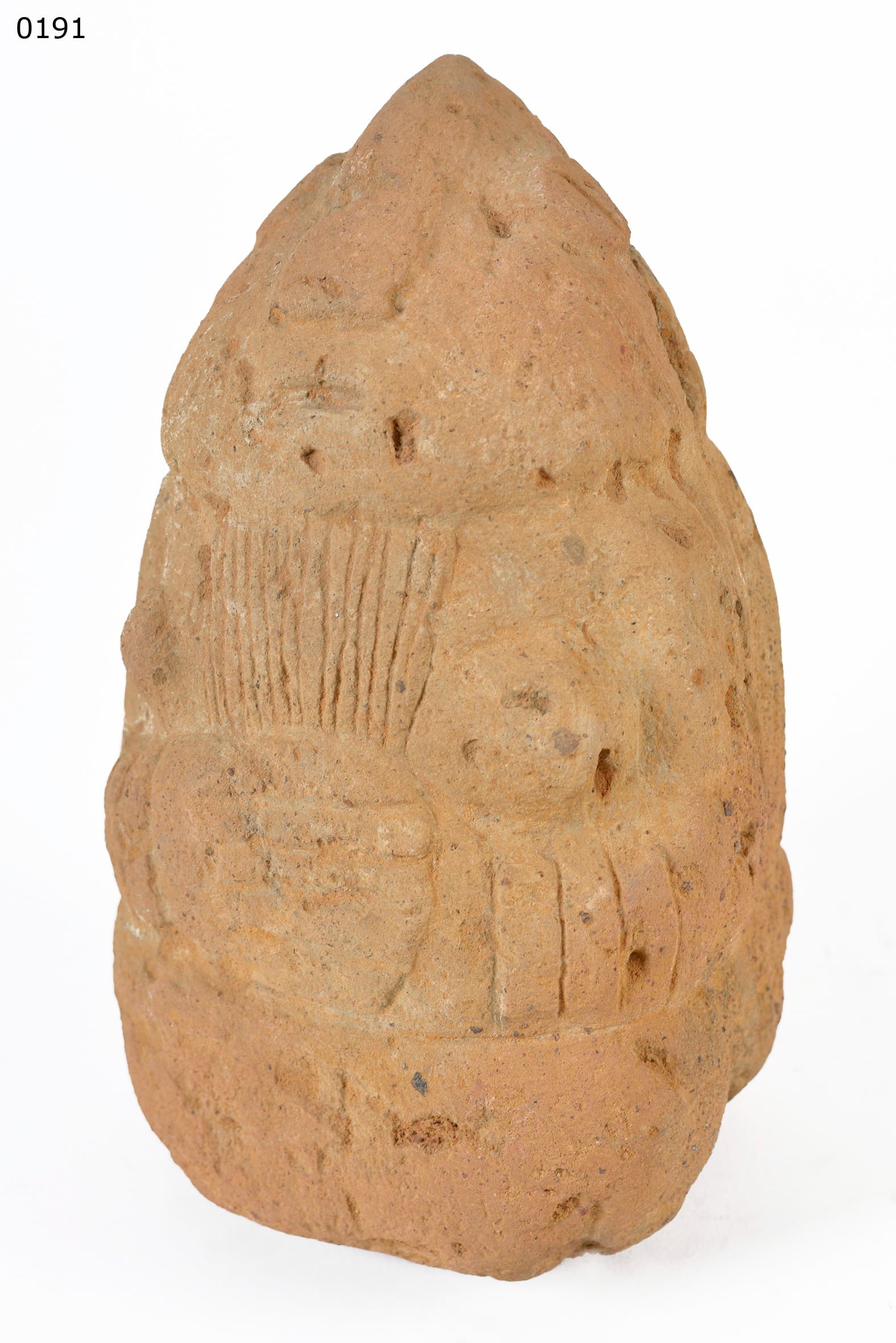
An ancient stone tomb figure (12th–16th C., 31 cm) from the Kurumba of Burkina Faso — a flattened highly geometric "cubist" face with a sharp vertical nose ridge, circular eye indentations, and faint incised body markings. Companion to collection Nrs. 13, 28.
1. Geometric reduction
In contrast to the phallic/columnar abstraction of other Kurumba pieces in the collection, this stone compresses the human form into a flat rectangular monolith.
- Proto-Cubism: The nose is a sharp vertical ridge; the eyes are mere circular indentations. This approach strips away individual mortal identity to represent the eternal, universal concept of "The Ancestor."
2. Incised clan markings
- Textile in Stone: Faint incised geometric lines (chevrons and zigzags) are visible on the lower torso. These likely correspond to ancient clan scarifications or specific textile patterns.
- Binding the Line: By carving these into stone, the artist bound the eternal spirit of the stone to a specific living family line — ensuring the ancestor's blessings were directed to the correct descendants.
3. The defiance of time
- An Act of Devotion: Carving a sharp distinct nose ridge and complex geometric lines into hard granite/laterite with early iron or stone tools required immense physical effort and devotion.
- A Surviving Record: That these geometric lines survived 500+ years of erosion is a testament to the artisan's dedication and the sacred importance of the monument.
Summary
This figure exemplifies the Kurumba genius for minimalism. It distills human presence into a sheer architectural block of enduring stone, meant to stand as an unyielding guardian for eternity.
Written with AI assistance from the collection appraisal, object photography and our own research; editorially reviewed. Mistakes are possible — corrections are welcome. How we work →