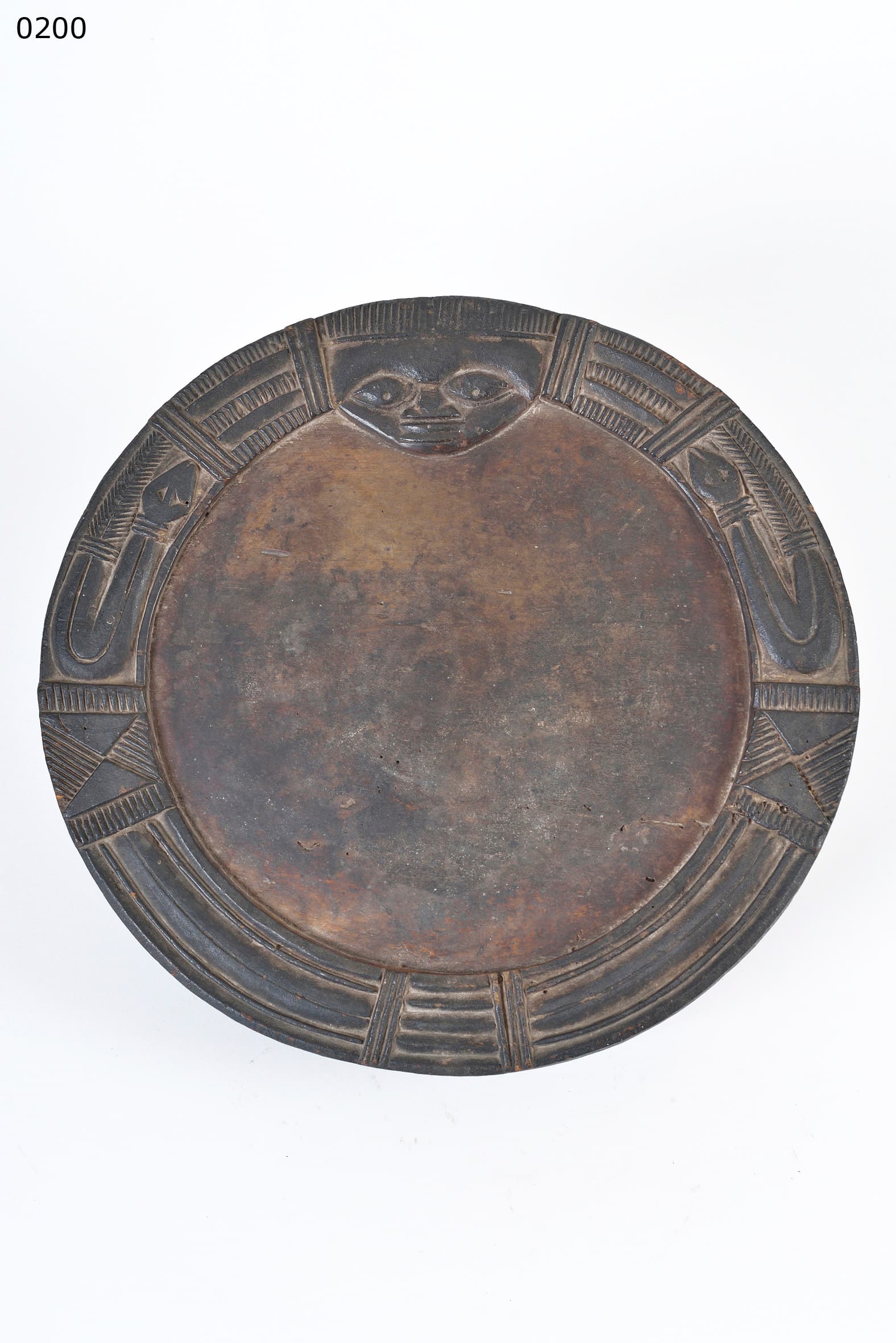
A large circular wooden Opon Ifa (19th–20th C., 30 cm) from the Yoruba of Nigeria — flat central depression surrounded by a raised intricately carved border of geometric interlacing, a prominent staring face of Eshu at the top edge, the wood carrying a dry powdery patina with remnants of white divination dust embedded in the grain.
1. The universe of the opon Ifa
The Opon Ifa is central to Yoruba religious practice — a physical microcosm of the universe.
- Earth and Sky in One Object: The flat center represents the earthly realm where human destinies are mapped; the carved border represents the spiritual realm.
- Eshu at the Threshold: The face at the top always depicts Eshu (or Elegba), the divine trickster and messenger — invoked first so that the prayers of the diviner (Babalawo) reach the supreme deities.
2. The mechanics of divination
During an Ifa consultation, the Babalawo performs a precise ritual sequence.
- Iyerosun Dust: The diviner sprinkles iyerosun (sacred wood dust) across the flat center of the tray.
- Palm Nuts and Patterns: He then casts sacred palm nuts and traces patterns into the dust based on how the nuts fall. These binary patterns correspond to verses of the vast oral Ifa literary corpus — revealing destiny, prescribing sacrifices, and restoring balance.
3. Iyerosun patina and ritual use
The patination and material fatigue are consistent with divinatory use and a long object biography.
- Encrusted Borders: The recesses of the carved border show a thick, encrusted age patina resulting from repeated libations, palm oil, and the handling patina from the Babalawo's fingers where he grips the tray during consultation.
- Deeply Abraded Center: The flat central depression shows extreme physical abrasion from the constant tapping of the divination tapper (Iroke Ifa) and the tracing of patterns. The original patina is completely rubbed off here, revealing highly oxidized, cracked wood. Pale iyerosun dust embedded deep in the grain is consistent with active use into the first half of the 20th century, while the depth of this ritual wear suggests the tray may have been carved and consecrated earlier, possibly in the late 19th century.
Summary
Representing the Yoruba cosmos, this Ifa oracle tray displays complex religious iconography and geometric carving. Its deep ritual wear—consistent with an origin in the late 19th century—and embedded sacred dust suggest its role as an instrument of West African divination.
Written with AI assistance from the collection appraisal, object photography and our own research; editorially reviewed. Mistakes are possible — corrections are welcome. How we work →