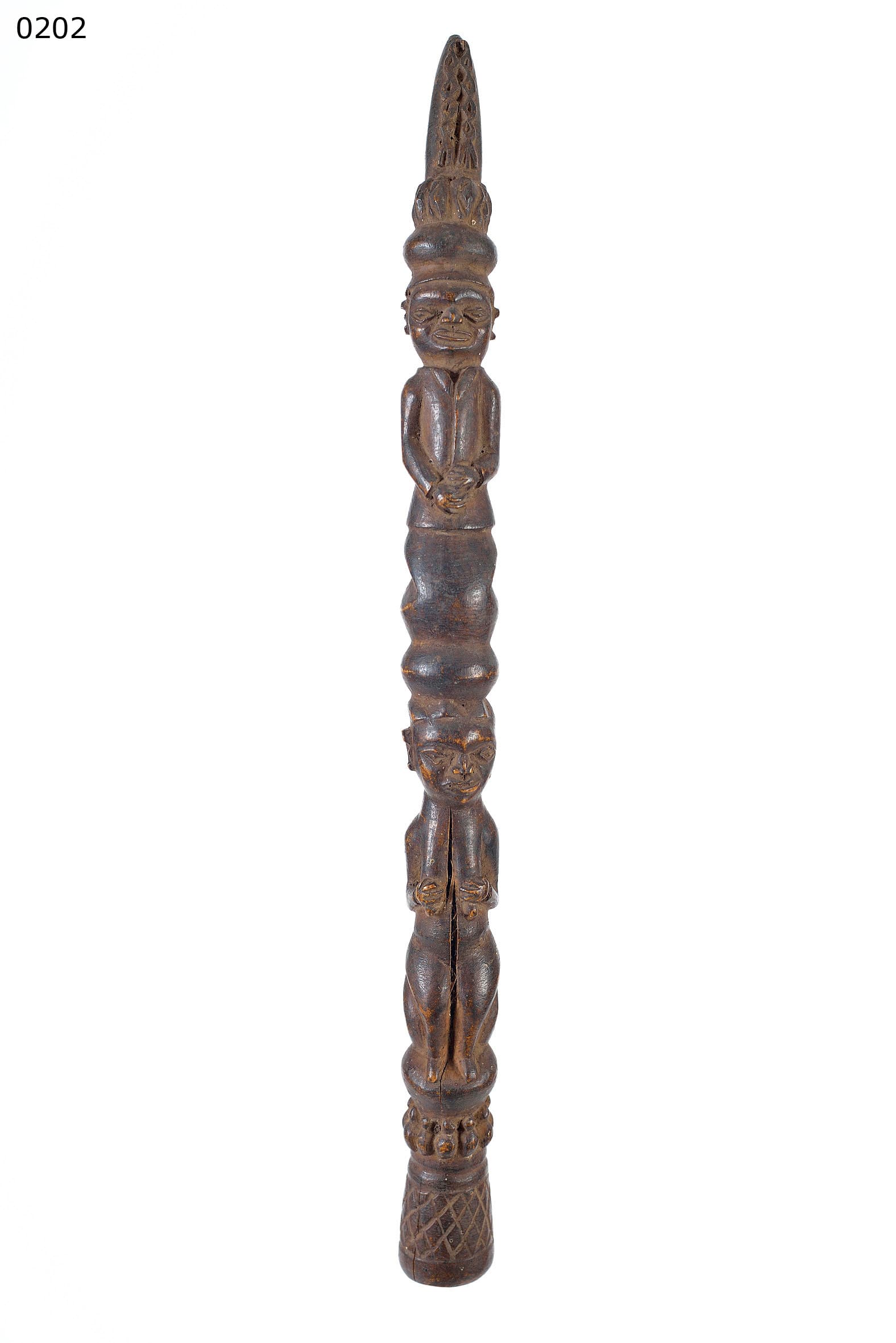
A towering multi-tiered wooden helmet mask (1st half 20th C., 138 cm) from the Yoruba of Nigeria — a grotesque abstract face at the base supporting a superstructure of a central seated maternity figure surrounded by attendants, painted in faded polychrome.
1. The architecture of the epa mask
The Epa masks of the northeastern Yoruba are among the largest and heaviest masks in Africa.
- The Two Realms: The mask is always divided into two parts. The bottom is a pot-like helmet featuring a highly abstract, bulging face representing the ancient, chaotic spiritual realm. The top superstructure represents the ordered, civilized world of humanity.
2. The maternity superstructure
- The Ideal Society: The central figure is a maternity figure (a mother holding children or surrounded by attendants). In Yoruba culture this honors the stabilizing, life-giving power of women and the importance of a large, healthy lineage.
- Athletic Spectacle: Weighing up to 30 kg (65 lbs), this mask demands immense athletic strength. During the Epa festival, young men wear these masks and attempt to leap onto a mound of earth. A successful jump ensures a fertile year for the village; a fall is a terrible omen.
Summary
At 138 cm, this Epa mask is a monumental feat of Yoruba engineering. It is a dual-layered portrait of the cosmos, contrasting the chaotic energy of the spiritual helmet with the civilized, maternal harmony of the superstructure.
Written with AI assistance from the collection appraisal, object photography and our own research; editorially reviewed. Mistakes are possible — corrections are welcome. How we work →