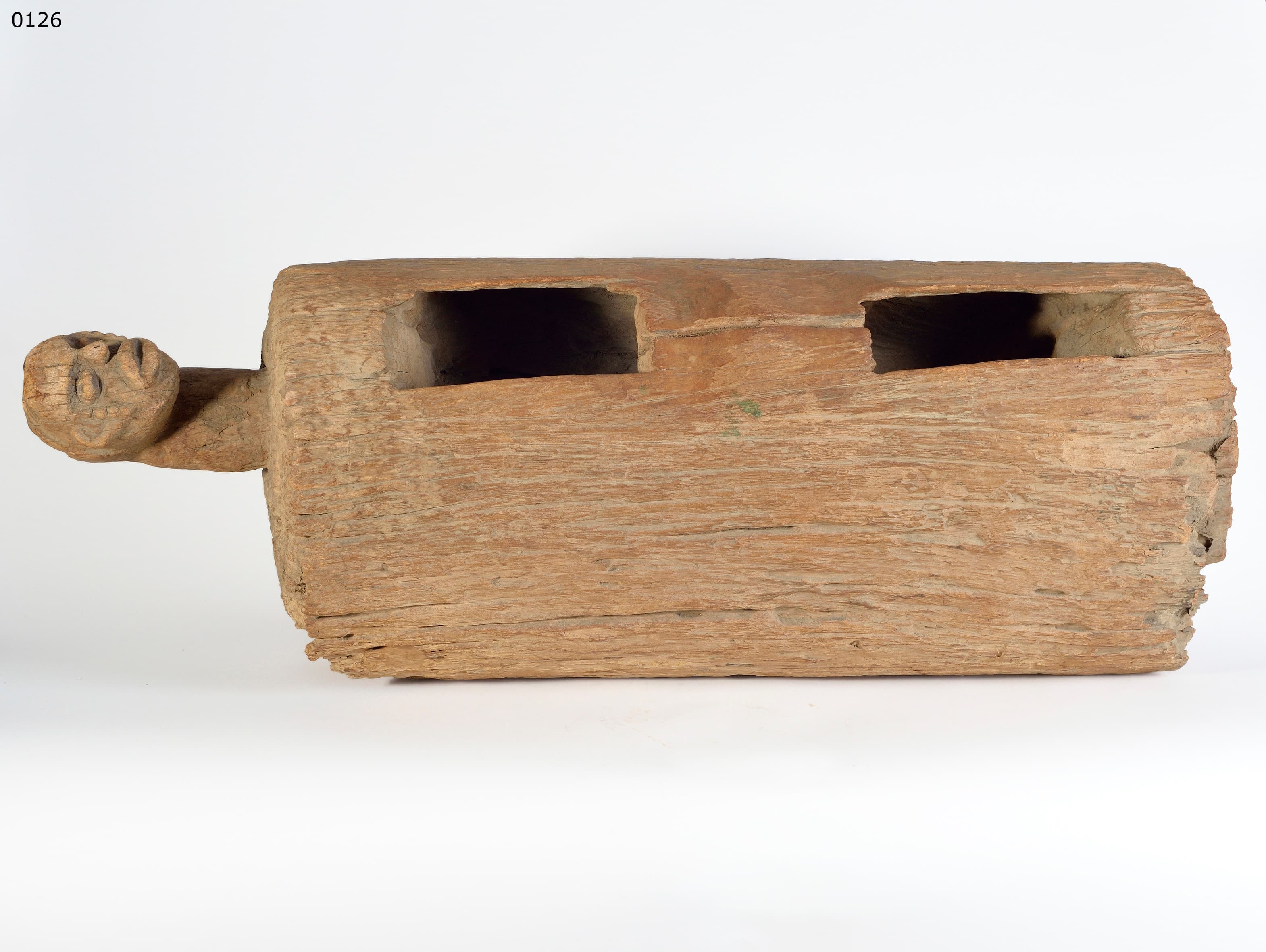
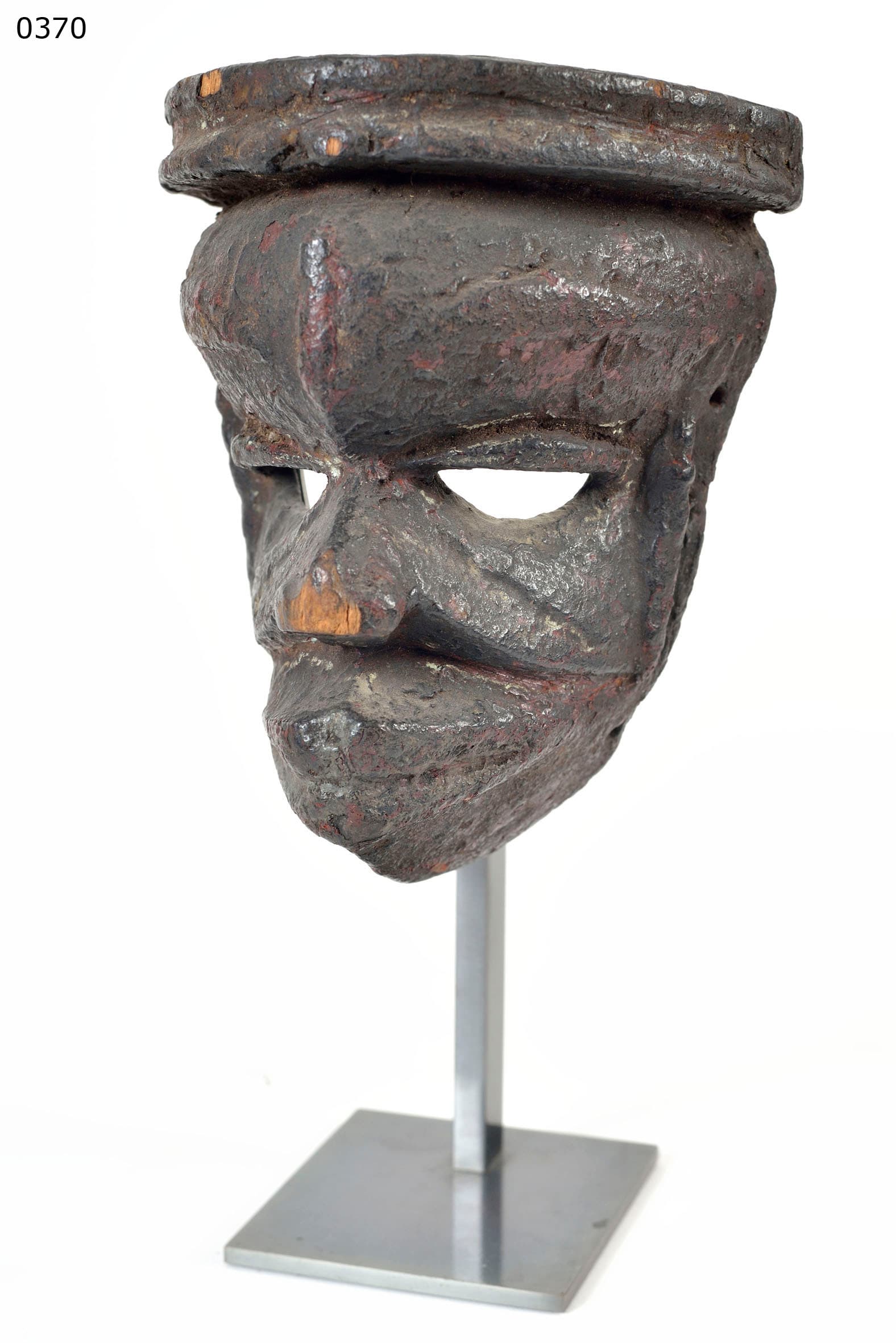
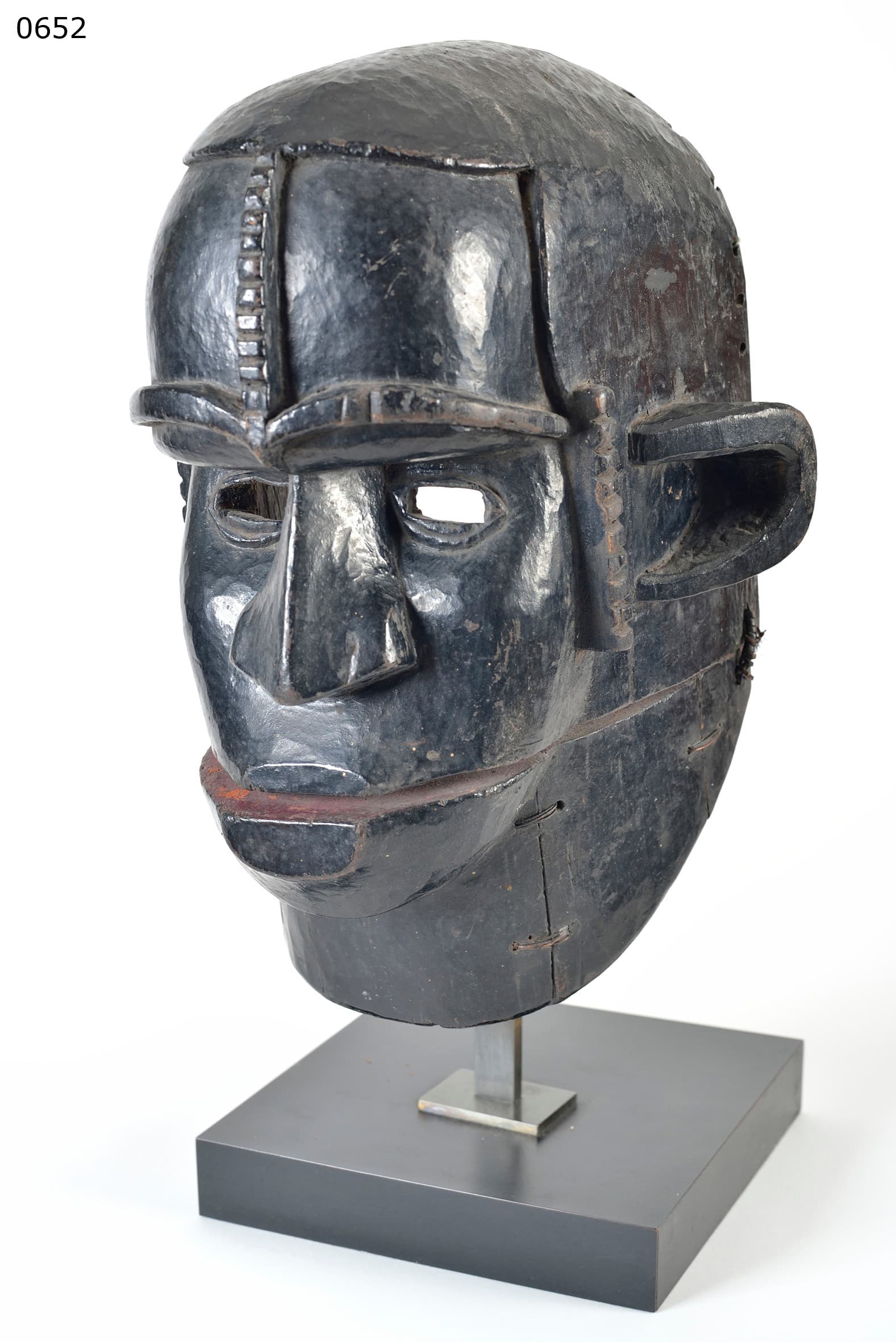
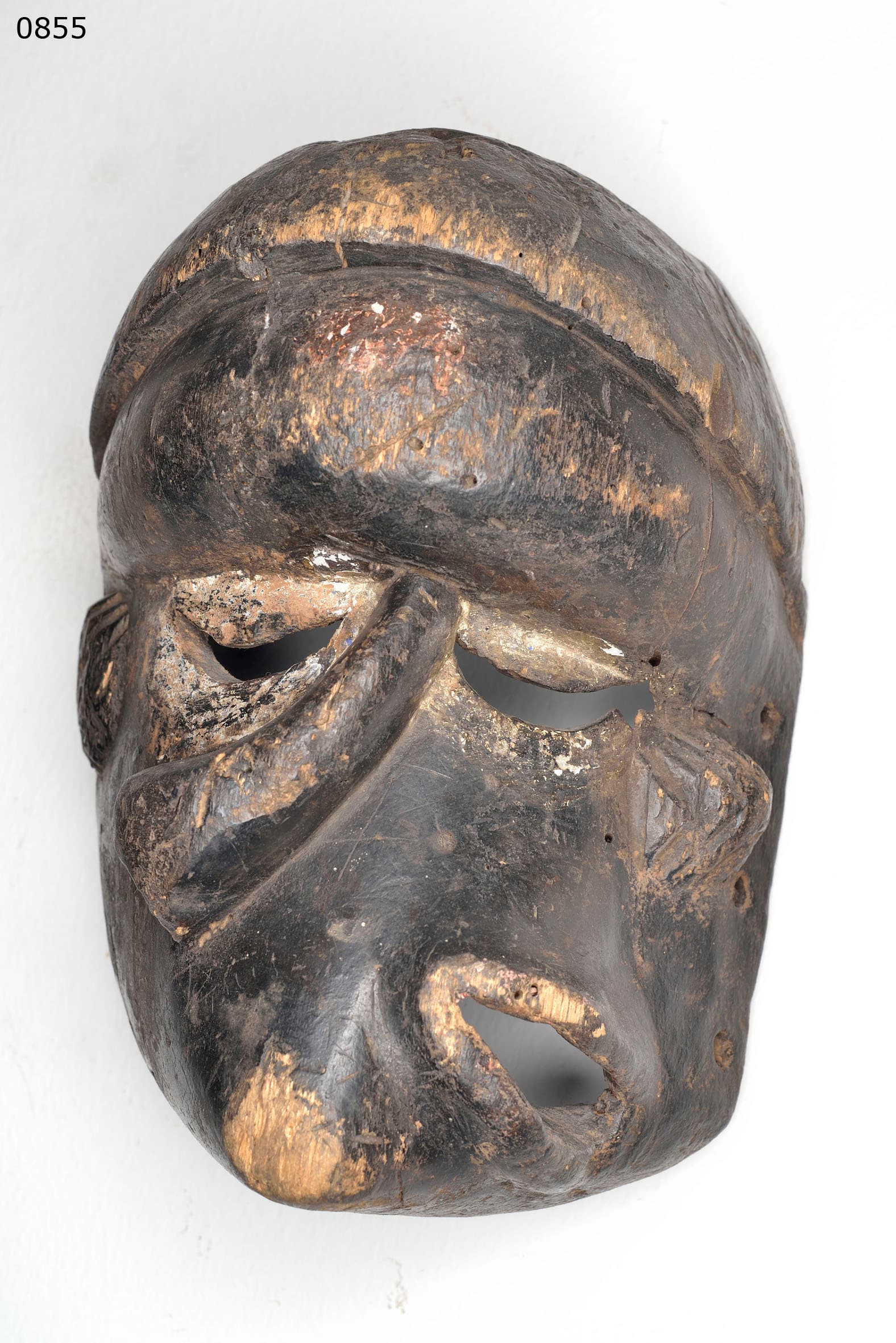
Dies ist ein sehr komplexes und "seltenes" Beispiel für einen Ibibio-Schreinaltar (wahrscheinlich von den Untergruppen Anang oder Eket) aus dem Südosten Nigerias.
Während das erste von Ihnen gezeigte Bild ein Lobi-Altar aus Burkina Faso war, stammt dieses Stück aus einem völlig anderen kulturellen Kontext. Es gehört zu der "dunkleren" und aggressiveren Ästhetik der Geheimgesellschaften in der Region Cross River.
1. Zentrale Figur und Stil
Der Stil der Schnitzerei ist klassisch Ibibio:
- Der gewundene Hals: Der dicke, beringte Hals der zentralen Figur ist ein Prestigesymbol. Historisch gesehen repräsentierten diese Ringe Reichtum (wie die Bronzewickel, die von Frauen mit hohem Status getragen wurden) und die Tradition des "Masthauses", bei der ein voller Hals ein Zeichen von Schönheit und Wohlstand war.
- Gesichtszüge: Die große Stirn, die Augen mit schweren Lidern und der leicht geöffnete Mund sind typisch für Ibibio-Schnitzereien, die entweder einen Vorfahren oder eine mächtige Gottheit (Abassi oder ein lokales Geistwesen) darstellen sollen.
2. Die "magischen" Medizinschalen
Die beiden großen, runden, schalenartigen Gebilde, die an der Brust der Figur befestigt sind, sind rituelle Medizinbehälter.
- Die weiße Substanz: Die Substanz im Inneren ist höchstwahrscheinlich Kaolin (weißer Ton). In der Ibibio-Kultur steht Weiß (afia) für die Geisterwelt, Reinheit und die Kommunikation mit den Ahnen. Sie wird oft mit Kräutern gemischt, um eine "Medizin" herzustellen, die von einem Priester zum Schutz des Haushalts oder zur Verfluchung von Feinden verwendet wird.
- Funktion: Diese Figur war wahrscheinlich ein aktives "Kraftobjekt" (in der älteren Literatur manchmal als "Fetisch" bezeichnet), das Opfergaben wie Palmwein oder Opferblut "verzehren" sollte, um seine magische Kraft zu erhalten.
3. Tierschädel und Macht
Die Einbeziehung echter Tierschädel (wahrscheinlich Affen oder kleine Säugetiere), die mit Pflanzenfasern an den Holzrahmen gebunden sind, ist ein Merkmal von Ritualobjekten mit hohem Einsatz.
- Aggression und Schutz: In Gesellschaften wie den Ekpo oder Idiong werden Tierreste hinzugefügt, um den "wilden" oder "aggressiven" Geist des Tieres auf das Objekt zu übertragen. Dadurch wird der Schrein zu einem wirksameren Schutz gegen bösartige Kräfte.
- Binden: Die Schnur- und Faserbindung dient nicht nur der Befestigung, sondern "sperrt" den Geist in das Objekt ein.
4. Flankierende Figuren
Die beiden kleineren Figuren an den Seiten fungieren als Diener oder Familienmitglieder. In der Logik der Ibibio-Schreine ist ein zentraler mächtiger Geist selten allein; er wird von einer "Linie" kleinerer Geister unterstützt, die in seinem Namen Aufgaben erfüllen.
Zusammenfassung
Bei diesem Objekt handelt es sich um eine aktive Schreineinrichtung, nicht um ein dekoratives Stück. Es wurde in einem privaten Raum oder in einer Geheimloge (Nwommo) aufbewahrt. Seine Seltenheit rührt daher, dass es sich um eine vollständige, mehrteilige Baugruppe handelt; viele solcher Altäre wurden von Sammlern demontiert, wobei nur die zentralen Figuren übrig blieben. Das Vorhandensein der Originalschalen, der Schädel und des Kaolins deutet darauf hin, dass der Altar vor seiner Sammlung in erheblichem Umfang rituell genutzt wurde.
KI-unterstützt erstellt aus Sammlungsgutachten, Objektfotografie und eigener Recherche, redaktionell geprüft. Fehler sind möglich — Hinweise darauf sind uns willkommen. Zum Verfahren →