A 19th-century horizontal wooden door lock (48 cm) from the Fon of the Republic of Benin — a rudimentary crossbar mechanism from which a simplified heavily weathered human bust projects vertically, the wood severely aged with deep structural oxidation and a dry encrusted patina.
1. Animism in domestic architecture
In Fon culture, the threshold of the home is a highly sensitive boundary requiring both physical and spiritual security.
- Threshold as Spiritual Gate: Integrating an anthropomorphic figure into the door-lock mechanism transforms a utilitarian object into an active protective talisman.
- Ever-Watchful Sentinel: The figure is imbued with Vodun energies to prevent malevolent forces, witches, and physical intruders from crossing into the private domestic space.
2. The anti-aesthetic of Vodun carving
Unlike the polished arts of neighboring kingdoms, this piece encapsulates the raw Fon Vodun approach.
- Blocky Geometry: The figure is reduced to its most basic volumes, prioritizing conceptual weight over anatomical realism.
- Crudeness as Power: Deliberate roughness projects raw unrefined nyama — the object is a visually intimidating vessel for the protective spirits it houses.
3. 19th-century taphonomy
Extreme degradation confirms the 19th-century dating and continuous exposure to use.
- Cellular Breakdown: The surface shows cellular-level wood degradation, organic checking, and deep longitudinal fissures.
- Sacrificial Residue: Earthy encrustations fused into the grain indicate generations of active anointing — a profound taphonomy impossible to artificially rush.
Summary
Merging mechanical function with potent Vodun protection, this Fon door lock is a powerful example of animist architecture. Its extreme 19th-century weathering and raw sculptural intensity make it a highly desirable ethnographic artifact.
Written with AI assistance from the collection appraisal, object photography and our own research; editorially reviewed. Mistakes are possible — corrections are welcome. How we work →

rare power figure (used in VOODOO ceremonies)
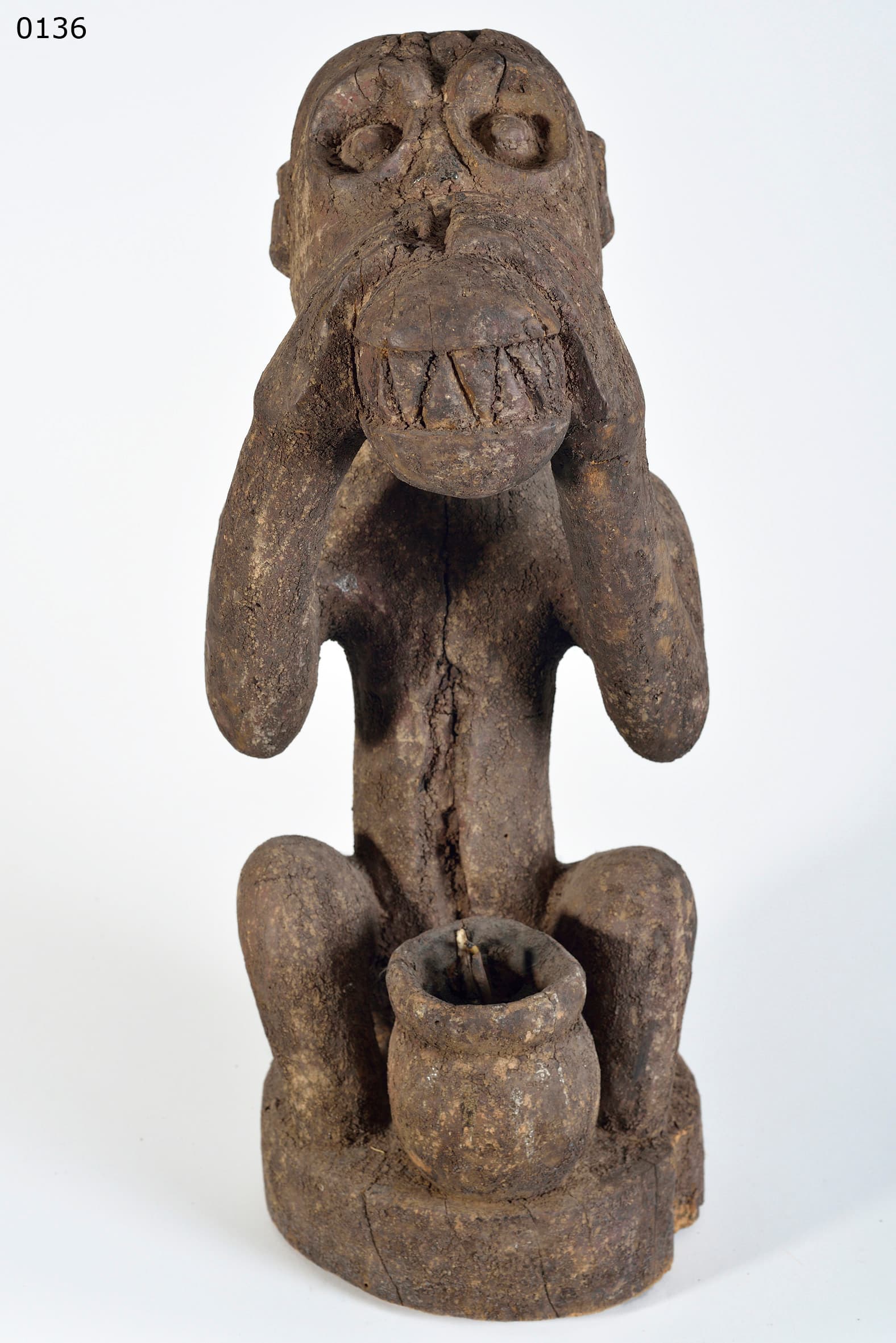
simian shrine figure
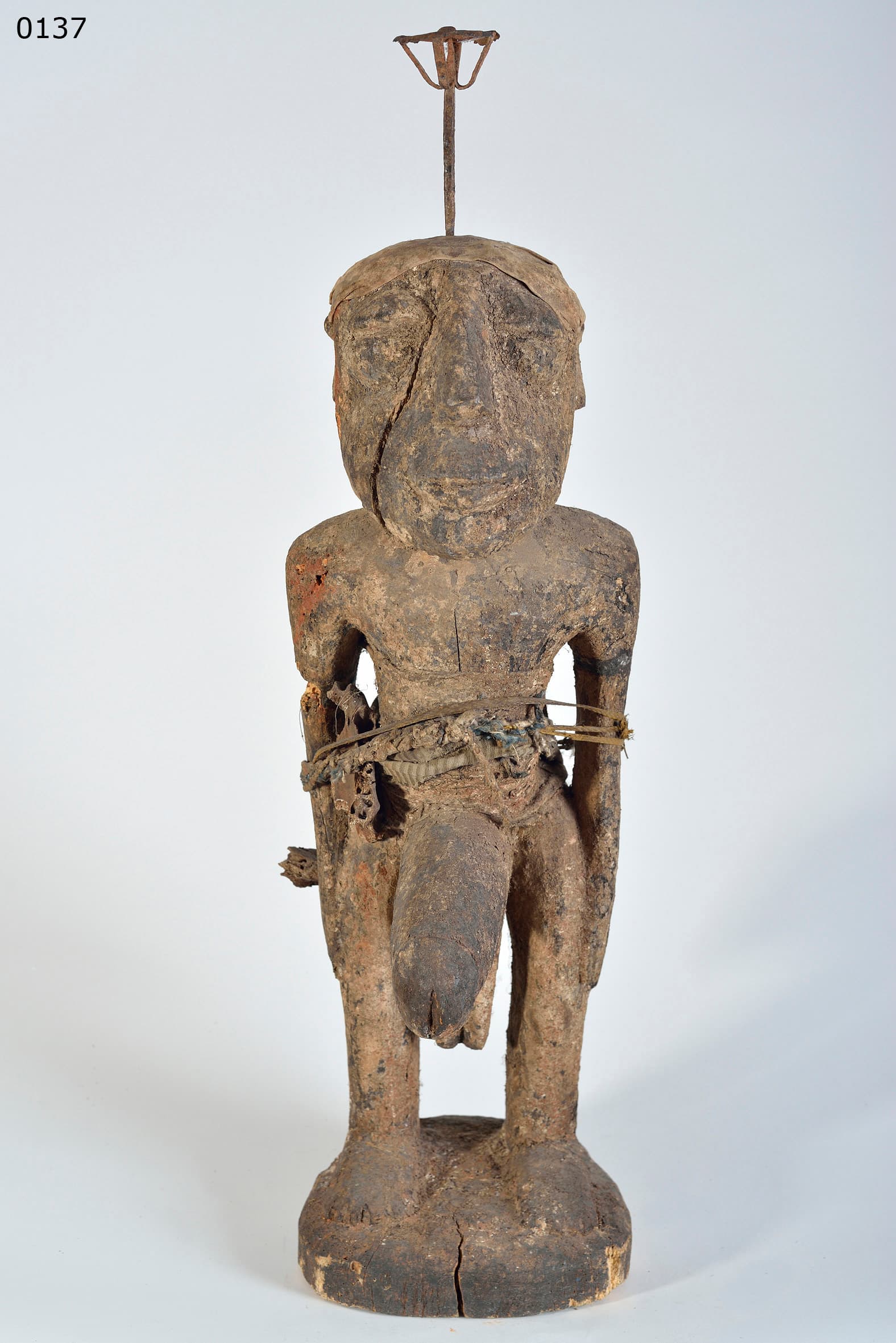
BOCIO statue (used in Voodoo ceremonies)
