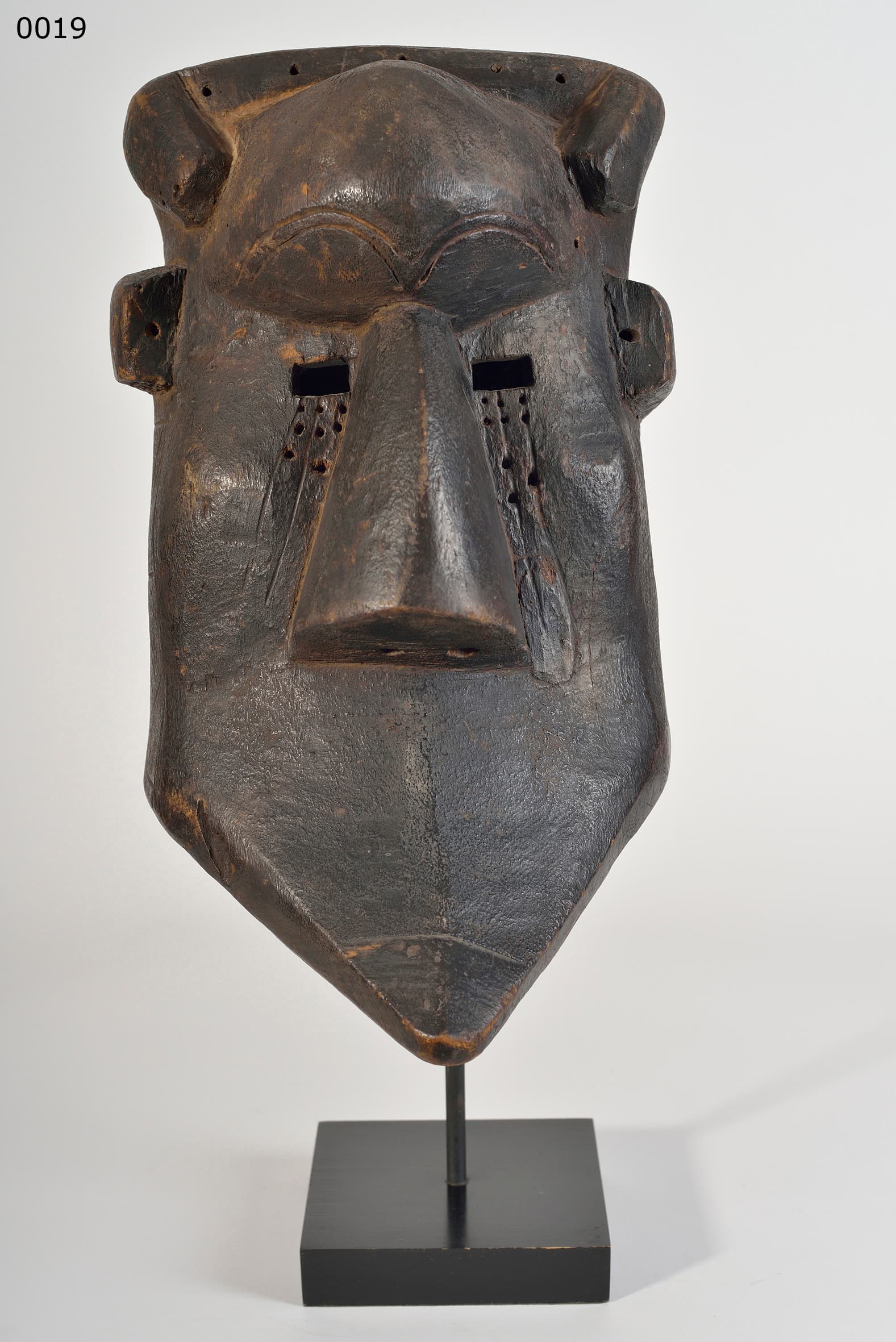
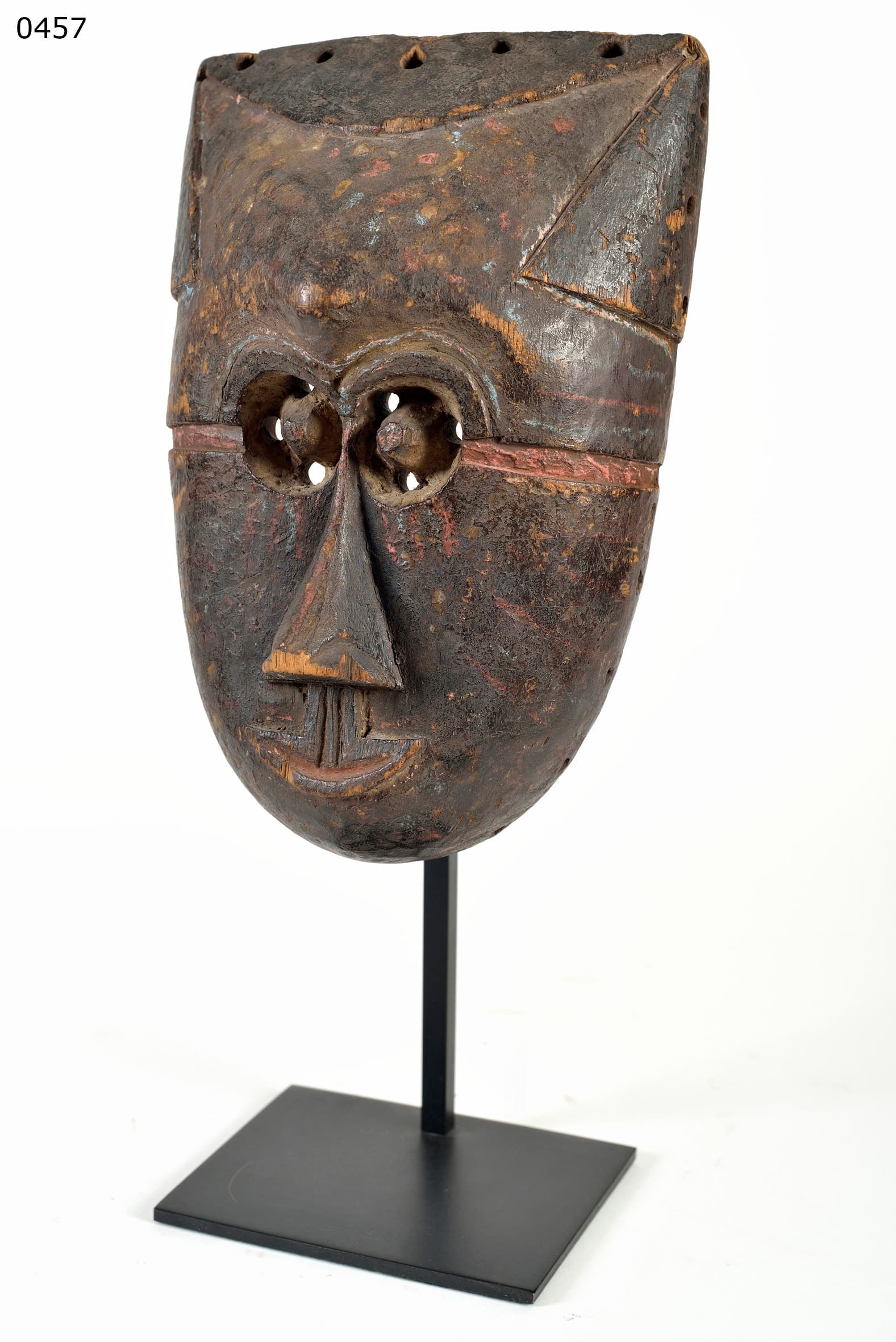
A highly structured block-style wooden helmet mask (1st half 20th C., 30 cm) from the Kuba of the DR Congo — squared-off brow, prominent triangular nose, fine linear surface carvings.
1. Architectural formalism
The Kuba are renowned for their obsession with geometry, famously expressed in their Shoowa cut-pile textiles. This mask applies that same logic to wood.
- The Block Aesthetic: The face is constructed as a series of intersecting planes. The heavy overhanging brow and flat rectangular nose give it the structural solidity of a building, creating a sense of immovable, stoic authority.
2. Surface decoration and clan identity
- Kuba Cloth in Wood: The forehead and the broad flat chin/beard area are covered in intricate low-relief interlocking patterns that mirror the famous Kuba raffia textiles.
- Named Motifs: These geometric carvings are not merely decorative — they are "named" motifs corresponding to specific Kuba clans, titles, and proverbs, embedding the wearer's identity into the wood.
3. Social role in the kingdom
- The Stoic Ancestor: While some Kuba masks are designed to be wild or comedic, this one exudes discipline. It likely represents a titled ancestor or a minor nature spirit that has been "civilized" and brought under the control of the royal court.
- Performance: Danced at funerals or festivals, its rigid expression reinforced the idea that the laws of the Kuba Kingdom were ancient, structured, and enduring.
Summary
This Kuba helmet mask is a notable example of geometric reduction. It illustrates how African sculptors could manipulate surface texture and block-like volumes to convey a profound sense of social order and unwavering authority.
Written with AI assistance from the collection appraisal, object photography and our own research; editorially reviewed. Mistakes are possible — corrections are welcome. How we work →