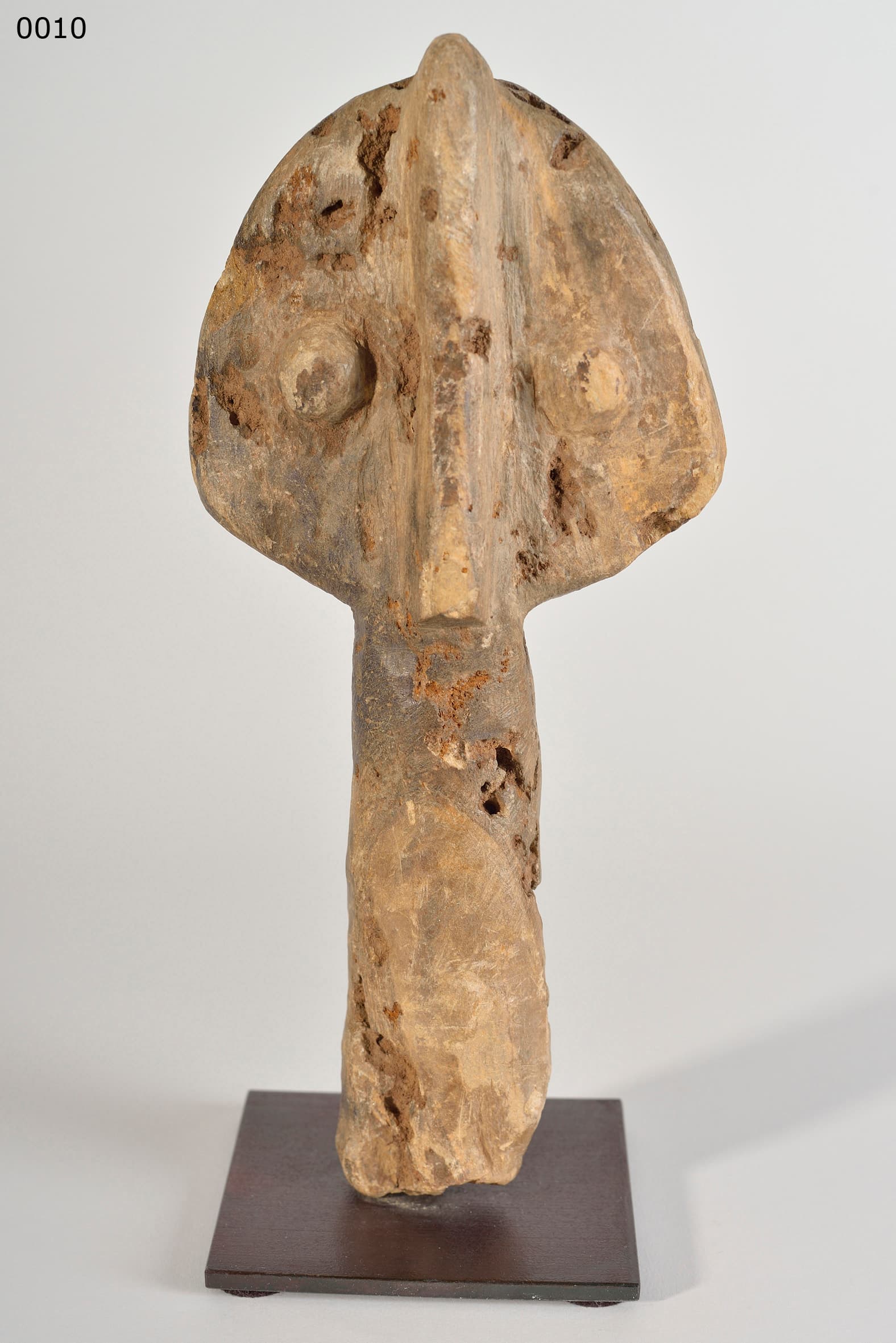
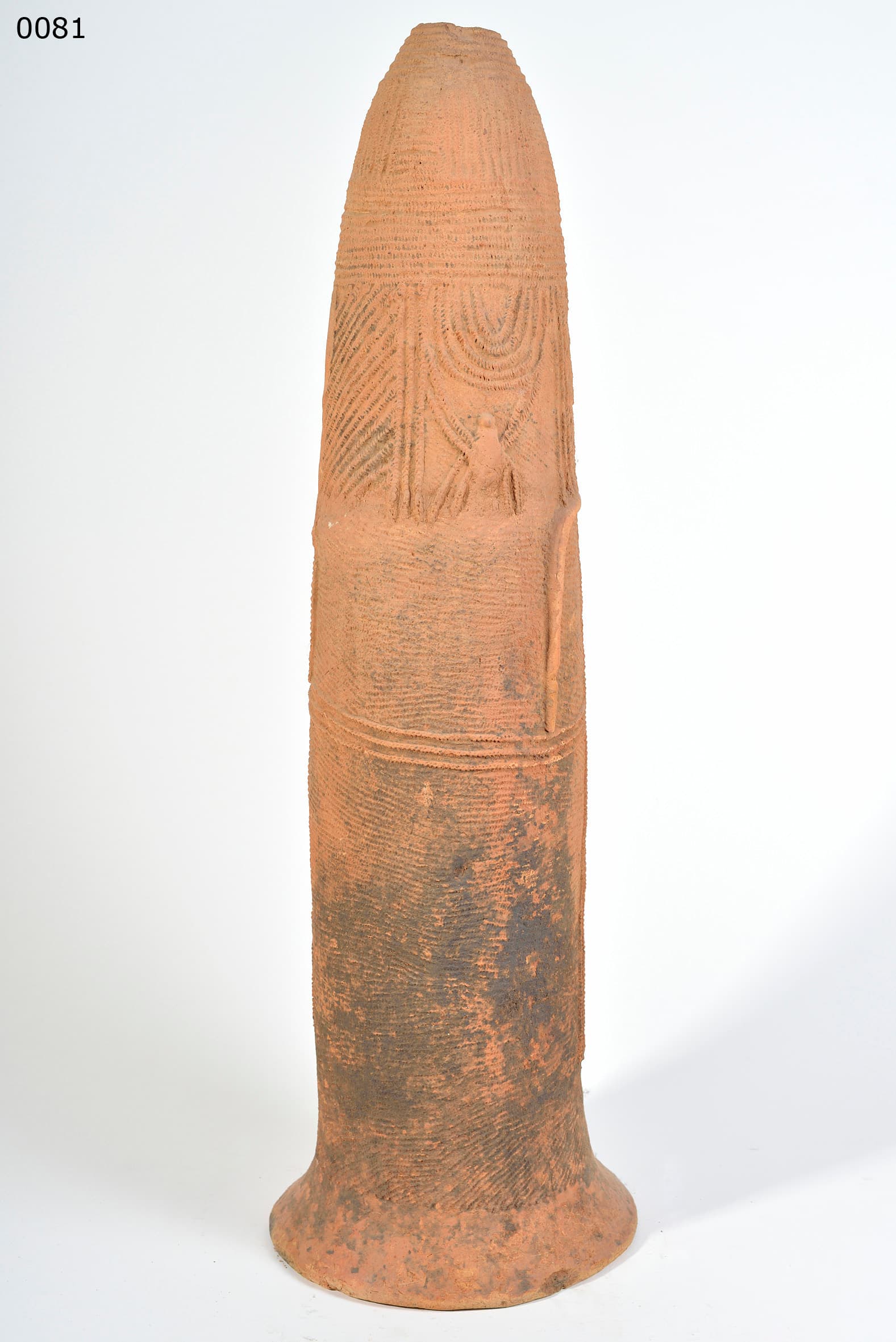
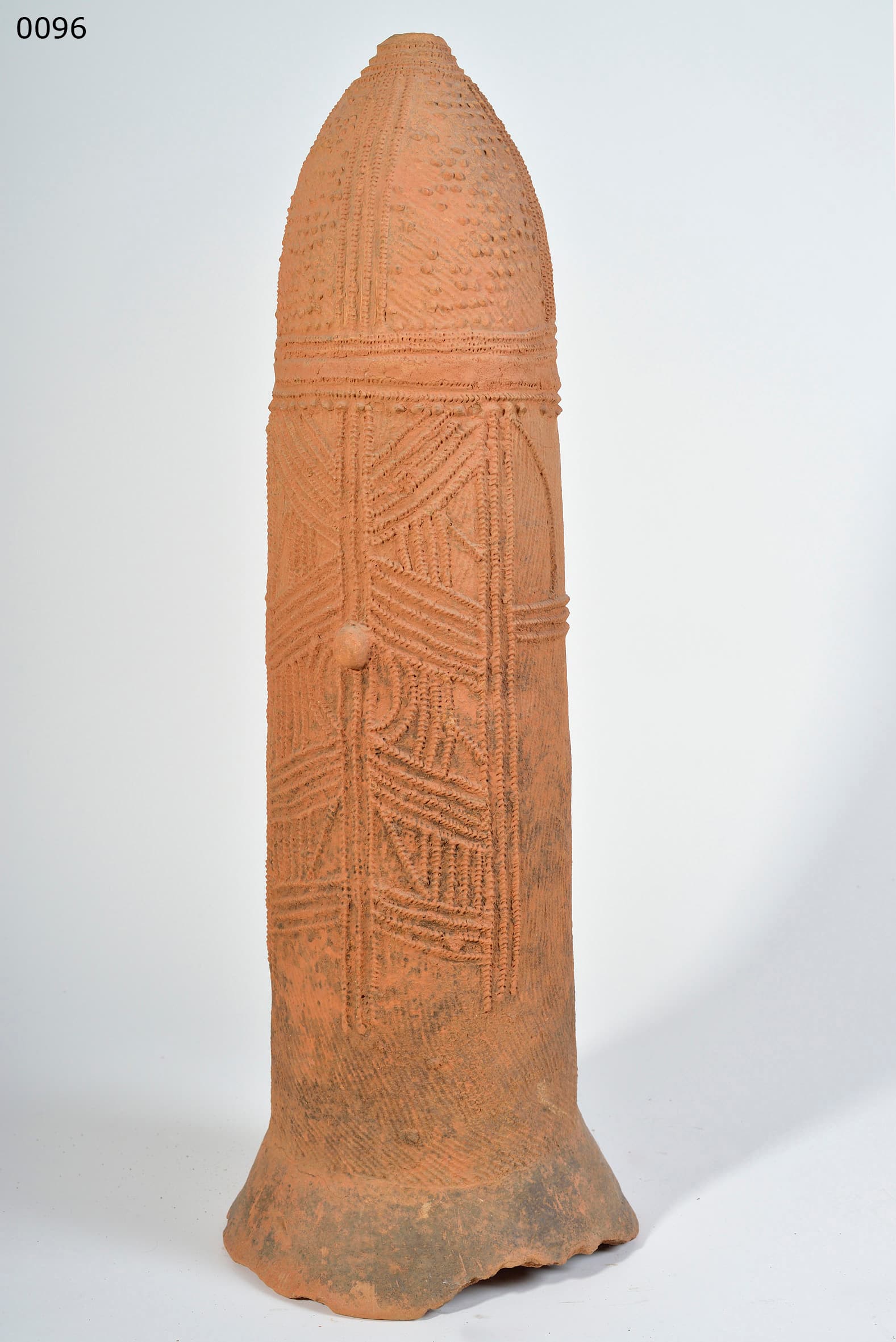
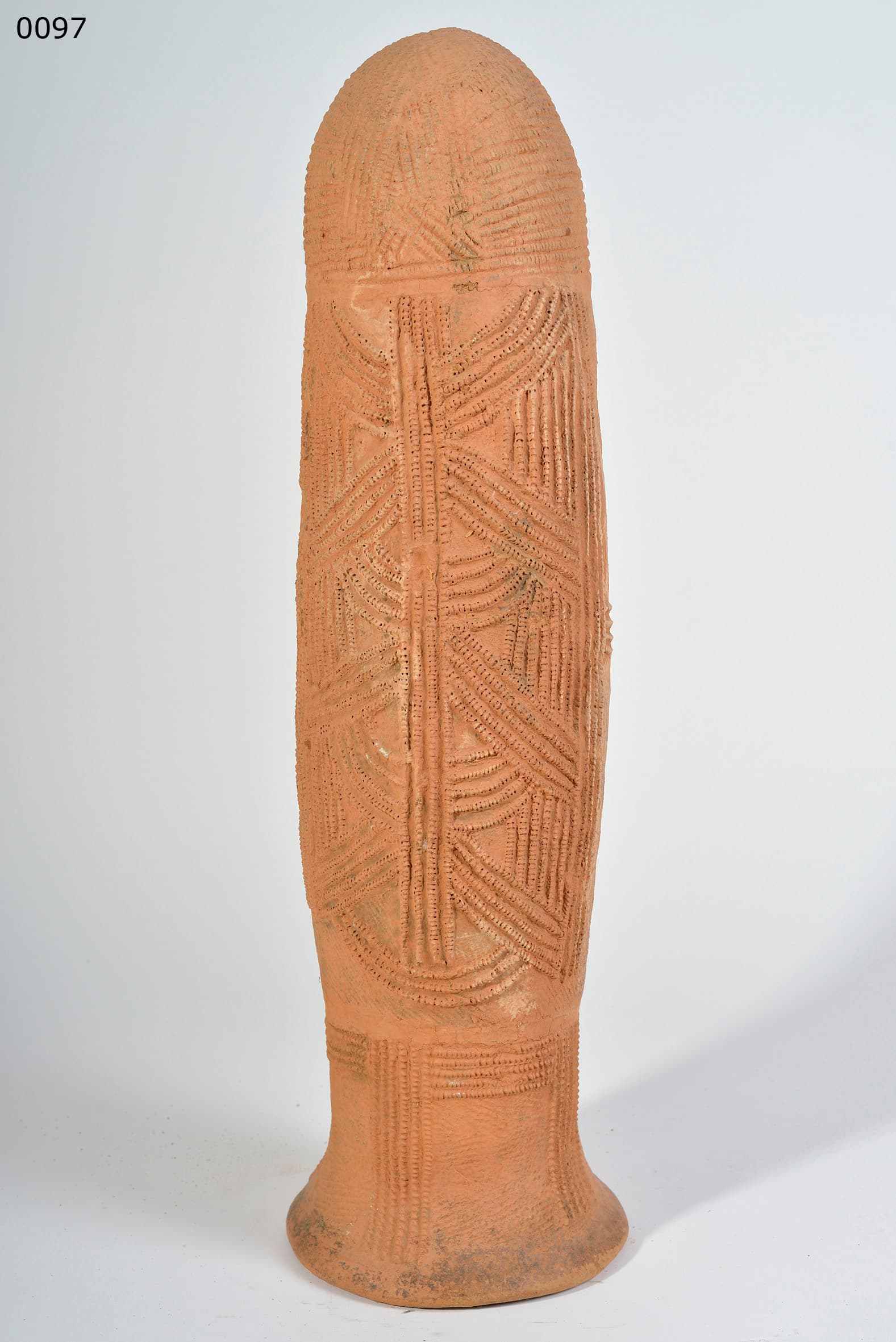
A tall phallic-shaped terracotta tomb vessel (3rd–11th C., 55 cm) from the Bura-Asinda culture of Niger/Burkina Faso — a highly simplified abstract face projects near the top of the smooth tapering cylinder, the pale chalky surface entirely enveloped in a thick baked-on crust of calcified earth and sand.
1. The bura-asinda necropolis tradition
Discovered in the 1970s in the lower Niger River valley, the Bura-Asinda system (3rd–11th centuries CE) is famous for its vast necropolises.
- Classic Tubular Memorial: The carver strips the human form to its most basic architectural essence.
- Watchful Apex: A stylized face near the top transforms the vessel from an abstract container into a permanent watchful avatar of the deceased.
2. Phallic symbolism and lineage
The unmistakable phallic silhouette is a deliberate and potent symbol.
- Fertility and Regeneration: The form invokes continuity of the lineage, not mere mortality.
- Planted Above the Grave: Placed inverted over a burial or driven into the ground above it, these figures marked the boundary between the living and the dead — ensuring the reproductive energy of the ancestor continued to bless the surviving community.
3. Desert calcification
The surface is a testament to millennial entombment in the Sahelian sands.
- Pale Bone-Like Hue: Calcification from minerals leaching out of the surrounding earth has shifted the clay toward a chalky pallor.
- Cement-Like Crust: The thick encrustation is consistent with an undisturbed Bura archaeological find, showing characteristics associated with long-term burial chemistry.
Summary
A monumental expression of ancient funerary architecture, this Bura tomb figure powerfully merges phallic fertility symbolism with abstract portraiture. Its extreme calcification and pale desert-weathered surface make it a highly significant relic of West African antiquity.
Written with AI assistance from the collection appraisal, object photography and our own research; editorially reviewed. Mistakes are possible — corrections are welcome. How we work →