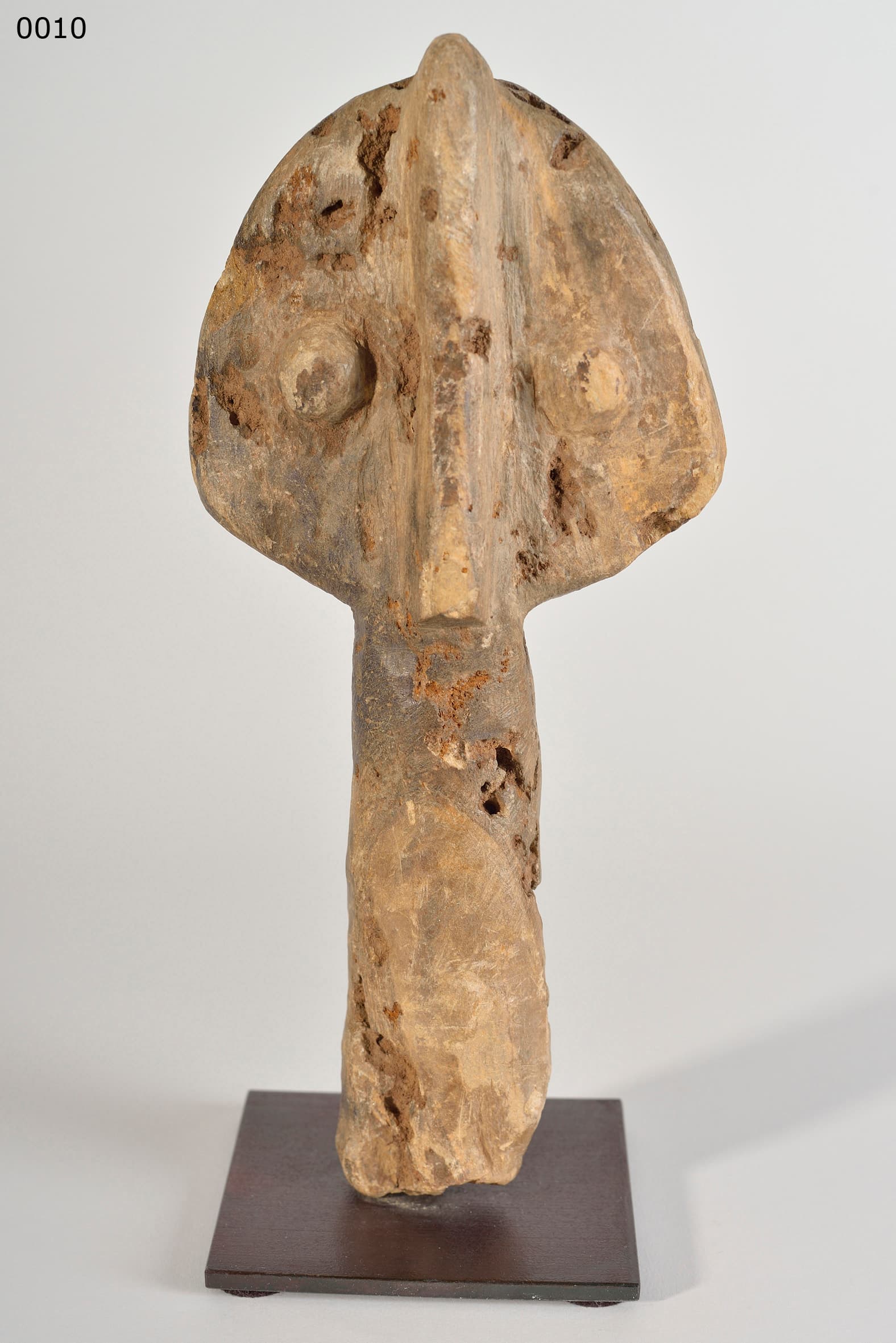
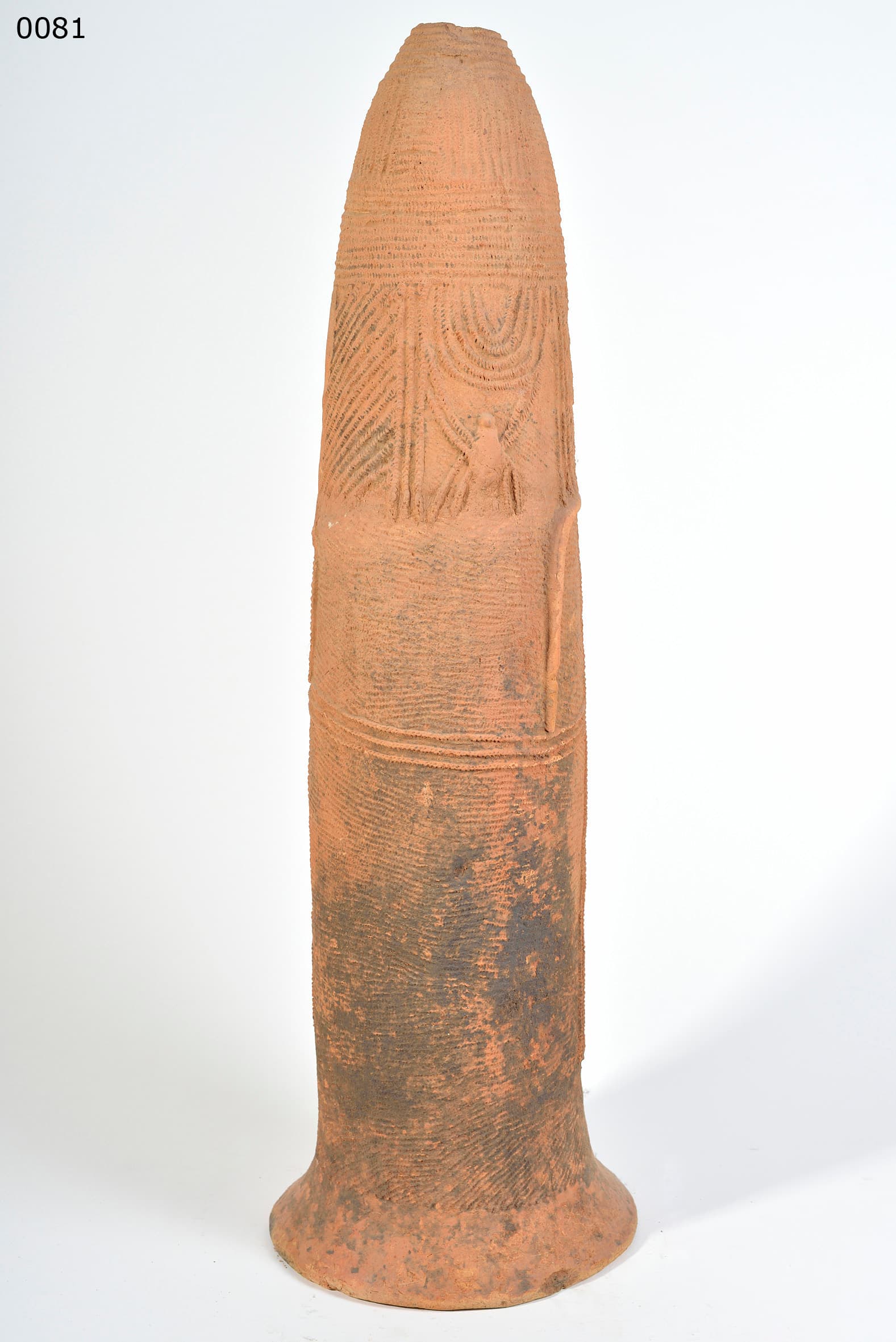
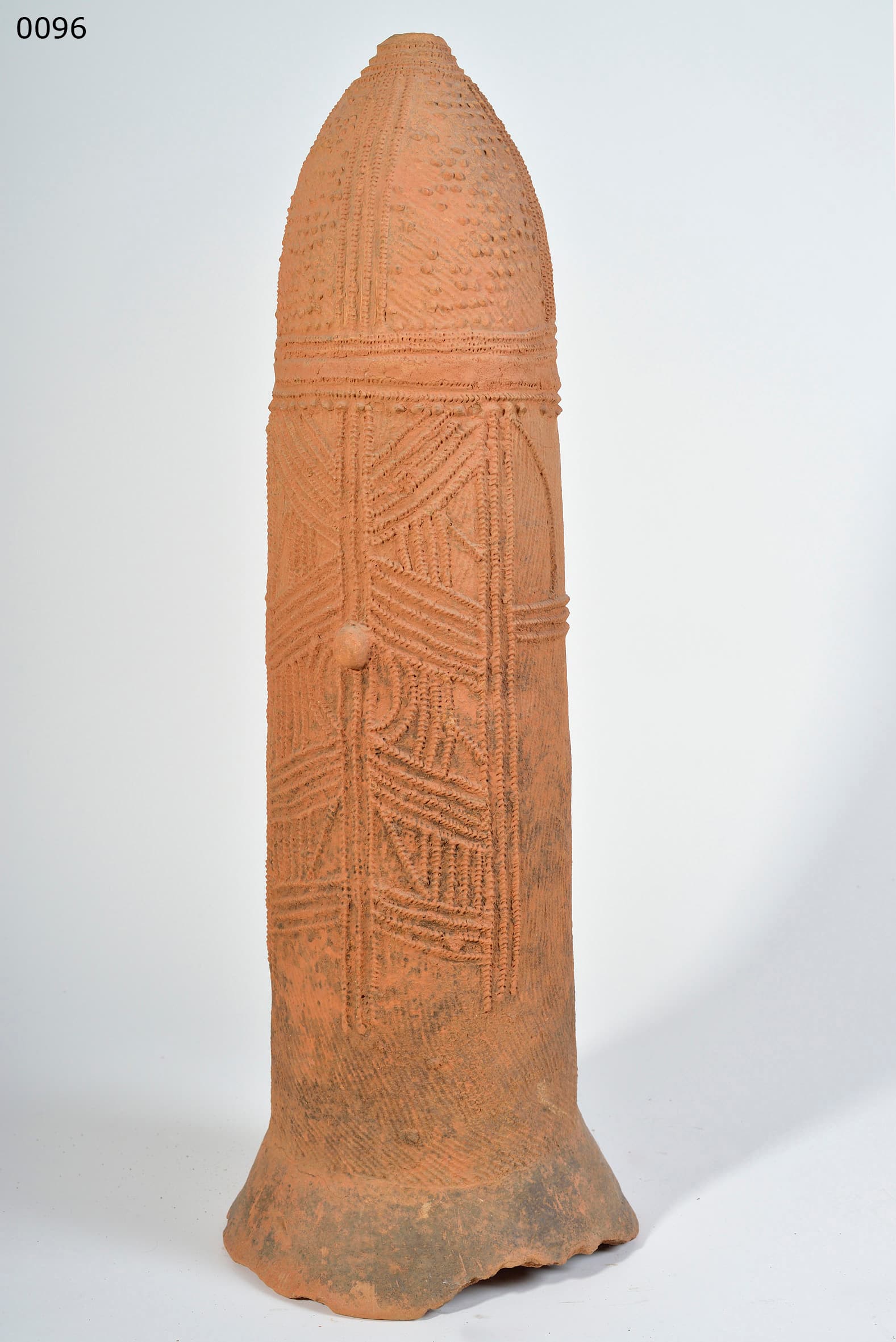
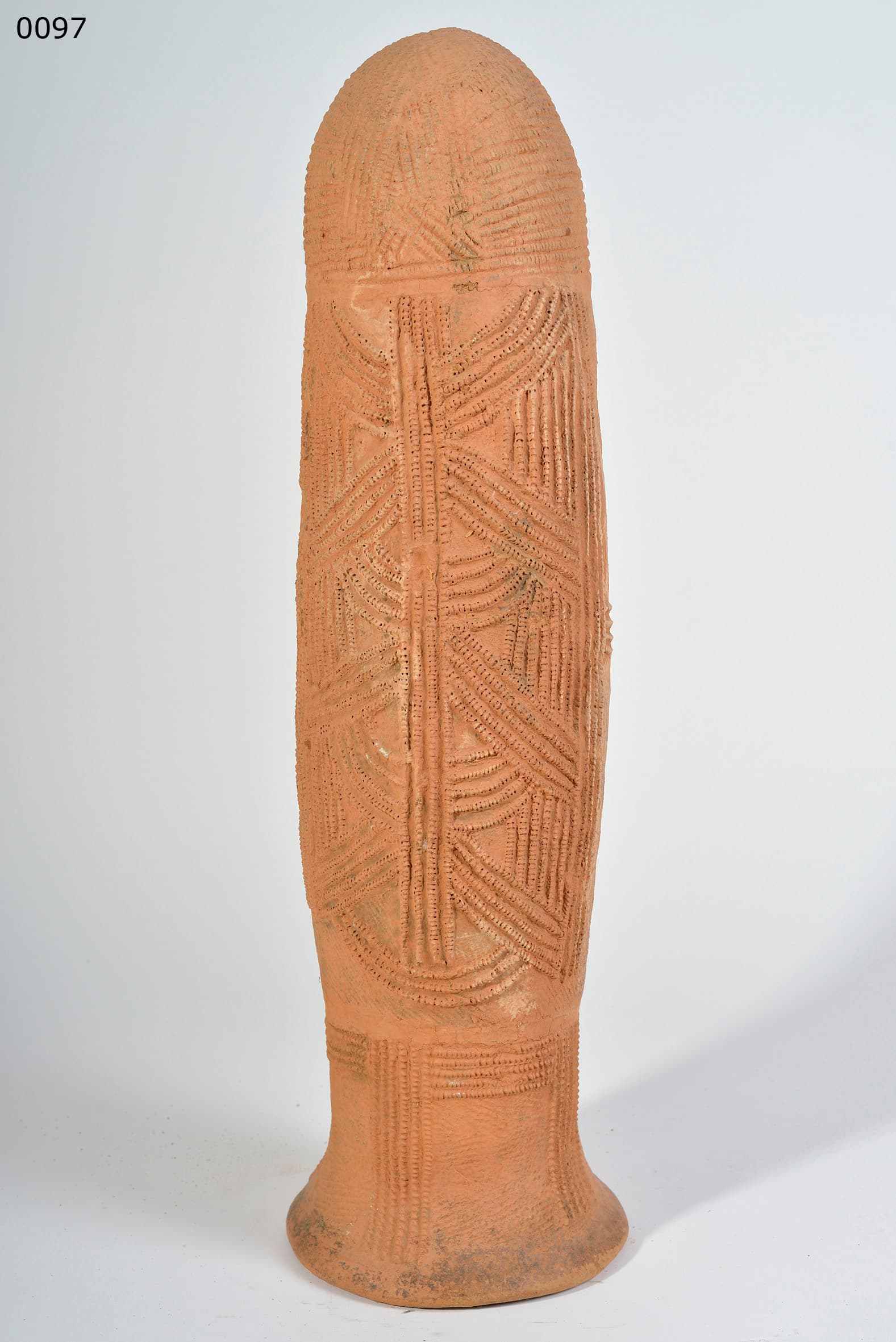
A carved lithic monolith (3rd–11th C., 41 cm) from the Bura culture of Niger/Burkina Faso — tapering phallic form topped with eroded abstract facial features in low relief, the dense stone deeply pitted, cratered, and texturized by ancient geological erosion.
1. Paired monolith
At 41 cm, this piece is the close sibling of the 40 cm stone sentinel in the collection.
- Matched Silhouette: Both stones share the same phallic ancestral format and the same method of abstract facial relief near the apex.
- Shared Cemetery: The tight sizing and morphological similarity suggest both stones came from the same necropolis field, likely marking adjacent graves.
2. Sentinel of the burial field
Together with its paired sibling, this stone would have stood vertically at the head of an elite grave.
- Rooted in Earth: The column was driven into the soil above the burial, grounding the spirit of the deceased to the specific location.
- Immortal Where Clay Fails: Unlike terracotta, stone resists shattering — a permanent anchor for the ancestor's spiritual presence across centuries.
3. Sandstorm chemistry
The geological degradation pattern is a continuous record of Sahelian weathering.
- Parallel Erosion: Similar cycles of wind, monsoon, and chemical weathering appear to have acted on both stones — producing closely comparable cratered textures.
- Sahelian Weathering: This taphonomy is consistent with long-term exposure to Sahelian climate conditions, supporting its attribution.
Summary
The companion to the 40 cm Bura stone sentinel, this 41 cm monolith completes the paired grave marker. Together the two extend the Bura stone-carving tradition into a visible duet — austere geometry under a thousand years of wind and rain.
Written with AI assistance from the collection appraisal, object photography and our own research; editorially reviewed. Mistakes are possible — corrections are welcome. How we work →