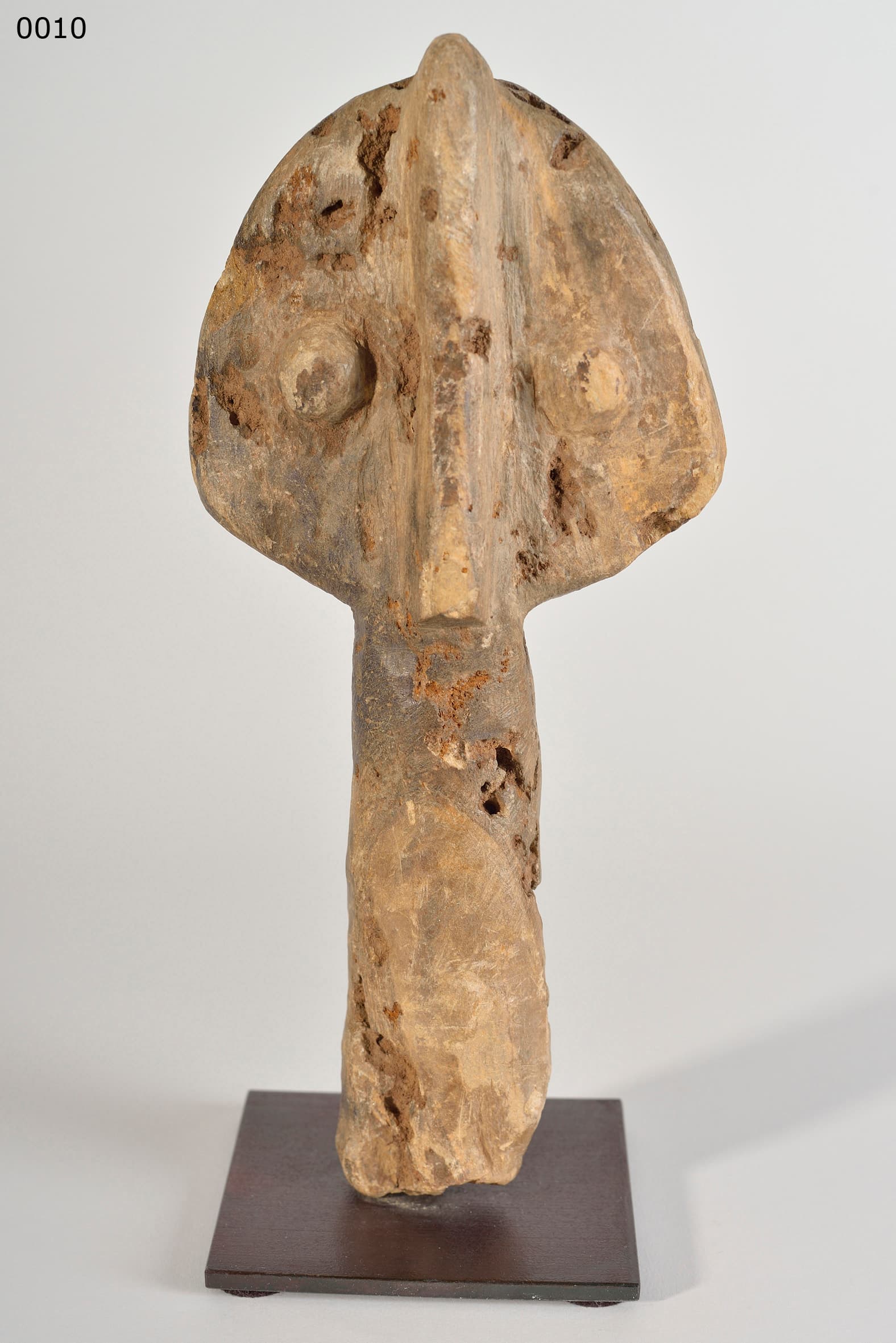
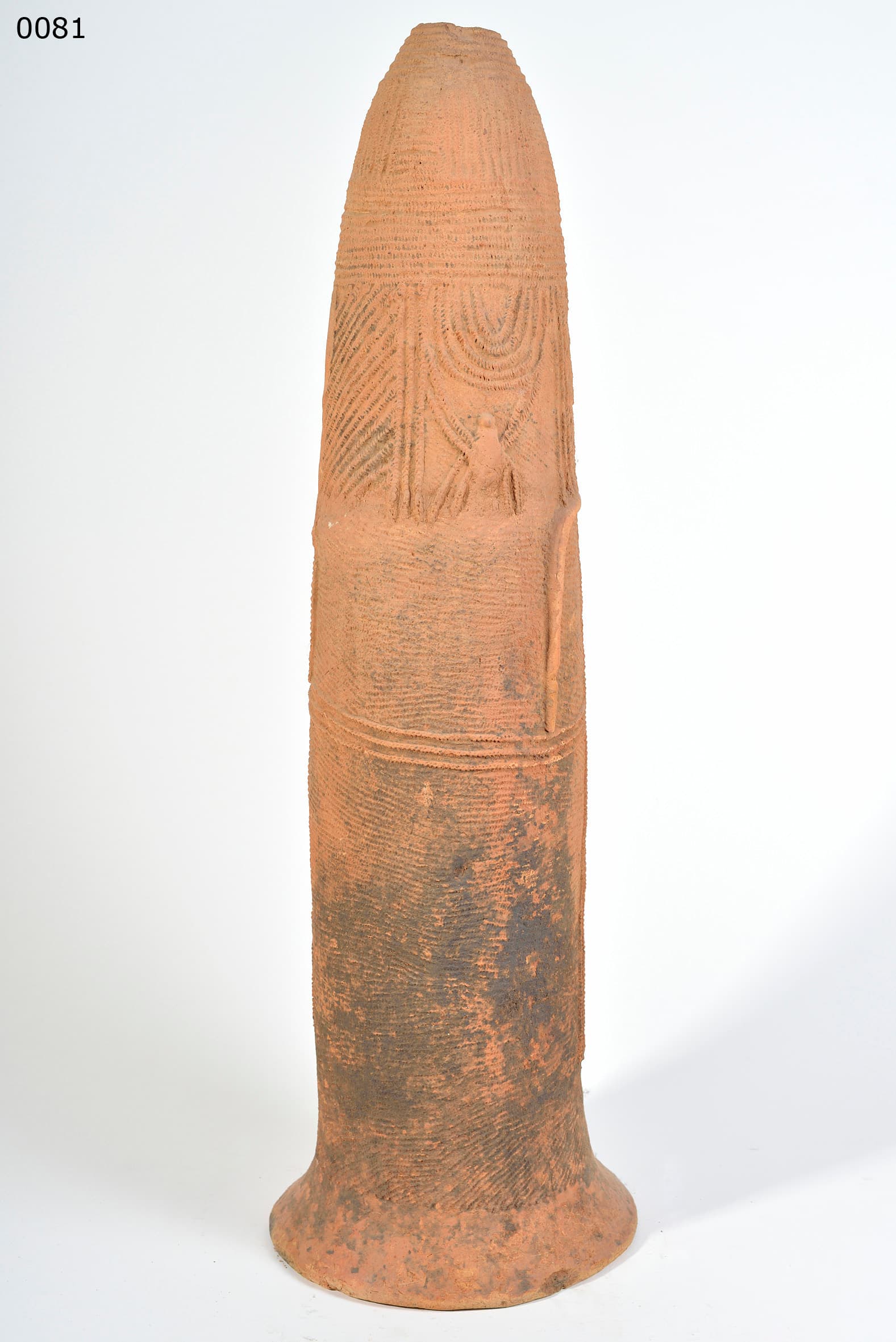
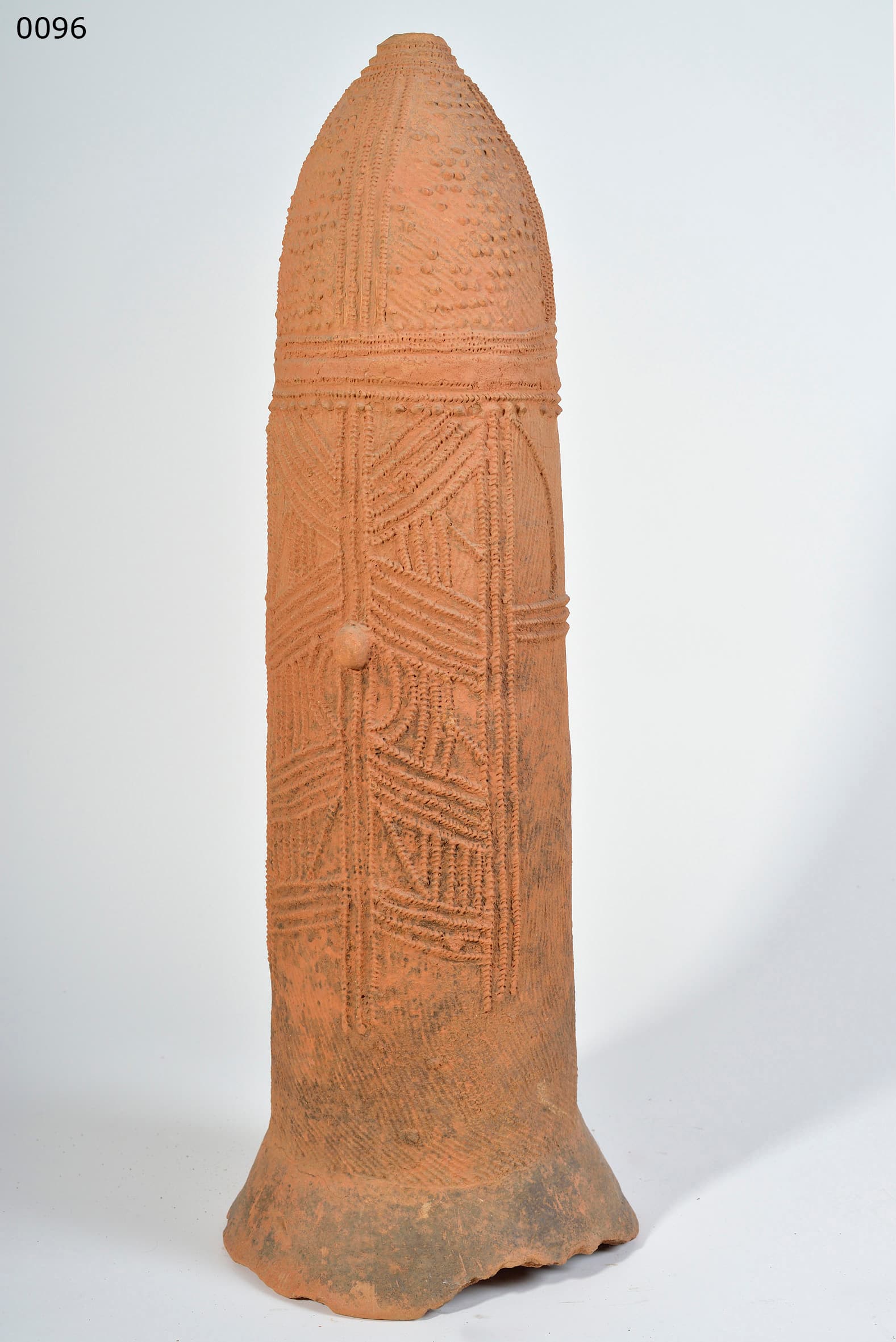
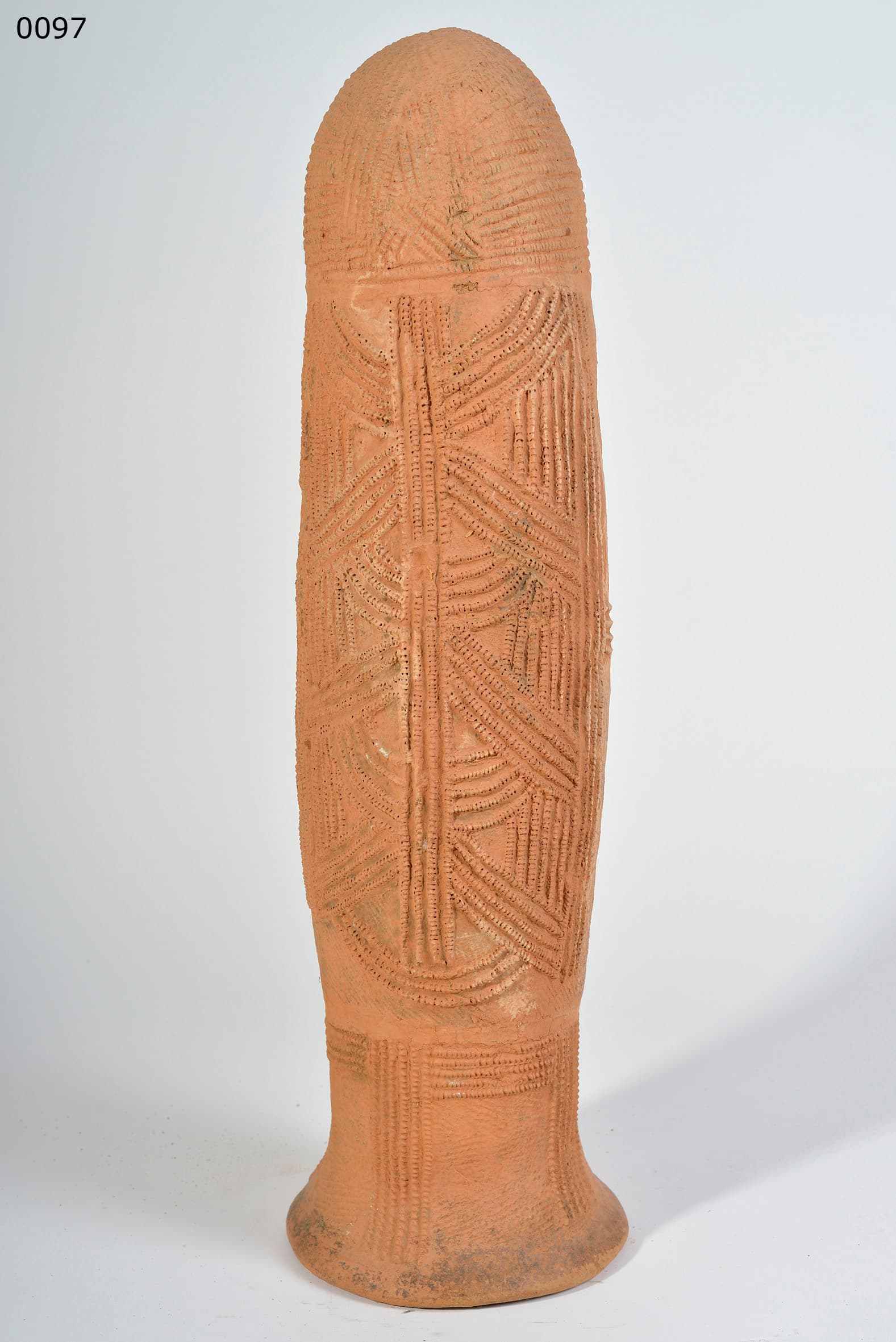
An ancient Bura terracotta funerary vessel (3rd–11th C., 30 cm) from Niger/Burkina Faso — a simple cylinder with a deep vertical stress crack, the highly calcified pale surface encrusted with hardened desert earth.
1. The bura-asinda necropolis complex
Discovered in 1978, the Bura-Asinda culture (3rd–11th century CE) fundamentally shifted understanding of ancient West Africa.
- Dual Typology: The Bura ceramic corpus oscillates between pure phallic-shaped tubular urns and more womb-like bulbous vessels.
- Pure Cylinder Variant: This 30 cm piece represents the most abstracted phallic form — stripped of all relief detail, the cylinder is pure regenerative symbol.
2. Mortuary deposition and ancestral focus
These objects were not for the living but for the deceased.
- Inverted Over Remains: Typically buried inverted over the deceased or filled with personal belongings, clothing, or human bones.
- Libation Conduit: Tubular forms often emerged just above the soil line, acting as physical channels through which the living poured water or millet beer during memorial ceremonies — the liquid reached the ancestors through the vessel itself.
3. Millennial calcification and firing fractures
The surface records both ancient technology and a thousand years of burial.
- Ancient Firing Stress: The deep vertical crack is a natural result of low-temperature open-pit firing stresses, exacerbated by the weight of shifting earth over a millennium.
- Mineral-Fused Crust: The thick cement-like encrustation of calcified Sahelian earth is characteristic of excavated Bura artifacts.
Summary
The pure-cylinder member of the Bura funerary pair, this 30 cm vessel concentrates the essence of the tradition's phallic regenerative iconography. Its firing fracture and mineral-bonded surface are consistent with first-millennium-CE ritual deposition.
Written with AI assistance from the collection appraisal, object photography and our own research; editorially reviewed. Mistakes are possible — corrections are welcome. How we work →