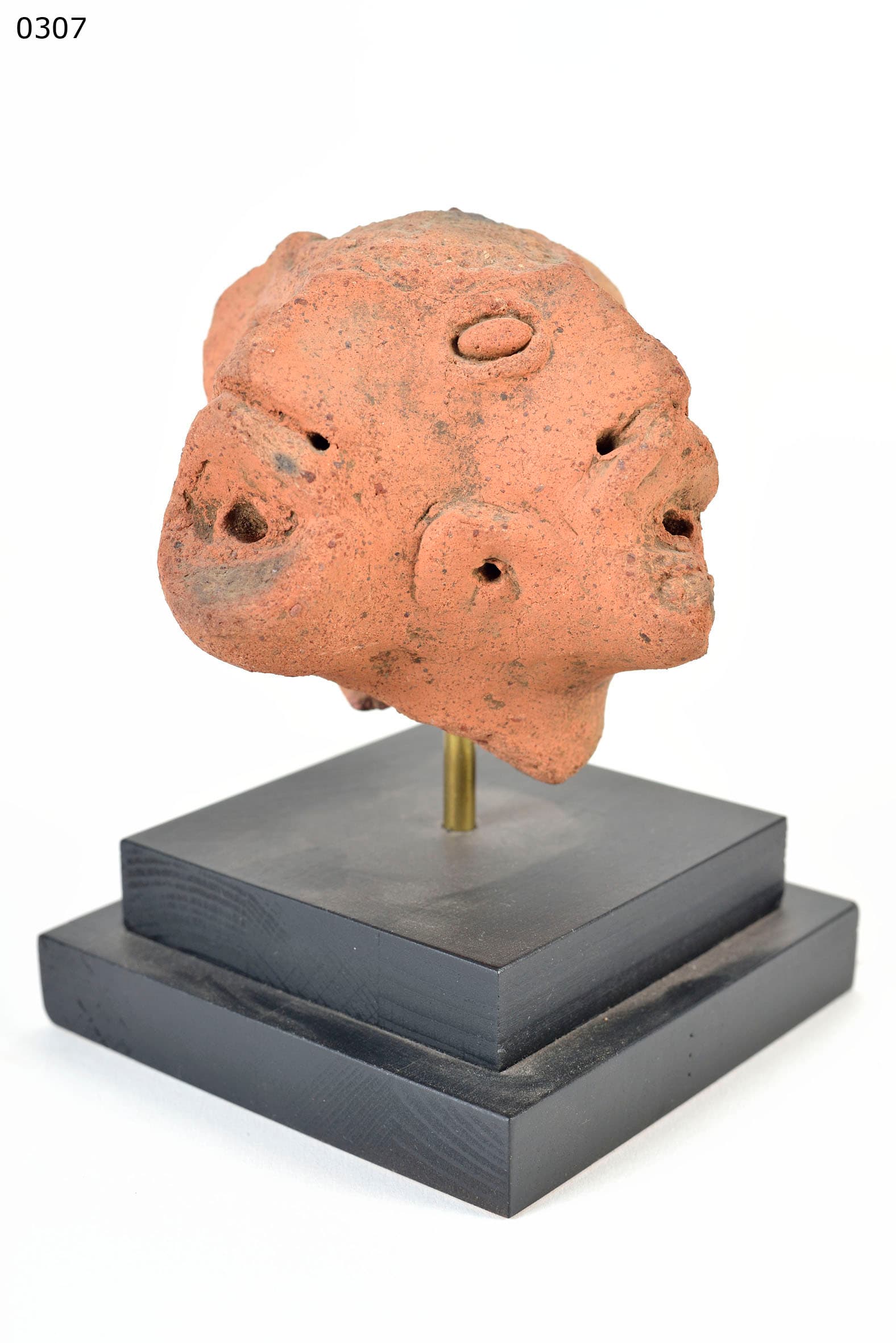
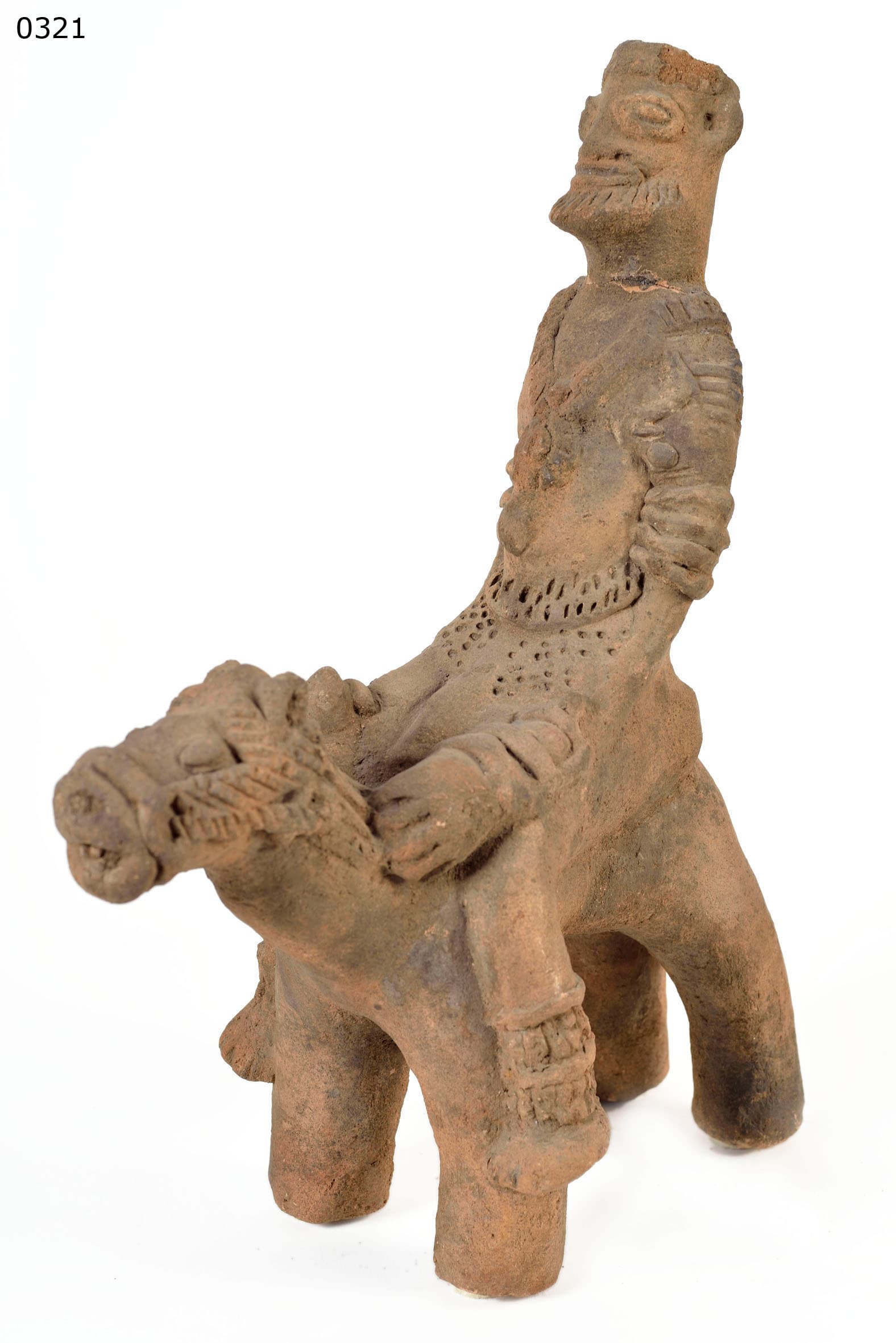
A highly unusual Koma terracotta Janus funerary figure (12th–18th C., 41 cm) from northern Ghana — columnar phallic-shaped body with projecting arms, surmounted by a two-faced head, the earthy orange-brown clay deeply pitted and heavily encrusted with baked-on soil deposits.
1. The koma-bulsa enigma
The Koma (or Komaland) terracottas of northern Ghana are a relatively recent and highly enigmatic archaeological discovery.
- Bulbous, Expressive Idiom: Dating 13th–18th centuries, the culture produced highly expressive often bulbous or tubular figures that break from the aesthetics of neighboring regions.
- Janus Rarity: This piece is exceptionally rare due to its two-headed configuration. The dual faces are carved with characteristic Koma protruding disc-like eyes and wide open mouths — giving the figure an alert, chanting expression.
2. Omniscience and mound burials
Koma figures are invariably found buried in organized mounds — ritual disposal sites, healing shrines, or graves.
- Dual-Direction Vision: The Janus motif is a universal symbol of omniscience — the ability to see into the past and future, to guard against malevolent forces approaching from any direction.
- Supreme Burial Sentry: As a funerary figure, this two-faced entity acted as a supreme spiritual guardian permanently warding off witchcraft and evil spirits from the sacred mound.
3. Shamanic deposition and taphonomy
The condition is consistent with centuries of burial in the savanna soils of northern Ghana.
- Heavy-Tempered Fabric: The extremely porous coarse terracotta reflects the use of heavy temper in the original clay mixture.
- Soil-Fused Recesses: Deep hardened encrustations of earth locked into the facial recesses, combined with overall abrasion, are consistent with a subterranean archaeological history.
Summary
Radiating omniscient power, this Koma Janus figure is an exceptionally rare survival from the enigmatic mound-builders of northern Ghana. Its dual-faced iconography and heavy earth encrustation make it a notable example of this archaeological tradition.
Written with AI assistance from the collection appraisal, object photography and our own research; editorially reviewed. Mistakes are possible — corrections are welcome. How we work →