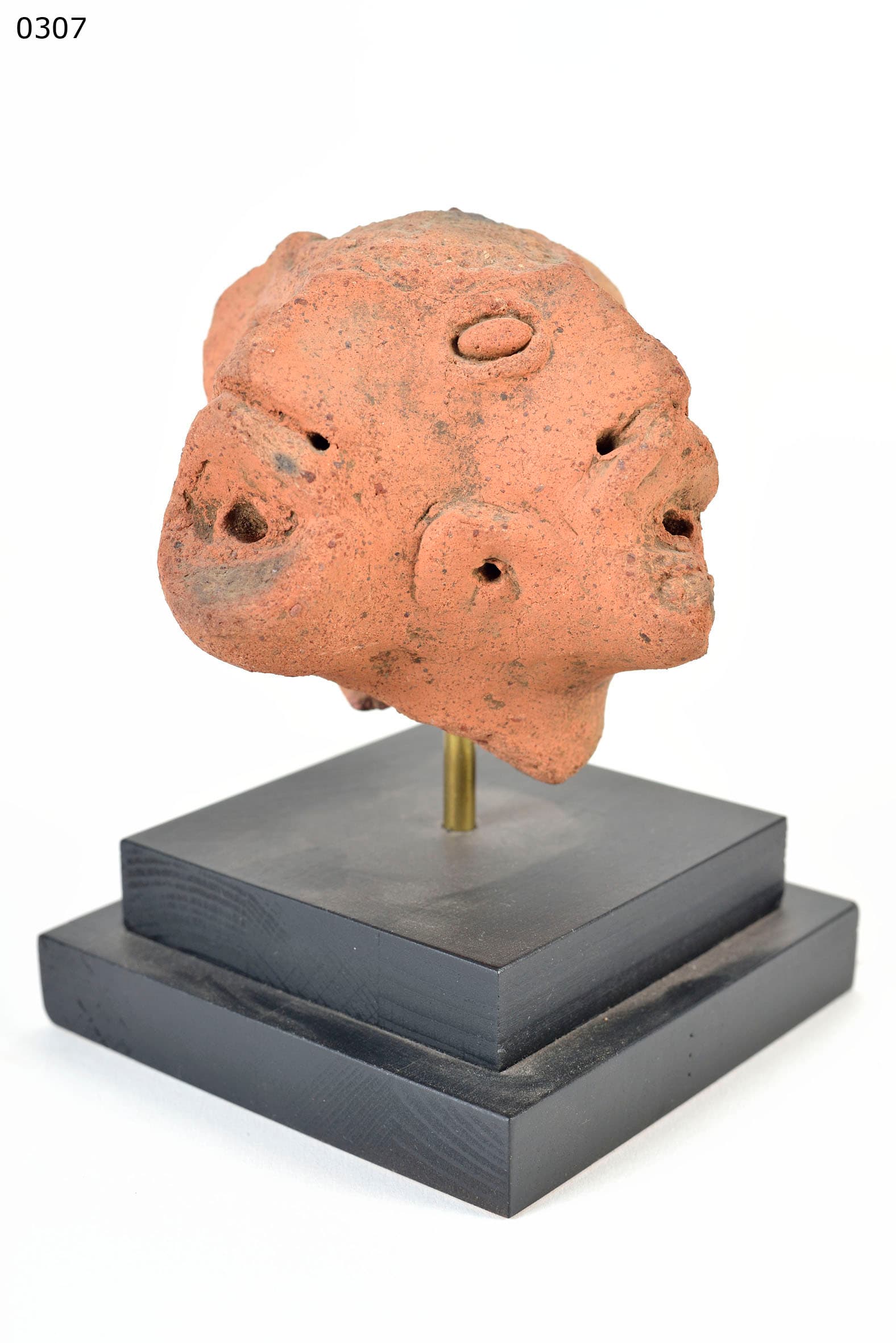
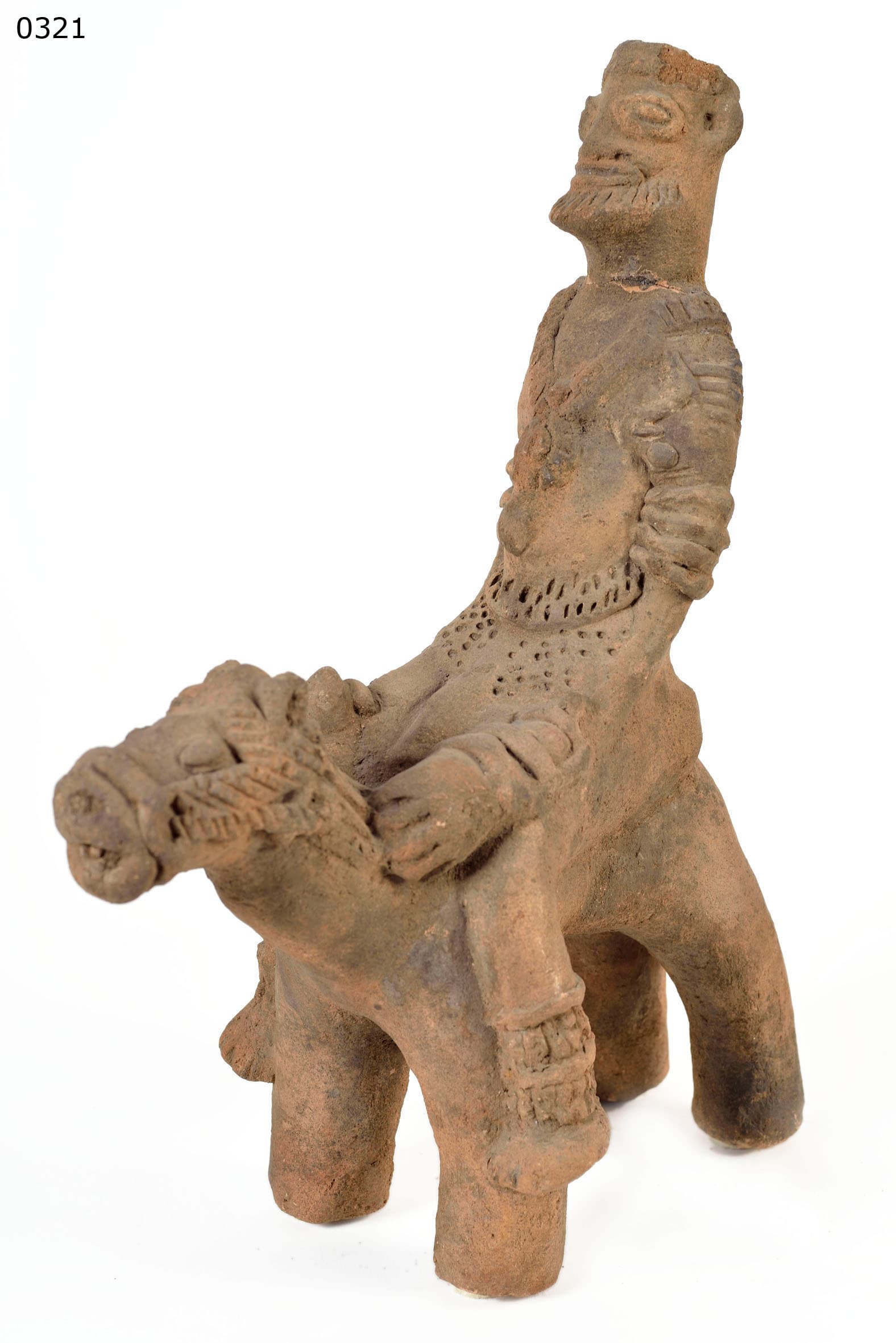
A dynamic Koma terracotta (12th–18th C., 24 cm) from Ghana — seated or squatting with arms bent upward toward the chest, featuring a heavily ringed neck, bulging disc-like eyes, and a dramatically open chanting mouth, the terracotta coarse and completely saturated with a dense baked-on crust of pale Ghanaian earth.
1. Koma-bulsa mound enigmas
The Koma (or Komaland) terracottas of northern Ghana are a highly enigmatic archaeological discovery.
- Break From Smooth Aesthetics: Dating between the 13th and 18th centuries, the culture produced highly expressive often bulbous figures that break completely from the smooth aesthetics of neighboring regions.
- Hyperventilating Exertion: This quintessential example — with protruding disc-like eyes and wide aggressively open mouth — gives the entity an alert almost hyperventilating expression of spiritual exertion.
2. Curative or funerary sentinels
Koma figures are invariably found buried in organized circular mounds — ritual disposal sites, healing shrines, or massive graves.
- Expelling Disease: The open mouth implies the figure is actively chanting, breathing, or expelling disease.
- Vocal Spiritual Sentry: As a tomb figure, it likely acted as an aggressive spiritual sentry — permanently warding off witchcraft and evil spirits from the sacred burial mound through continuous supernatural vocalization.
3. Earth sintering and taphonomy
The material state is entirely consistent with centuries of burial in the savanna soils of northern Ghana.
- Porous Heavy Temper: The terracotta is extremely porous, indicating the use of heavy temper.
- Fused Earth Recesses: Deep hardened earth encrustations are fused tightly into the recesses of the facial features, the ringed neck, and the spaces beneath the arms — features consistent with a prolonged period of subterranean burial.
Summary
Radiating active vocal spiritual power, this Koma tomb figure is a rare survival from the enigmatic mound-builders of northern Ghana. Its expressive iconography and deep earth encrustation are characteristic of this distinctive archaeological tradition.
Written with AI assistance from the collection appraisal, object photography and our own research; editorially reviewed. Mistakes are possible — corrections are welcome. How we work →