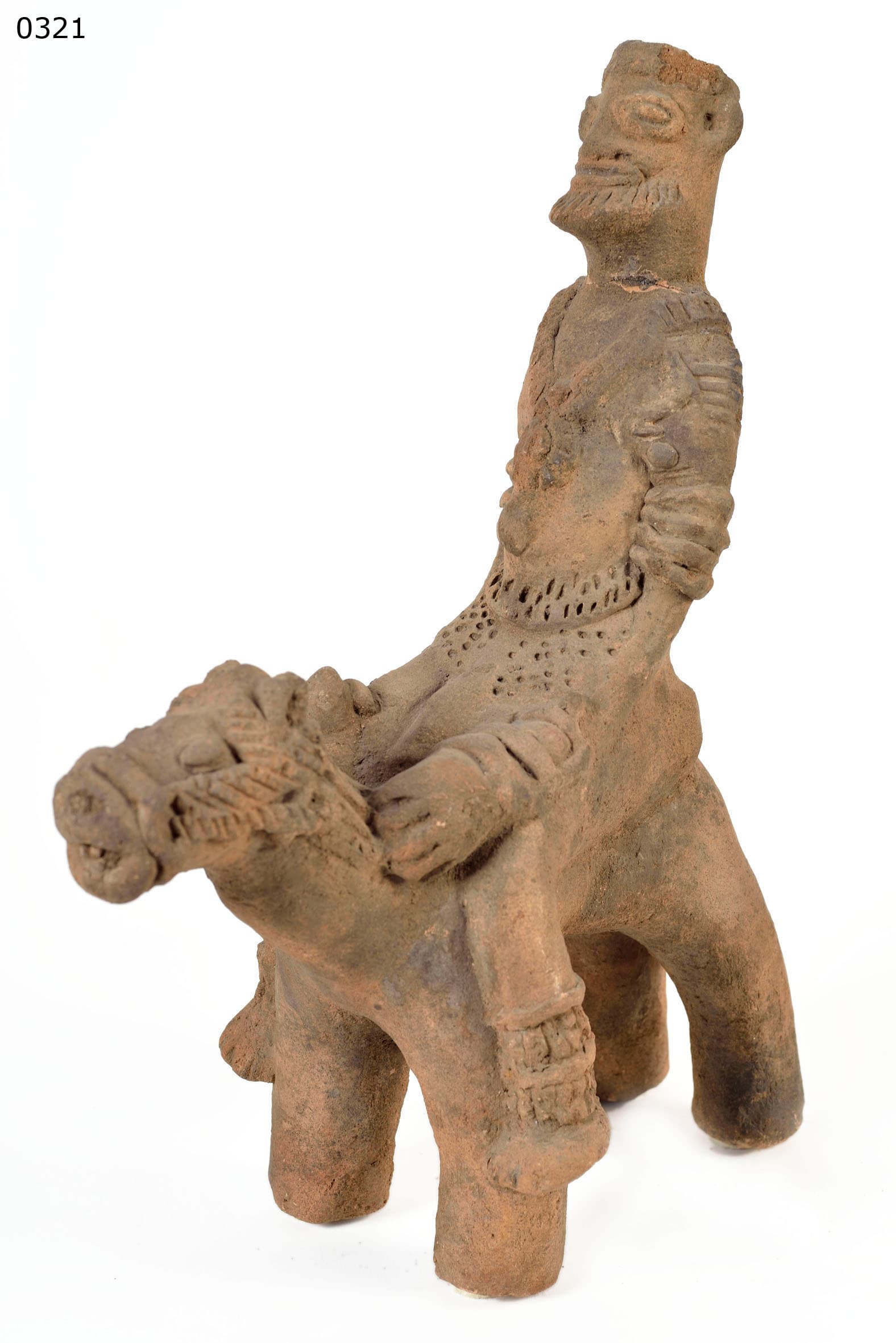
An exceedingly rare Koma polycephalic terracotta head (12th–18th C., 11 cm) from Ghana — a four-faced configuration projecting from a central nodule, with deeply punctured cavities for eyes, ears, and mouths, the clay bearing a coarse reddish-brown slip with heavy soil encrustation and significant signs of ancient burial wear.
1. The koma-bulsa archaeological enigma
The Koma-Bulsa terracotta mounds of Northern Ghana represent one of the most enigmatic archaeological discoveries of the 20th century.
- Intense Stylization: Koma artistry is renowned for relying on globular forms and deep punctate incisions that give figures an expressive almost surreal presence.
- Shadow-Play Features: Deep circular gouges defining facial features is a hallmark of the aesthetic — creating a dramatic interplay of shadow and light that brings the clay to life.
2. Omniscience and multi-directional vigilance
The polycephalic four-faced structure is an extraordinary rarity.
- All-Seeing Authority: In West African animist cosmologies, multi-faced deities or ancestors represent all-seeing spiritual power, omnidirectional vigilance, and absolute authority.
- Cardinal Guardian: Positioned in a mound or shrine, this figure kept watch over all four cardinal directions — protecting the community from malevolent forces and observing the actions of the living from every angle.
3. Subterranean patination and chronology
The gritty highly porous surface of this low-fired clay figure is covered in hardened soil accretions and calcified root marks.
- Primary Koma Context: The encrustation within the punctured eye and mouth cavities is consistent with excavation from a primary Koma context.
- Centuries of Mineral Absorption: Deep burial has caused the clay to absorb the mineral content of the Ghanaian soil — a natural indication compatible with a medieval age.
Summary
As an exceptional polycephalic variant of an already enigmatic culture, this piece represents a rare form within the Koma corpus. It is a significant artifact that visually maps the theology of omnidirectional ancestral surveillance.
Written with AI assistance from the collection appraisal, object photography and our own research; editorially reviewed. Mistakes are possible — corrections are welcome. How we work →