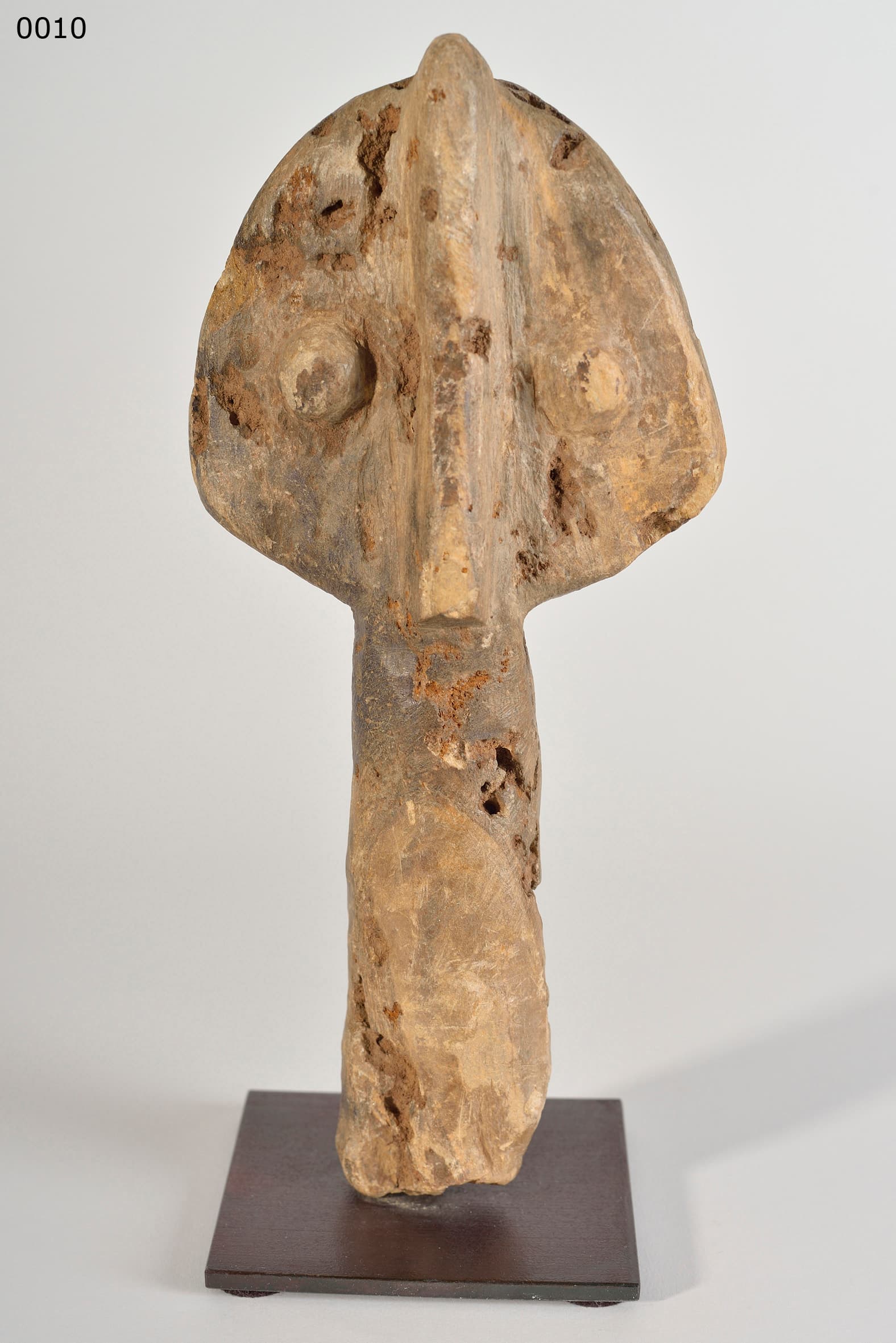
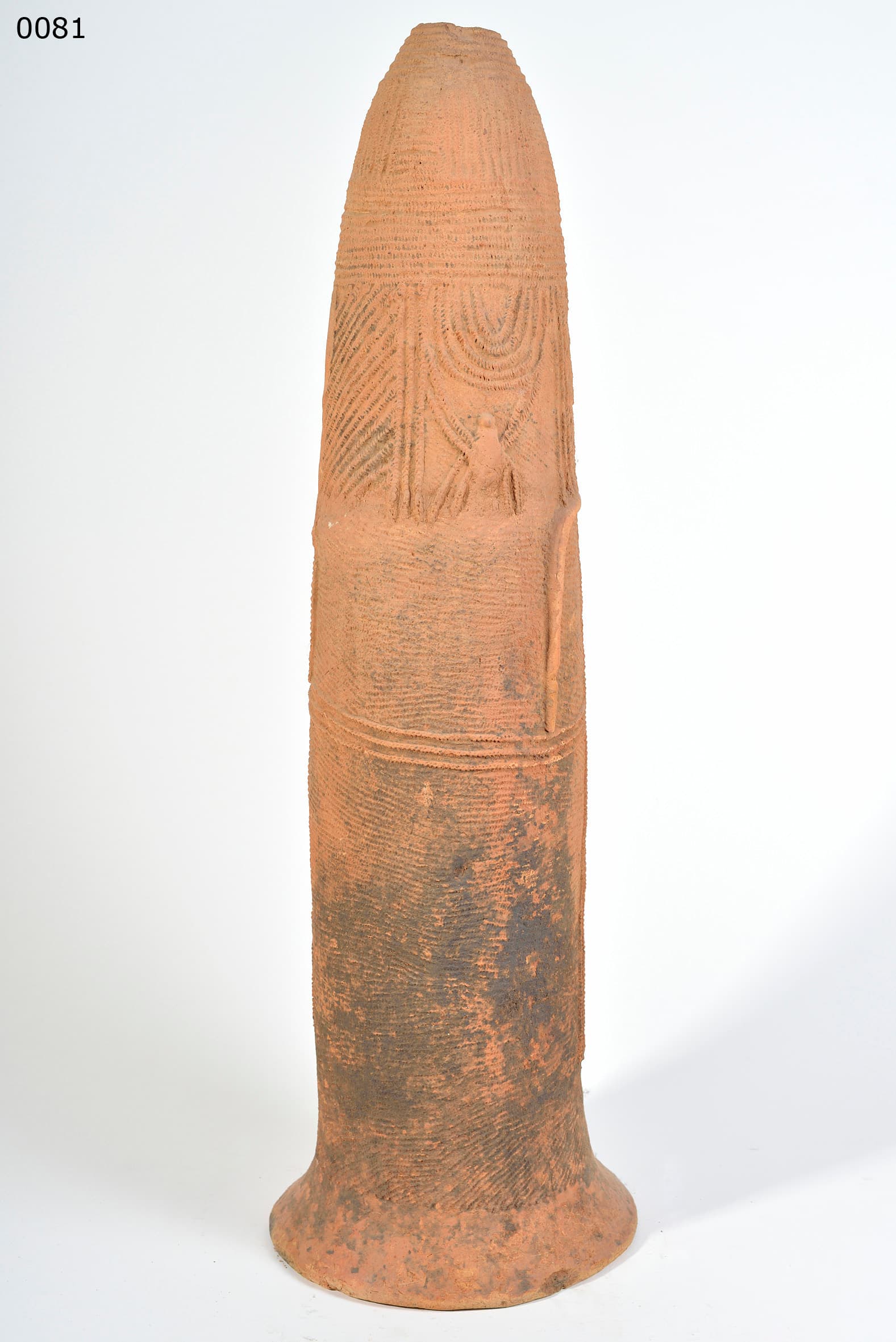
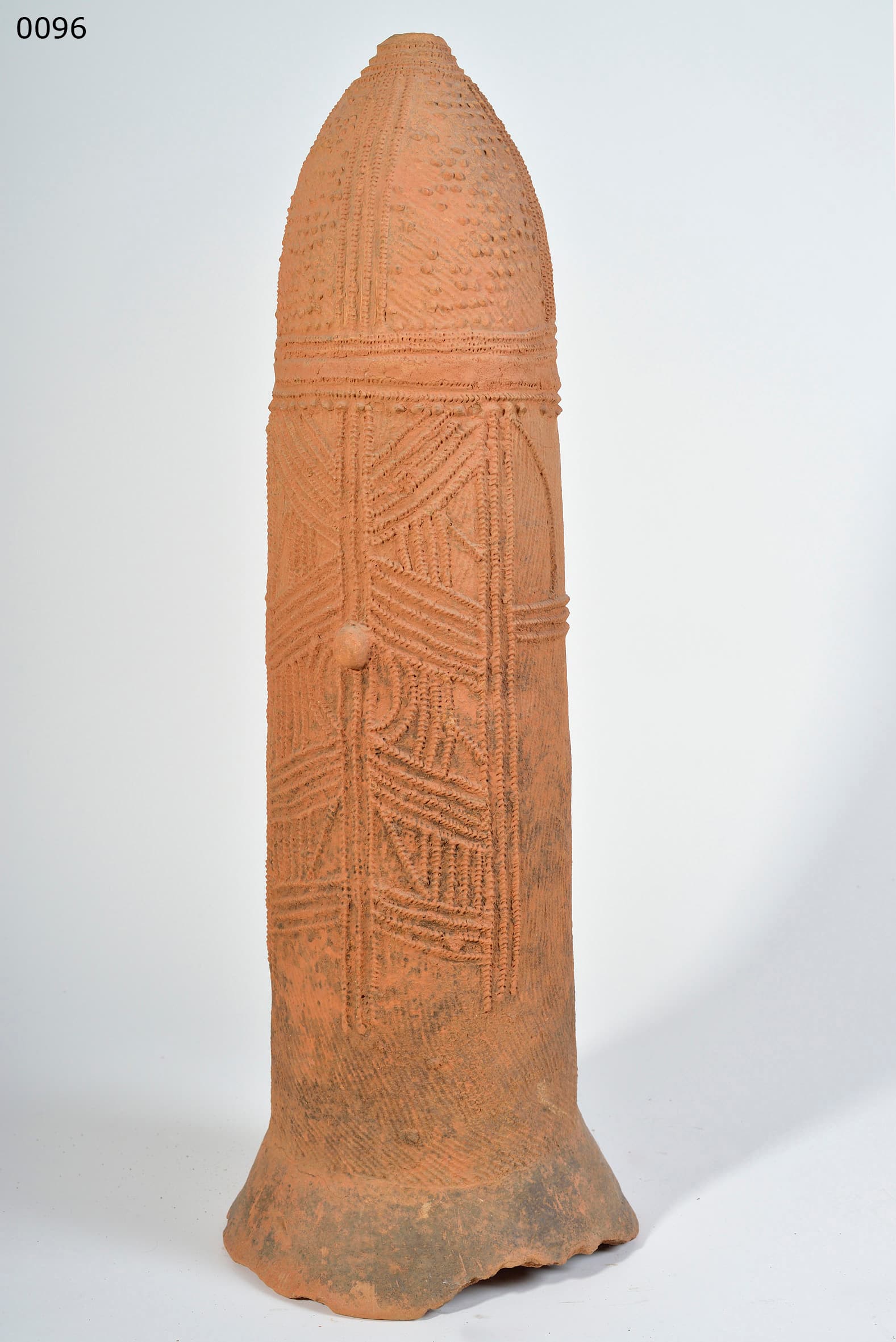
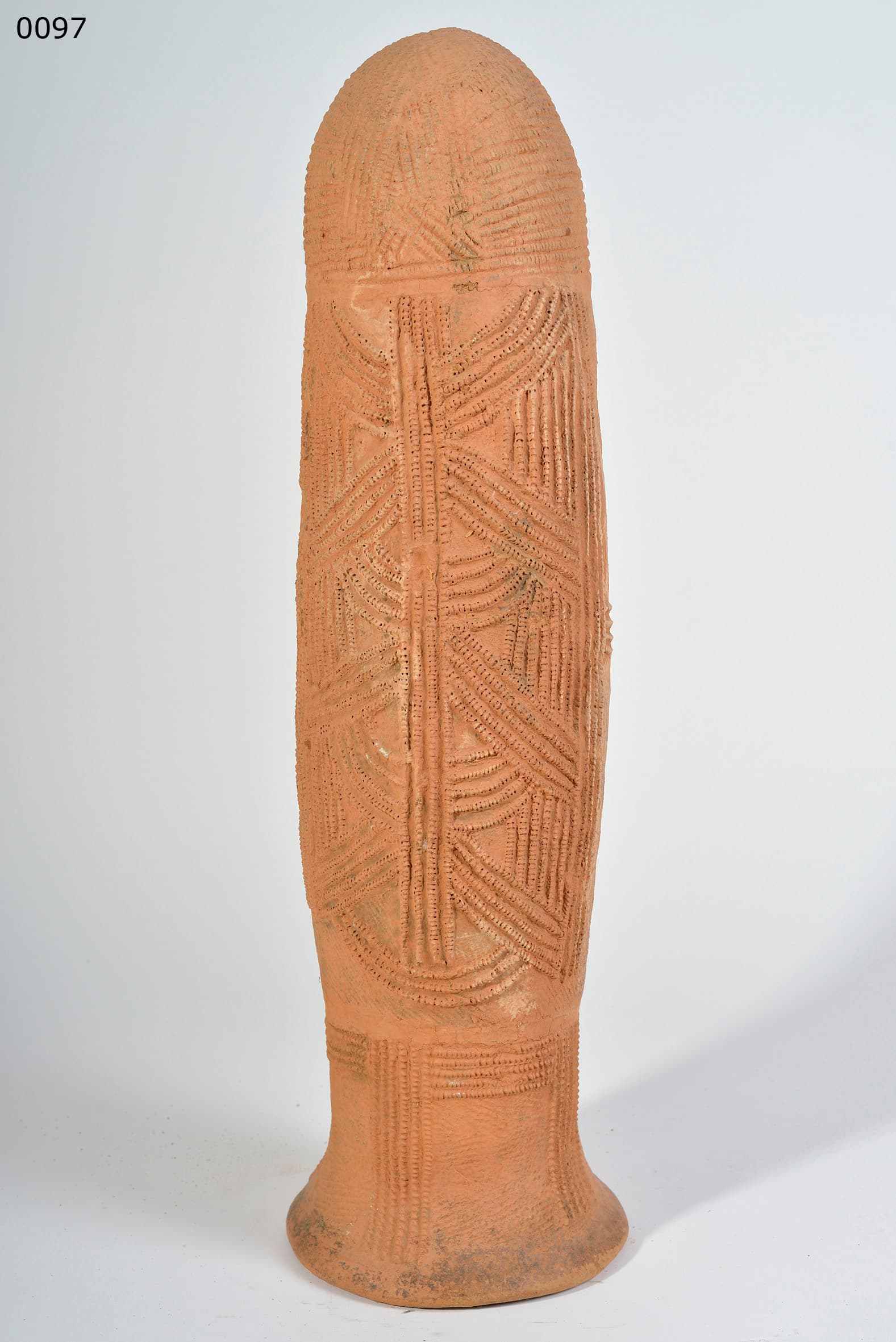
An ancient Bura terracotta funerary vessel (3rd–11th C., 38 cm) from Niger/Burkina Faso — a tall narrow neck expanding into a rounded spherical base, the highly calcified pale surface encrusted with hardened desert earth.
1. The womb-like variant
Where its 30 cm sibling represents the pure phallic cylinder, this 38 cm piece represents the bulbous womb-like Bura variant.
- Dual Typology in One Collection: The Bura ceramic corpus moves between phallic and womb-like silhouettes; the collection's pairing of both forms documents the tradition's complementary symbolism.
- Regenerative Fullness: The bulbous base evokes the womb, gestation, and the interior darkness of the grave as generative rather than terminal.
2. Mortuary container and libation portal
Like its cylindrical counterpart, this vessel served the dead rather than the living.
- Interior Holds the Ancestor: Buried inverted over the deceased or filled with skeletal remains and personal belongings.
- Narrow Neck as Portal: The narrow neck protruding above the soil line served as a libation portal — liquids poured in flowed down into the ancestor's container at the core of the grave.
3. Century-deep calcification
The surface is consistent with a long period of burial.
- Mineral Saturation: Sahelian earth chemistry has permanently bonded pale minerals into the porous terracotta, producing the characteristic chalky thick crust.
- Cement-Like Fusion: This calcification is difficult to replicate artificially; Bura pieces typically carry this specific bonding pattern resulting from long-term interaction between the clay and soil.
Summary
The womb-form counterpart in the Bura ceramic pair, this 38 cm vessel extends the tradition's funerary iconography into its regenerative register. Its narrow neck, bulbous body, and extensive calcification are consistent with notable archaeological examples of this tradition.
Written with AI assistance from the collection appraisal, object photography and our own research; editorially reviewed. Mistakes are possible — corrections are welcome. How we work →