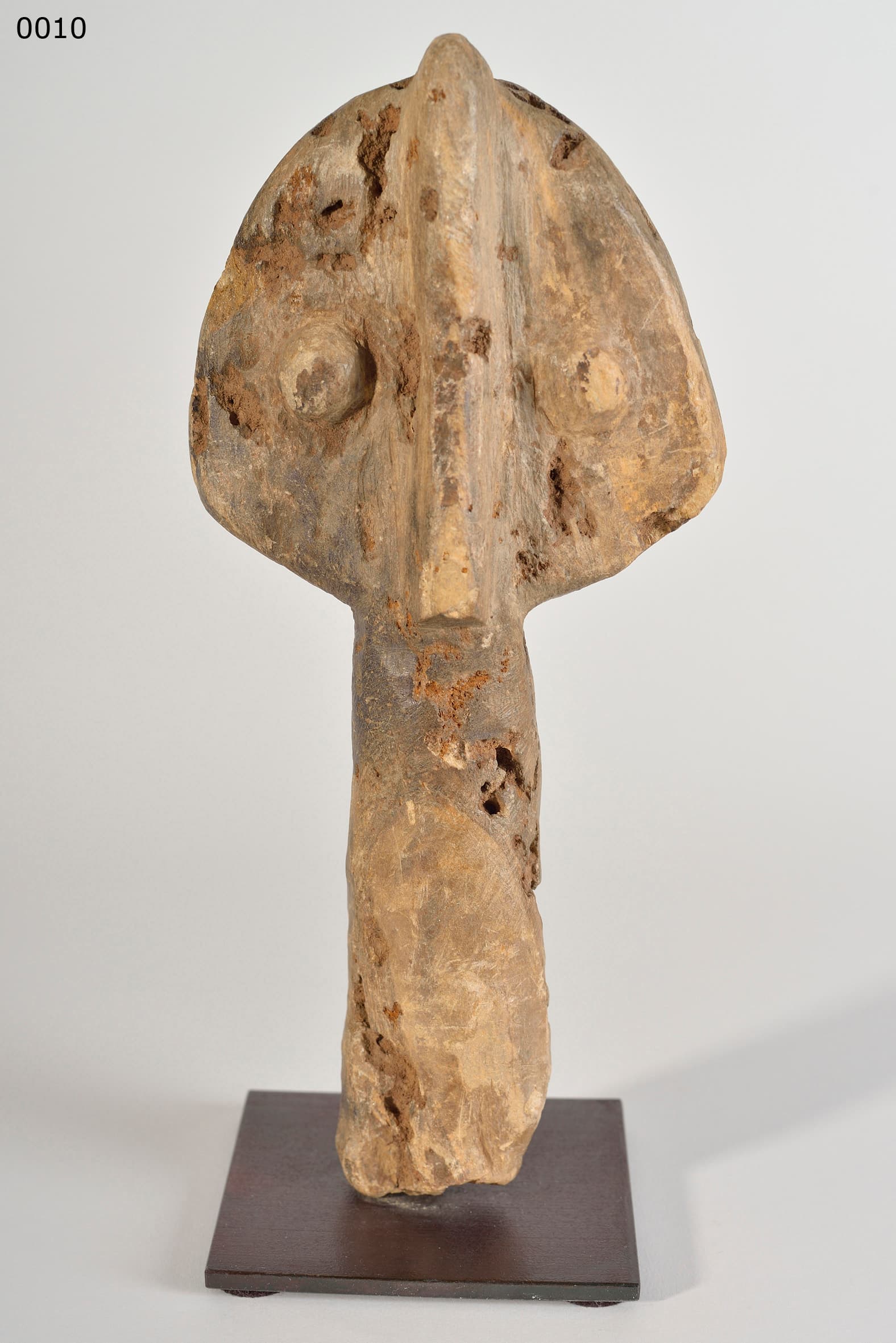
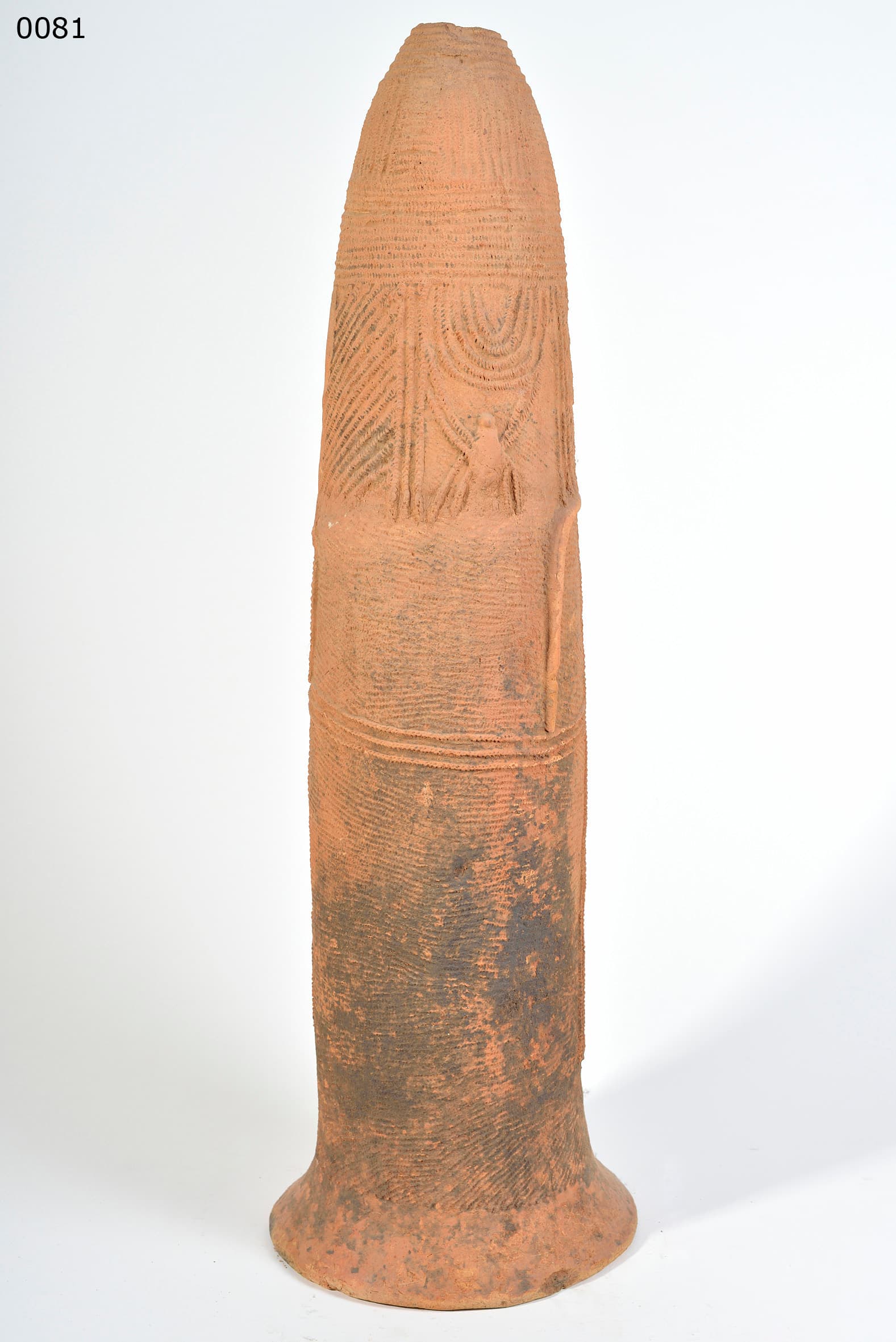
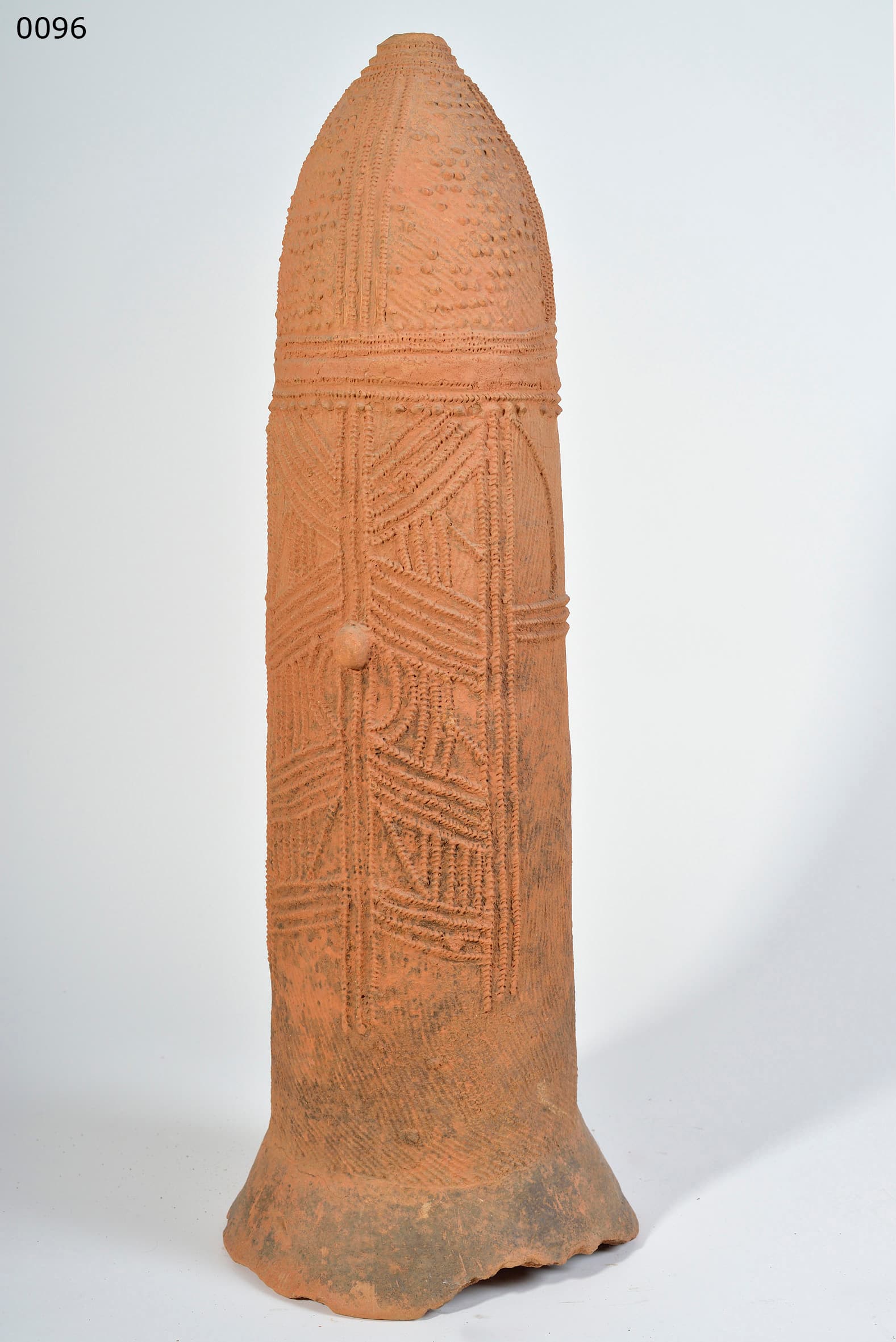
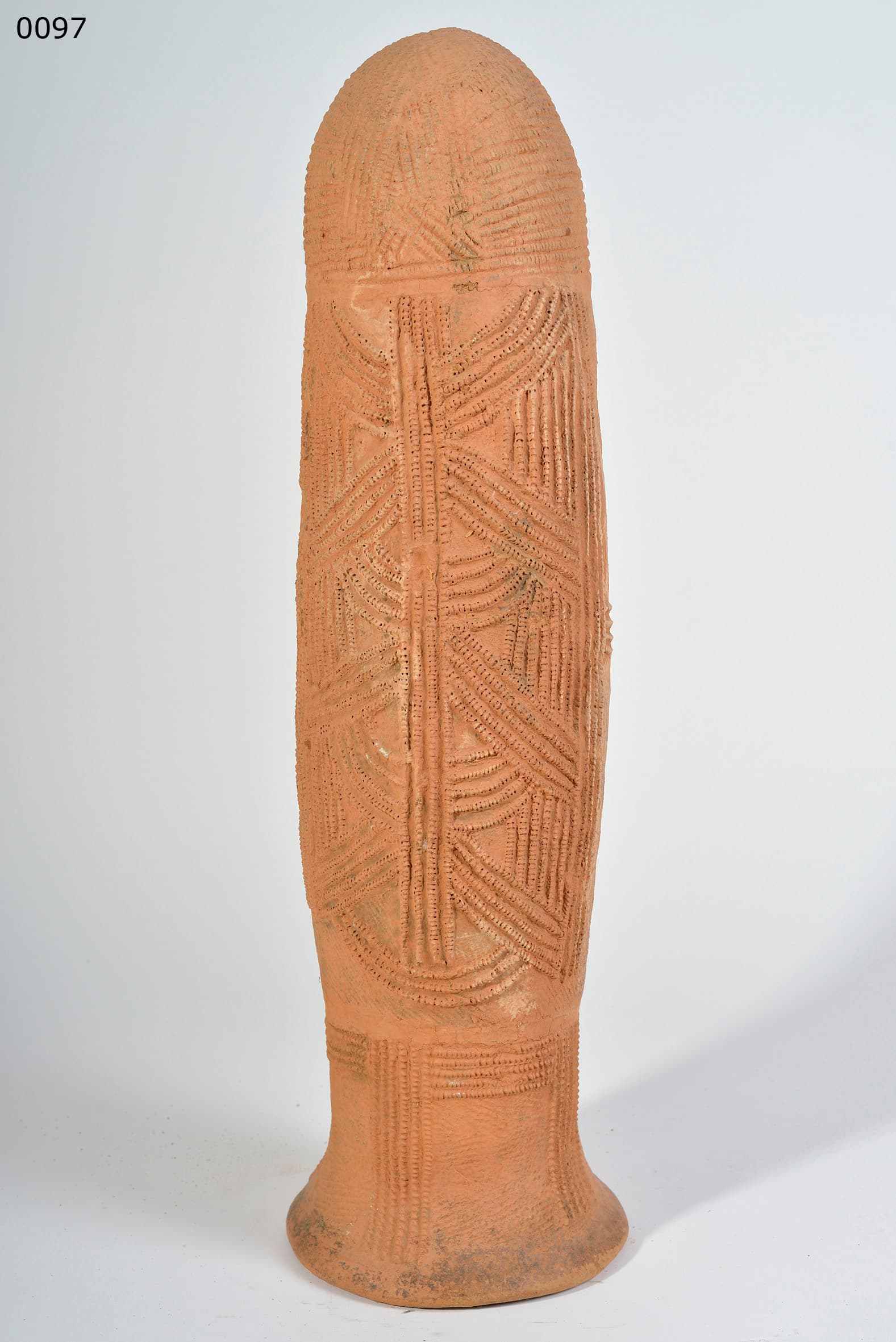
An exceptionally rare paired set of Bura stone monoliths (3rd–11th C., 39/45 cm) from Niger/Burkina Faso — a classic phallic/tubular pair where the taller bears an abstract face and the shorter uniquely displays both facial features and carved breasts indicating maternity, the heavy pale stones deeply cratered by severe weathering.
1. The dual generative principles
While the Bura-Asinda culture is known for abstract stone monuments, finding a definitive male/female couple — especially one denoting maternity — is an extreme rarity.
- Complete Cosmology: The male phallic form paired with the female maternal form stands for the absolute complete cycle of human fertility.
- Unbroken Lineage: Together the stones encode the unbroken continuity of the ancestral lineage rather than commemorating a single individual.
2. Sentinels of the necropolis
Placed together at the head of a grave, this stone couple served as immovable sentinels.
- Soul-Pinning: The stones pinned the wandering soul to the burial site while projecting protective, life-giving energies outward into the community.
- Anchored Fertility: The indestructible medium was traditionally believed to guarantee the ancestors' fertility would be permanently anchored to the landscape for future generations to venerate.
3. Millennial wind and rain erosion
The taphonomy of these two stones is consistent with a significant age.
- Sandstorm-Scoured: A thousand years of Sahelian sandstorms and monsoon rains have scrubbed away the softer minerals.
- Sponge-Like Skin: The resulting deeply pitted textured surface is consistent with long-term geological aging, supporting an attribution to the 3rd–11th-century period.
Summary
A highly unusual representation of the paired generative forces, this Bura stone couple is a significant archaeological example. Their explicitly maternal iconography and profound geological erosion are consistent with a millennia-old origin.
Written with AI assistance from the collection appraisal, object photography and our own research; editorially reviewed. Mistakes are possible — corrections are welcome. How we work →