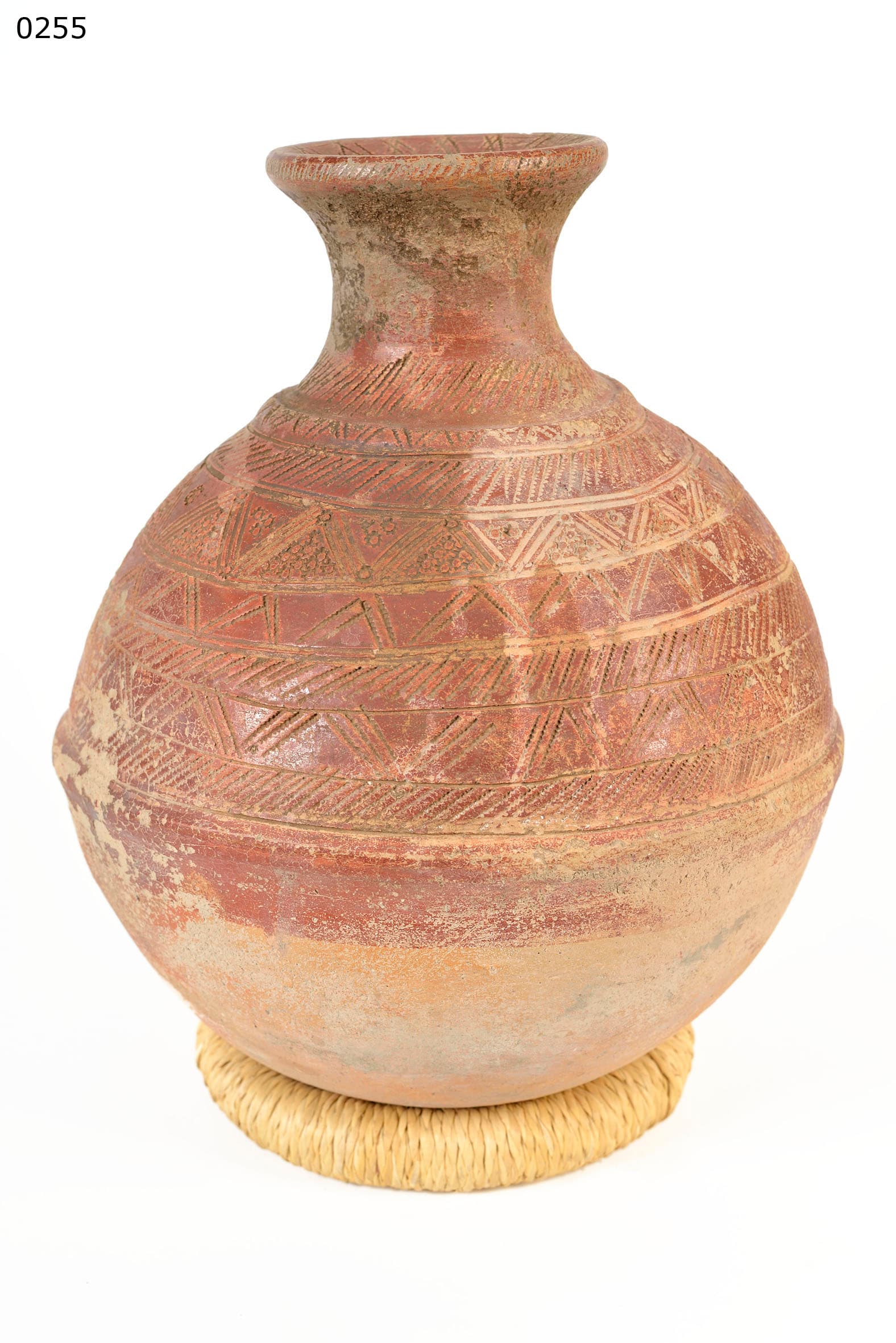
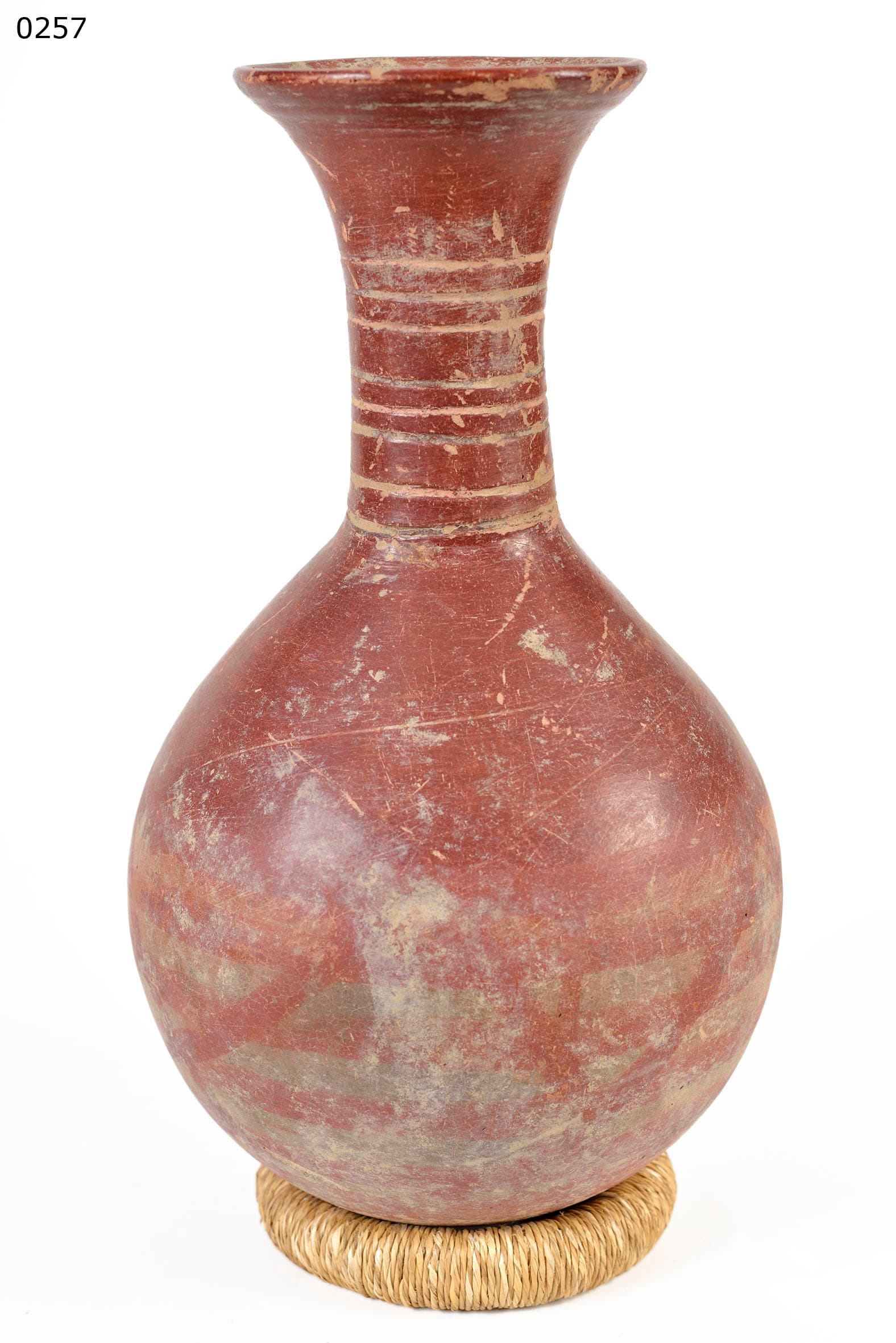
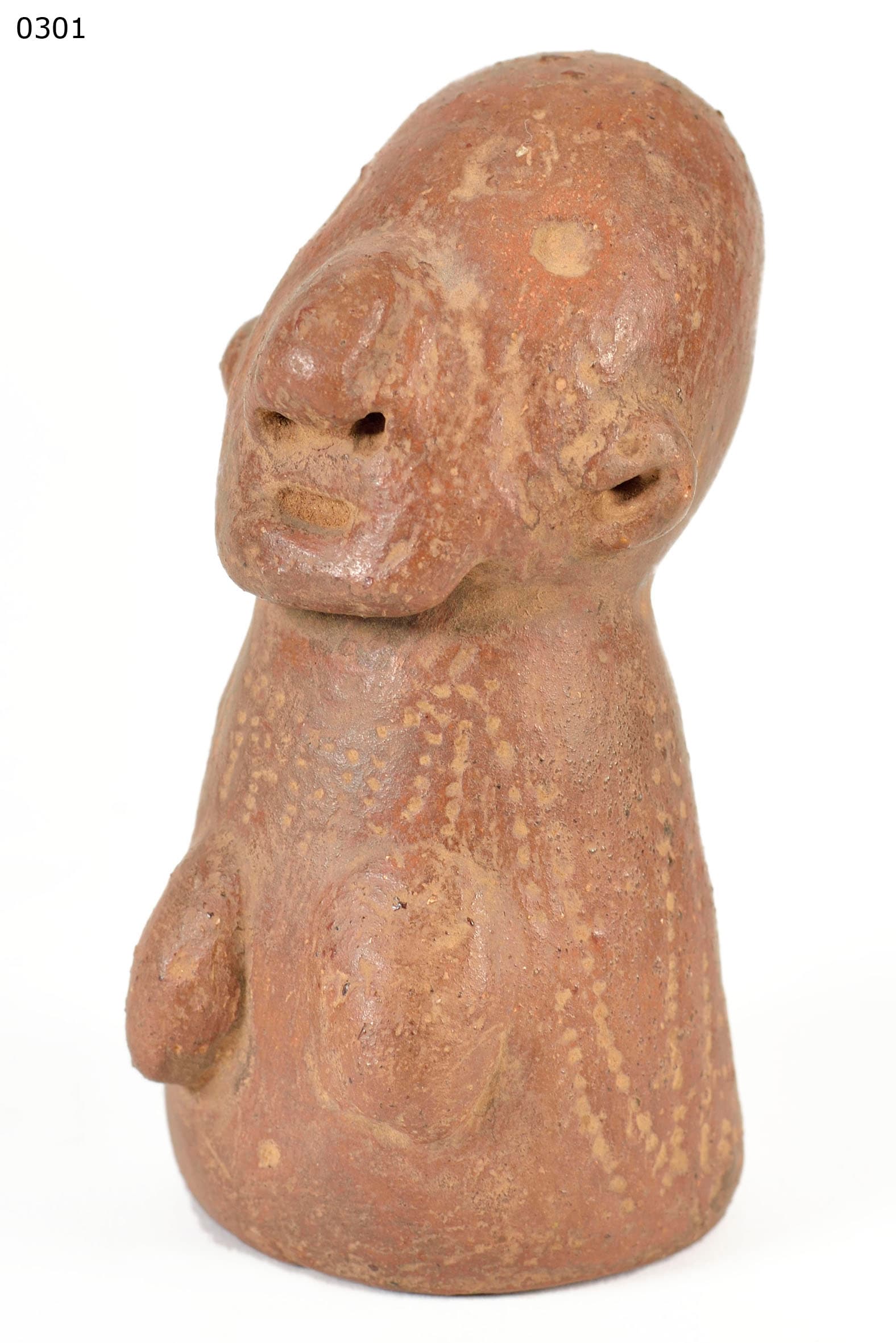
A highly emotive Inland Niger Delta terracotta (12th–16th C., 24 cm) from Mali — contorted body, bulging eyes, torso and shoulders ornamented with rows of impressed dots, and a dramatic kneeling or seated posture, the patina a mix of warm smoothed terra-sigillata slip and calcified surfaces characteristic of the anaerobic mud of the Niger floodplain.
1. The djenne-jeno aesthetic typology
This figure epitomizes the distinctive Inland Niger Delta aesthetic.
- Reptilian Elongation: Elongated almost reptilian head shape and deeply incised parallel eyes are consistent with styles associated with ancient Djenne-Jeno and Tenenkou workshops.
- Trance-State Musculature: Upturned chin, crossed arms, and taut musculature convey profound spiritual submission, prayer, or mourning — standing in stark contrast to the static rigidity of other African ceramic traditions.
2. Body ornament and ancestral veneration
The rows of small impressed dots running over the shoulders and down the upper arms are a deliberate ornament, not a rendering of disease. Whether they stand for scarification, tattooing, beadwork or a garment is not settled for Inland Niger Delta figures; comparable dotted bands appear on many excavated pieces.
- Body marking: Dotted bands of this kind follow the lines of the body and are read as a sign of status or adornment on the person represented.
- Votive Function: Figures of this type are thought to have stood in shrines or house niches as intermediaries between the living and their ancestors.
3. Alluvial burial and elite provenance
The patina is consistent with alluvial burial in the Niger River floodplains.
- Cyclical Flood-and-Bake: Cyclical flooding and baking of the mud is associated with the thick crusty calcification and slip degradation across the surface.
- Taphonomy: This specific chemical-mechanical weathering signature supports an attribution to a 12th–16th-century origin.
Summary
Combining harrowing psychological intensity with masterful ceramic execution, this figure represents a significant example of medieval Malian art. Its alluvial aging is consistent with its archaeological context.
Written with AI assistance from the collection appraisal, object photography and our own research; editorially reviewed. Mistakes are possible — corrections are welcome. How we work →