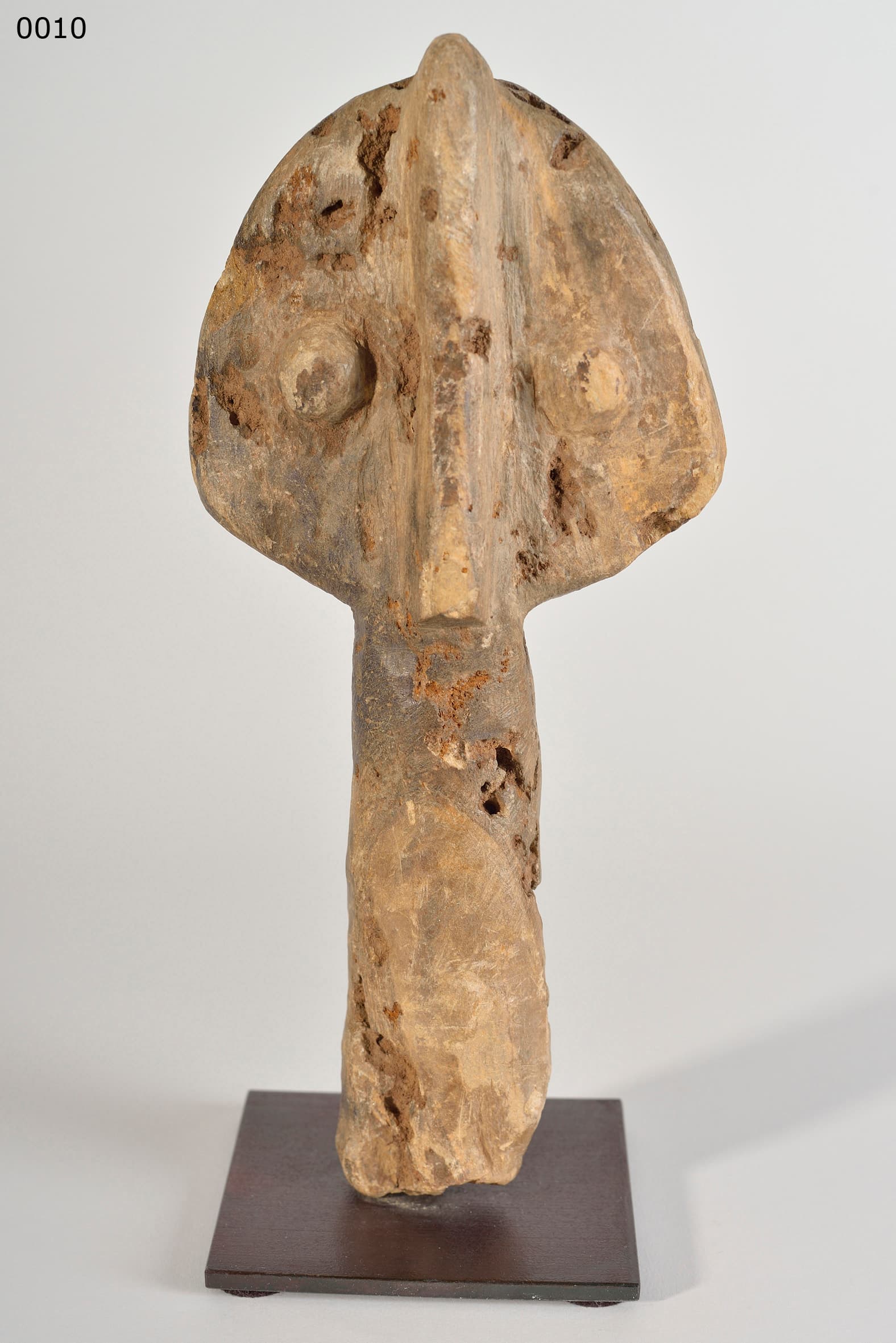
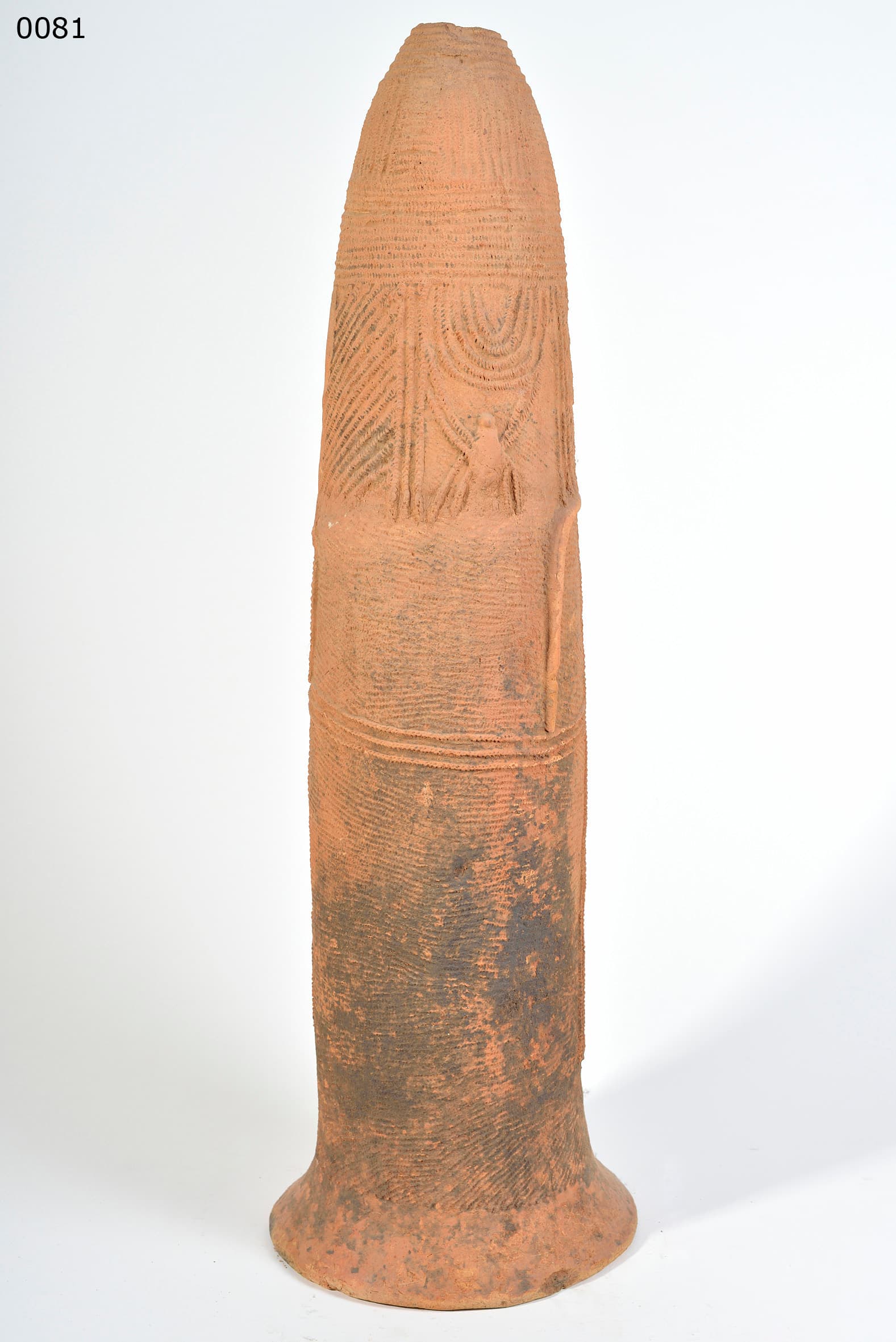
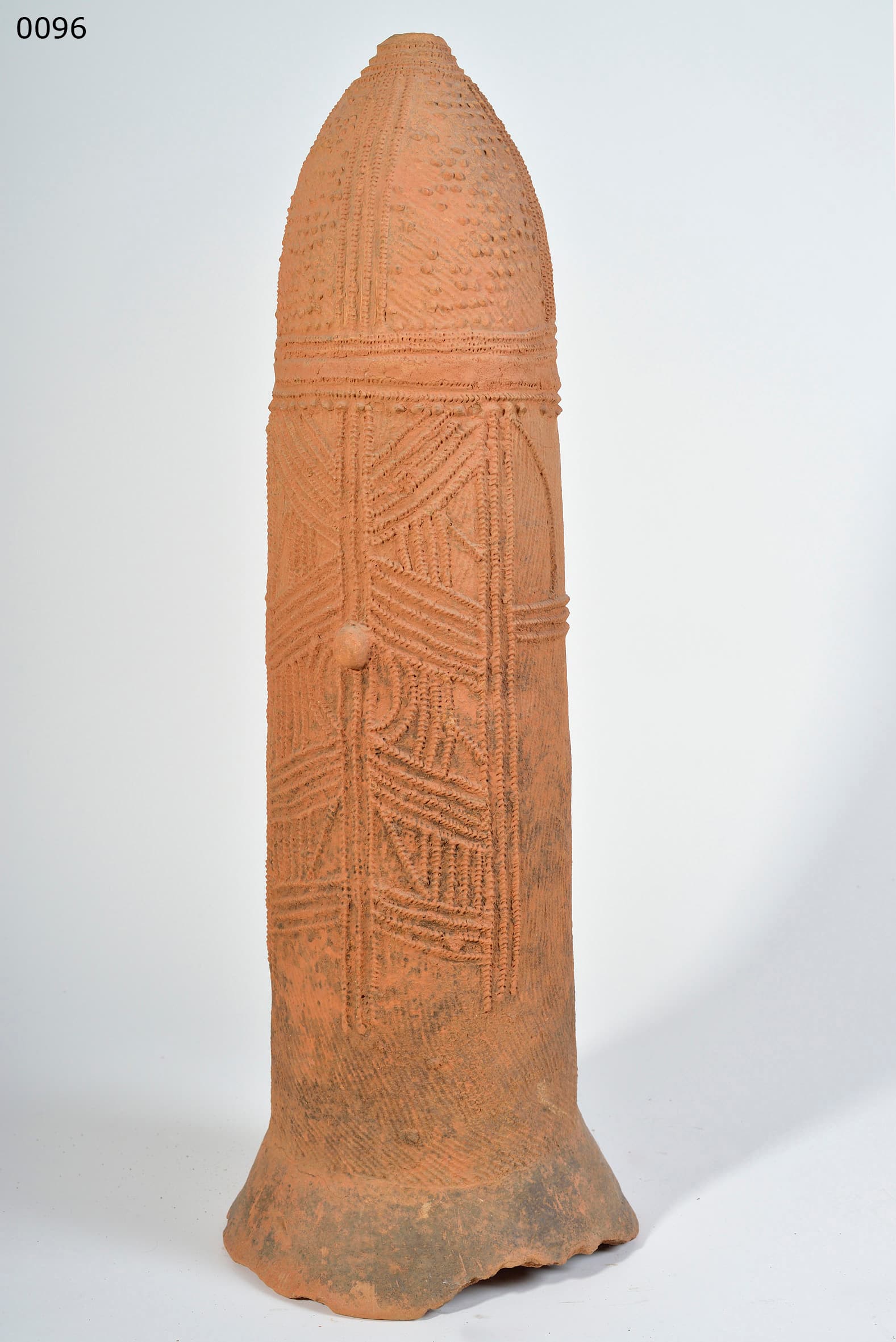
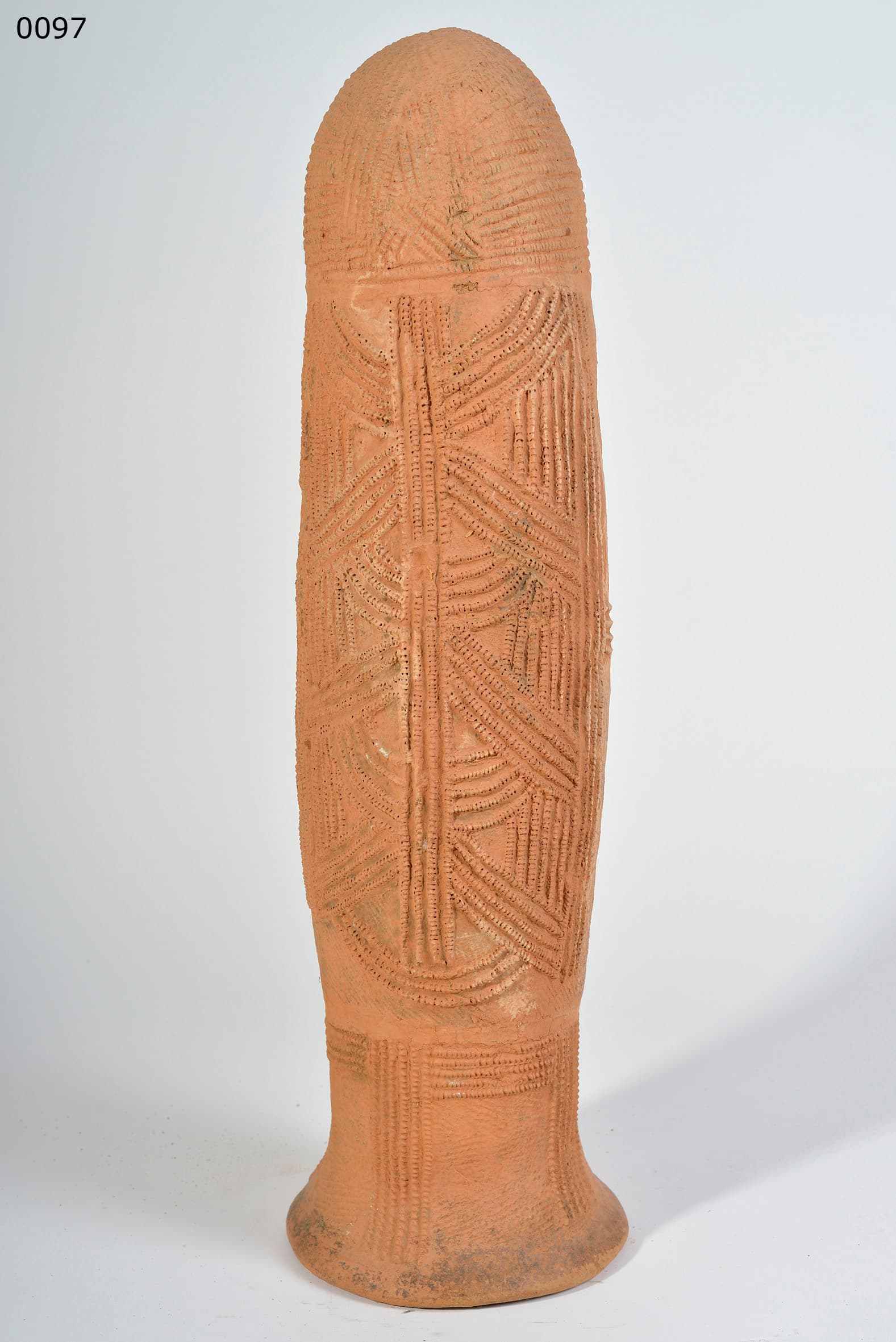
A striking Bura terracotta (3rd–11th C., 22 cm) from Niger / Burkina Faso — distinctly phallic tubular shape with a flattened cranial plane and highly simplified pinched facial features, the dense reddish clay bearing a dry encrusted patina with significant atmospheric and subterranean weathering.
1. The asinda-sikka aesthetic system
Discovered in 1975 in the Bura-Asinda-Sikka region of southwest Niger, the Bura ceramic tradition represents a crucial archaeological link between the Sahel and the broader West African Iron Age.
- Geometric Over Naturalistic: The aesthetic vocabulary is resolutely geometric and abstract — heavily favoring cylindrical, phallic, and hemispherical forms over anatomical realism.
- Mass Over Portraiture: The flattened top and minimal incised ridge defining nose and brow are classical hallmarks — prioritizing monumental mass and conceptual symbolism rather than portraiture.
2. The necropolis and ancestral urns
This head originally functioned as the uppermost finial of a large tubular funerary vessel (an urn or ossuary).
- Neck-Down Burial: In the Bura necropolis, these vessels were buried neck-down in the earth — sometimes containing the physical remains of the deceased or grave goods like beads and iron arrowheads.
- Memorial Contact Point: The anthropomorphic head remained above ground as a memorial marker and specific architectural point of contact where the living could communicate with, and pour libations for, the spirit residing in the earth below.
3. Arid weathering and chronology
Bura terracottas endure unique degradation due to their environment in the Sahelian scrublands.
- Desiccated Slip-Less Surface: Seasonal cycles of intense Saharan heat and sparse rains have leached the clay of its original slip — leaving a highly porous granular aggregate.
- Mineral Signatures: Embedded fine sand and hard-packed earthen calcification within the crevices are geological features consistent with long-term burial.
Summary
Embodying the stark monolithic abstraction of ancient Nigerien artistry, this Bura urn head is a notable artifact of sub-Saharan burial practices. Its presence and aged archaeological patina are consistent with long-term burial, making it a significant addition to an antiquity collection.
Written with AI assistance from the collection appraisal, object photography and our own research; editorially reviewed. Mistakes are possible — corrections are welcome. How we work →