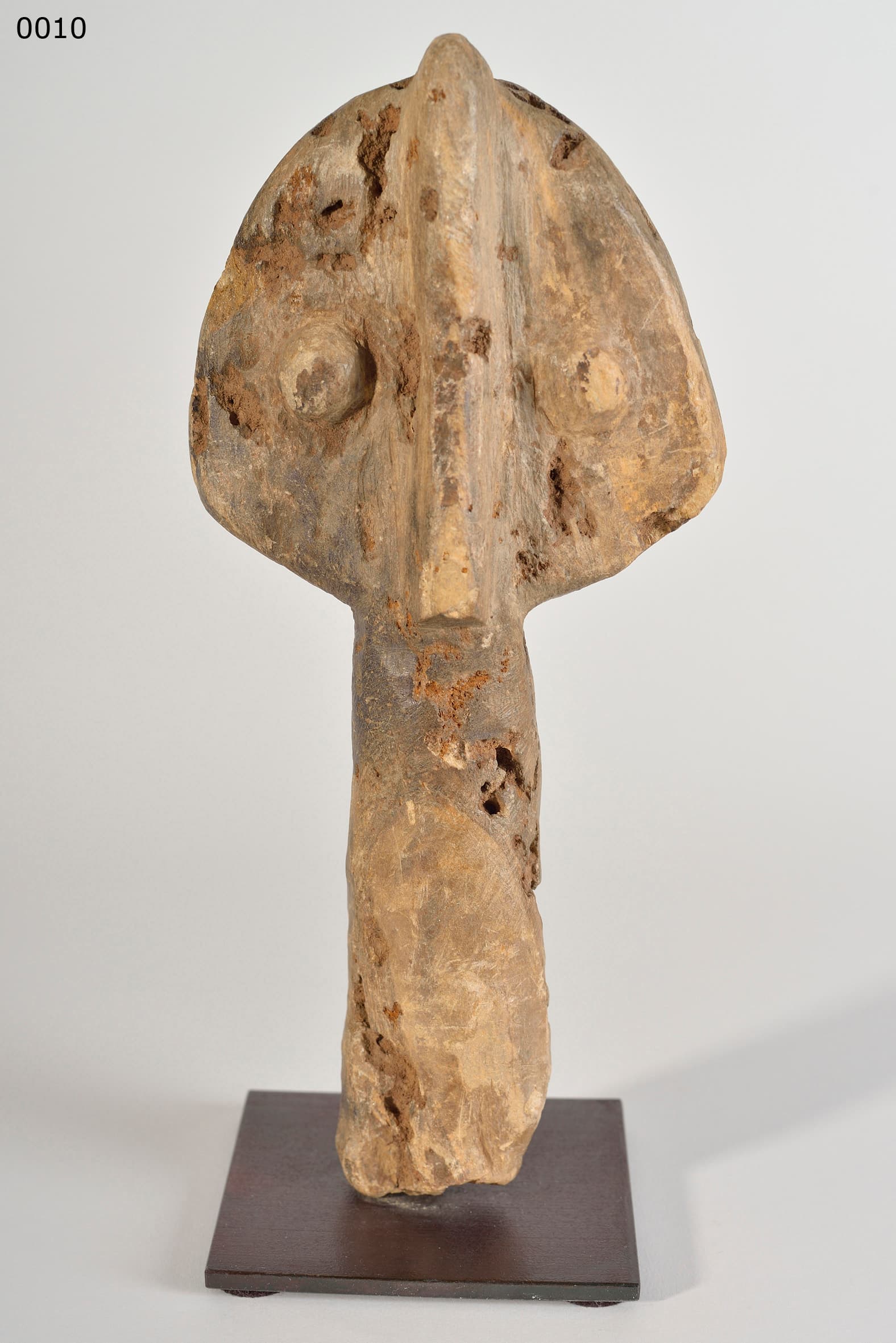
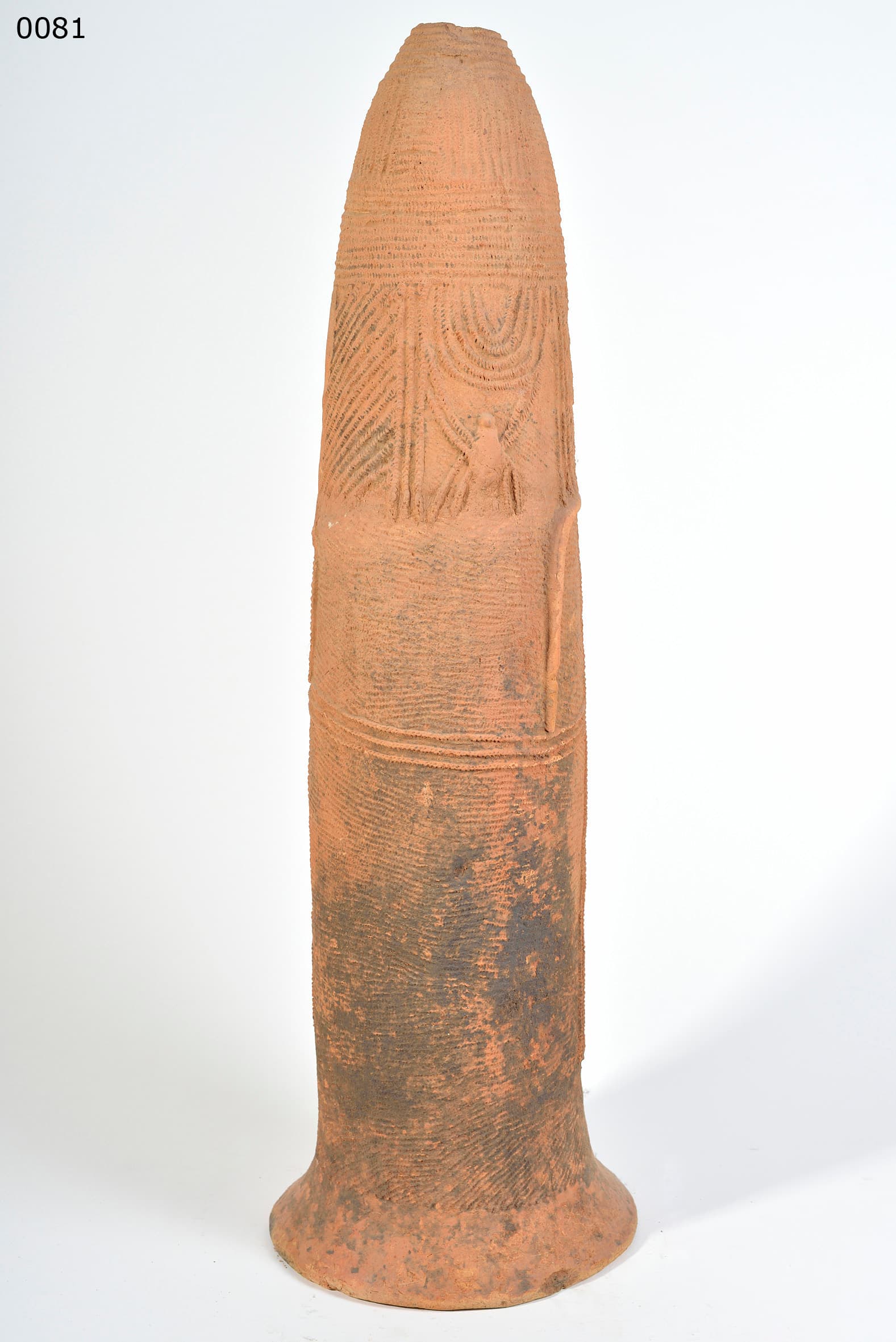
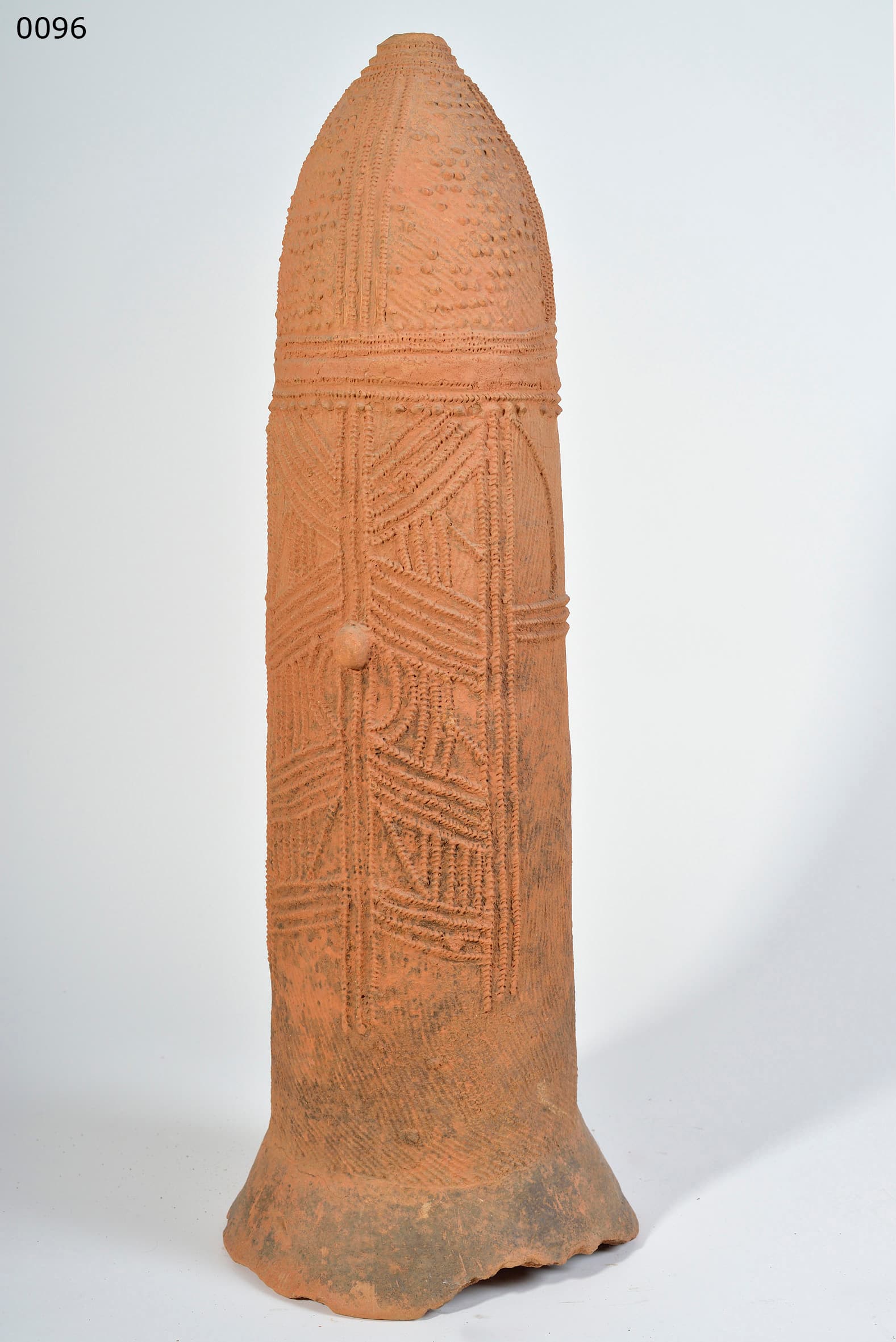
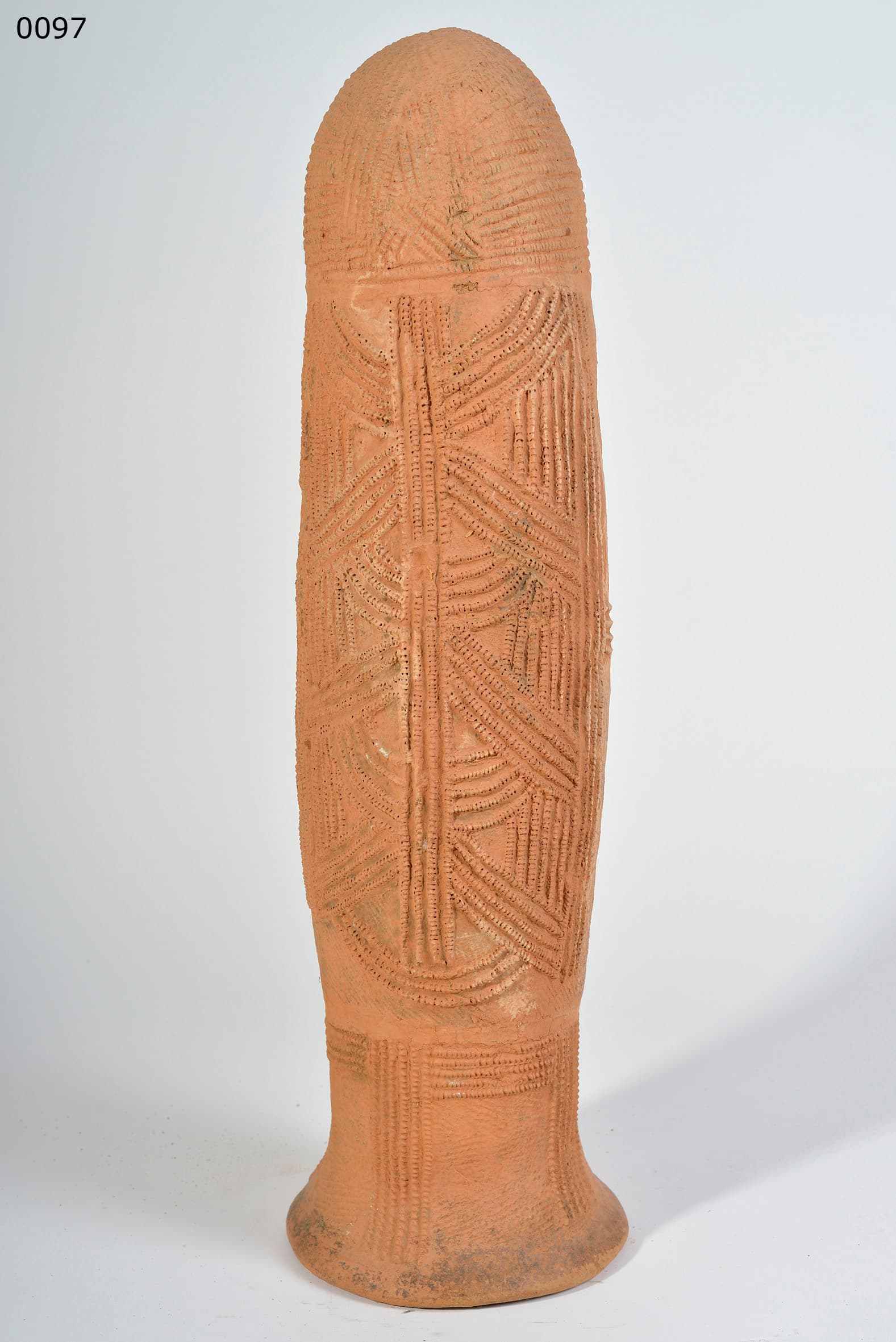
A Bura lithic tomb figure (attributed to the 3rd–11th C., 45 cm) from Niger / Burkina Faso — a flattened paddle-like anthropomorphic form in dense coarse-grained granite or sandstone, the stone heavily degraded under a dry mottled patina of environmental erosion, lichen remnants, and mineral oxidation. Companion paddle to 0340; part of a six-piece Bura lithic set.
1. The asinda-sikka lithic vocabulary
The Bura-Asinda-Sikka archaeological culture is characterized by an extreme monolithic approach to abstraction.
- Paddle Silhouette: Flattened paddle-like shapes represent the more explicitly figural branch of the foundational Sahelian vocabulary — human silhouette distilled to pure planar geometry.
- Elementary Features: Simple circular indentations for eyes and a continuous T-shaped ridge defining nose and brow project quiet monumental gravity.
2. Necropolis guardians and funerary markers
These heavy stone monoliths are traditionally associated with funerary markers within Bura necropolis sites.
- Terrestrial Soul Anchor: Associated with burial mounds or placed adjacent to subterranean terracotta urns — serving as potential terrestrial anchors for the spirits of the deceased.
- Cyclical Connection: Traditionally linked to animist concepts of fertility and the eternal continuation of the family lineage.
3. Geological weathering and indications of antiquity
Geological weathering supports an attribution of profound antiquity.
- Sand-Smoothed Planes: Wind-blown Saharan sand erosion is consistent with the smoothing of the original chisel marks on the planar surfaces over centuries.
- Laterite and Lichen: Embedded laterite within the crevices and calcified lichen shadows suggest a long period of Sahelian exposure.
Summary
Companion paddle to 0340 within the six-piece Bura lithic set, this tomb figure reinforces the planar-figural branch of the ancient Sahelian stone tradition. Its geometric abstraction and geological erosion are consistent with its attributed age and significance within this archaeological tradition.
Written with AI assistance from the collection appraisal, object photography and our own research; editorially reviewed. Mistakes are possible — corrections are welcome. How we work →