A Fon bocio assemblage (attributed to the first half of the 20th century, 50 cm) from the Republic of Benin — a carved wooden anthropomorphic figure wrapped tightly in coarse textiles, functioning as an anchor for a cluster of heavy forged iron implements including conical bells and hooked staffs, unified by a dense, dark, crusty patina of sacrificial blood, palm oil, and earth.
1. The additive aesthetic of Vodun
The art of the Fon is famously defined by its "additive" aesthetic — the core wooden carving is merely the starting point.
- Weaponized Figure: This bocio derives its visual and spiritual power from intense accumulation of external materials — iron bells (to call spirits) and iron staffs (representing Ogun / Gu, god of iron and war) strapped directly to the torso.
- Visually Chaotic, Deeply Intimidating: The accumulation creates a visually chaotic, intimidating form traditionally intended to provoke awe and fear.
2. Psychological warfare and spiritual protection
In the Vodun framework, a bocio is a surrogate body and a magical battery — activated by a Fa diviner or priest through secret incantations and organic offerings.
- Aggressive Defense: This specific figure, heavily laden with iron weaponry and bells, was likely created for aggressive protection or spiritual retaliation.
- Threshold Sentinel: Placed at the threshold of a compound or within a private shrine to intercept curses, ward off witchcraft, and physically absorb malicious intentions directed at its owner.
3. Extreme sacrificial encrustation
Its ritual history is indicated by its dense, layered patina.
- Countless Libations: The thick blackened crust coating wood, textiles, and iron is consistent with repeated libations over an extended period — mixtures of animal blood, millet porridge, palm oil, and clay poured over the object to feed the activating spirit.
- Physical Record: The way this crust has hardened, cracked, and oxidized onto the iron bells is consistent with historical Vodun ceremonial practice.
Summary
This bocio represents an expressive manifestation of Fon Vodun theology — using iron and organic accumulation to project intense magical power. Its complex assemblage and dense sacrificial crust make it a significant example of West African esoteric art.
Written with AI assistance from the collection appraisal, object photography and our own research; editorially reviewed. Mistakes are possible — corrections are welcome. How we work →

rare power figure (used in VOODOO ceremonies)
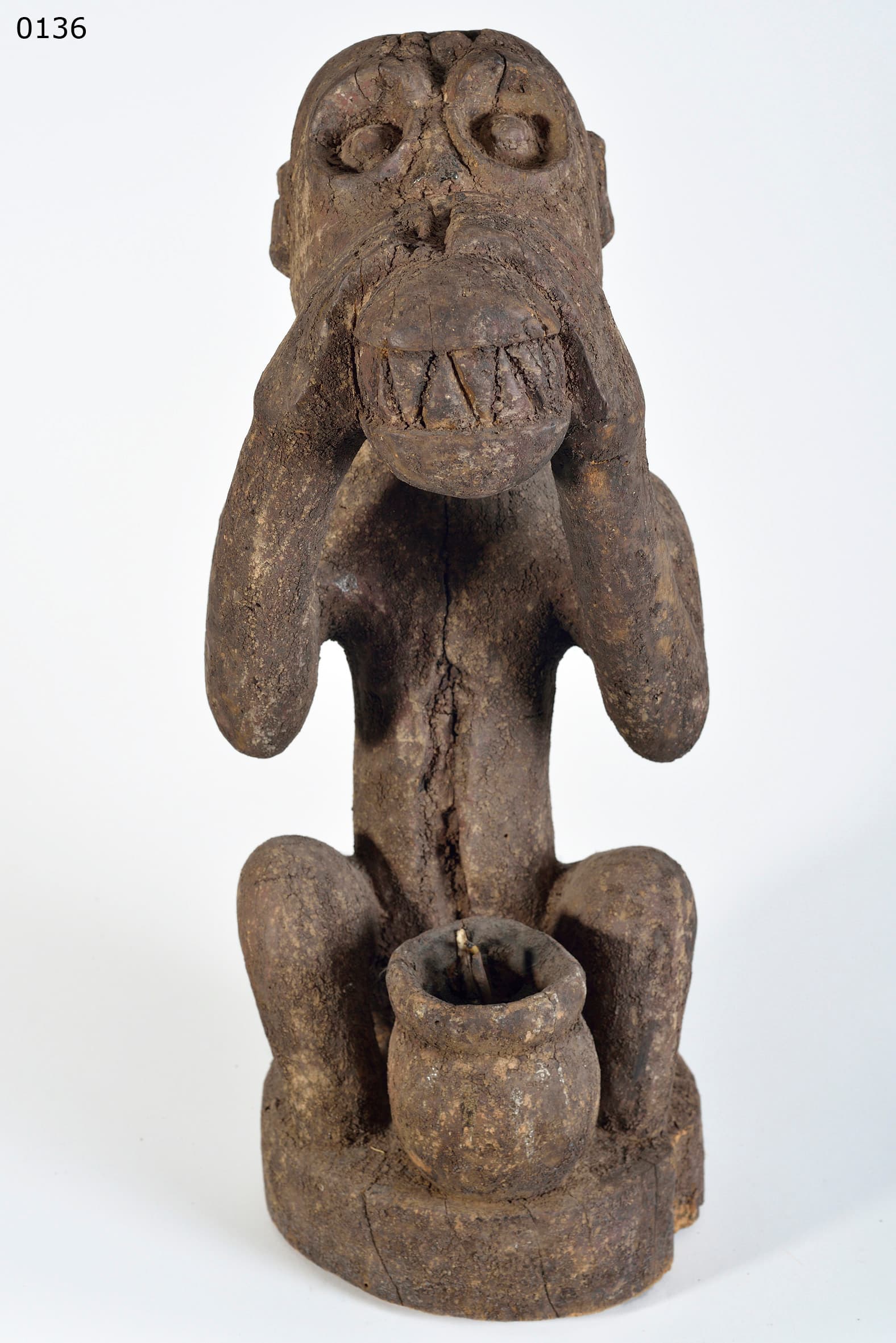
simian shrine figure
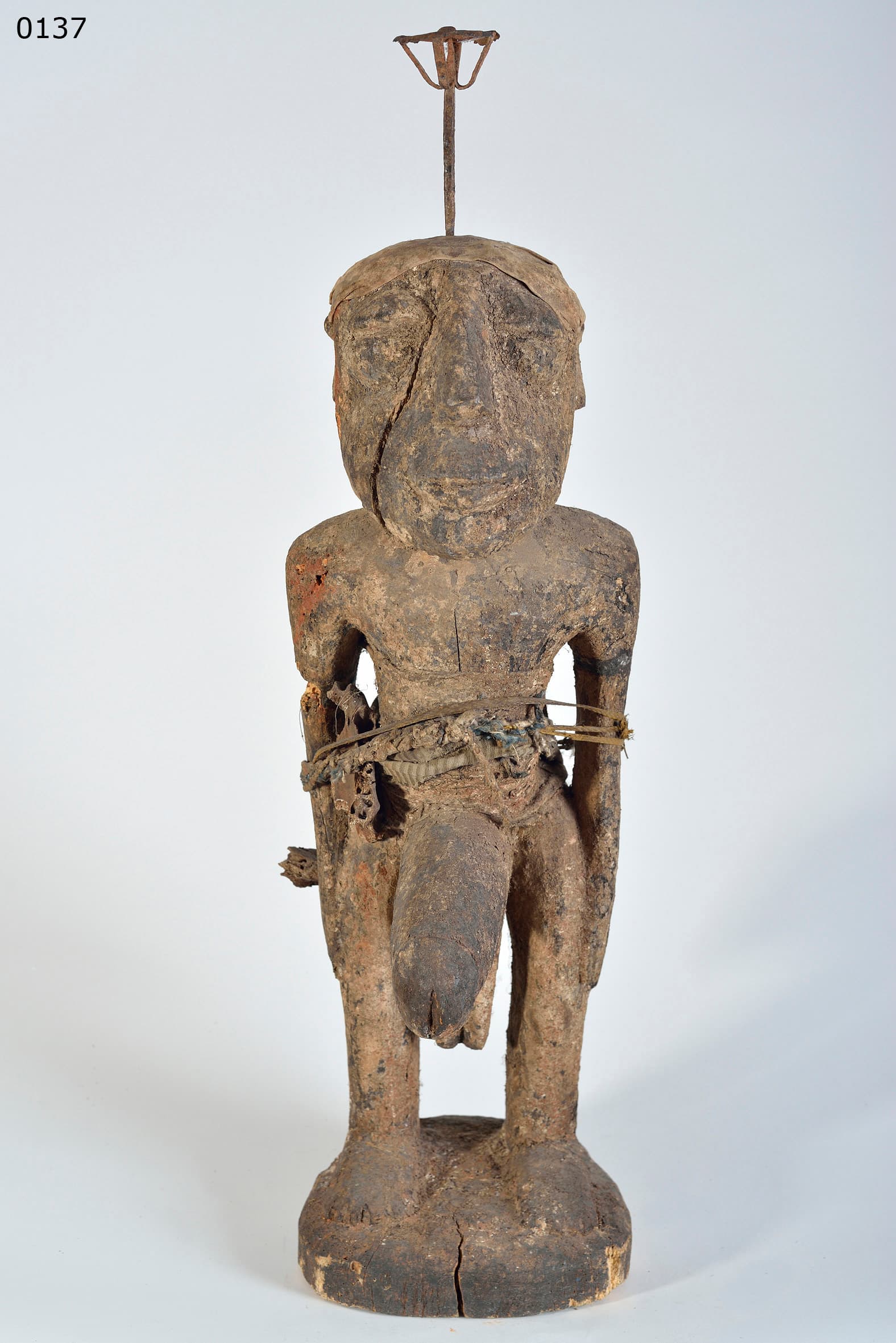
BOCIO statue (used in Voodoo ceremonies)
