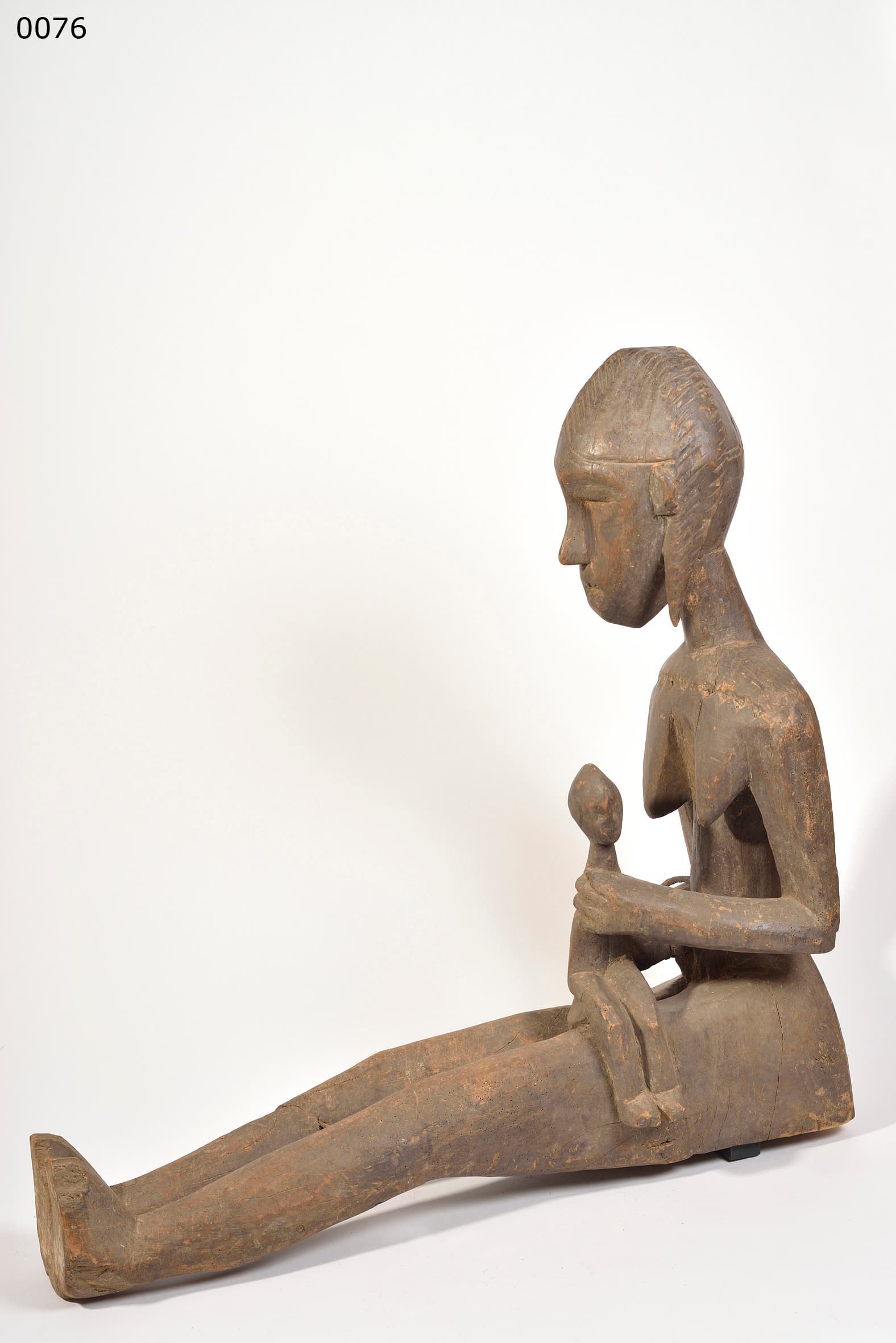
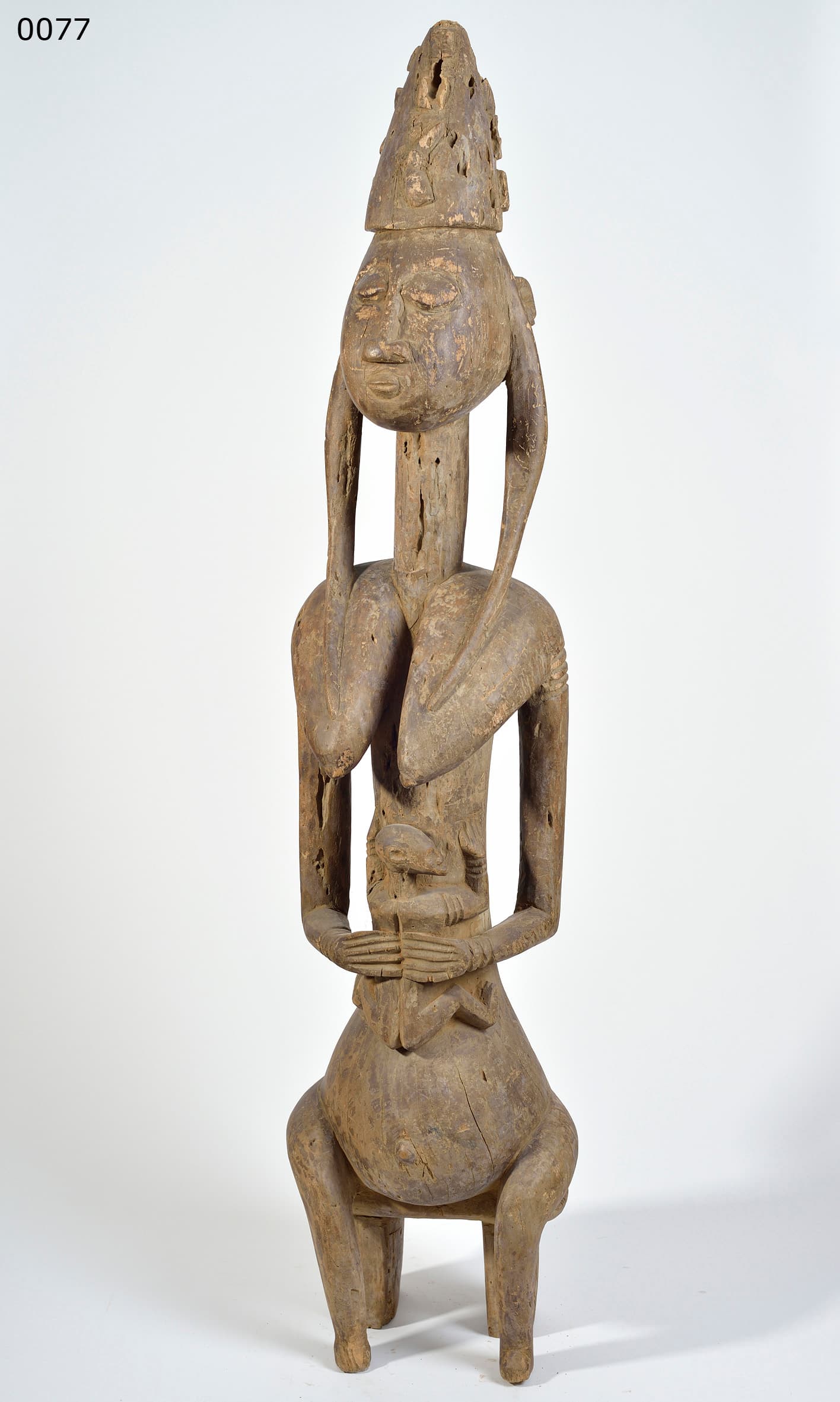
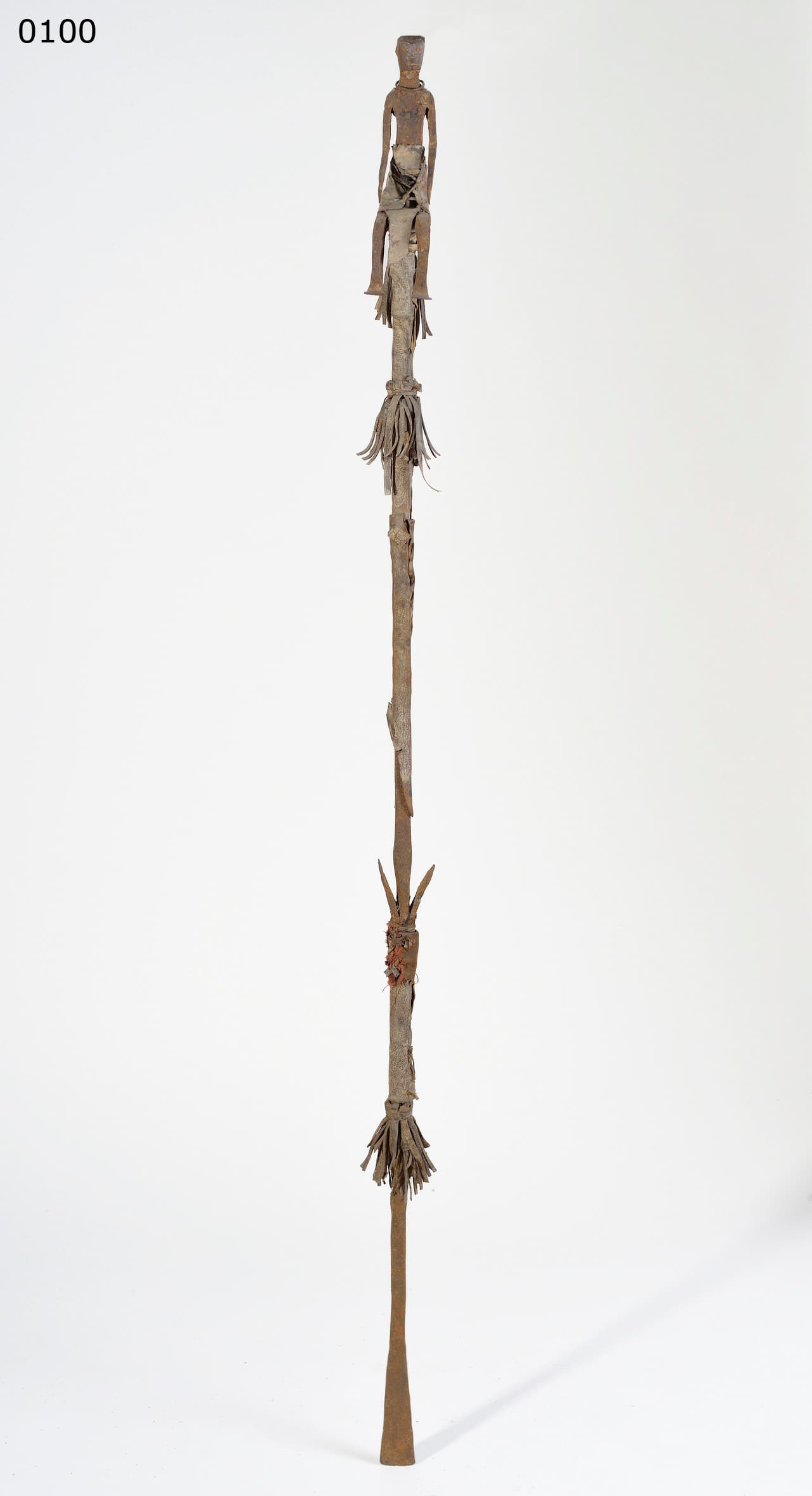
A large imposing Bamana wooden equestrian (attributed to the 19th century, 98 cm) from Mali — an elongated warrior or chief wearing a smooth helmet-like coiffure, mounted on an abstract horse with a long drooping snout, the wood severely aged showing a deeply cracked darkened highly eroded surface with significant loss to the extremities and the horse's legs.
1. Mande iron-age aesthetics translated to wood
The Bamana carving style often mirrors their renowned ironwork — favoring long stretched volumes, stark unadorned surfaces, and an economy of form.
- Stretched Towering Presence: Severe vertical elongation conveys the majestic towering presence of a Mande cavalryman.
- Miniaturized Beast: The artist deliberately distorts the horse's anatomy — miniaturizing it and giving it a sloping abstract head to emphasize the massive commanding torso and intense gaze of the rider, effectively elevating the human will over the beast.
2. Gwan society and the heroic ideal
Massive equestrian figures in Bamana culture are closely tied to the Gwan (or Jo) initiation societies — which venerate legendary heroes, successful mothers, and founders of the community.
- Founding Hero Memorial: This nearly meter-tall sculpture likely represents a mythological founding hero (such as Ndomajiri) who brought agriculture, ironworking, and social order to the Bamana people.
- Annual Festival Focal Point: Displayed during annual village festivals, it served as a monumental focal point to inspire young initiates and physically manifest the glorious history of the Mande empire.
3. 19th-century degradation and environmental wear
The patina shows wear consistent with a 19th-century origin.
- Lost Extremities: Major sections of the horse's legs and the rider's arms have been lost to time, rot, and subterranean termite activity.
- Blackened Heartwood: The core heartwood that remains is deeply oxidized into a blackened-brown hue and displays profound stable desiccation cracks — consistent with a long period of exposure and active shrine life in the harsh Malian savanna.
Summary
An imposing monument to the Bamana heroic ideal, this massive equestrian figure, attributed to the 19th century, radiates historical gravity. Its extensive environmental degradation and striking vertical abstraction make it a compelling testament to the Mande empire's legacy.
Written with AI assistance from the collection appraisal, object photography and our own research; editorially reviewed. Mistakes are possible — corrections are welcome. How we work →