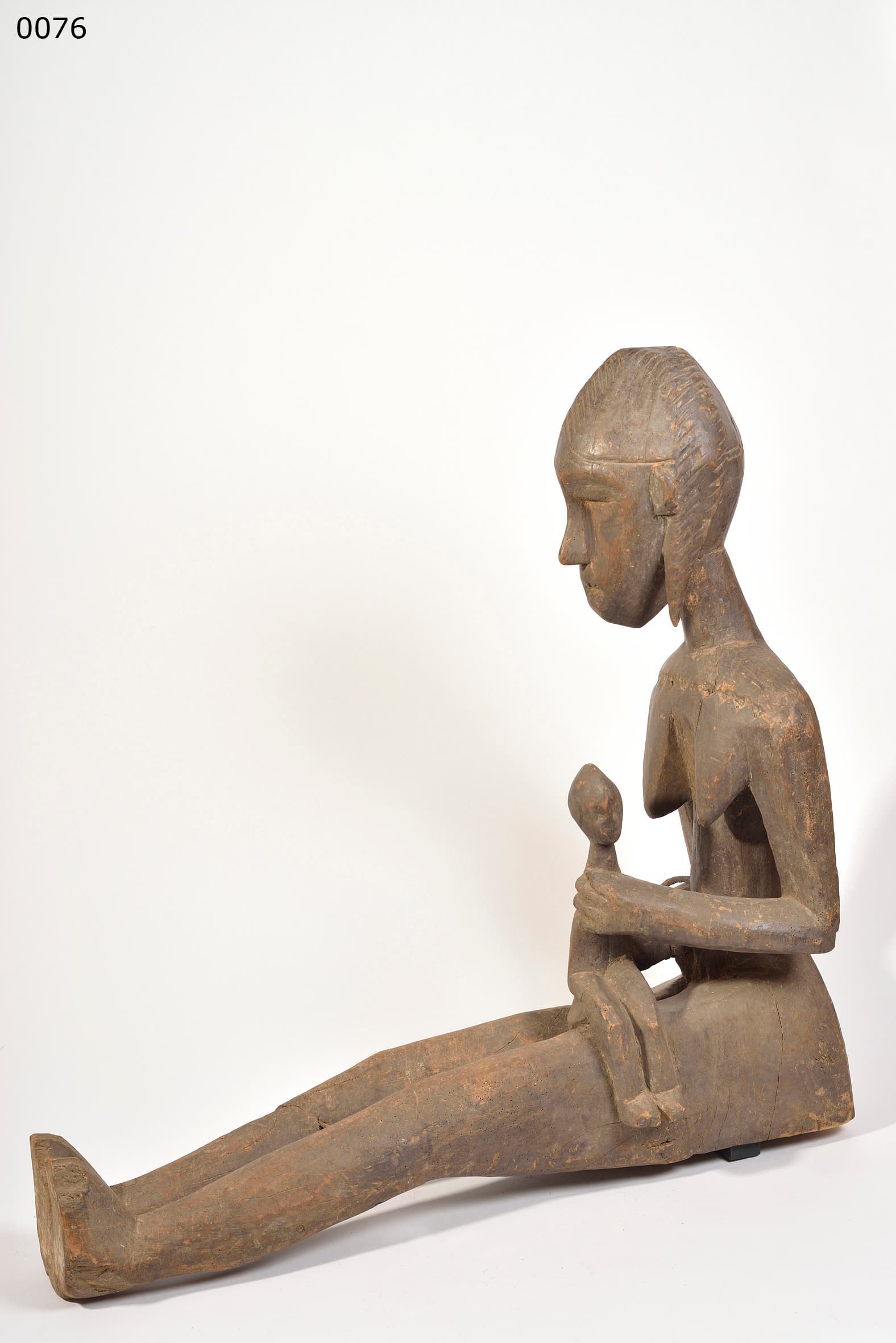
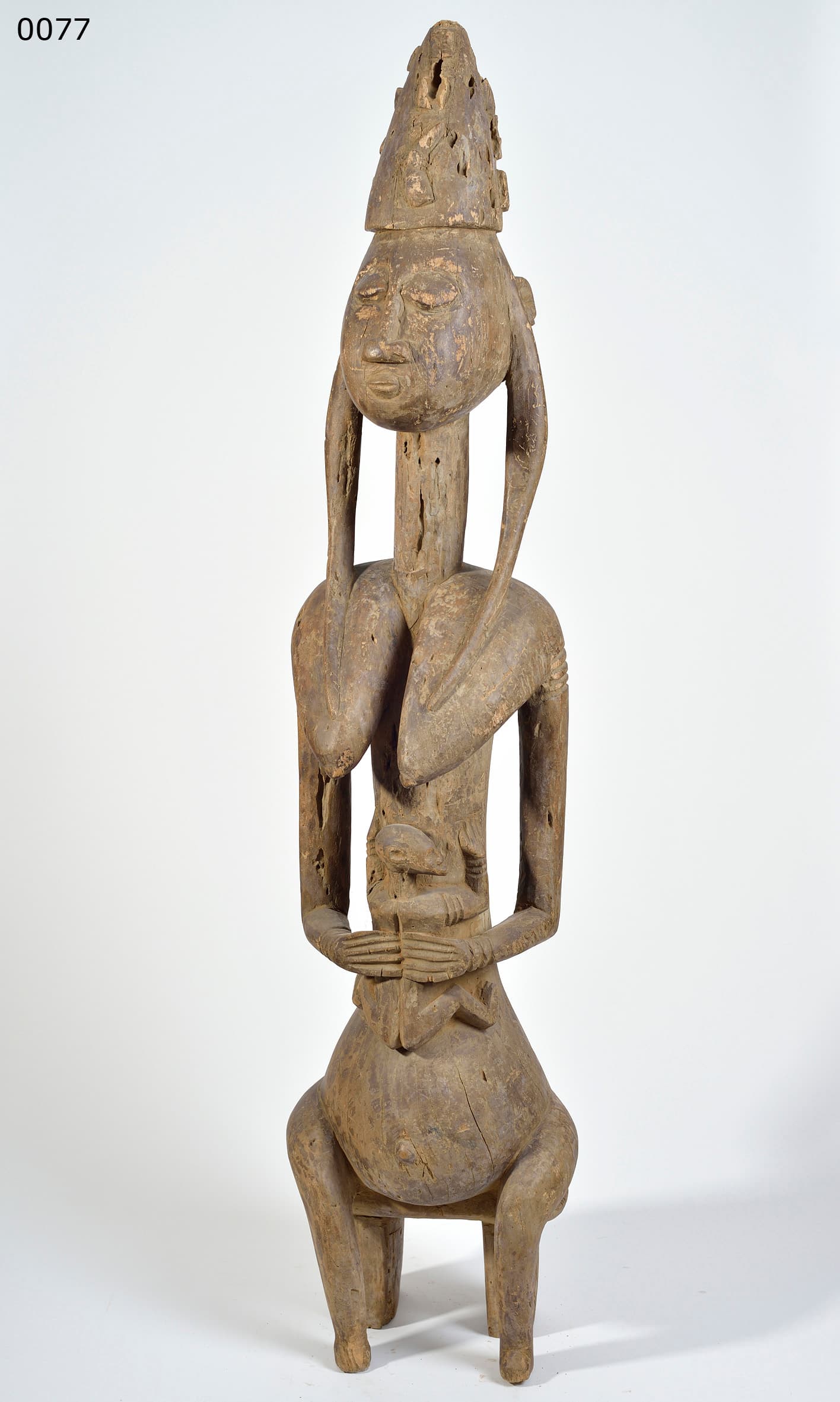
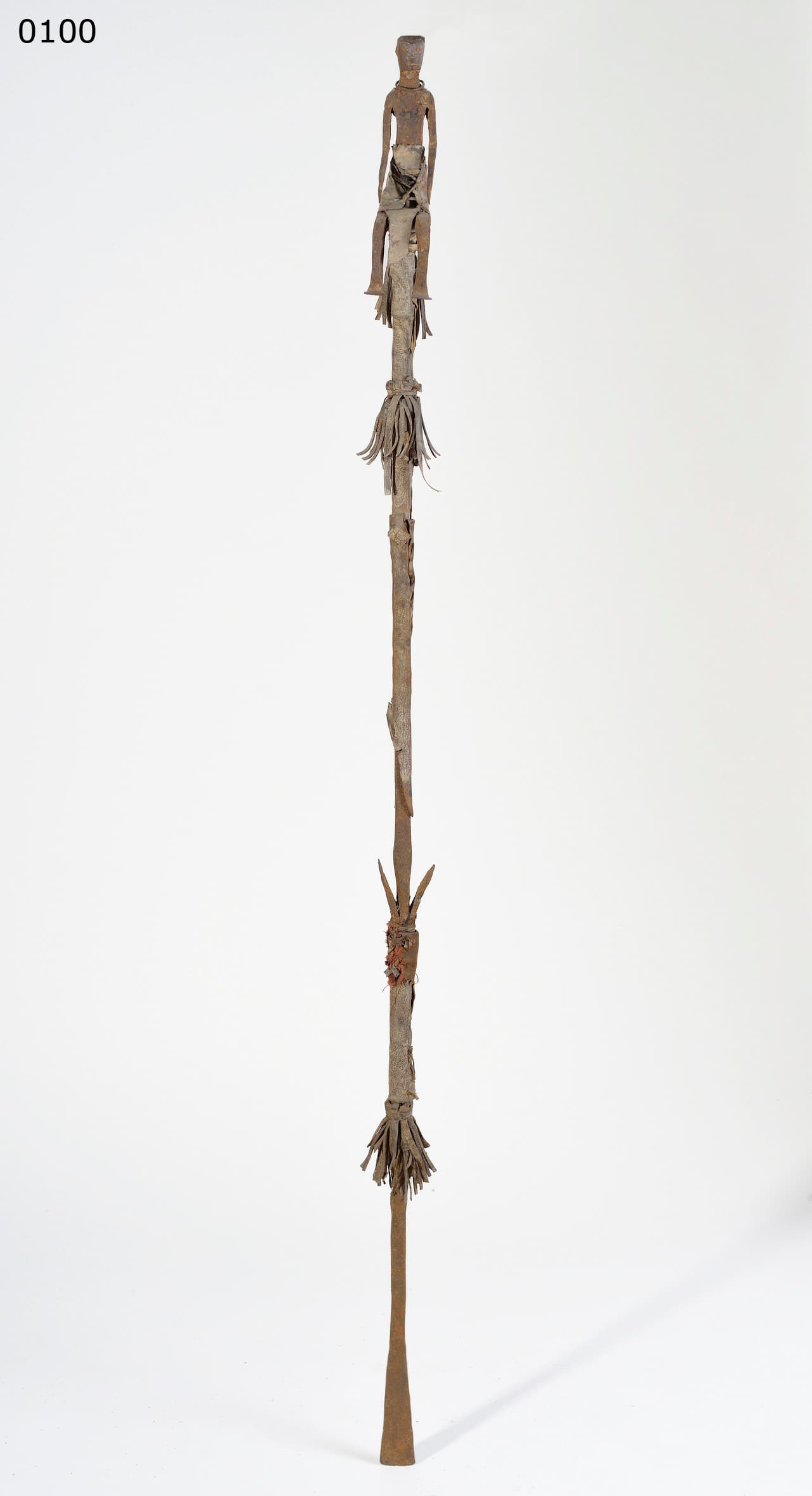
Eine große Bamana-Reiterfigur aus Holz (wohl 19. Jh., 98 cm) aus Mali - ein langgestreckter Krieger oder Häuptling, der eine glatte, helmartige Frisur trägt und auf einem abstrakten Pferd mit einer langen, hängenden Schnauze sitzt. Das Holz ist stark gealtert und zeigt eine tief gerissene, dunkel gefärbte, stark erodierte Oberfläche mit erheblichen Verlusten an den Extremitäten und den Beinen des Pferdes.
1. Die Ästhetik der Eisenzeit in Mande, übertragen auf Holz
Der Schnitzstil der Bamana spiegelt oft ihre berühmten Eisenarbeiten wider - sie bevorzugen lang gestreckte Volumen, schlichte, schmucklose Oberflächen und eine sparsame Formgebung.
- Gestreckte, hoch aufragende Präsenz: Die starke vertikale Streckung vermittelt die hoch aufragende Präsenz eines Mande-Kavalleristen.
- Miniaturisiertes Tier: Der Schöpfer verzerrt die Anatomie des Pferdes - er verkleinert es und gibt ihm einen schrägen, abstrakten Kopf, um den massiven Oberkörper und den intensiven Blick des Reiters zu betonen und den menschlichen Willen über das Tier zu stellen.
2. Die Gwan-Gesellschaft und das heroische Ideal
Massive Reiterfiguren sind in der Bamana-Kultur eng mit den Gwan (oder Jo) Initiationsgesellschaften verbunden, die legendäre Helden, erfolgreiche Mütter und Gründer der Gemeinschaft verehren.
- Gründungshelden-Denkmal: Diese fast einen Meter hohe Skulptur stellt wahrscheinlich einen mythologischen Gründungshelden (wie Ndomajiri) dar, der dem Volk der Bamana Landwirtschaft, Eisenverarbeitung und soziale Ordnung brachte.
- Jährlicher Festivalschwerpunkt: Während der jährlichen Dorffeste diente sie vermutlich als Mittelpunkt, um junge Eingeweihte zu inspirieren und die Geschichte des Mande-Reiches physisch zu manifestieren.
3. Verwitterung und Umweltverschleiß, die auf das 19. Jahrhundert hindeuten
Die ausgeprägte Patina spricht für ein hohes Alter der Skulptur.
- Verlorene Gliedmaßen: Große Teile der Beine des Pferdes und der Arme des Reiters sind durch Zeit, Fäulnis und unterirdische Termitenaktivität verloren gegangen.
- Geschwärztes Kernholz: Das verbliebene Kernholz zeigt eine tiefe Oxidation in einem dunkelbraunen Farbton sowie ausgeprägte, stabile Austrocknungsrisse – Merkmale, die für eine jahrzehntelange Exposition und Nutzung im rituellen Kontext in der malischen Savanne sprechen.
Zusammenfassung
Diese große Reiterfigur, die stilistisch dem 19. Jahrhundert zugeordnet werden kann, veranschaulicht das heroische Ideal der Bamana. Die ausgeprägten Verwitterungsspuren und die vertikale Abstraktion machen das Objekt zu einem repräsentativen Zeugnis für die Bildhauerkunst des Mande-Kulturkreises.
KI-unterstützt erstellt aus Sammlungsgutachten, Objektfotografie und eigener Recherche, redaktionell geprüft. Fehler sind möglich — Hinweise darauf sind uns willkommen. Zum Verfahren →