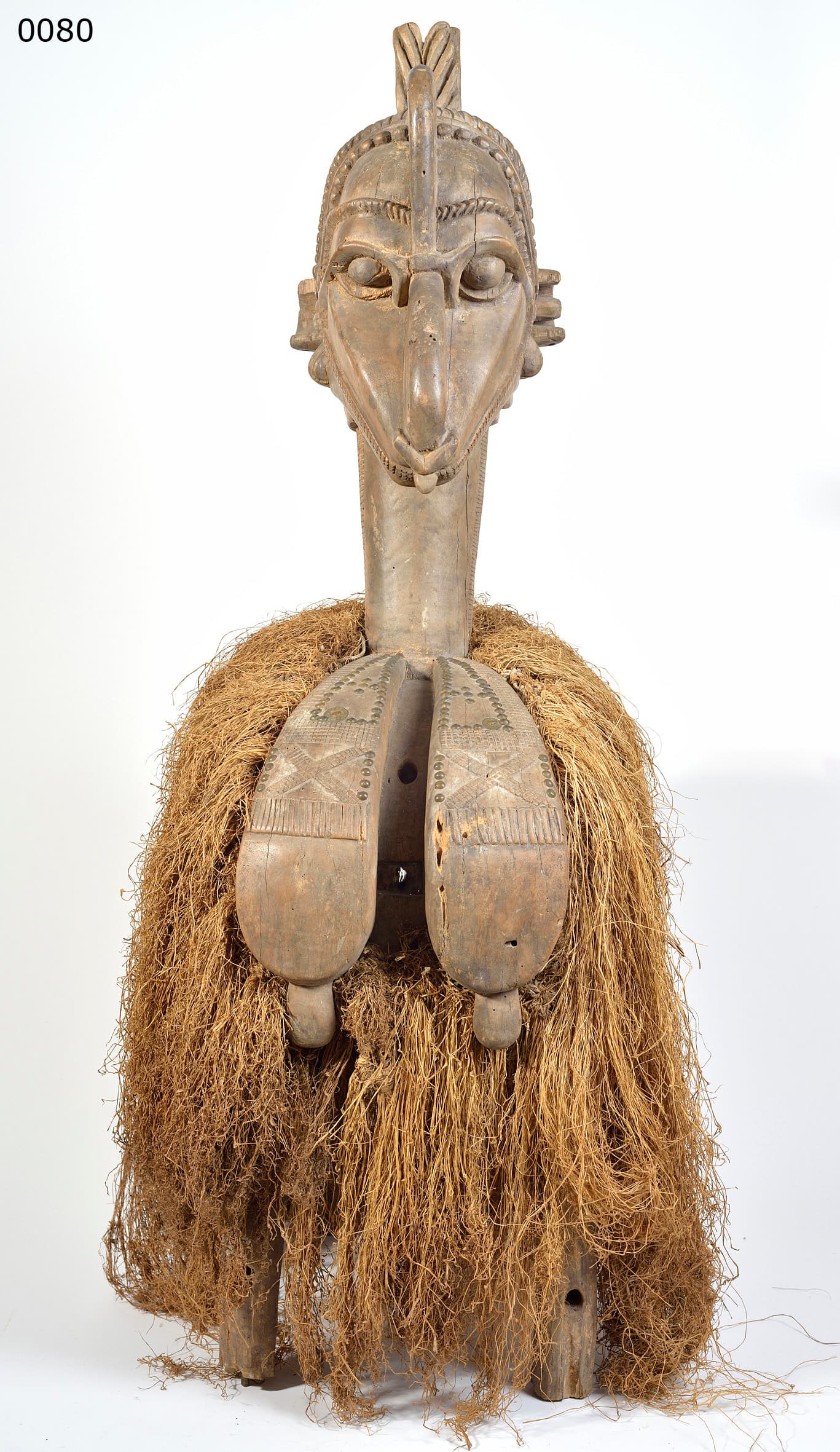
A colossal Baga D'mba (Nimba) shoulder mask (1st half 20th C., 116 cm) from Guinea — the iconic cantilevered head with sweeping aquiline nose, U-shaped eyes, intricately incised braided coiffure, and a chest plate bearing large pendulous breasts. Deep dark-brown heavily oxidized patina with friction wear on the lower carrying struts consistent with use. Provenance — previously exhibited at the French Embassy.
1. D'mba — the mother of fertility
The D'mba is a celebrated form in Baga art — an idealized "Mother of Fertility."
- Sweeping Geometric Volumes: The 116 cm carving eschews realistic portraiture for monumental volumes — the massive cantilevered head and exaggerated pendulous breasts visually communicate the prestige of a matriarch who has successfully borne and nursed many children.
- Braided Coiffure of Status: The intricate parallel linear patterns carved into the coiffure are associated with the high social status, grooming, and dignity of this ancestral figure.
2. The simo society and the agricultural dance
The Nimba is the focal point of the Simo secret society's public performances.
- Shoulder-Borne Colossus: Despite its weight, it was worn on the shoulders of a single exceptionally strong male dancer, completely concealed beneath a massive skirt of wild raffia fibers.
- Physical Prayer for Abundance: Danced during rice planting, harvest festivals, and the funerals of prominent women — the rhythmic stamping dance was a physical prayer intended to support the ongoing fertility of both the village's crops and its women.
3. Structural wear and pedigree
The surface shows wear consistent with active ceremonial use.
- Deep Matte Oxidation: The mask lacks synthetic varnishes, possessing instead a deeply oxidized matte charcoal-brown hue consistent with natural aging and repeated palm oil anointings.
- Shoulder-Strut Friction Polish: The four lower wooden struts — where the dancer's shoulders bore the mask's weight — exhibit smooth frictional wear, suggesting a history of active use in dance.
Summary
Towering at nearly 1.2 meters, this Baga D'mba is a monumental icon of West African fertility and grace. Its French Embassy exhibition history and shoulder-strut wear are consistent with an object of significant ethnographic interest.
Written with AI assistance from the collection appraisal, object photography and our own research; editorially reviewed. Mistakes are possible — corrections are welcome. How we work →

cresthead serpent mask

zoomorphic shrine figure (used in ritual ceremonies)
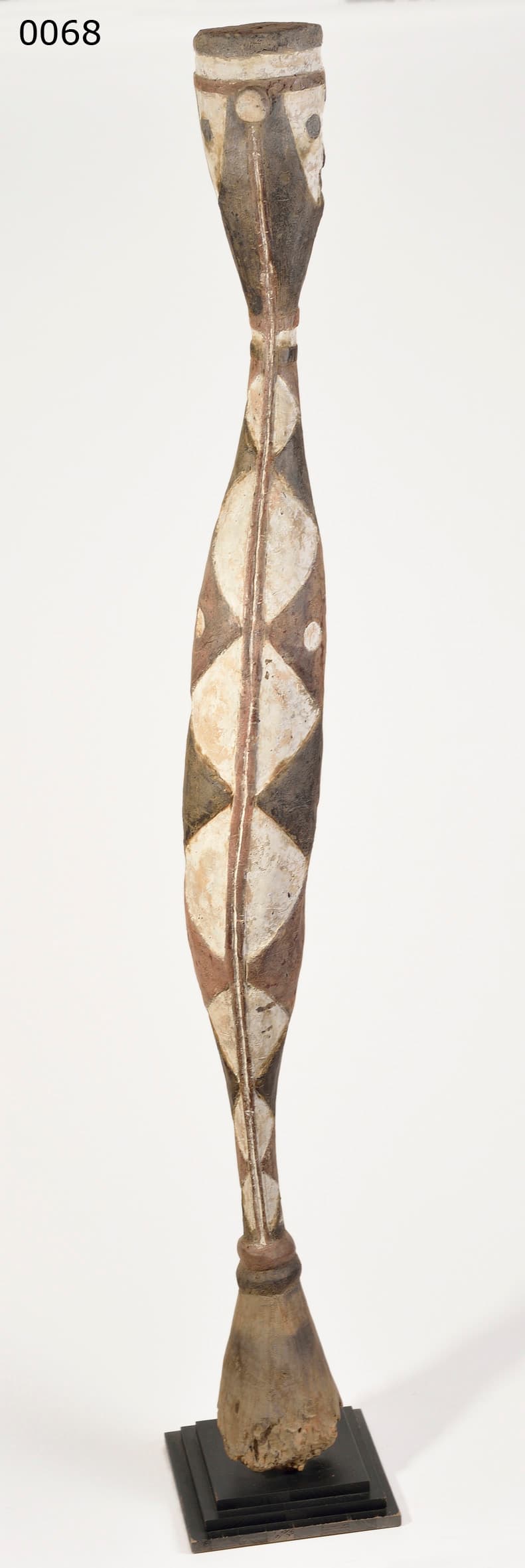
serpent head crest