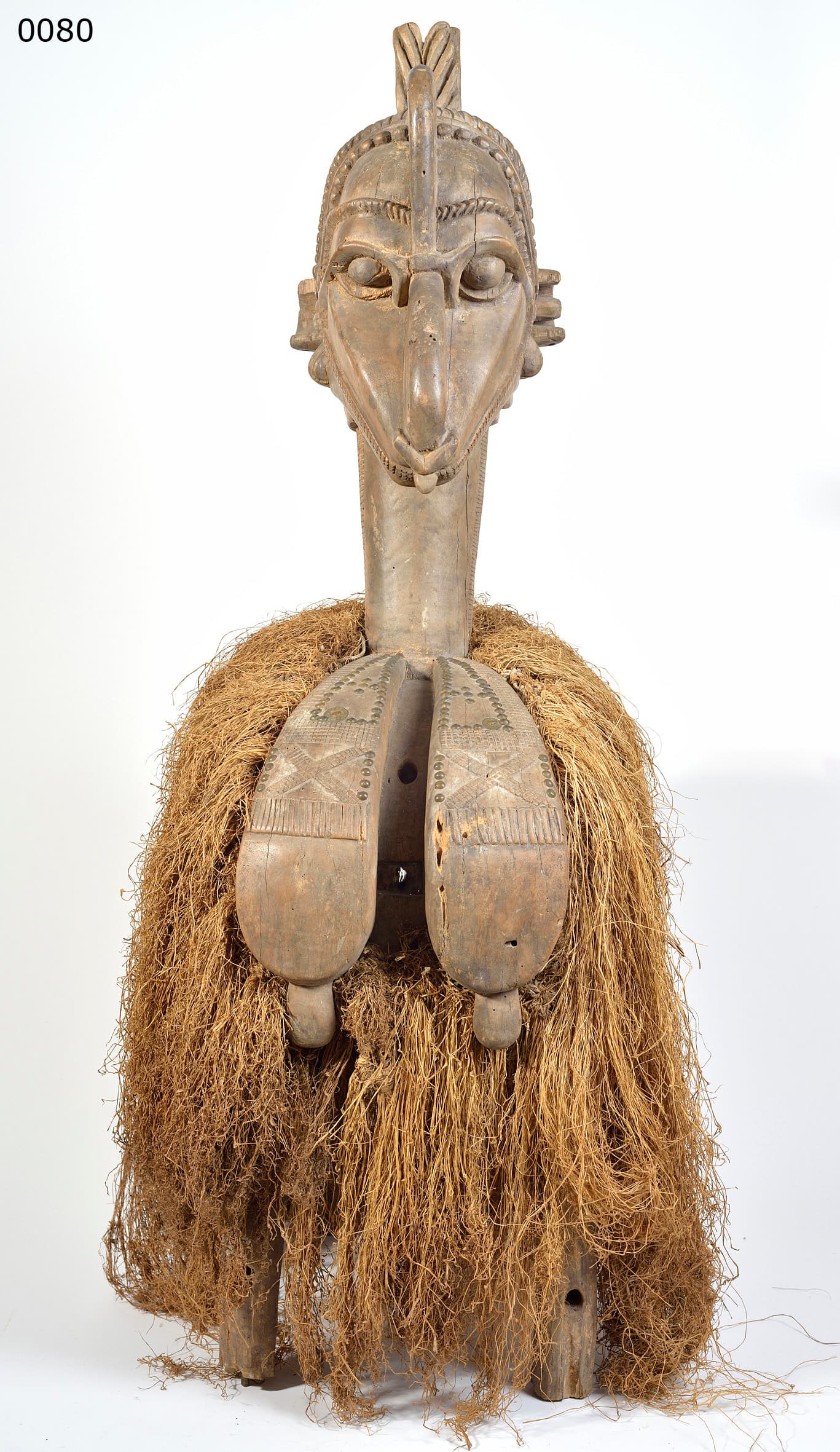
A complex Baga dual A-Tshol altar (attributed to the 1st half of the 20th century, 86 cm) from Guinea — a thick rectangular base supporting two distinct long-beaked A-Tshol (hybrid avian/human) heads rising on cylindrical necks, probably male and female. The heavy wood is deeply oxidized and shows a dry crusty earth-toned patina with severe erosion on the prominent sweeping beaks.
1. Bicephalic composition and kinetic geometry
The A-Tshol (or Elek) is a classic example of Baga zoomorphic abstraction — blending a human cranium with the sweeping beak of a hornbill.
- Sculptural Rarity: Finding two A-Tshol figures integrated into a single unified altar base is an unusual sculptural composition — the bicephalic composition creates a striking architectural symmetry.
- Twin Cantilevered Beaks: The massive cantilevered beaks project outward, while the domed human-like craniums anchor the piece — demonstrating highly skilled Guinean craftsmanship in balancing massive opposing geometric volumes on a single base.
2. The simo society and dual cosmic defense
The A-Tshol is a primary spiritual object of the Simo secret society, traditionally utilized by elders to counter malevolent witchcraft.
- Male-Female Cosmic Unity: This dual altar represents a unified cosmic order — likely manifesting the male and female principles working in tandem.
- Omnidirectional Defense: By housing two spirits on one altar, the society sought to create a powerful omnidirectional barrier of defense for the lineage — during extreme crises, the heavy altar would be danced or paraded to sweep the village clean of unseen sorcery.
3. Elemental degradation and sacrificial crust
The surface shows wear consistent with active semi-exposed shrine use.
- Earthy Textured Crust: The timber has not been commercially polished — it features a dry, highly textured earthy crust consistent with coagulated liquid sacrifices and wind-blown dust.
- Beak-Tip Erosion: Severe edge wear, blunting, and age-related chipping on the tips of the massive beaks and the base suggest this object was actively handled, danced, and transported during rituals throughout the early 20th century.
Summary
A rare bicephalic composition, this dual A-Tshol altar is a notable example of Baga anti-witchcraft magic. Its sweeping geometry and deeply encrusted dry patina support its attribution as a highly venerated Simo society object.
Written with AI assistance from the collection appraisal, object photography and our own research; editorially reviewed. Mistakes are possible — corrections are welcome. How we work →

cresthead serpent mask

zoomorphic shrine figure (used in ritual ceremonies)
serpent head crest