An elegantly carved Senufo ceremonial spoon (mid 20th C., 40 cm) from Ivory Coast — a large deep circular bowl, with the handle terminating in a finely executed seated female figure exhibiting classic Senufo jutting facial features and a crested coiffure. The dense wood is deeply saturated with a dark lustrous mirror-like handling patina.
1. Utilitarian elegance of the Poro society
Senufo carvers are known for transforming everyday functional objects into notable works of prestige.
- Functional + Figural Union: This ceremonial spoon (nungo) merges utilitarian engineering with high-status portraiture — the seated female figure acts as the finial, displaying the sharp cubist jawline and sweeping crested hair typical of Senufo aesthetics.
- Sculptural Balance: The artist achieves sculptural tension — balancing the heavy wide volumetric bowl with the delicate rigid vertical architecture of the human form on the handle.
2. The "mother of the village" and ritual feasting
These large ornate spoons were typically not used for daily domestic meals — they are traditionally associated with the most hospitable and senior women in a Senufo village, integrated into the Poro and Sandogo secret societies.
- Matriarch's Ritual Tool: During major communal feasts, funerals, or initiation ceremonies, the "mother of the village" traditionally uses a spoon of this type to distribute rice and stew.
- Ritualized Hospitality: Transforms the act of serving food into a highly visible ritual of maternal generosity, wealth distribution, and social unification.
3. Saturation and tactile polish
The physical surface shows wear consistent with an active ethnographic history.
- Jet-Black Glass Patina: Features a deep, saturated jet-black "glass patina" — compatible with repeated handling, contact with palm oil and cooked foods, and physical polishing by Senufo matriarchs.
- Smoothed Active Service: The bowl's interior and the edges of the figure are worn smooth, suggesting an active role in community serving during mid-20th-century festivals.
Summary
Blending sharp Senufo cubism with the graceful curves of a functional vessel, this ceremonial spoon stands as a testament to matriarchal hospitality. Its jet-black mirror-like handling polish makes it a highly tactile ethnographic work.
Written with AI assistance from the collection appraisal, object photography and our own research; editorially reviewed. Mistakes are possible — corrections are welcome. How we work →
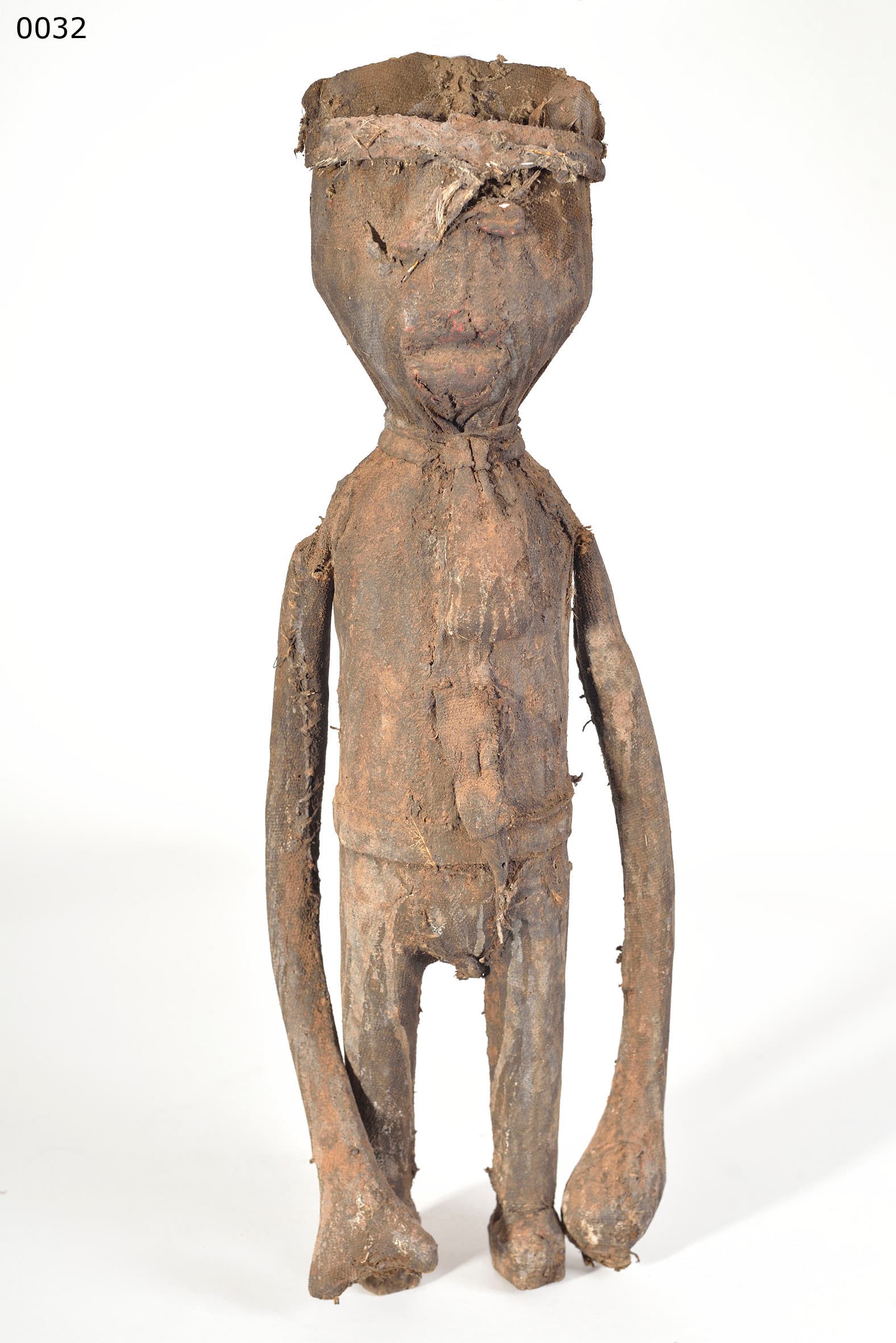
power figure (called KAFIGELEDJO)
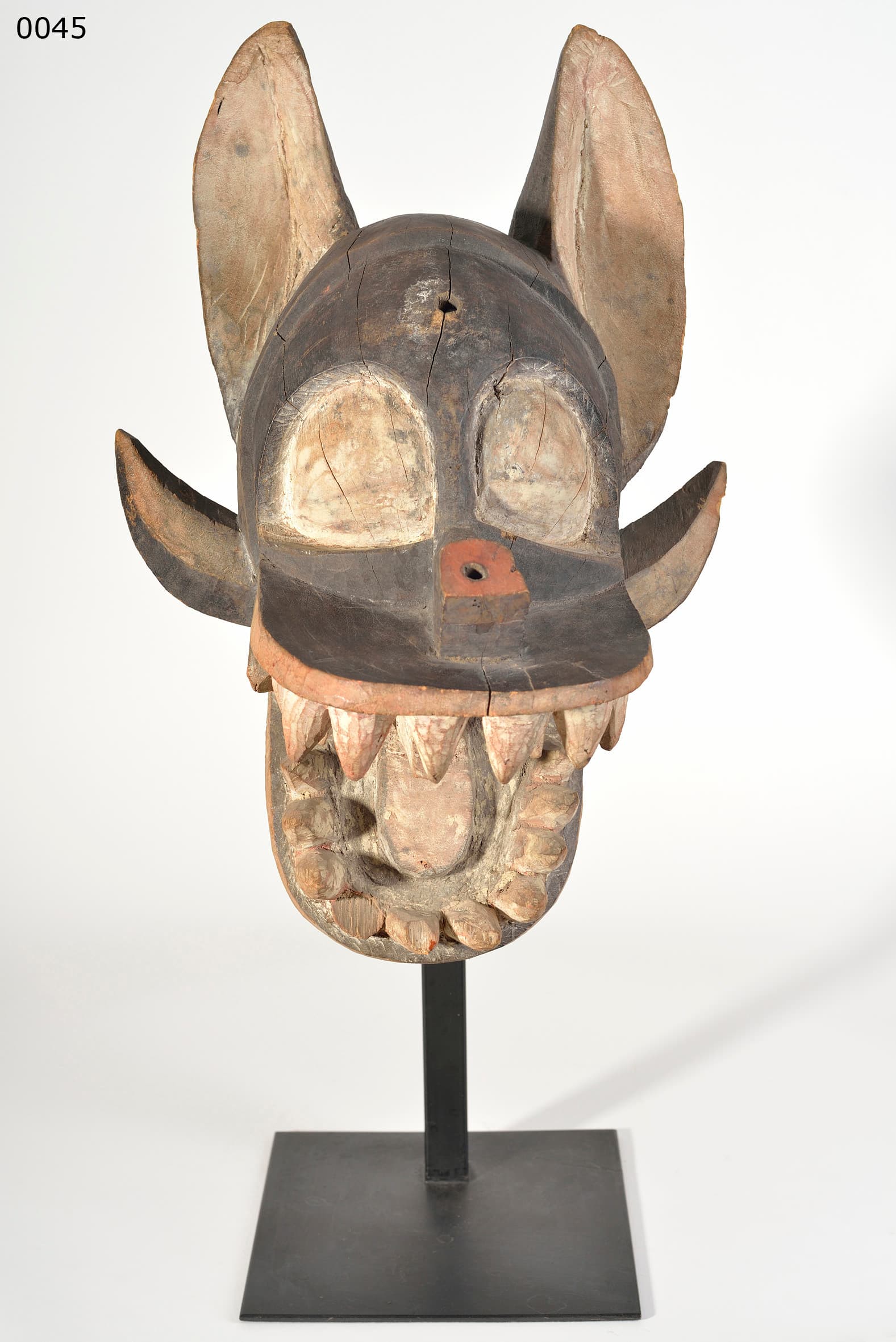
headcrest mask
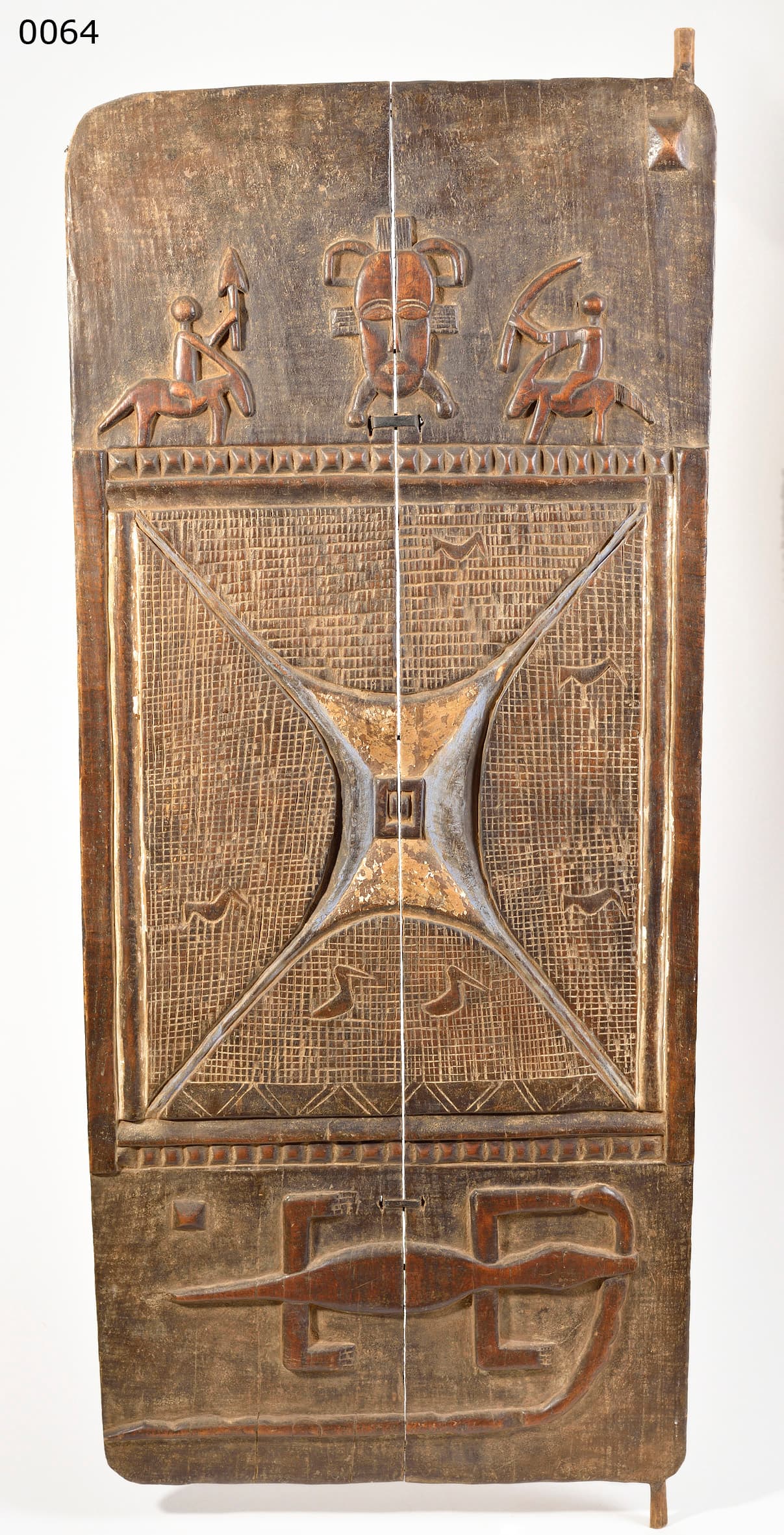
door
