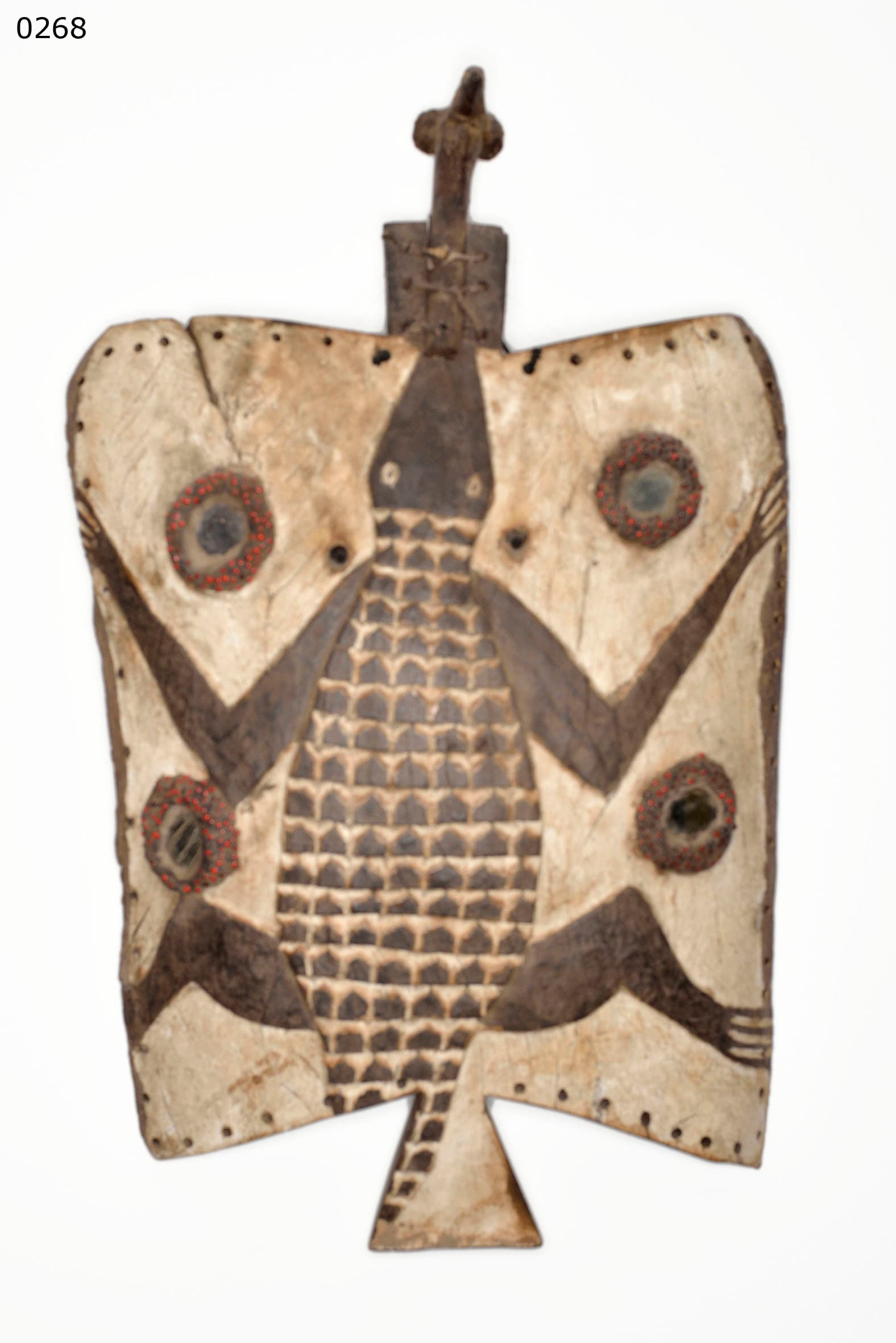
A striking flat wooden plank mask (attributed to the first half of the 20th century, 73 cm) known as Loniake, associated with the Tusia (Toussian) people of Burkina Faso — decorated with thick beeswax/resin and embedded with hundreds of bright red Abrus seeds arranged in geometric patterns.
1. The aesthetics of the board
The Tusia utilize a radical two-dimensional aesthetic.
- The Plank Form: The mask is essentially a flat rectangular wooden board, often topped by stylized animal horns or a bird head. It departs from the volumetric sculptural carving of neighboring groups in favor of a flat canvas for graphic symbols.
2. Toxic protection (abrus seeds)
- The Red Signature: A distinctive feature of the Loniake is its surface decoration. The artist applies a thick layer of beeswax or resin to the wood and embeds hundreds of bright red Abrus precatorius seeds ("crab's eyes") into geometric patterns — squares, X's, and circles.
- Lethal Power: Abrus seeds are highly toxic if ingested. Using them as the primary decoration is traditionally understood to visually signal the dangerous, lethal power of the mask.
3. The Do society
These masks are associated with restricted ritual contexts.
- Initiation Shield: They are traditionally used by the Do secret society during the initiation of young men. The mask is understood to act as a graphic shield against witchcraft, using its toxic red visual language to warn off any uninitiated individuals who might interrupt the sacred rites.
Summary
The Loniake is a notable example of mixed-media graphic design. By using toxic red seeds on a flat wooden canvas, the Tusia created a vibrant visual warning associated with the protection of their initiation rites.
Written with AI assistance from the collection appraisal, object photography and our own research; editorially reviewed. Mistakes are possible — corrections are welcome. How we work →