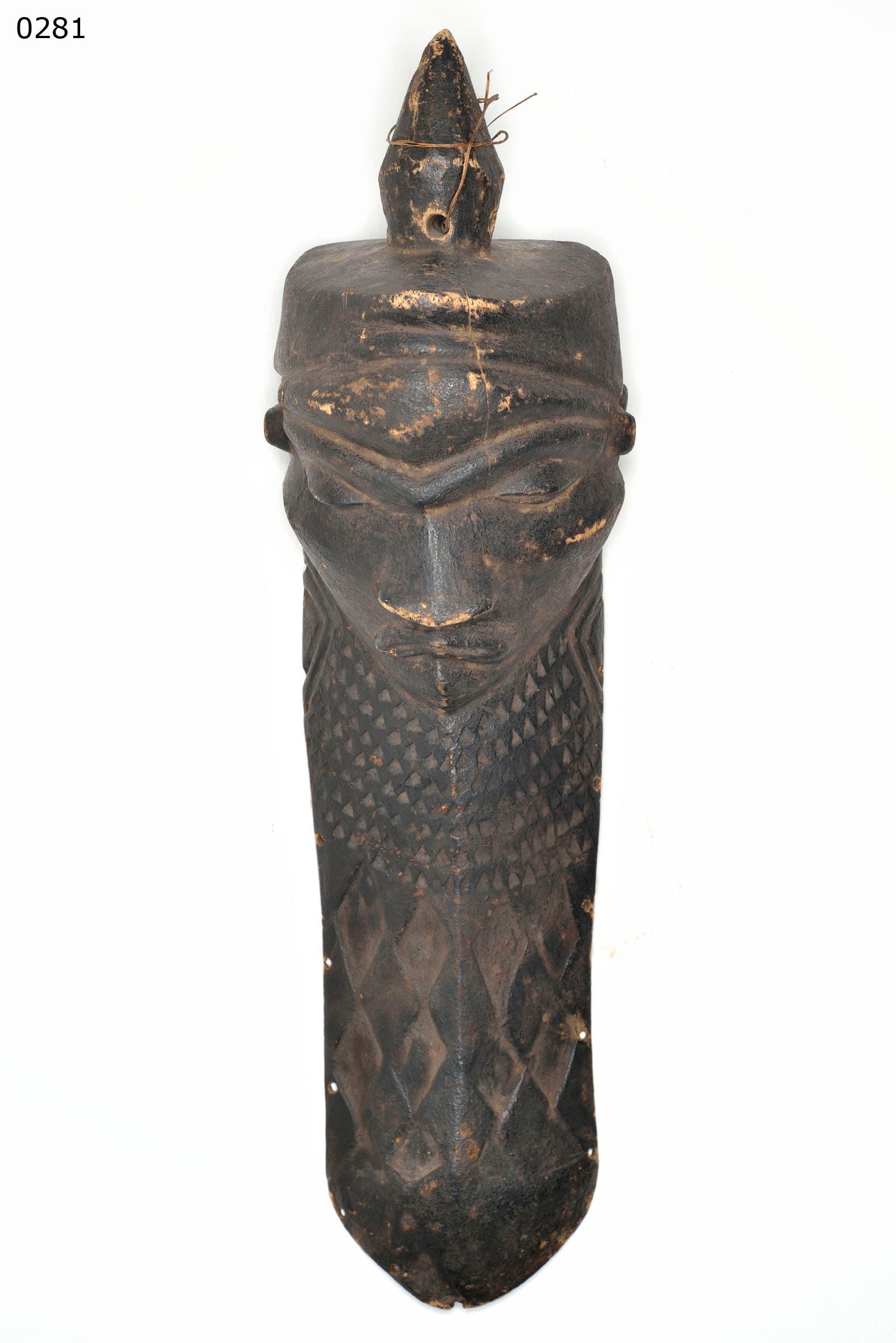
This striking prestige weapon features a wooden haft that flares at the top into a finely carved human head with typical Pende heavy-lidded eyes and geometric scarifications. A flat, heavy iron axe blade protrudes directly from the figure's mouth. The wood has a rich, handled patina, and the iron is deeply oxidized.
1. Aesthetic style and regional traits
This ceremonial axe (kasuyu) perfectly synthesizes the Pende people's mastery of both woodcarving and symbolic metallurgy. The carved face exhibits the classic traits of Pende Mbuya masks: the continuous, unbroken brow line, the triangular nose, and the heavy, downcast, sleepy eyes that project chiefly composure and restraint. The genius of the design lies in the iron blade exiting directly from the figure's mouth. This is a profound visual metaphor, equating the spoken word of the chief with the devastating, cutting power of iron.
2. Ritual function and secret society context
This is not a functional tool for agriculture or warfare; it is traditionally regarded as a prestigious badge of aristocratic authority. Carried hooked over the shoulder by Pende chiefs, lineage heads, and master blacksmiths during public ceremonies, the axe symbolically represents their power over their subjects. It also serves as a visible reminder of the elite's control over the region's iron mines and forging technologies, which were considered sacred and magical endeavors.
3. Physical patina and indications of age
The object displays dual-material wear consistent with age. The iron blade is covered in a thick, dark brown, unpolished rust (magnetite oxidation) consistent with decades of natural exposure, remaining undisturbed by modern wire brushing. The wooden handle and the carved face possess a smooth, oily, and darkened friction polish, consistent with handling during traditional ceremonies and dances.
Summary
This Pende ceremonial axe is a brilliant, kinetic metaphor for royal authority, turning the spoken word into a blade of iron. Its classic, heavy-lidded portraiture and deeply aged, handled patina make it a spectacular symbol of Central African aristocratic power.
Written with AI assistance from the collection appraisal, object photography and our own research; editorially reviewed. Mistakes are possible — corrections are welcome. How we work →