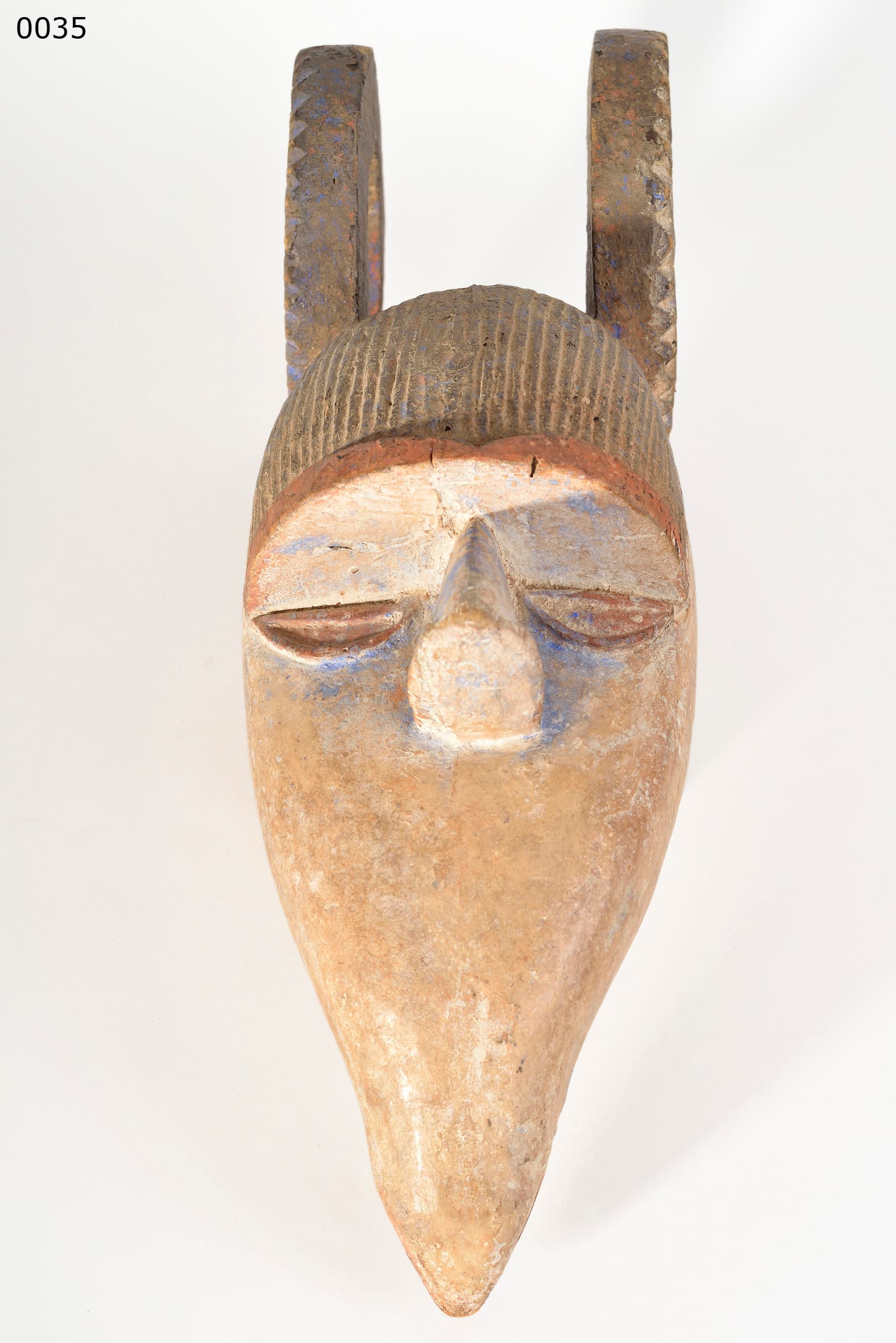
This wooden face mask showcases classical Igbo features with a narrow face, pierced crescent-shaped eyes, a delicate, straight nose, and an open mouth showing teeth, all topped with a domed, bi-colored dark coiffure. The facial plane is heavily rubbed with white kaolin pigment.
1. Aesthetic style and regional traits
This piece is a classic Agbogho Mmuo (Maiden Spirit) mask from the northern Igbo region. The aesthetic is entirely focused on idealized, ethereal female beauty. The carver has utilized elegant, sweeping curves to define the narrow face and delicate features, contrasting sharply with the intricate, dark, architectural hairstyle above. This visual dichotomy between the pure, white face and the dark hair represents the balance and perfection expected of a young Igbo woman ready for marriage.
2. Ritual function and secret society context
Despite representing female spirits, Agbogho Mmuo masks are exclusively danced by men in tightly fitting, colorful appliqué suits. They appear during agricultural festivals, particularly the yam harvest, and during the funerals of prominent society members. The dancers mimic the graceful, dignified movements of young women. The white coloring of the face is deeply symbolic; kaolin chalk (nzu) represents the spirit world, purity, and peace, and is traditionally associated with deceased ancestors returning to bless the living.
3. Physical patina and surface wear
The application of the kaolin pigment on this mask is thick, dry, and consistent with traditional preparation. It is not a modern, flat paint, but a powdery, layered clay that has rubbed off along the high points (the nose and brow) from handling. The dark wood of the coiffure is oxidized and dry. The interior of the mask, particularly around the chin and forehead, shows a smooth, darkened friction patina consistent with use.
Summary
A classic example of Igbo masquerade art, this Maiden Spirit mask captures the region's ideals of feminine grace and ancestral purity. The powdery kaolin surface and internal handling wear are consistent with active ceremonial use.
Written with AI assistance from the collection appraisal, object photography and our own research; editorially reviewed. Mistakes are possible — corrections are welcome. How we work →