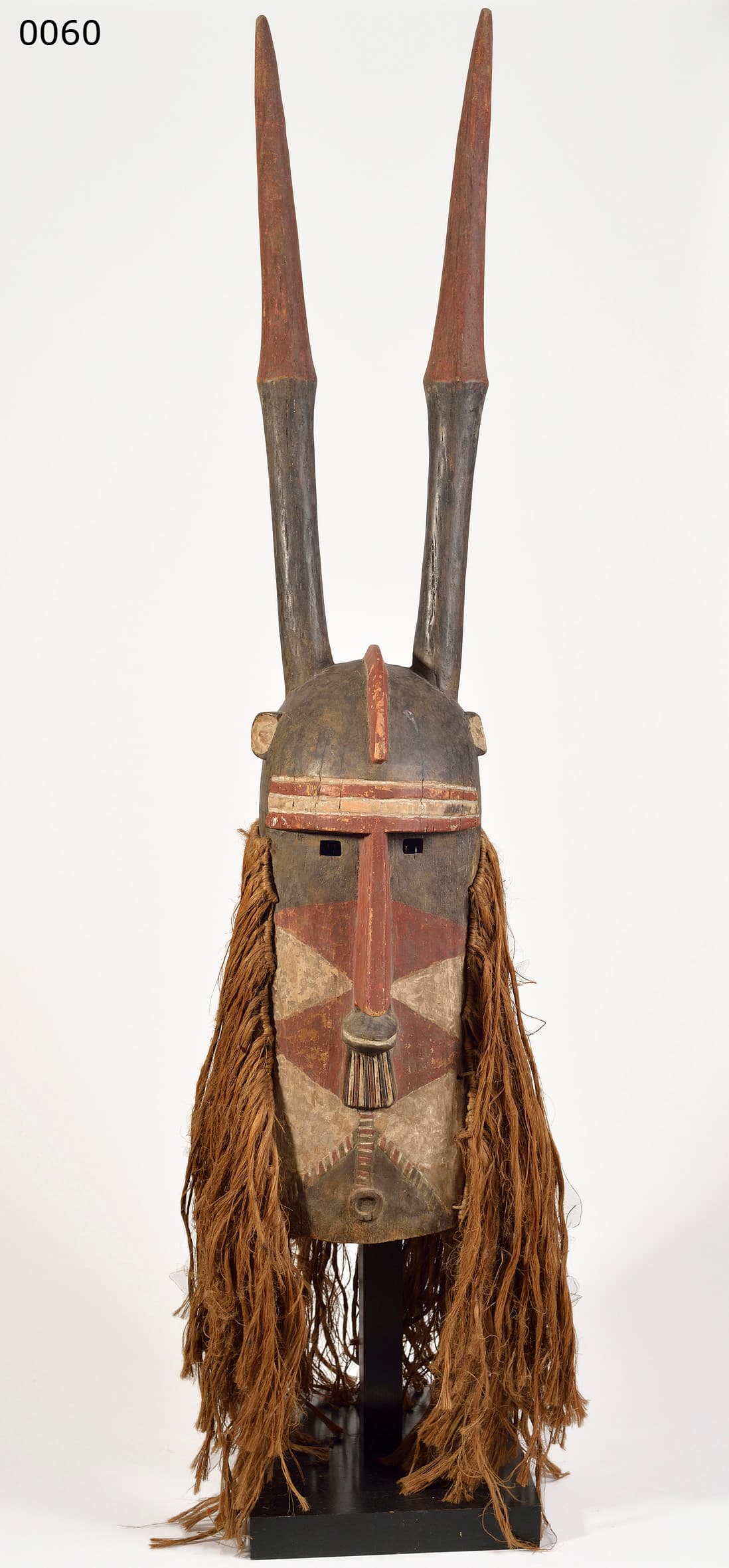
A large elongated animal mask (1st half 20th C., 98 cm) from the Bobo of Burkina Faso, with a long snout, tall spiraling antelope horns, and an avian crest.
1. Zoomorphic representation
The Bobo are masters of the animal mask. This piece does not represent a single biological animal but a composite bush spirit.
- The Antelope and the Bird: The tall, beautifully spiraled horns belong to the roan antelope, symbolizing grace and agricultural fertility. The small fin-like ridge between the horns represents the crest of a sacred bird, linking earth to sky.
- The Elongated Snout: The massive plunging snout gives the mask an aerodynamic, aggressive profile, evoking the speed and untamed nature of the forest.
2. Geometric incisions
The face is covered in a checkerboard of incised, white-pigmented geometric patterns — triangles, squares, and chevrons. For the Bobo, these patterns are the written language of the creator god Wuro, representing the duality of nature (male/female, light/dark, wet/dry).
3. Dwo purification rites
This mask is a physical manifestation of Dwo, the life-giving spirit of nature. It is danced in the spring before the rains. The masquerader spins and strikes the earth with the mask's snout — an act believed to cleanse the village of the previous year's sins and physically re-balance the soil for the new planting season.
Summary
This Bobo mask is an agrarian prayer carved in wood. It combines the power of the antelope and the bird into a large, kinetic instrument designed to purify the earth and secure the survival of the farming community.
Written with AI assistance from the collection appraisal, object photography and our own research; editorially reviewed. Mistakes are possible — corrections are welcome. How we work →