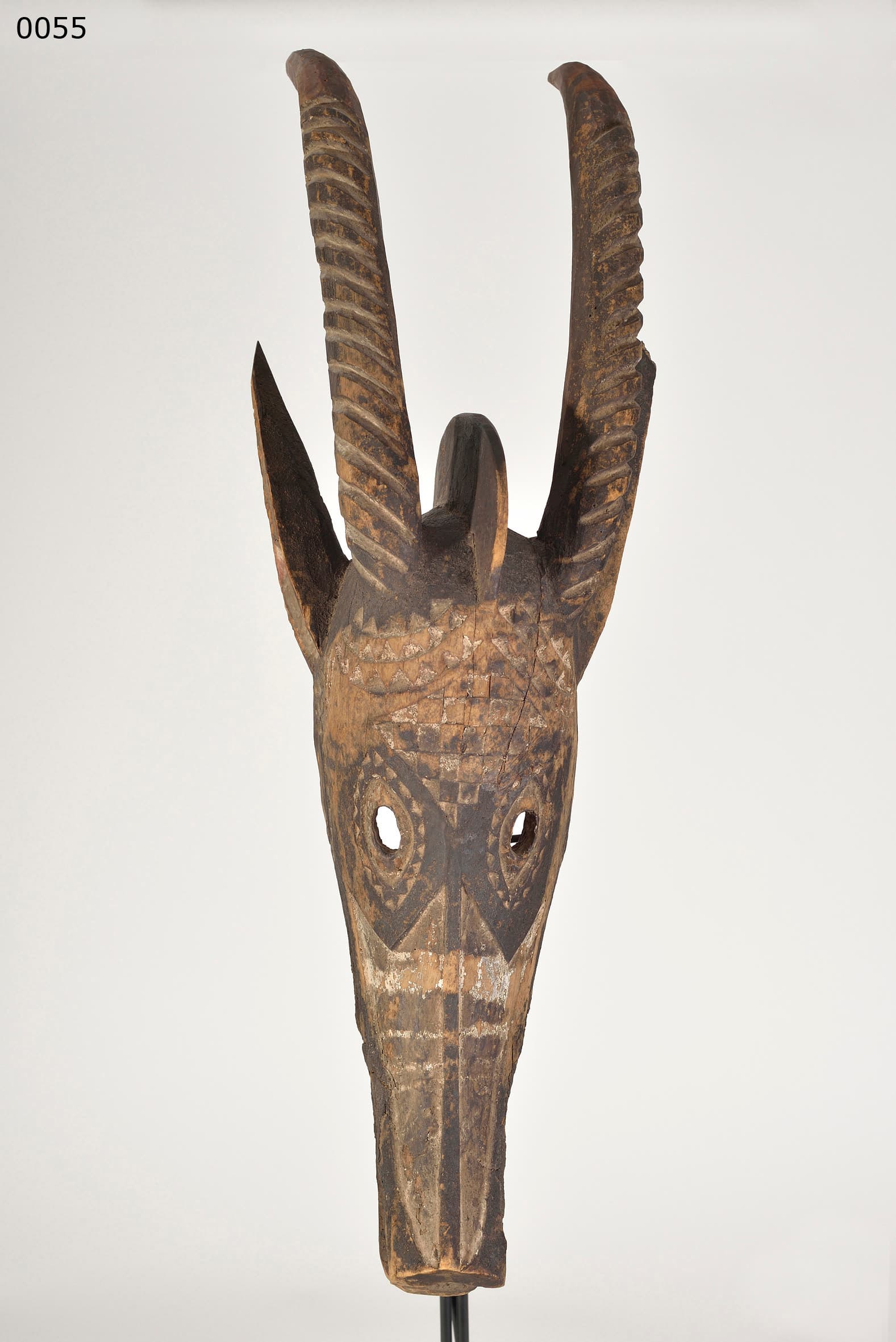
A towering wooden helmet mask (1st half 20th C., 143 cm) from the Bobo of Burkina Faso, with an elongated face, prominent sagittal crest, two massive vertical horns, and a thick fringe of raffia fiber.
1. The caste of the blacksmith
Bobo society is divided into farmers and blacksmiths. This specific mask style is traditionally carved and danced by the blacksmith caste.
- Masters of Fire: Blacksmiths are feared and respected because they control fire and transform earth into iron. This magical ability makes them the primary mediators between the human world and the spirits. The mask is the visual instrument of that mediation.
2. Geometry and the universal balance
The Bobo mask is a canvas for cosmic instruction.
- Polychrome Patterns: The face is painted with distinct red, white, and black geometric shapes — triangles and diamonds. These colors represent the three fundamental elements of the Bobo universe; the layout symbolizes the moral balance required by the creator god Wuro.
- The Horns: The towering horns reaching into the sky serve as antennas, pulling divine energy down into the mask.
3. The presence of dwo
The thick, heavy fringe of natural raffia is as important as the wood. When the masquerader dons mask and suit, he ceases to be human. He becomes a manifestation of Dwo — the untamed, life-giving spirit of the bush — arriving in the village to purify the community and prepare them for the farming season.
Summary
At 143 cm, this Bobo smith helmet is a monumental kinetic sculpture. It combines the magical authority of the blacksmith with stark cosmic geometry, resulting in a towering spirit designed to physically and spiritually cleanse the village.
Written with AI assistance from the collection appraisal, object photography and our own research; editorially reviewed. Mistakes are possible — corrections are welcome. How we work →