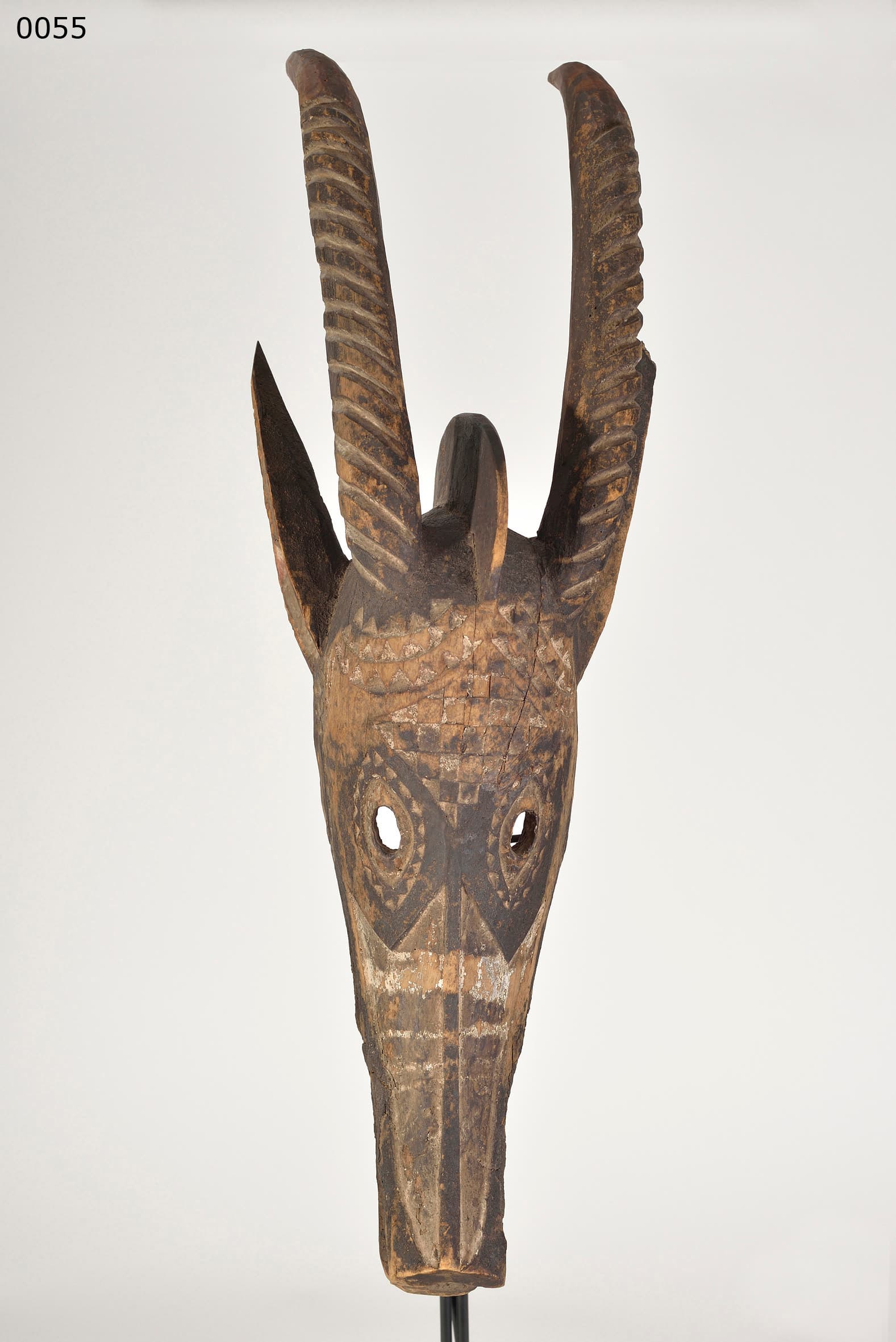
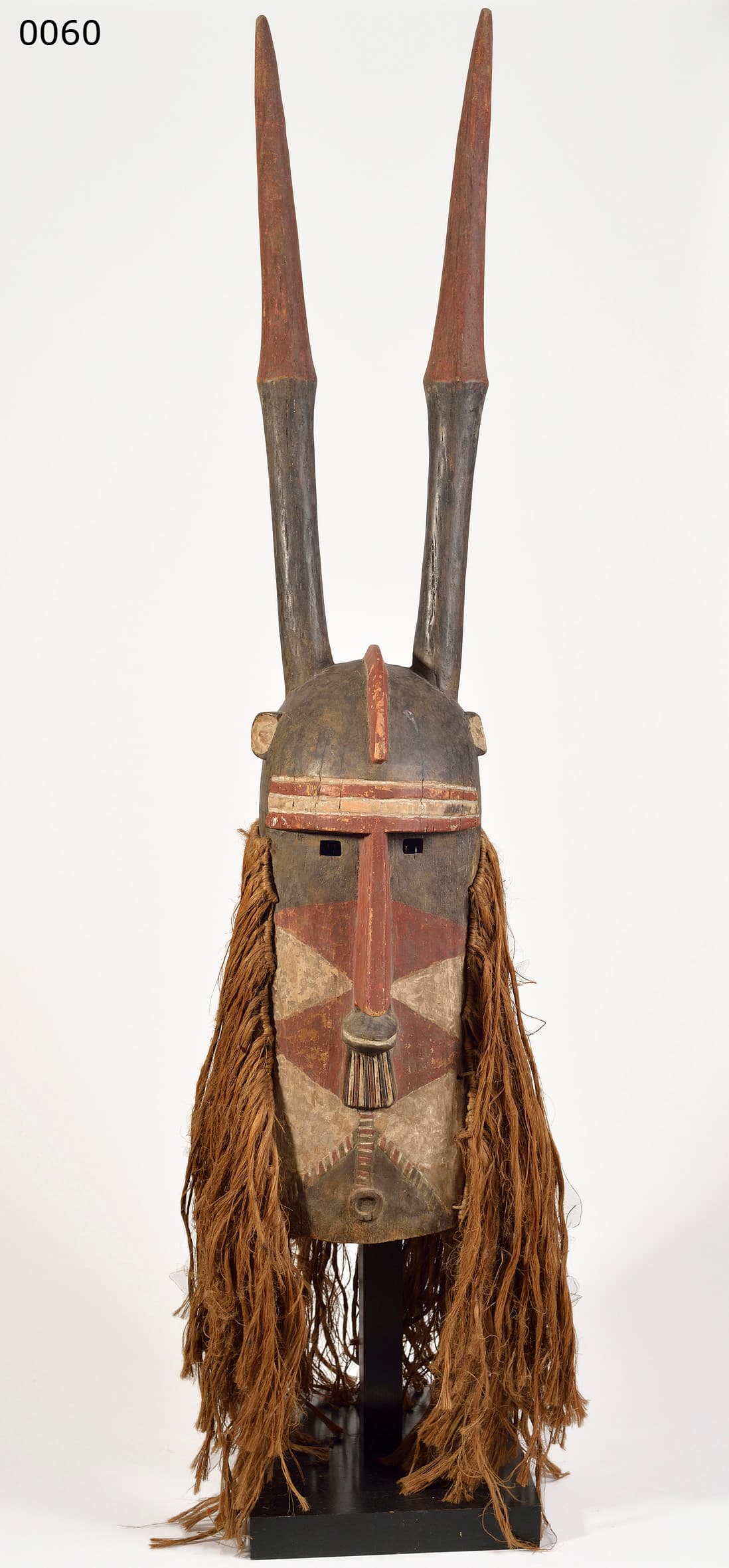
A massive, architecturally complex wooden helmet mask (1st half 20th C., 82 cm) from the Bobo of Burkina Faso — an elongated face, prominent sagittal crest, and two sweeping vertical horns, painted in geometric patterns.
1. Monumental zoomorphism
This mask exemplifies the sheer scale and aggressive geometry of the Bobo masking tradition.
- Horns and Crest: The mask is topped by two massive sweeping horns and a central blade-like crest. This represents a composite spirit of the bush — part antelope, part bird, part supernatural entity — designed to physically dominate the space around the dancer.
2. Geometric polychrome and duality
- Striking Triangles: The long sloping face is painted with alternating triangles in faded pigments.
- Cosmic Balance: In Bobo thought these contrasting patterns represent the duality of the universe — light and dark, male and female, knowledge and ignorance. The mask is a visual representation of the balance required by the creator god Wuro.
3. The re-creation of the world
These massive helmets are danced at the onset of the farming season.
- The Creator's Agent: The mask represents the creator god's agent, sent down to wipe the slate clean.
- The Spinning Rebirth: The heavy spinning dance of the masquerader is believed to physically re-balance the natural forces — ensuring the rains will come and the crops will grow.
Summary
This Bobo helmet is a colossal wearable altar. Its sweeping horns and bold geometries make it an awe-inspiring manifestation of nature's power, tasked with renewing the earth for human survival.
Written with AI assistance from the collection appraisal, object photography and our own research; editorially reviewed. Mistakes are possible — corrections are welcome. How we work →