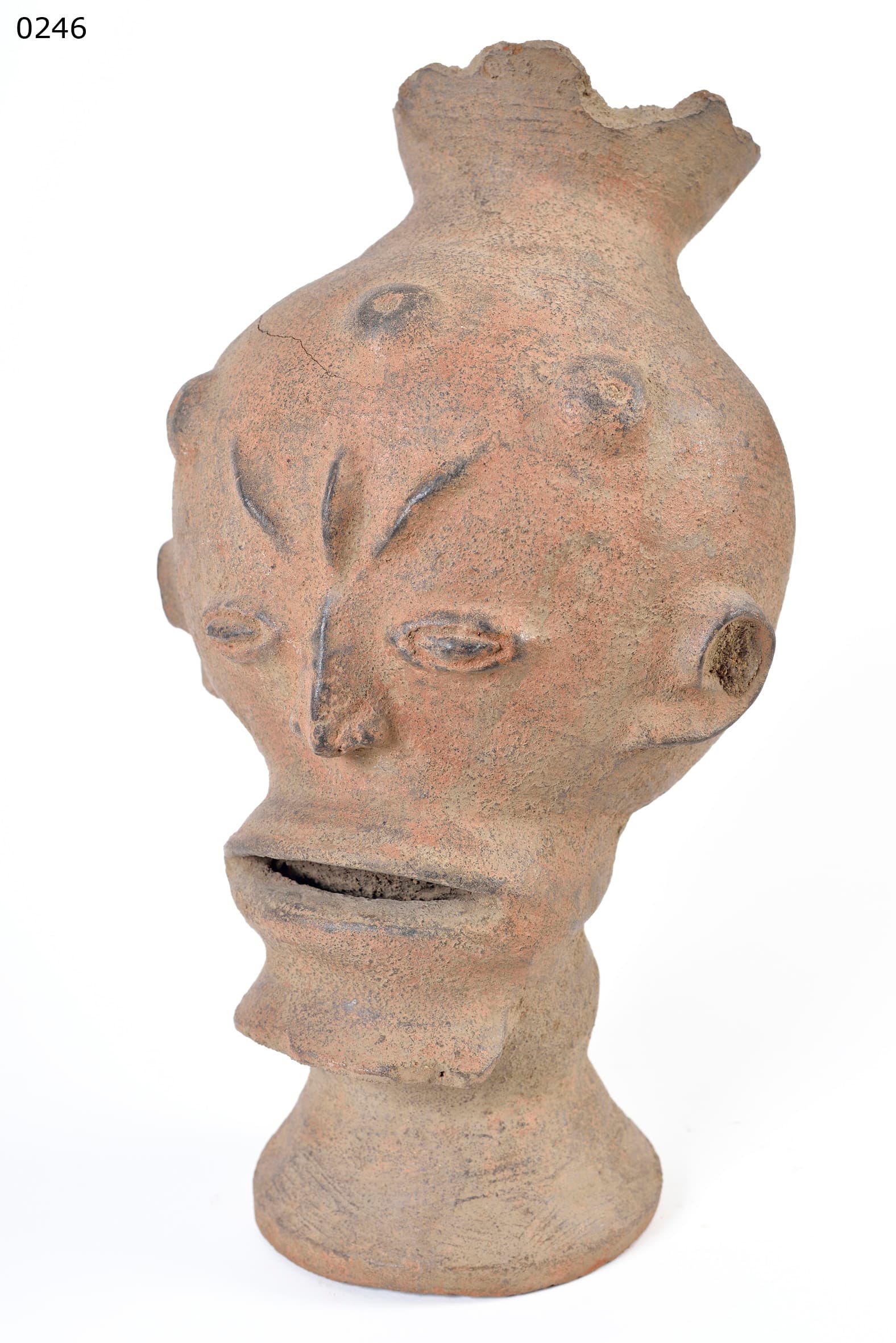
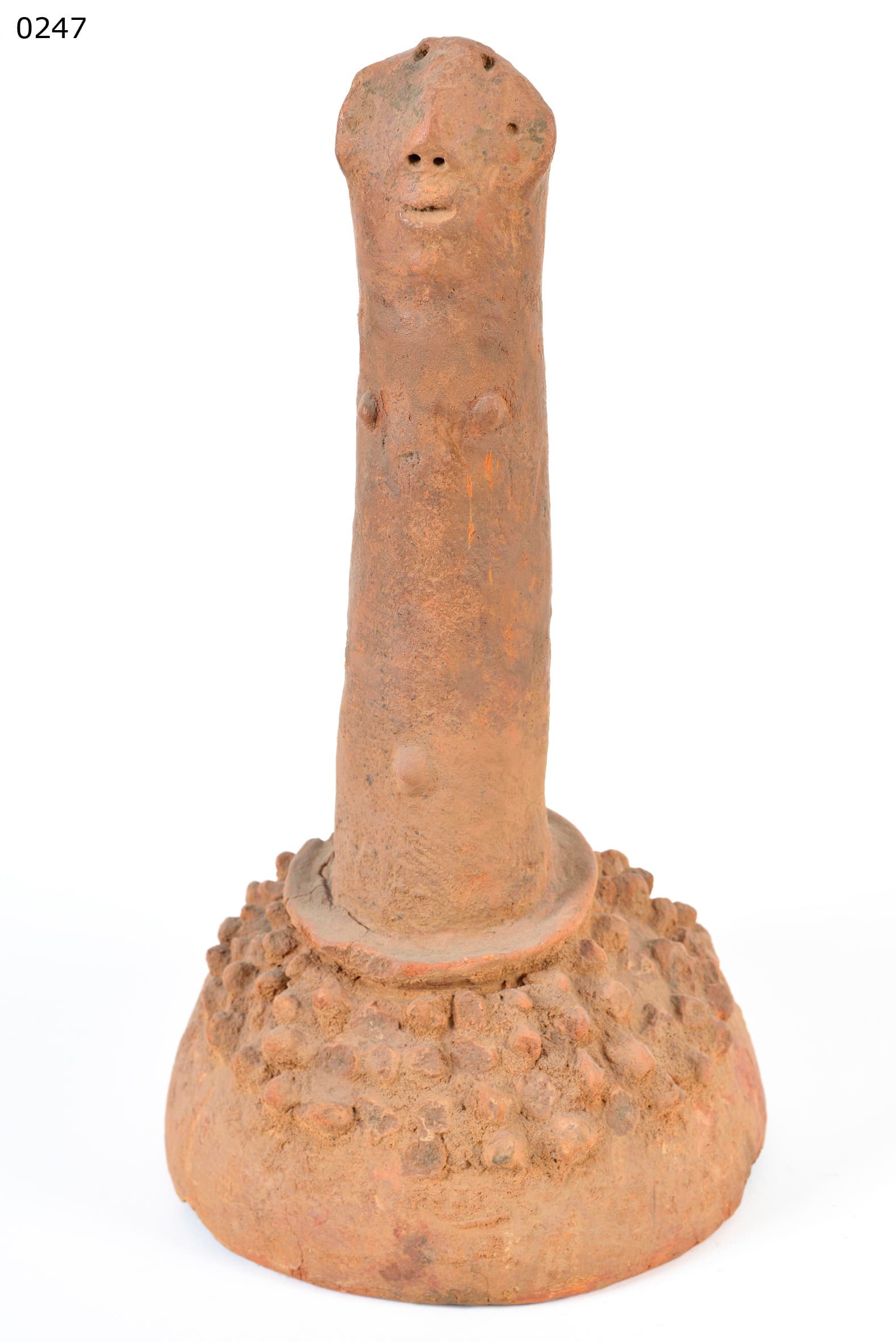
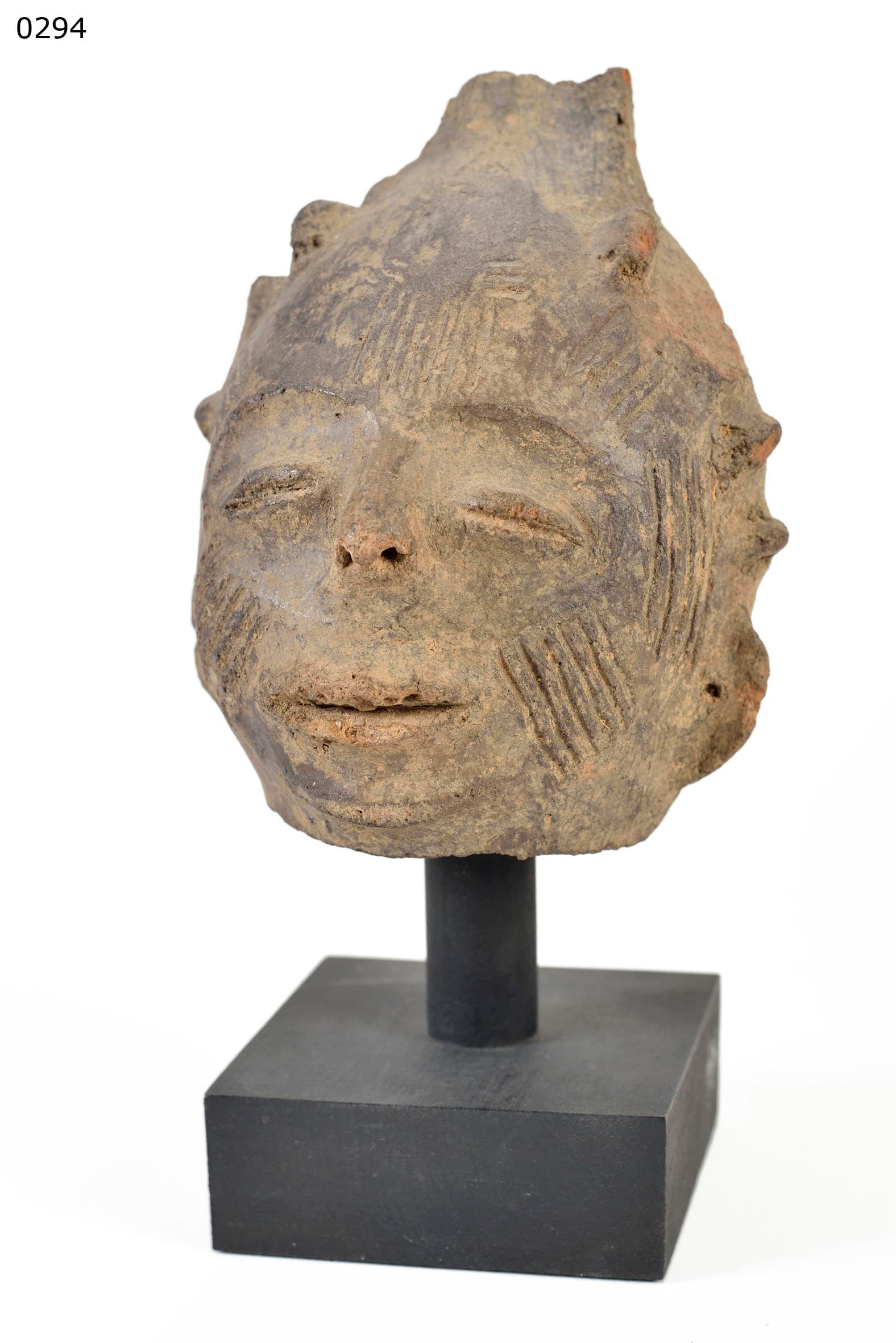
These two fired-clay terracotta heads exhibit the classic flattened, lunar-shaped faces of the Akan style, with delicate coffee-bean eyes, prominent arching brows, and heavily ringed, columnar necks. Both show significant wear, with the porous clay retaining layers of soil and calcification.
1. Aesthetic style and regional traits
These pieces are characteristic mma or nsodie terracottas, representing a highly regarded form of funerary art among the Akan peoples (including the Ashanti, Fante, and Twifo) of Ghana. The extreme abstraction of the face into a flat, disk-like plane is intentional, favoring an idealized spiritual portrait over realistic physical likeness. The deeply incised rings encircling the neck are an important cultural motif; they represent rolls of fat, which are traditionally associated with prosperity, beauty, and aristocratic well-being.
2. Ritual function and religious meaning
Traditionally commissioned following the death of a royal or elite individual, these terracottas were crafted by specialized female potters. They were typically not buried with the corpse but placed in a sacred grove (asensie or "place of pots") located outside the village. Surrounded by cooking vessels and libation bowls, these statues are understood to have provided an earthly resting place for the ancestor's soul and served as the focal point for annual mourning rituals, where palm wine and prayers were offered to the deceased.
3. Physical patina and material condition
The extensive fragmentation and surface erosion are consistent with the proposed 12th-18th century dating. Having been exposed to the elements in an open-air forest shrine and subsequently buried beneath accumulating vegetation and soil, the terracotta shows signs of environmental wear. The breakage points at the necks are worn and smoothed, and the clay matrix is permeated with calcified earthen deposits.
Summary
These Akan nsodie heads are notable miniature representations of Ghanaian royal funerary rites. Their stylized lunar faces and earthen degradation suggest a connection to historical ancestral veneration in the sacred groves.
Written with AI assistance from the collection appraisal, object photography and our own research; editorially reviewed. Mistakes are possible — corrections are welcome. How we work →