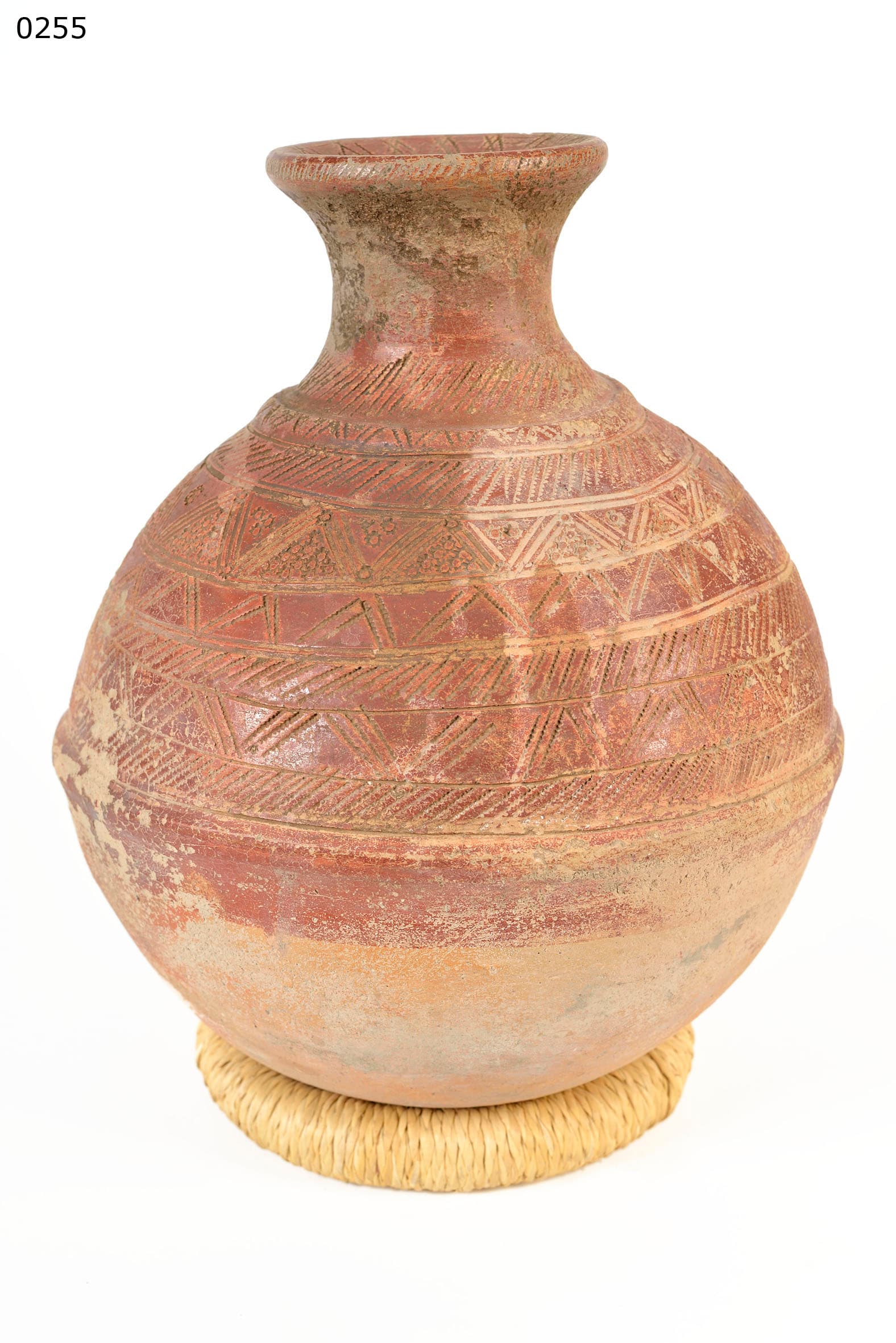
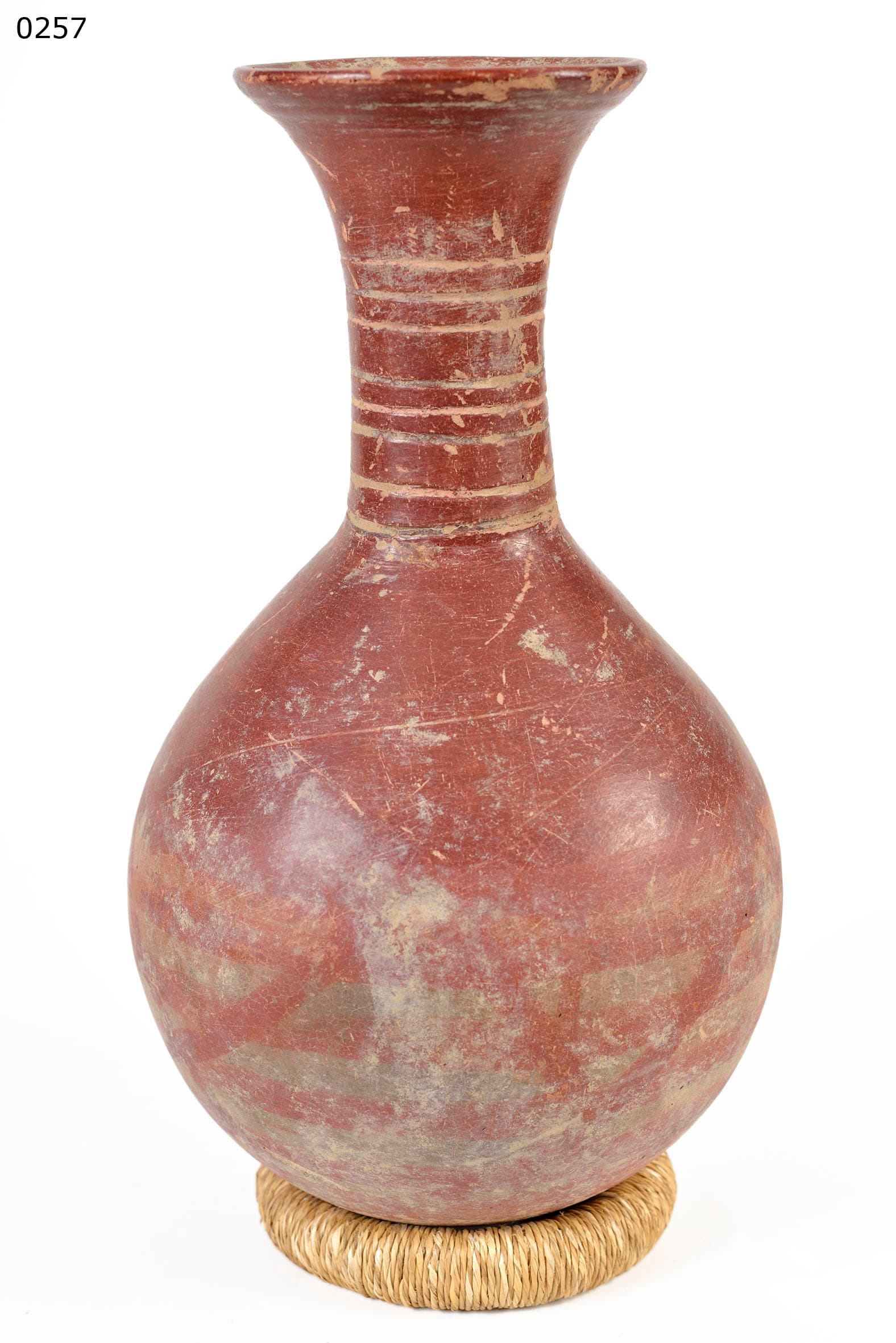
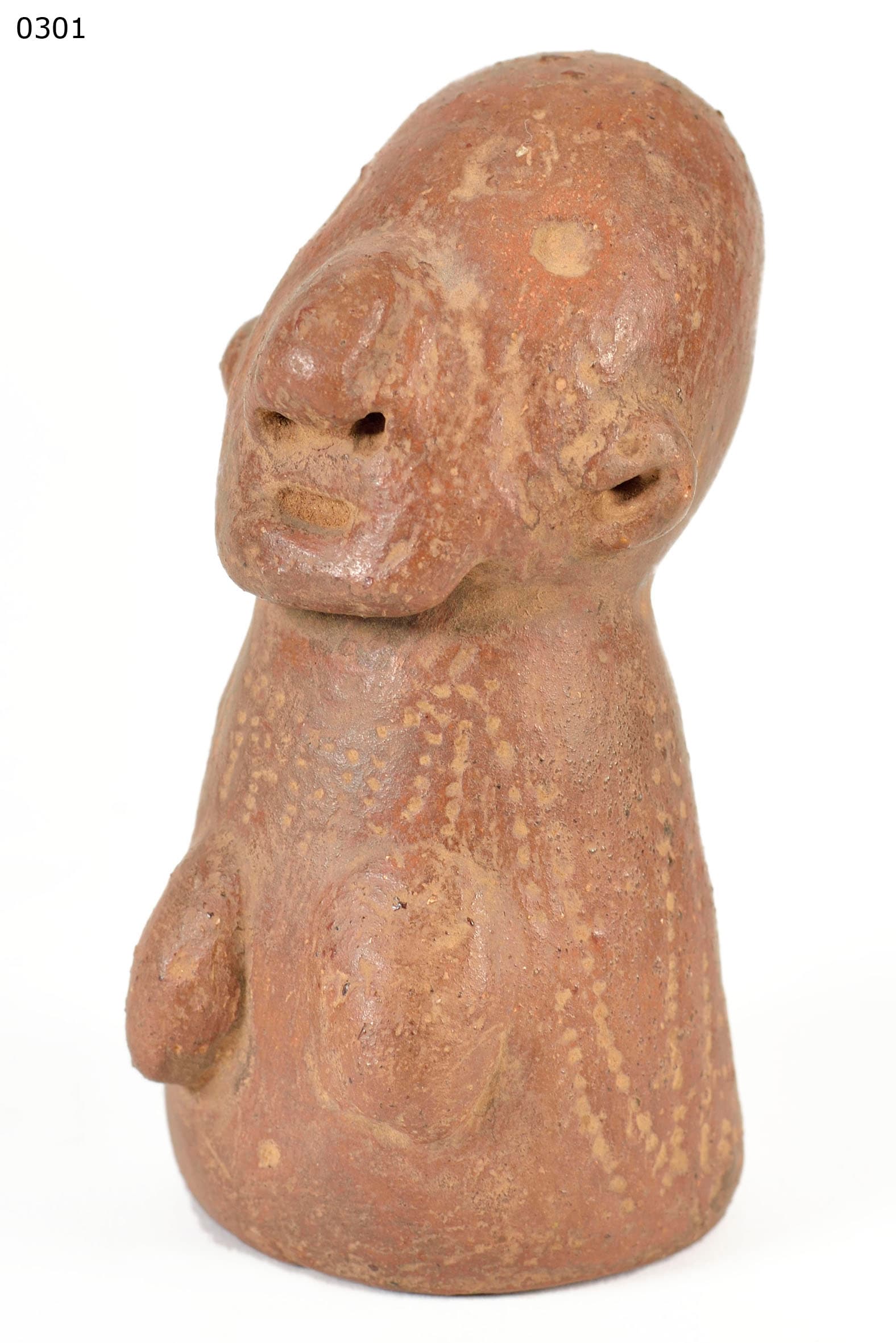
This grouping of ancient Malian terracottas includes clustered globular pots, an altar vessel with a ring of applied knobs, a conjoined double-bowl, and a jar with four lug handles at the neck. The fired clay forms share a consistent, porous archaeological texture with reddish-brown slip remnants and thick calcified soil encrustations.
1. Aesthetic style and regional traits
Originating from the Inland Niger Delta region of Mali, these vessels represent the functional and ritual ceramic traditions that operated alongside the famous Djenne figurative sculptures. The aesthetic is highly symbolic; for instance, the conjoined double-vessel (Nr. 574) visually manifests the widespread Mande philosophical concept of duality and twinship. The altar vessel (Nr. 573) carries a single ring of applied knobs above bands of notched ridges, a decorative scheme found on pedestalled vessels from the region; the jar (Nr. 576) has four broad lugs at the shoulder.
2. Ritual function and secret society context
These are understood to have been specialized shrine objects rather than ordinary domestic cooking wares. The double-vessels are believed to have been utilized by traditional healers (Nganga equivalents) to mix opposing spiritual medicines or to offer dual libations to twin deities. What the vessels held or served is not recorded; the raised knobs and lugs are ornament and handles, not a reference to illness.
3. Physical patina and age indicators
All four vessels exhibit weathering consistent with 12th-16th century burial in the floodplains of the Niger River. The low-fired terracotta has undergone significant surface vitrification and mineral leaching. The application of the appliqué nodules and joined clay sections remains structurally sound, yet the surfaces are thoroughly coated in irremovable, hardened laterite soil and calcified salt blooms, supporting the attribution of an ancient subterranean history.
Summary
This cohesive collection of Inland Niger Delta vessels provides a fascinating window into the ritual ceramic practices of ancient Mali. Their forms — the twin bowls, the knobbed altar vessel and the lugged jar — combined with deep archaeological encrustation, make them significant examples of ritual ceramic art.
Written with AI assistance from the collection appraisal, object photography and our own research; editorially reviewed. Mistakes are possible — corrections are welcome. How we work →