This horizontally forged iron object features a central mounting peg that branches into a long, sweeping crescent, terminating at both ends in highly stylized bird heads, likely hornbills, with long, flat beaks. The entire surface is covered in a thick, dense layer of historical rust and dark iron oxidation.
1. Aesthetic style and regional traits
Created by the Fonombele (the Senufo blacksmith caste), this piece is a triumph of minimalist iron forging. Senufo metallurgy often relies on stark, linear silhouettes to communicate spiritual ideas. The double-headed bird motif, facing outward in opposite directions, visually articulates concepts of omniscience, vigilance, and the dual nature of the cosmos (male/female, earthly/spiritual). The severe abstraction of the birds strips away all ornithological detail to focus entirely on the sweeping, aerodynamic power of the form.
2. Ritual function and secret society context
This object is an altar implement or staff finial utilized by the Sandogo (the female-dominated divination society) or senior initiates of the Poro (the male secret society). The hornbill (kasingele) is one of the primordial creatures in Senufo cosmology, symbolizing primal intellect, fertility, and the original creation of life. Placed upon a shrine or mounted on a wooden staff, the iron birds acted as spiritual intermediaries, attracting protective spirits to the diviner and guarding the sacred space from malevolent witchcraft.
3. Physical patina and age indicators
The attribution to the 19th century is supported by the state of the metal. The iron exhibits a deep, crusty magnetite oxidation—a stable rust layer consistent with formation over many decades in the humid West African climate. There is no apparent evidence of modern wire brushing or chemical blackening; the surface remains raw, textured, and deeply integrated into the metallic core, suggesting generations of exposure and ritual libation.
Summary
This Senufo iron altar piece is a notable example of West African symbolic metallurgy. Its sleek, double-headed hornbill abstraction and deep-seated rust patina make it a compelling artifact associated with Sandogo and Poro spiritual divination.
Written with AI assistance from the collection appraisal, object photography and our own research; editorially reviewed. Mistakes are possible — corrections are welcome. How we work →
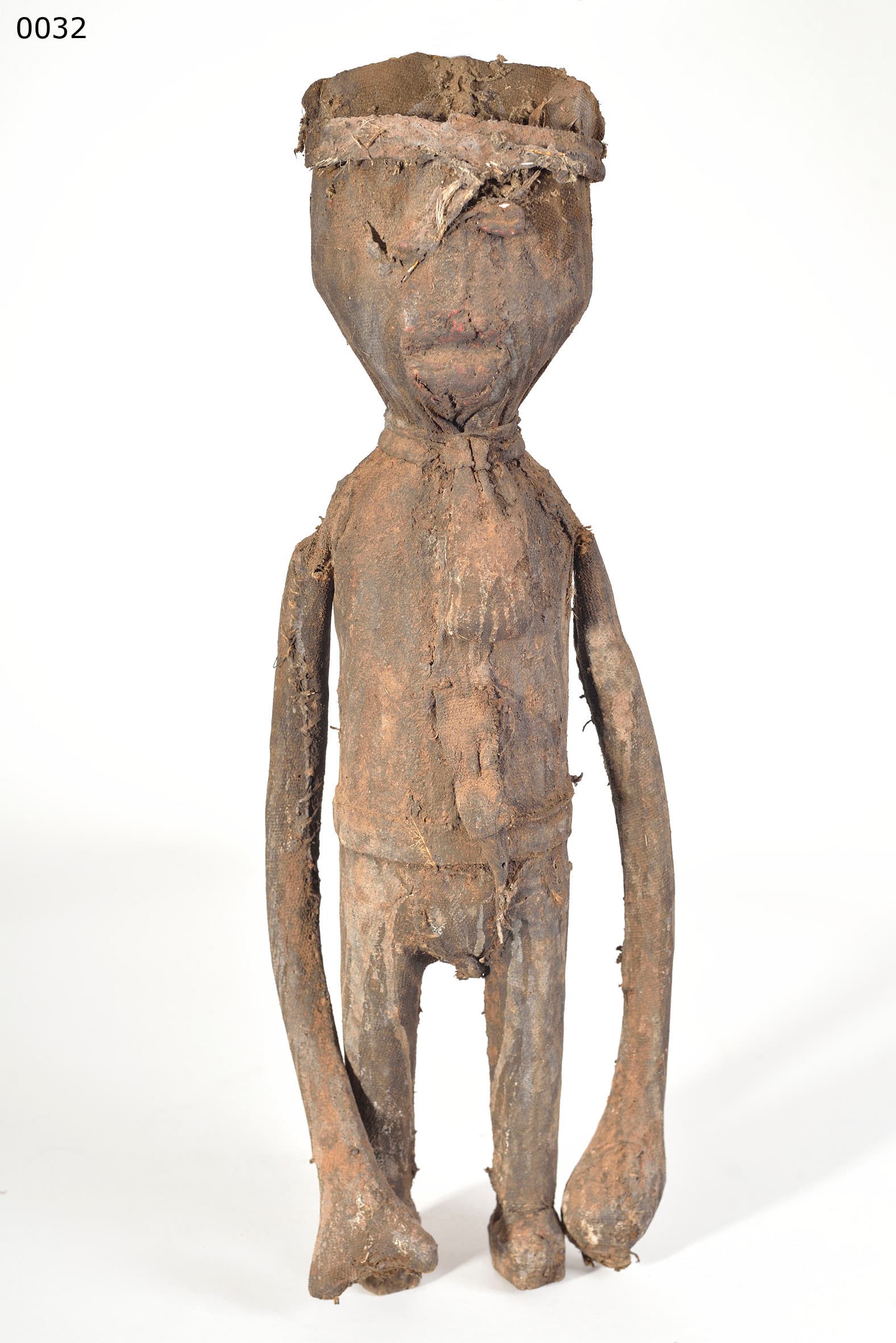
power figure (called KAFIGELEDJO)
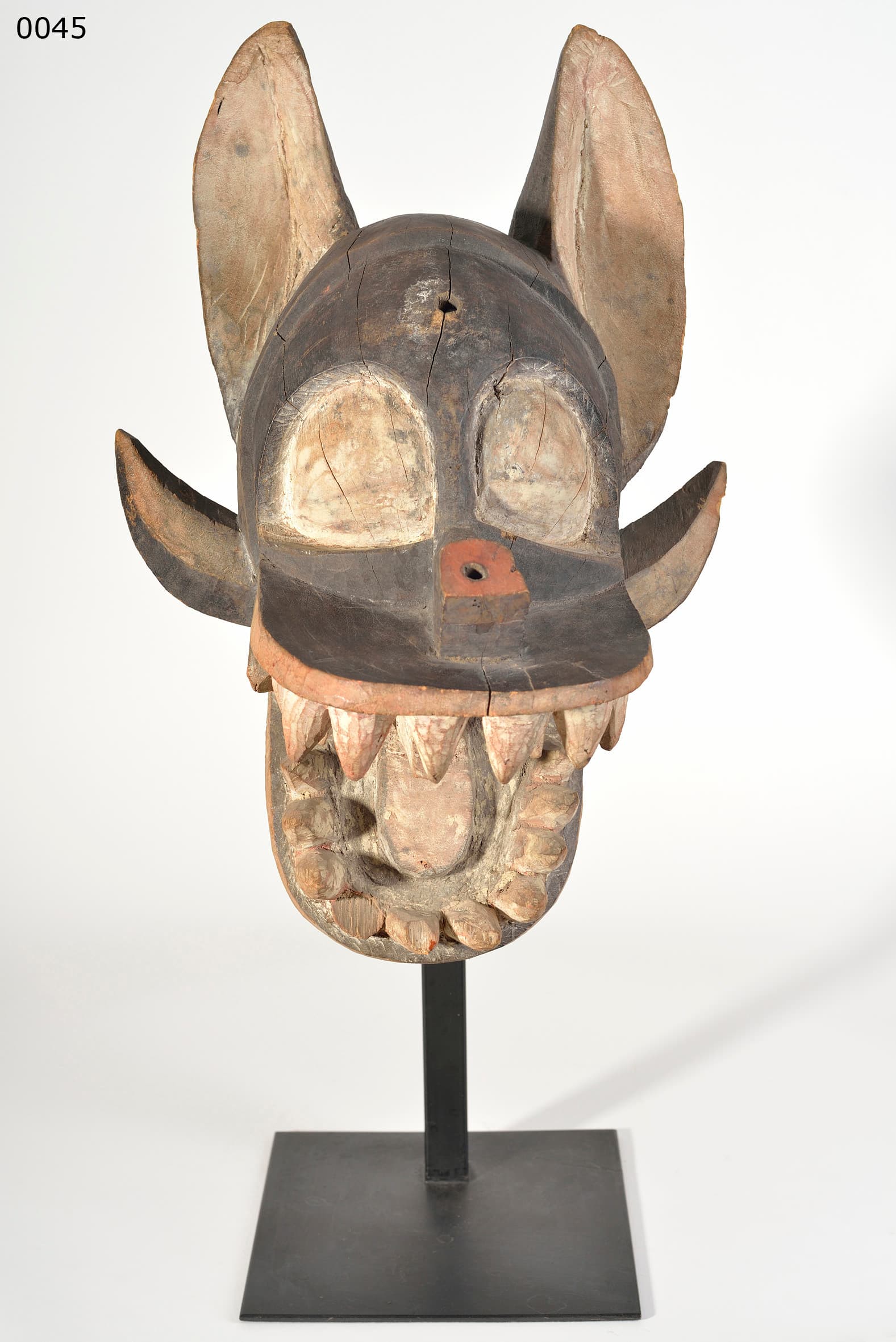
headcrest mask
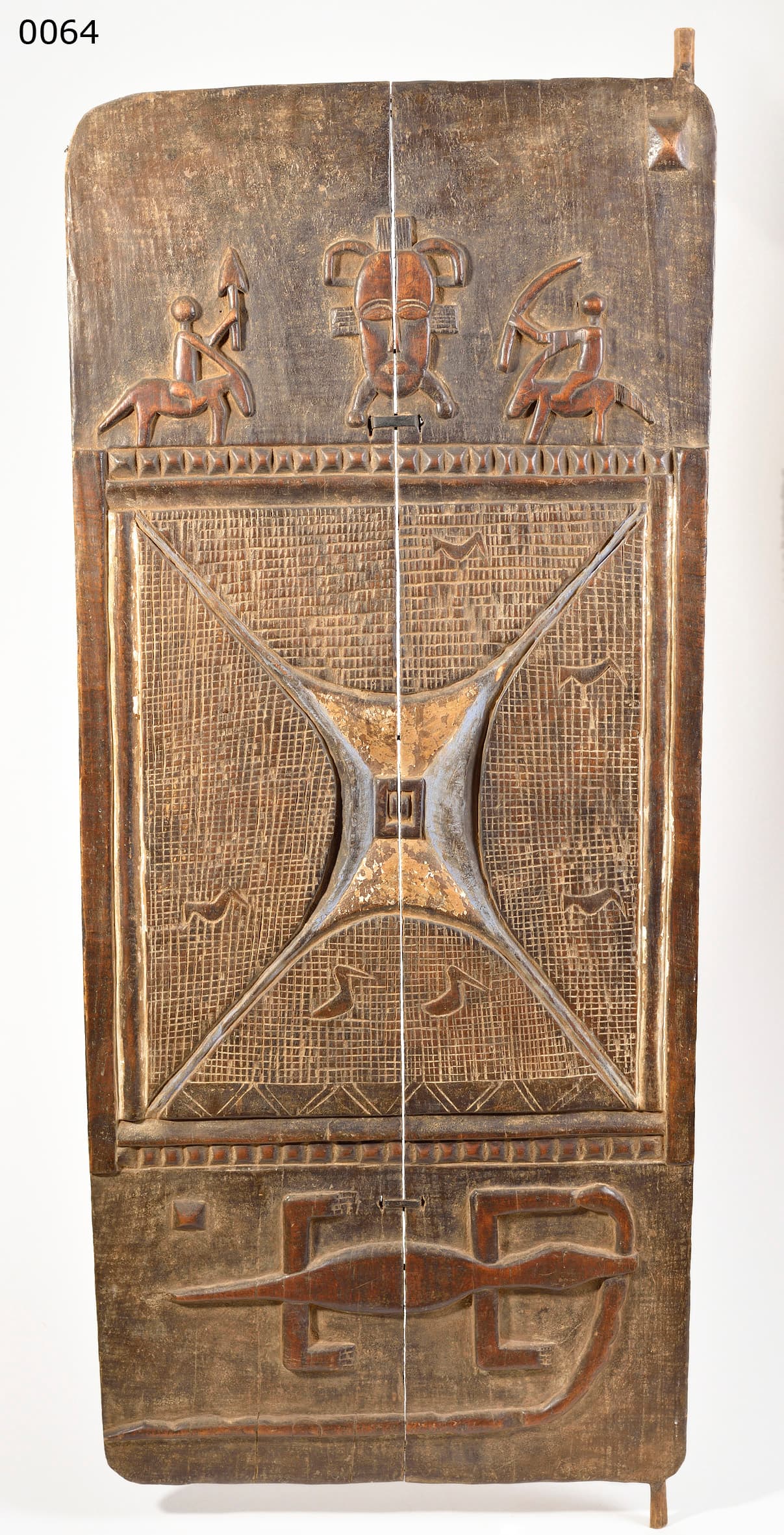
door
