These three massive wooden statues (two female, one male) are characterized by their extreme, elegant vertical elongation, sweeping columnar limbs, and crested coiffures, all resting upon thick, heavy cylindrical bases. The deeply oxidized wood exhibits smooth handling wear along the torsos and severe impact damage on the bases.
1. Aesthetic style and regional traits
These figures, known as pombibele ("those who give birth to the Poro"), are highly regarded examples of Senufo sculptural elegance. Attributed to the Kulebele woodworkers, the statues exhibit an elongated, aerodynamic form. The bodies are stretched into slender, sweeping lines, with the arms detached from the torso to create negative space. The female figures feature prominent, conical breasts symbolizing maternal nourishment, while the male figure shares a similar serene, geometric abstraction, creating a balanced aesthetic of gendered harmony.
2. Ritual function and secret society context
Pombibele are dynamic, kinetic instruments traditionally utilized during the funerary rites of deceased elder initiates of the Poro secret society. Held by the arms or the waist, young initiates strike the heavy cylindrical bases of the statues directly against the earth in a rhythmic, pounding dance. This auditory and physical vibration is believed to awaken the ancestors, purify the sacred grove, and ensure the successful transition of the deceased elder's spirit into the realm of the dead.
3. Physical patina and age indicators
The physical evidence on these three statues is consistent with intensive ceremonial use. The torsos, waists, and arms are covered in a dark, smooth, and glossy friction patina, compatible with being gripped during ceremonial dances. Conversely, the thick cylindrical bases are severely battered, splintered, and compressed, supporting their attribution as percussive, earth-striking instruments.
Summary
These Pombibele rhythm pounders are classic examples of Senufo artistry, blending sculptural grace with percussive utility. Their elegant proportions, combined with the heavy impact wear on their bases, support their attribution as significant works of Poro ritual performance.
Written with AI assistance from the collection appraisal, object photography and our own research; editorially reviewed. Mistakes are possible — corrections are welcome. How we work →
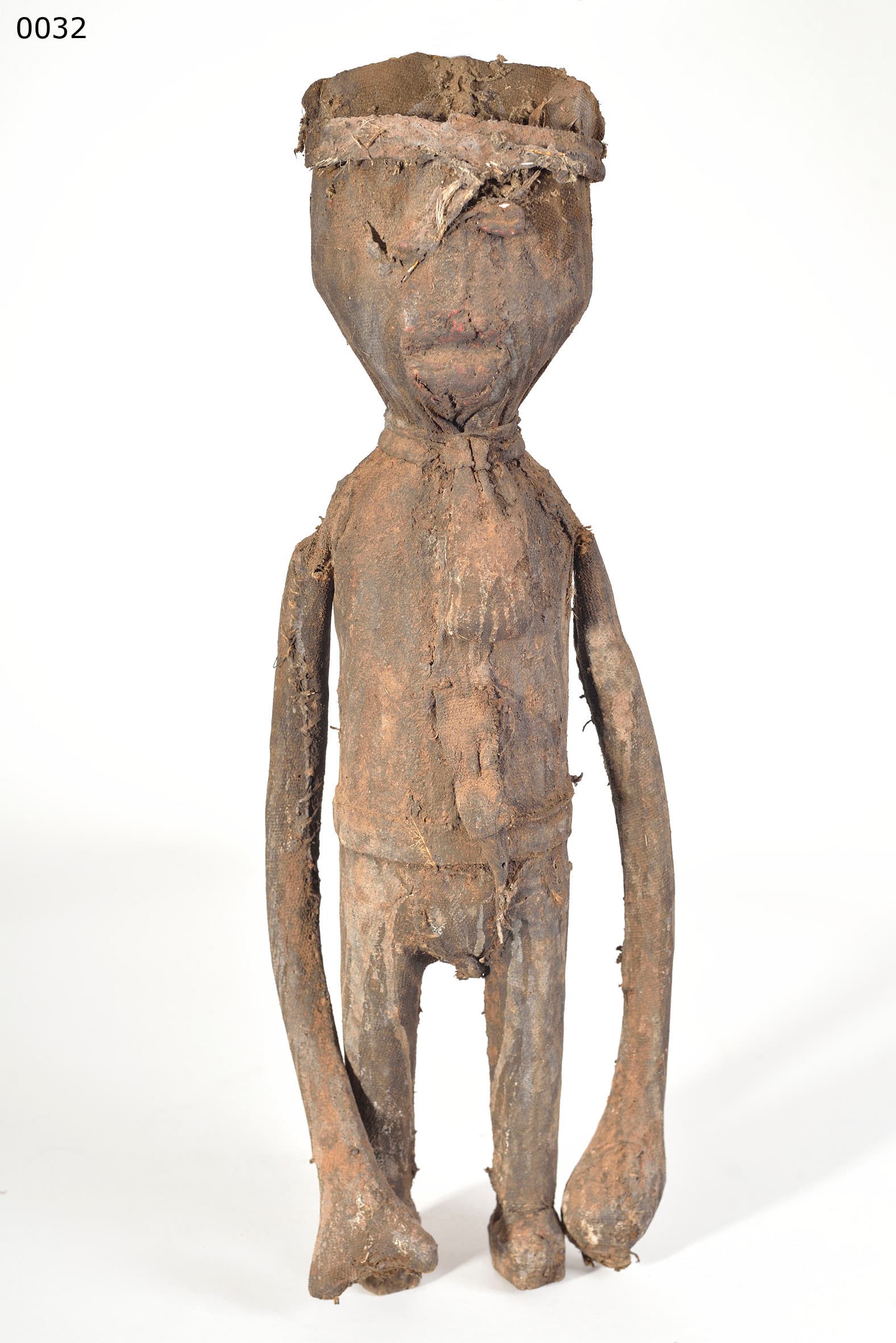
power figure (called KAFIGELEDJO)
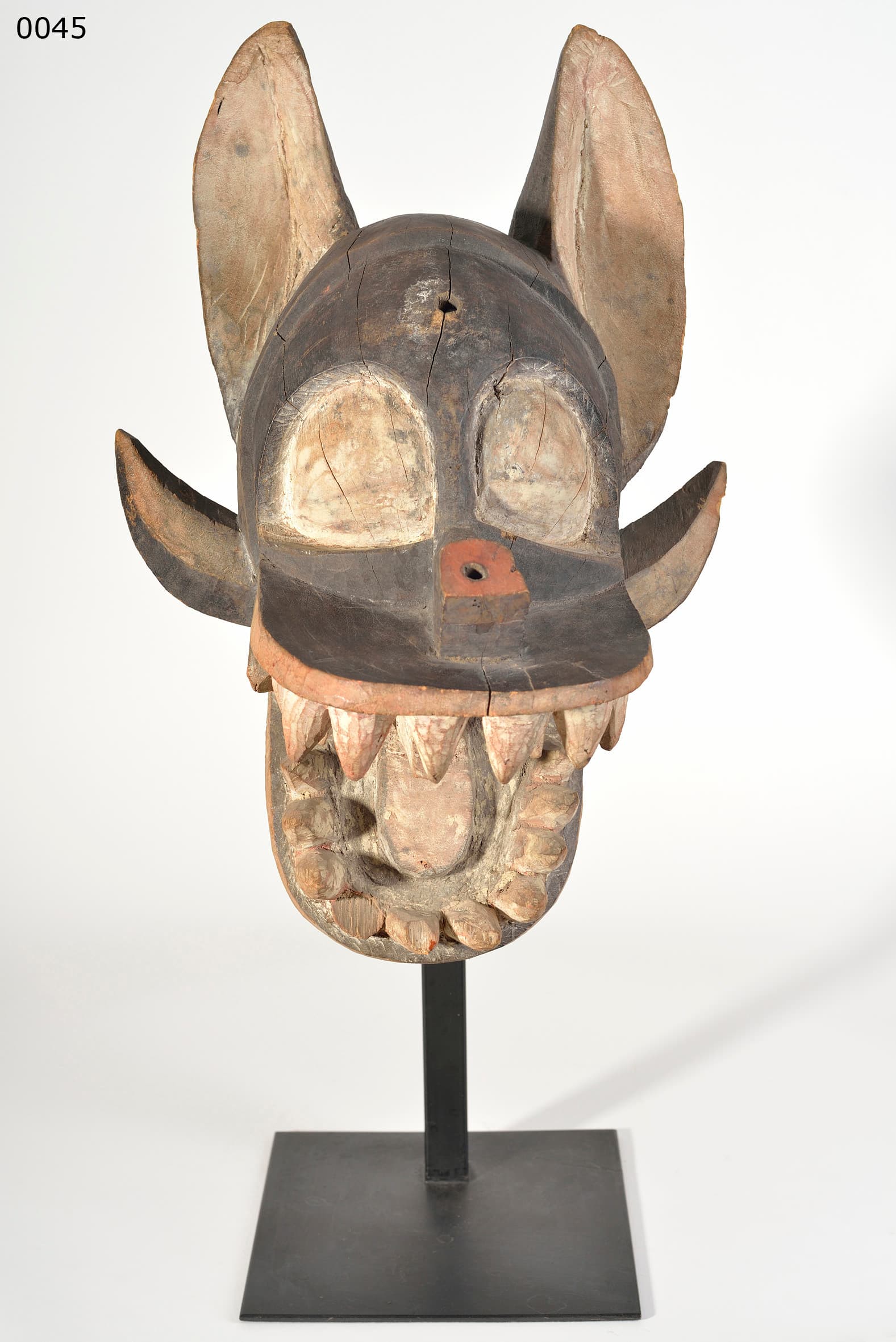
headcrest mask
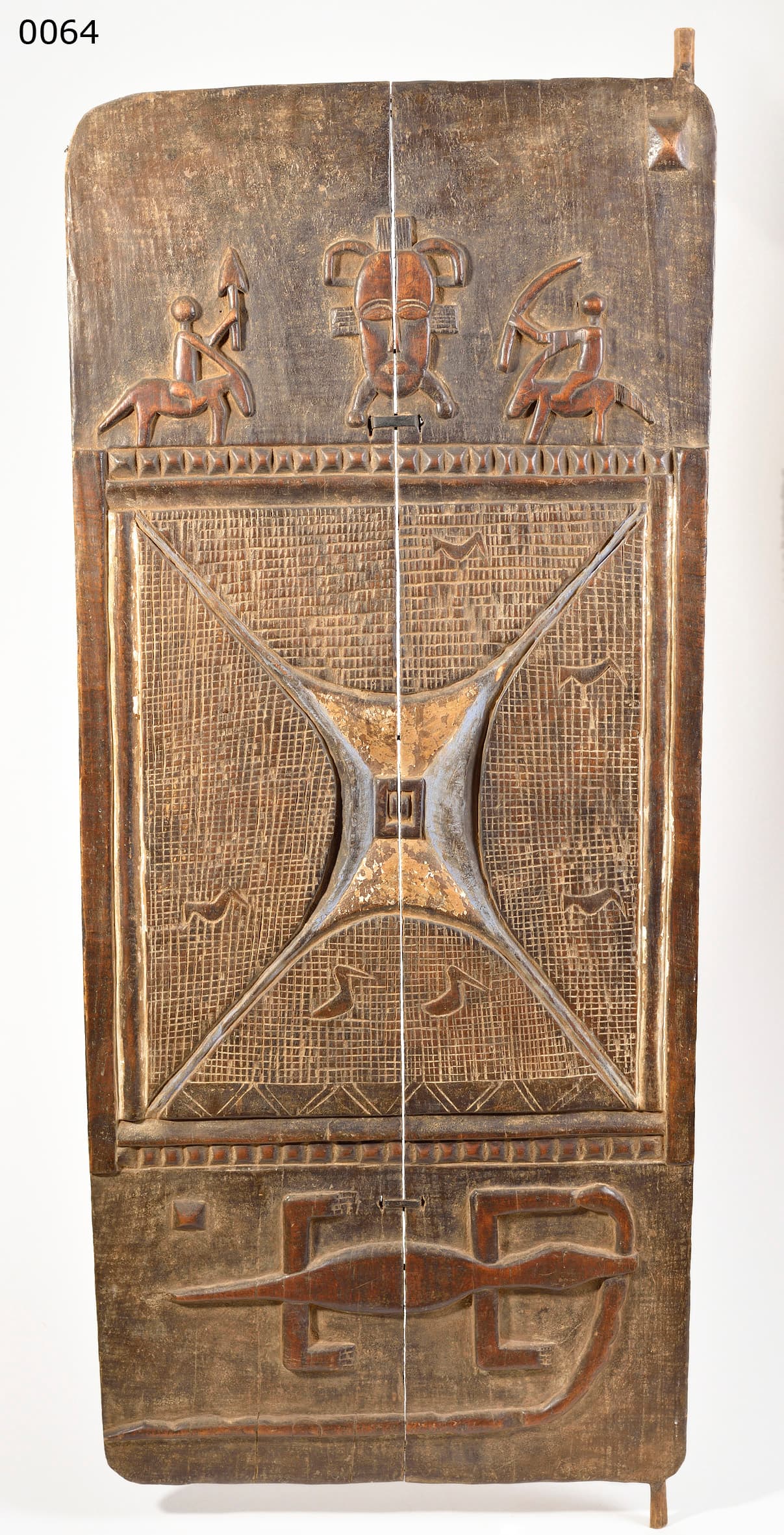
door
