These three soaring, wrought-iron staffs (known as Asen) feature long, heavy central shafts terminating in wide, umbrella-like circular platforms. The platforms are highly decorated with small, forged iron figures, animals, and dangling metallic elements. The iron is uniformly covered in a thick, dense, and flaky red-brown oxidation.
1. Aesthetic style and regional traits
These objects are a classic expression of Fon royal blacksmithing from the Kingdom of Dahomey (modern-day Republic of Benin). The Asen utilizes the structure of an umbrella — a universal West African symbol of royalty and protection — rendered in heavy, forged iron. The artistry of the Dahomeyan smiths lies in the complex, miniature dioramas built atop the platforms. These small forged elements act as visual proverbs or specific identifying markers for the deceased, transforming a heavy iron staff into a delicate, narrative sculpture.
2. Ritual function and secret society context
Asen are portable memorial altars dedicated to specific, elite ancestors. Following a death, the family commissions a blacksmith to forge the staff, incorporating symbols that reflect the deceased's profession, character, or lineage. The staffs are planted directly into the ground within dedicated ancestral shrine houses (dexoxo). They serve as a conduit between the living and the dead; during annual customs, libations of alcohol, water, and animal blood are poured directly over the top platform to "feed" the ancestor and seek their blessings.
3. Physical patina and age characteristics
An attribution to the 19th century is supported by their profound metallurgical decay. The iron has developed a thick, heavy, and deeply pitted layer of hematite and limonite rust. The delicate dangling elements and the small figures on the platforms are heavily corroded, with some edges blunted or fused by decades of oxidation and accumulated sacrificial libations. This level of granular, organic rust is consistent with long-standing installation in Dahomeyan earthen shrines.
Summary
These three Fon Asen are notable examples of narrative iron forging. Their soaring, umbrella-like forms and deeply oxidized, sacrificial patinas make them highly evocative records associated with Dahomeyan royal ancestral worship.
Written with AI assistance from the collection appraisal, object photography and our own research; editorially reviewed. Mistakes are possible — corrections are welcome. How we work →

rare power figure (used in VOODOO ceremonies)
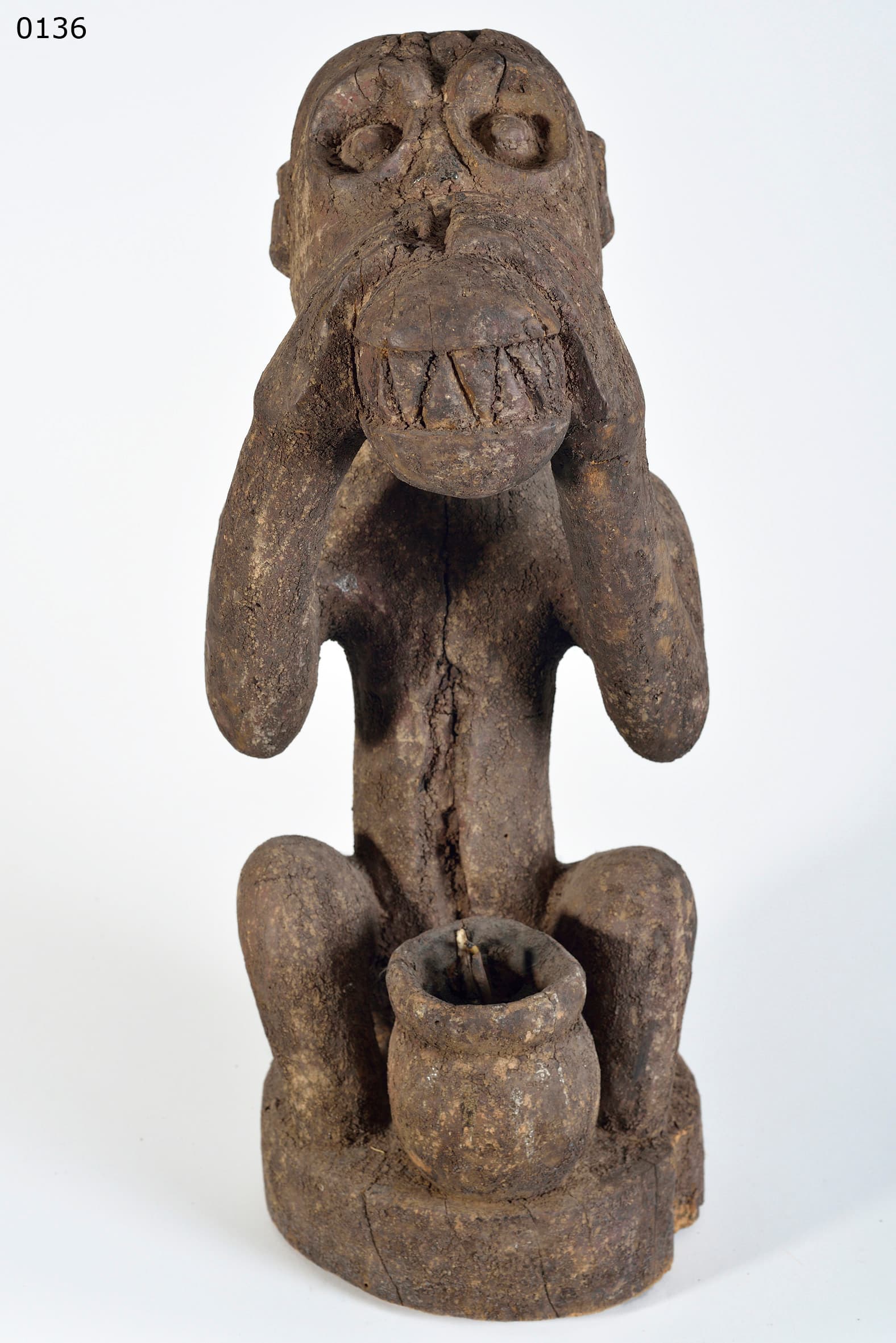
simian shrine figure
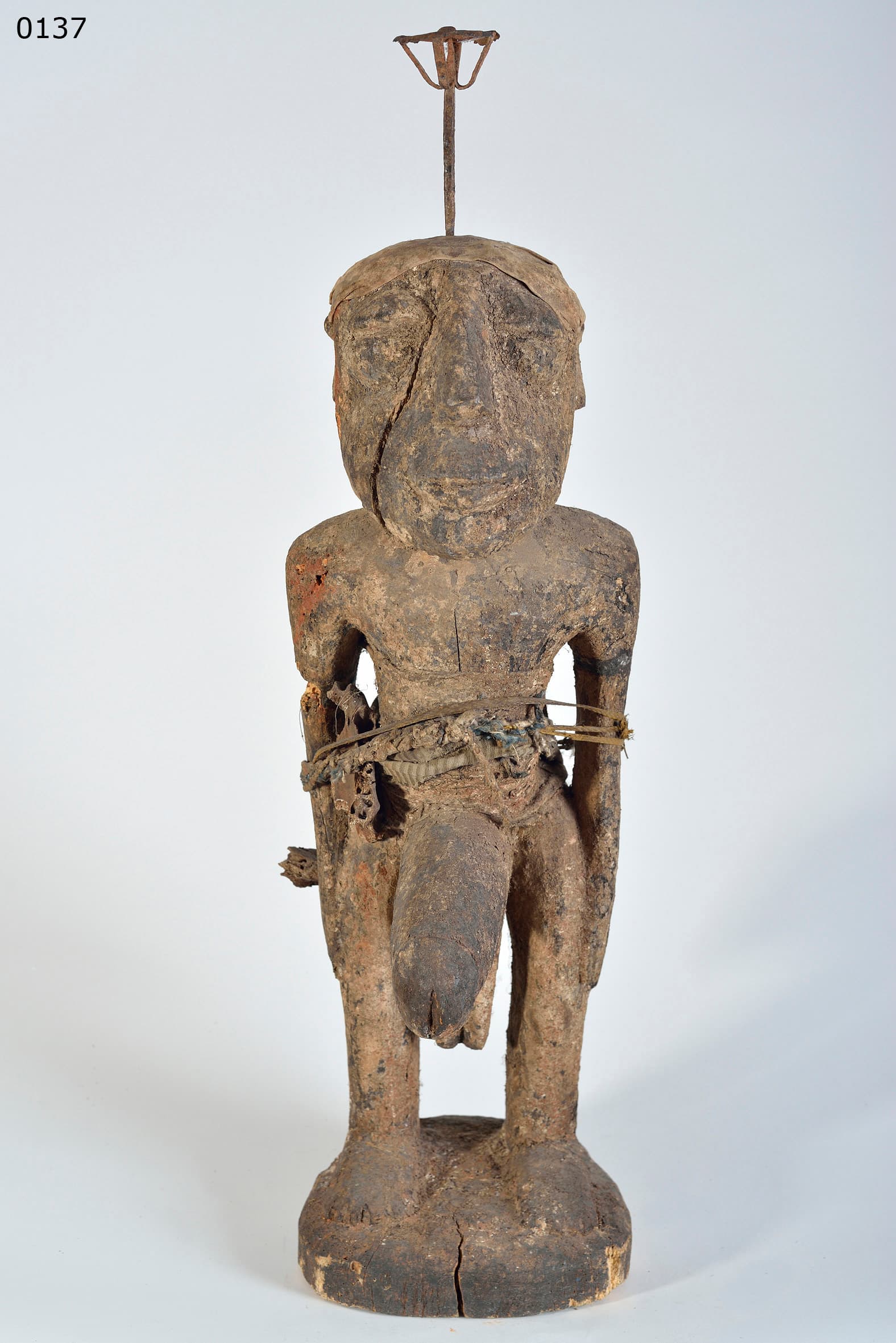
BOCIO statue (used in Voodoo ceremonies)
