This prestige weapon features a long, slightly curved, forged iron blade attached to a cast brass hilt. The brass handle forms a D-shaped handguard and terminates in a detailed, stylized zoomorphic pommel (resembling a chameleon or hornbill). The iron is deeply rusted, while the brass bears a dark tarnish.
1. Aesthetic style and regional traits
Attributed to the Fonombele (the Senufo blacksmith caste), this ceremonial sword demonstrates mixed-metal artistry. The heavy iron blade is paired with a lost-wax cast brass hilt. The zoomorphic pommel incorporates core Senufo totems — likely the chameleon, a primordial creature associated with transformation and ancient wisdom. The D-guard is both functional and visually prominent, consistent with the high-status aesthetic associated with the regional elite.
2. Ritual function and secret society context
This weapon is not designed for the battlefield; it is traditionally regarded as an emblem of authority, wealth, and spiritual protection. Such swords are traditionally linked to paramount chiefs, champion farmers, or high-ranking initiates of the Poro secret society during public processions and funerals. They are understood to have served as manifestations of the wielder's control over the forces of the forge. In traditional Poro or Sandogo divination rites, such swords are said to have been used to physically "cut" through malevolent energy and protect the sacred space.
3. Physical patina and age indicators
The physical characteristics of this weapon are compatible with a 19th-century origin. The forged iron blade is blanketed in a dense, dark-brown, and highly textured layer of magnetite rust, a stable oxidation consistent with natural aging over a significant period. In contrast, the brass hilt has developed an unpolished dark-olive tarnish. The grip and the high points of the zoomorphic pommel exhibit a smooth friction polish, showing wear consistent with being handled over generations.
Summary
This Senufo prestige sword reflects the traditional metalworking practices of West African blacksmithing. Its brass lost-wax hilt, combined with the deep rust of the iron blade compatible with a 19th-century attribution, supports its association with Poro ceremonial authority.
Written with AI assistance from the collection appraisal, object photography and our own research; editorially reviewed. Mistakes are possible — corrections are welcome. How we work →
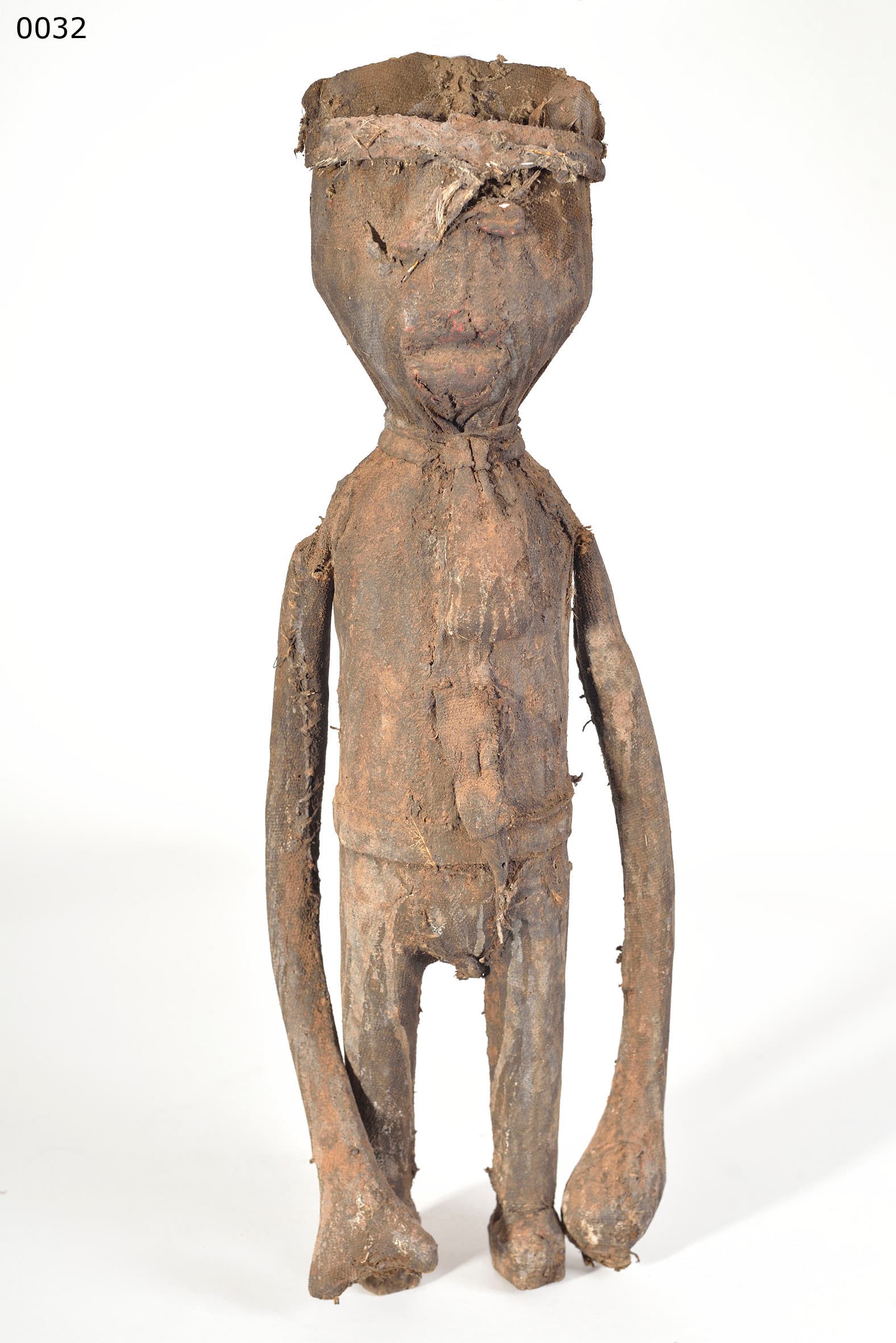
power figure (called KAFIGELEDJO)
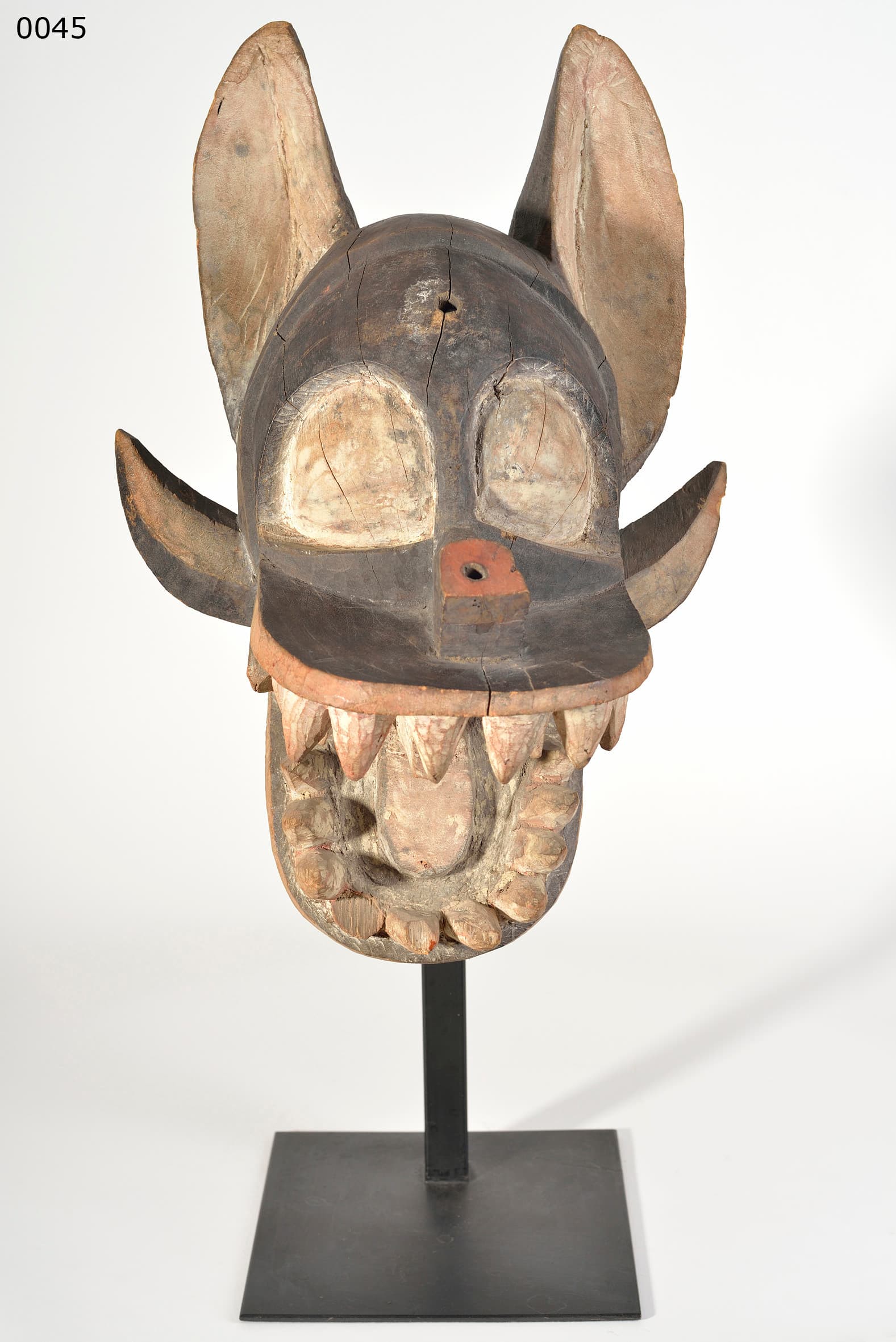
headcrest mask
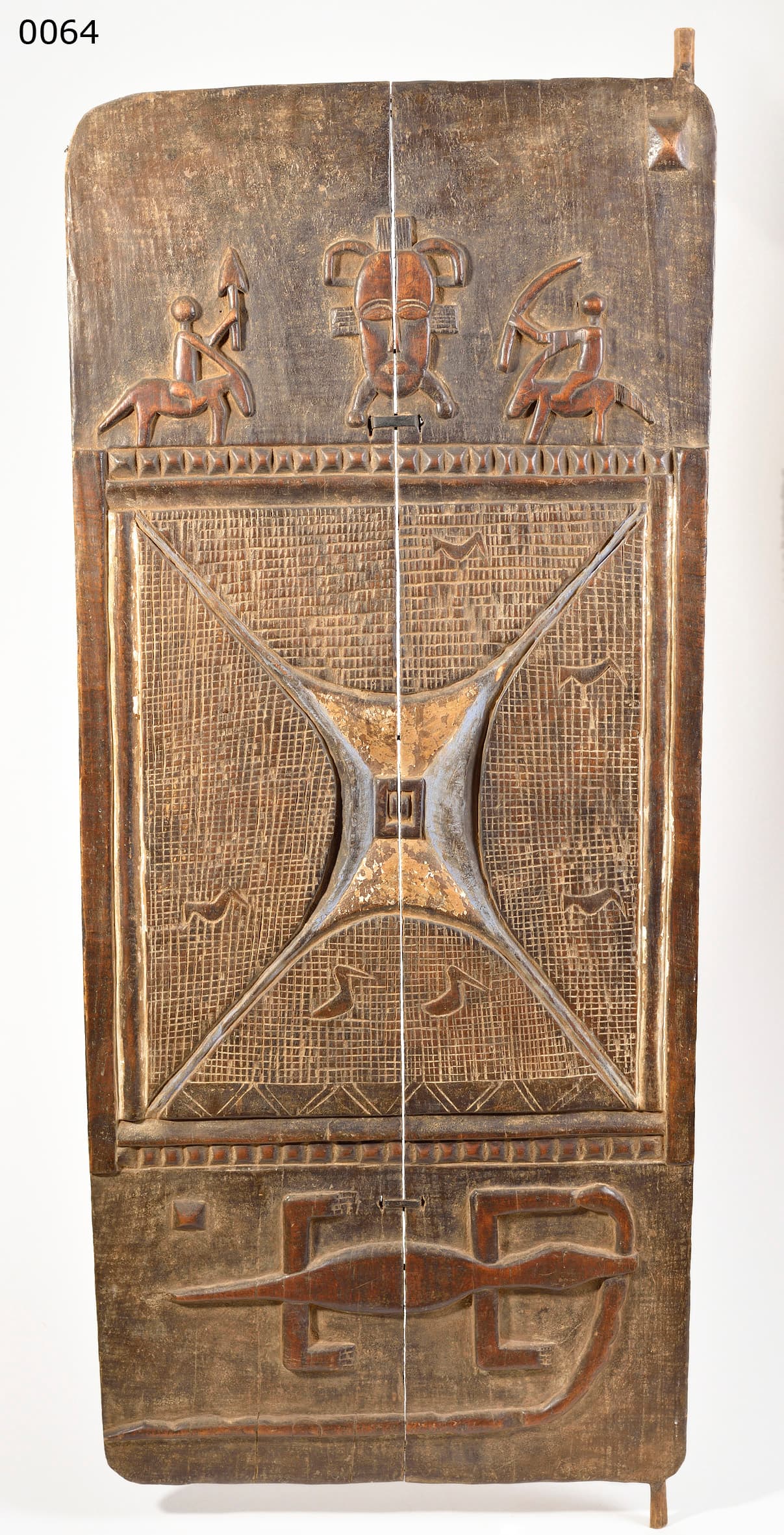
door
